


As an Amazon Associate, Sumizeit earns from qualifying purchases.
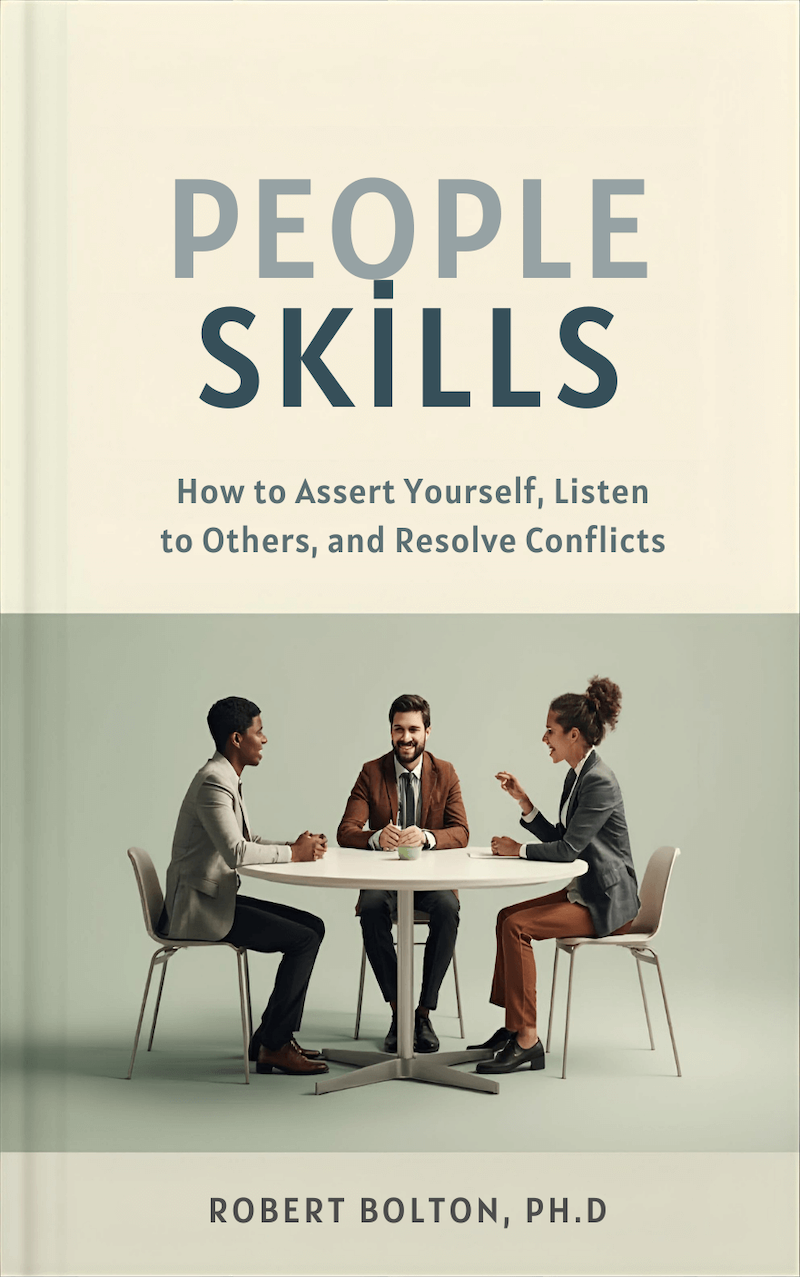
People Skills Book Summary
This People Skills Book Summary covers the key ideas, lessons, and takeaways in about 20 minutes.
At its core, this book asserts that relationships thrive when we trade judgment for curiosity, advice for understanding, control for respect, and reaction for reflection. Communication becomes a tool for healing rather than harm. By practicing self-awareness, embracing authenticity, and cultivating non-possessive love, we create environments where both ourselves and others can grow freely. In learning to listen deeply and speak honestly, we not only improve our relationships—we transform the way we move through the world.
Helps with these goals
Want the complete 20-minute summary?
- Full structured summary
- Video Summary
- Podcast Summary
- Audio summary
- Infographic
- Key takeaways
- Exercises
- Quiz
- Highlights and notes
- Ask the book with AI
What is in the People Skills book summary?
Below is a preview of Sumizeit’s expert-written summary of People Skills by Robert Bolton. The full summary covers the book’s key ideas in text, audio, and video.
Human connection isn’t maintained by love alone — it is maintained by communication. We lose friendships not always because we stop caring, but because we stop listening, fail to express needs, or misinterpret others. People often believe communication is natural, yet Bolton emphasizes that most misunderstandings come from automatic habits rather than intentional skill. For example, many families grow distant not due to conflict, but because no one knows how to openly speak about disappointment or loneliness without sounding critical or defensive.
Think about a workplace team where no one speaks up during meetings, yet slack channels fill with complaints afterwards. The problem is rarely incompetence — it’s a lack of safe communication structures. Similarly, a romantic relationship may deteriorate not from lack of love, but because neither partner knows how to say, “I need comfort, not solutions,” or “I’m scared you don’t care.” Communication is the mechanism by which feelings become visible. Without it, connection starves.
This book teaches that communication is a skill system, not a personality trait. You don't need to be extroverted, charming, or highly verbal to communicate well — you simply need techniques for listening deeply, disagreeing respectfully, expressing needs clearly, and understanding emotions (yours and others'). Mastering these abilities leads to stronger marriages, smoother business interactions, better friendships, healthier families, and more self-respect.
The Hidden Gap Between Speaking and Understanding
Bolton explains that conversations often fail because we assume understanding instead of verifying it. Hearing words isn't equal to receiving meaning. If your friend says “Do what you want,” the literal words show permission — but the irritated tone and stiff posture scream resentment. Many conflicts come not from what was said, but from how it was said, when it was said, and the emotional context behind it.
Example scenario:
Partner A: “It would be nice if you helped more around the house.”
Partner B hears: “You think I do nothing.”
Reality: A may simply be overwhelmed and asking for support.
A gap forms — between intention and interpretation.
Parents experience this with teenagers constantly. A teen says “Leave me alone.” The parent might hear rudeness, while the teen is actually saying “I’m overwhelmed and embarrassed, give me space.” When we react to our interpretation instead of clarifying meaning, misunderstandings escalate. A simple question like “Are you feeling overwhelmed and need some time?” could prevent a shouting match.
Bolton teaches us to become meaning detectives, paying attention to tone, body language, pacing, emotional cues, and what remains unsaid. Understanding grows when we ask clarifying questions instead of assuming.
Why Communication Breaks Down: The Roadblocks We Use Without Realizing It
Roadblocks are knee-jerk reactions that shift focus away from the speaker’s experience. They often come from good intentions — to comfort, guide, or fix — but they make people feel controlled or misunderstood. Bolton says roads to closeness are paved with listening, but we often throw “communication roadblocks” instead.
Consider a friend saying: “I feel like I can’t handle life right now.”
Common…
Want the complete 20-minute summary?
- Full structured summary
- Video Summary
- Podcast Summary
- Audio summary
- Infographic
- Key takeaways
- Exercises
- Quiz
- Highlights and notes
- Ask the book with AI
Who should read People Skills?
People Skills is for anyone seeking to strengthen their relationships and communication effectiveness. Whether you're navigating marriage, friendships, workplace dynamics, or family tensions, this book offers practical tools for those who recognize that connection requires intentional skill rather than natural talent or good intentions.
Why does People Skills matter?
In a world where digital communication dominates and misunderstandings breed conflict, People Skills by Robert Bolton reminds us that most relationship damage stems from poor communication habits, not lack of care. The book's techniques for listening, assertiveness, and conflict resolution address real barriers that keep people isolated, frustrated, and disconnected—issues as relevant today as when the book was written.
What are the key themes in People Skills?
- Communication is a learnable skill system, not an innate personality trait
- Listening actively and reflectively is more transformative than giving advice
- Roadblocks like judgment, reassurance, and logic prevent genuine understanding
- Assertiveness—respectful self-expression—sits between passivity and aggression
- Conflict reveals unmet needs and becomes an opportunity for growth
- Empathy and validation must precede problem-solving
- Authenticity and self-acceptance enable deeper connection
- Non-possessive love respects autonomy while offering support
What are the key lessons from the People Skills book summary?
Hearing is Not Understanding
People often assume they understand what was said without verifying meaning. Tone, body language, emotional context, and unspoken cues matter as much as words, and gaps between intention and interpretation fuel most conflicts.
Communication Roadblocks Come from Good Intentions
Advice, reassurance, judgment, excessive questioning, and logic are well-meaning responses that derail genuine listening. They shift focus away from the speaker's emotional experience and block deeper connection.
Attending Is an Active, Physical Practice
True listening requires being mentally, emotionally, and physically present. This means facing the speaker, maintaining open body language, minimizing distractions, and signaling that their words matter.
Reflection Demonstrates Psychological Presence
Paraphrasing what you hear—both content and emotion—shows the speaker you truly understand them. Reflection often de-escalates conflict and opens space for deeper sharing without you offering solutions.
Following Means Allowing Pauses and Silence
Silence is not empty; it often precedes the speaker's deepest truths. Resisting the urge to fill pauses allows others to think and express themselves more fully.
Empathy Opens Doors Faster Than Problem-Solving
When someone is hurting or overwhelmed, they need emotional validation first. Only after feeling heard and understood can they think constructively about solutions.
Validation Is Not Agreement
You can acknowledge someone's feelings without condoning their behavior. Saying 'I see why you felt angry' validates emotion while keeping appropriate boundaries.
The Three-Part Assertion Message Respects Both Parties
Assertiveness combines describing behavior objectively, expressing your feeling, and explaining the impact. This approach respects your needs without attacking the other person.
Tone and Posture Matter as Much as Words
Delivering an assertive message calmly, with balanced posture and appropriate tone, increases the likelihood it will be received as respectful clarity rather than hostility or blame.
Conflict Reveals Unmet Needs, Not Character Flaws
Reframing disagreements as information about underlying needs—rather than proof of incompatibility—transforms conflict from destructive to constructive and solvable.
Cool the Emotional Temperature Before Problem-Solving
Listening and empathy must precede solution brainstorming. When people feel emotionally validated, they are ready to think collaboratively rather than defensively.
Good Conflict Handling Strengthens Bonds
Relationships don't deepen through avoiding conflict or pretending agreement; they strengthen through respectful repair and the experience of being truly heard across differences.
Communication Is a Toolbox—Use the Right Tool for the Moment
Different situations call for different skills: listening when someone is emotional, assertion when boundaries are crossed, problem-solving when decisions need to be made. Using the wrong tool causes damage.
Authenticity Invites Closeness; Masks Build Walls
When you hide behind politeness, humor, or silent suffering, you rob others of the chance to support you and block emotional intimacy. Honest vulnerability creates space for real connection.
Self-Acceptance Is the Foundation of Healthy Communication
People with weak self-acceptance either apologize excessively, suppress their needs, or become aggressive to protect their ego. Self-compassion enables genuine, balanced expression.
Non-Possessive Love Empowers Rather Than Controls
True support respects the other person's autonomy and growth path. Disguising control as helpfulness—whether in parenting, partnerships, or friendship—undermines trust and independence.
Listening First Prevents Defensiveness
When people feel heard and understood, their defensiveness naturally lowers. Reflecting their perspective before asserting your needs creates psychological safety for dialogue.
Clarifying Questions Prevent Escalation
Instead of reacting to your interpretation of what someone said, asking clarifying questions (like 'Are you saying...?') prevents misunderstandings from spiraling into conflict.
Communication Skills Transform More Than Relationships
Practicing these techniques consistently changes not only how you relate to others but also how you see yourself, building confidence, peace, and a deeper sense of connection across all life domains.
Want the complete 20-minute summary?
- Full structured summary
- Video Summary
- Podcast Summary
- Audio summary
- Infographic
- Key takeaways
- Exercises
- Quiz
- Highlights and notes
- Ask the book with AI
How can you apply ideas from People Skills?
- Use reflective listening when a friend or family member shares a problem—paraphrase their feeling before offering advice
- Apply the three-part assertion message to set boundaries at work or home without sounding aggressive or blaming
- Practice active attending by putting away your phone, facing the person, and maintaining open body language during conversations
- In conflicts, take time to listen and uncover underlying needs rather than debating surface complaints
- Replace roadblock responses (giving advice, reassurance, or judgment) with empathetic reflection to deepen emotional safety
- Use clarifying questions ('Do you mean...?' or 'Tell me more about...?') to prevent misinterpretations before they become arguments
- Develop self-acceptance by noticing when you're performing for approval and practice expressing your authentic needs and feelings instead
What common mistakes do readers make with People Skills?
- Assuming you understand what someone means without asking clarifying questions, leading to conflicts built on misinterpretation
- Jumping straight to advice-giving or problem-solving when someone needs emotional validation first
- Using communication roadblocks like judgment, reassurance, or excessive questioning under the guise of helping, which actually closes conversations down
- Confusing assertiveness with aggression and either staying silent about violated boundaries or expressing needs in ways that sound like attacks
Sumizeit Exercises Apply what you've learned
Turn ideas from People Skills into action with a short guided reflection: identify the biggest takeaway, connect it to your life, and commit to one step you can take in the next 24 hours.
What is the expert analysis of People Skills?
Overview
People Skills by Robert Bolton, PhD, stands as a seminal work in the field of interpersonal communication, bridging academic rigor with practical application. Bolton, an expert in counseling and organizational psychology, distills decades of clinical and training experience into a comprehensive manual for enhancing human connection. The book’s significance lies in its demystification of communication—not as an innate talent but as a learnable skill set essential for personal and professional relationships. Bolton’s influence extends beyond therapy rooms into workplaces, families, and social networks, making this work a cornerstone for anyone seeking to navigate the complexities of human interaction with greater empathy and efficacy.
Core Thesis
At the heart of People Skills is the argument that effective communication is not a natural gift but a deliberate, teachable system of skills. Bolton posits that most relational breakdowns stem from automatic, unexamined habits rather than intentional malice or incompatibility. He emphasizes the “hidden gap” between speaking and understanding, underscoring that true communication requires active listening, emotional attunement, and the ability to express oneself assertively without aggression. The book advances the idea that mastering these skills transforms conflicts into opportunities for growth and fosters authentic connections built on empathy, respect, and self-acceptance.
Strengths
- Practical Framework: Bolton provides clear, actionable techniques such as reflective listening, assertive communication, and empathy exercises that readers can immediately apply.
- Holistic Approach: The book addresses communication across diverse contexts—family, romantic relationships, workplaces—demonstrating versatility and broad relevance.
- Emphasis on Emotional Nuance: By highlighting the importance of tone, body language, and emotional context, Bolton moves beyond superficial dialogue to the deeper layers of interpersonal exchange.
- Integration of Self-Acceptance: The recognition that personal growth and communication skills are intertwined adds psychological depth, encouraging readers to cultivate inner resilience alongside external skills.
- Balanced Conflict Resolution: Framing conflict as information about unmet needs rather than a battle to win encourages constructive dialogue and mutual understanding.
Critiques & Counterarguments
- Potential Oversimplification: While Bolton’s toolbox metaphor is useful, real-world communication often involves more complex power dynamics and cultural variables that the book addresses only tangentially.
- Limited Engagement with Digital Communication: Given the book’s original publication era, it lacks discussion of how digital platforms alter communication patterns, a critical omission in today’s context.
- Evidence Base: The book leans heavily on clinical observations and anecdotal examples rather than rigorous empirical research, which may limit its acceptance in some academic circles.
- Competing Theories: Approaches such as Nonviolent Communication (Marshall Rosenberg) or Relational-Cultural Theory offer alternative frameworks emphasizing systemic and societal factors that Bolton’s individual skill focus may underplay.
- Emotional Complexity: Some critics argue that the model risks reducing emotional expression to formulaic patterns, potentially overlooking the spontaneity and unpredictability inherent in human relationships.
Who Should Read This
People Skills is ideal for readers seeking a grounded, accessible introduction to improving interpersonal communication. It serves professionals in leadership, counseling, education, and human resources who require practical tools to foster collaboration and resolve conflict. Additionally, individuals invested in personal development, relationship enhancement, or emotional intelligence will find Bolton’s insights invaluable. The book’s blend of psychological insight and actionable guidance makes it a timeless resource for anyone committed to cultivating deeper, more authentic connections in a complex social world.
Frequently asked questions about the People Skills book summary
What is People Skills about?
People Skills by Robert Bolton is a practical guide to strengthening relationships through communication. The book teaches that most interpersonal pain stems not from lack of care but from poor communication habits—like failing to listen, giving unasked advice, or misinterpreting what others mean. Bolton provides concrete techniques for listening deeply, expressing needs assertively, resolving conflict constructively, and building genuine understanding across relationships.
Who should read People Skills?
Anyone seeking stronger, more authentic relationships will benefit from this book. It's especially valuable for people in leadership roles, parents, couples, those struggling with conflict, individuals in helping professions, and anyone who recognizes that connection requires intentional communication skill. You don't need to be extroverted or naturally gifted at talking—the book is designed for people willing to practice techniques.
What are the main takeaways from People Skills?
The main takeaways include: communication is a learnable skill, not a personality trait; active listening and reflection matter more than advice-giving; most conflicts reveal unmet needs rather than character flaws; assertiveness—respectful self-expression—sits between harmful passivity and aggression; empathy and validation must precede problem-solving; and authenticity builds deeper connection than performing. Bolton teaches that when practiced consistently, these skills transform conversations into bridges rather than battlegrounds.
What are roadblocks in People Skills?
Roadblocks are knee-jerk communication responses that derail genuine connection. Common roadblocks include giving advice, offering false reassurance, judging or criticizing, interrogating with excessive questions, or applying logic to dismiss feelings. Though usually well-intentioned, roadblocks shift focus away from the speaker's emotional experience and prevent them from feeling truly heard, causing them to shut down or withdraw.
How does Bolton define assertiveness?
Bolton defines assertiveness as respectful self-expression—a middle path between harmful passivity and aggression. The core technique is the three-part assertion message: describe the behavior objectively, communicate your feeling, and explain the impact. For example: 'When you interrupt me, I feel dismissed because I lose my train of thought.' Delivery matters—calm tone and balanced posture communicate clarity without hostility.
Why is listening more important than giving advice in People Skills?
According to Bolton, listening—especially reflective listening—is transformative because it makes people feel understood and valued. When someone feels genuinely heard, their emotional intensity naturally decreases and they become open to problem-solving. Jumping to advice before someone feels understood often backfires; they dismiss the advice and feel more isolated. Understanding must precede solutions.
How does People Skills approach conflict resolution?
Bolton frames conflict not as destructive but as information about unmet needs. Healthy conflict resolution involves cooling emotional temperature through listening first, encouraging each person to voice needs (not complaints), brainstorming solutions collaboratively, selecting one that respects both parties, and planning execution. This approach strengthens relationships because it builds experience of being truly heard across differences.
What role does empathy play in People Skills?
Empathy—sensing emotional reality rather than just hearing words—opens doors faster than problem-solving. Bolton teaches that empathy lets people feel human rather than judged and creates psychological safety for deeper sharing. It's not about agreement; you can validate someone's feelings while maintaining boundaries. After empathy creates safety, constructive problem-solving becomes possible.
About Sumizeit
Sumizeit is a profitable Scomy LLC company based in Miami, Florida. It has been helping readers learn from nonfiction books for 7 years with expert-written summaries in text, audio, podcast, and video.
Want the complete 20-minute summary?
- Full structured summary
- Video Summary
- Podcast Summary
- Audio summary
- Infographic
- Key takeaways
- Exercises
- Quiz
- Highlights and notes
- Ask the book with AI
Here's why readers love Sumizeit
Join thousands of learners getting smarter every day
"Great experience. Detailed summaries. Loved the gamification feature. Makes learning fun. Good customer service. I recommend Sumizeit to anyone. You'll learn a lot."
"I always felt busy but still wanting to keep up with the book discussion in my friend group. This was a great supplement to help me keep reading the books I find fun while keeping up with important books."
"I love this website. Instead of scrolling social media, I find myself learning a lot. I use it everyday. I recommend this app for anyone who is too busy and wants to get up to speed with their favorite books."
People Skills Book Summary PDF
Looking for a People Skills Book Summary PDF you can save and revisit offline? Our People Skills Book Summary PDF captures the book’s core ideas in a clean, printable format — the key frameworks, takeaways, and structure without the fluff. Download the People Skills Book Summary PDF when you want a reference you can annotate, share with your team, or review on the go. Get your People Skills Book Summary PDF from the download page below.
Download People Skills Book Summary PDFPeople also liked these summaries
Readers who explored People Skills often enjoyed these titles next.

Want the complete 20-minute summary?
- Full structured summary
- Video Summary
- Podcast Summary
- Audio summary
- Infographic
- Key takeaways
- Exercises
- Quiz
- Highlights and notes
- Ask the book with AI
Featured Book Titles
Popular Book Summaries at sumizeit, leading book summary app
