


As an Amazon Associate, Sumizeit earns from qualifying purchases.
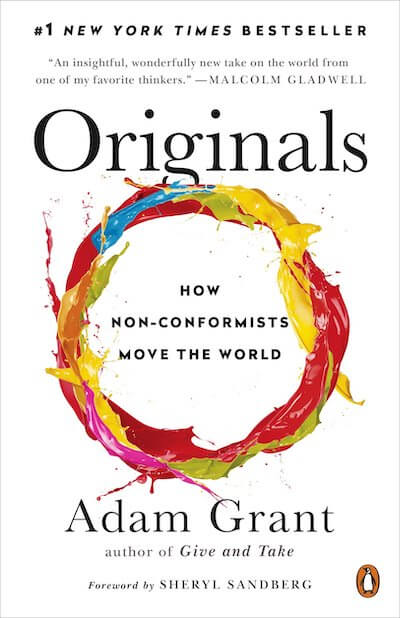
Originals Book Summary
This Originals Book Summary covers the key ideas, lessons, and takeaways in about 20 minutes.
Helps with these goals
Want the complete 20-minute summary?
- Full structured summary
- Video Summary
- Podcast Summary
- Audio summary
- Key takeaways
- Exercises
- Quiz
- Highlights and notes
- Ask the book with AI
What is in the Originals book summary?
Below is a preview of Sumizeit’s expert-written summary of Originals by Adam Grant. The full summary covers the book’s key ideas in text, audio, and video.
What do you think of when you hear the word ‘original’?
Do you think weird and freaky?
Or, do you think special and exclusive?
In Adam Grant’s, “Originals” he explains how you can be original without carrying the eccentric stigma around with you.
“Originality brings more bumps in the road, yet it leaves us with more happiness and a greater sense of meaning.”- Adam Grant
He will show you how the world needs original people and how it’s really a good thing to be your own individual person in all aspects of life.
Originality Will Help Your Career
Anybody can be an original! And, it usually starts with being curious about something. But, what exactly is an original?
An original is someone that doesn’t go by the book, who thinks up new and innovative ideas, and who is willing to take risks against modern societal thinking.
Now, being an original doesn’t mean you have to come up with some crazy invention out of nowhere. An original idea may just be something simple such as a small change that will help propel you forward.
“Being original doesn’t require being first. It just means being different and better.”- Adam Grant
Michael Housman, an economist, made an observation in his research that people who kept their default internet browser at the workplace were more likely to get bored of their position, while ‘originals’ who installed their browser of choice were more satisfied with their jobs.
To succeed in the 9-5 world, being an original is key. We all have the ability to make small changes that will help improve our work and our happiness in the workplace.
However, sometimes these small changes do require some courage. So, it is important to conquer the fear of going against the crowd.
Quantity Leads to Quality
To create new ideas requires hard work and determination. Great ideas don’t just appear out of thin air.
Brainstorming and creating a large number of ideas is a surefire way to find one that is quality. You don’t have to be naturally creative to think of the best idea. Anyone has the ability if they brainstorm!
“Practice makes perfect, but it doesn’t make new.”- Adam Grant
For example, many famous artists create hundreds of works, but how many are really famous? Picasso only had a handful of famous paintings, however, he created thousands of works in many forms.
Through research and experimentation, Psychologist Dean Simonton found that even artistic geniuses cannot determine which one of their pieces will be ‘the one’. That is why it is necessary to create many so that there is a higher chance of success.
By brainstorming and creating new ideas, you will begin to become more of a creative thinker, even if you were not creative at all before. However, you must understand that great ideas are not lining up to enter your brain. You must have patience and practice the art of brainstorming.
Procrastination
We have always been told that procrastination makes our productivity…
Want the complete 20-minute summary?
- Full structured summary
- Video Summary
- Podcast Summary
- Audio summary
- Key takeaways
- Exercises
- Quiz
- Highlights and notes
- Ask the book with AI
Who should read Originals?
Originals is for entrepreneurs, professionals, and anyone feeling stuck in conventional thinking who want to generate breakthrough ideas without being labeled as eccentric. If you're curious about how to stand out at work, lead innovation, or simply find more meaning in what you do, this book offers practical strategies grounded in psychological research.
Why does Originals matter?
In a world that increasingly rewards differentiation and creative problem-solving, Adam Grant's Originals shows that originality isn't reserved for the naturally gifted or the unconventional outliers. The book challenges the myth that great ideas come from genius-level insight, instead revealing how ordinary people can systematically generate, refine, and champion ideas that matter—making it essential reading for anyone navigating rapid change.
What are the key themes in Originals?
- Originality is accessible to everyone, not just the eccentric
- Quantity of ideas increases the probability of breakthrough innovation
- Strategic procrastination can enhance creative thinking
- Transparency about weaknesses builds trust and idea adoption
- Familiarity and framing determine how audiences receive new ideas
- Constructive criticism and dissenting voices prevent groupthink
- Small, deliberate changes compound into significant career impact
What are the key lessons from the Originals book summary?
Originality Doesn't Require Being First
Being original means being different and better, not necessarily being the first to an idea. Small improvements and thoughtful variations on existing concepts count as legitimate originality.
Generate Volume to Find Quality
Even prolific geniuses like Picasso created hundreds of works to produce a handful of masterpieces. Quantity of ideation naturally leads to higher-quality outcomes through trial and refinement.
Procrastination Can Fuel Creativity
Unlike productivity, creativity benefits from procrastination because last-minute pressure forces improvisation and fresh thinking. The Zeigarnik effect keeps your mind open to new directions even after you've started a task.
Lead With Your Weaknesses, Not Strengths
Paradoxically, admitting flaws and vulnerabilities in your ideas builds credibility and trust, making others more receptive to your proposals. Transparency signals honesty rather than weakness.
Connect New Ideas to Familiar Anchors
People naturally resist the unfamiliar; bridge this gap by linking your original idea to existing concepts and values your audience already accepts. This contextual framing dramatically increases adoption rates.
Use Repetition to Overcome Resistance
The exposure effect shows that repeated, low-pressure encounters with a new idea increase familiarity and acceptance over time. Short, clear presentations work better than overwhelming single pitches.
Seek Out Dissenters and Challengers
Surrounding yourself with people who question your ideas prevents groupthink and forces deeper, more original thinking. A lone dissenter in the room can disrupt conformity and spark individual thinking.
Small Workplace Choices Signal Original Thinking
Simple acts like choosing your own browser at work rather than defaults correlate with job satisfaction and reduced boredom. Individual agency in small decisions predicts originality in larger ones.
Align Ideas With Audience Values and Morals
Frame your ideas in terms of what your audience cares about. When people see how your original idea serves their existing values, resistance drops significantly.
Balance Enthusiasm With Measured Presentation
Presenting ideas requires enough passion to engage your audience while avoiding overwhelming them with excessive conviction. Calibrated excitement keeps people interested without triggering defensiveness.
Embrace Feedback as a Creative Tool
Rejection and criticism aren't signs to abandon ideas; they're signals to refine and adapt them. Understanding why an idea was rejected helps you strengthen and reframe it for different audiences.
Originality Doesn't Require Personality Change
You don't need to become eccentric or socially awkward to be original. Originality is about your ideas and actions, not your personality, so you can champion unconventional thinking while remaining professionally appropriate.
Practice Brainstorming as a Deliberate Skill
Creativity and ideation improve with structured practice, not just raw talent. Anyone can become a better creative thinker through consistent brainstorming, even if they don't consider themselves naturally creative.
Recognize Why Your Ideas Face Resistance
Ideas often get rejected not on merit but because they threaten others' positions or challenge established hierarchies. Understanding the real reason for rejection helps you address the actual obstacle.
Build Incremental Innovation Into Your Routine
Originality in the workplace doesn't require revolutionary change; consistent small improvements in how you work, think, and solve problems compound into meaningful career advantage.
Give Yourself Permission to Iterate and Evolve
Geniuses and artists often take years to refine work because procrastination time allows new insights and perspectives to emerge. Patience with the creative process often yields stronger final results.
Want the complete 20-minute summary?
- Full structured summary
- Video Summary
- Podcast Summary
- Audio summary
- Key takeaways
- Exercises
- Quiz
- Highlights and notes
- Ask the book with AI
How can you apply ideas from Originals?
- Start a regular brainstorming practice where you generate 10-20 ideas per session without judgment; track which ones lead to implementable solutions
- When presenting a new idea at work, lead with its connection to existing values or successful strategies your organization already uses
- Identify your idea's weaknesses upfront in your pitch to disarm objections and build trust with stakeholders
- Deliberately delay starting routine projects to allow your subconscious to work on creative solutions through the Zeigarnik effect
- Build a personal advisory board of people who naturally question your thinking and challenge assumptions
- Introduce new workplace ideas through repeated, low-pressure exposure rather than a single high-stakes pitch
- Test small, original changes in your daily work routine (tools, processes, approaches) to signal and practice original thinking
- Frame innovative proposals in terms of audience values, concerns, and existing organizational goals rather than just the novelty of the idea
What common mistakes do readers make with Originals?
- Waiting for the perfect idea before taking action instead of generating volume and refining through iteration
- Presenting original ideas as complete, polished concepts when audiences often need repeated exposure and familiar framing
- Surrounding yourself with yes-people who validate everything instead of seeking out constructive critics who challenge your thinking
- Assuming that eccentricity or personality change is necessary to champion original ideas, when in fact professionalism and transparency work better
Sumizeit Exercises Apply what you've learned
Turn ideas from Originals into action with a short guided reflection: identify the biggest takeaway, connect it to your life, and commit to one step you can take in the next 24 hours.
What is the expert analysis of Originals?
Overview
Originals is a compelling work by Adam Grant, a distinguished organizational psychologist and professor at the Wharton School of the University of Pennsylvania. Known for his rigorous research and accessible writing style, Grant explores the nature of originality and innovation within the realms of business, creativity, and personal development. The book’s significance lies in its challenge to conventional stereotypes about originality, presenting it not as eccentricity but as a practical and attainable mindset that fosters meaningful change and personal fulfillment.
Core Thesis
Grant’s central argument is that originality is not the exclusive domain of geniuses or radical innovators but is accessible to anyone willing to challenge the status quo thoughtfully and persistently. He posits that originality involves generating new and better ideas through curiosity, risk-taking, and strategic thinking rather than mere novelty or first-mover advantage. The book emphasizes that originality thrives on a combination of quantity in idea generation, strategic procrastination, openness to criticism, and the ability to frame ideas in familiar contexts to gain acceptance.
Strengths
- Demystification of Originality: Grant effectively dispels myths that originality requires eccentricity or innate genius, making the concept approachable and actionable for a broad audience.
- Empirical Foundation: The book is rich with research-backed insights, drawing on studies from psychology, economics, and social science to support its claims.
- Practical Strategies: Grant offers concrete advice, such as leveraging strategic procrastination and the exposure effect, which readers can apply to enhance creativity and innovation in their personal and professional lives.
- Balanced Perspective on Risk: The nuanced discussion about managing fear and resistance when proposing new ideas provides a realistic roadmap for navigating organizational and social dynamics.
- Engaging Anecdotes: The use of historical and contemporary examples, including Martin Luther King Jr.’s improvisation and Picasso’s prolific output, enriches the narrative and grounds abstract concepts in relatable stories.
Critiques & Counterarguments
- Overemphasis on Individual Agency: While Grant champions individual originality, the book may underplay structural and systemic barriers—such as organizational inertia, cultural constraints, and socioeconomic factors—that limit the ability of many to act on original ideas.
- Procrastination as a Creativity Tool: The endorsement of procrastination as beneficial for creativity, though intriguing, risks romanticizing what is often a detrimental habit. Empirical evidence on procrastination’s effects is mixed, and for many, it impairs rather than enhances output.
- Simplification of Idea Adoption: The suggestion that framing new ideas within familiar contexts will ease acceptance may underestimate the complexity of cognitive biases and entrenched interests that resist change, especially in hierarchical or politically charged environments.
- Competing Research on Originality: Alternative schools of thought emphasize collaborative innovation over individual originality, highlighting the role of diverse teams and collective intelligence, which the book touches on but could explore more deeply.
- Limited Attention to Failure: Although the book acknowledges bumps in the road, it could provide a more rigorous analysis of failure’s role in the innovation process, including how repeated failure impacts motivation and resource allocation.
Who Should Read This
Originals is ideally suited for professionals, entrepreneurs, educators, and creatives seeking to foster innovation within themselves and their organizations. It appeals to readers interested in psychology and business who desire actionable insights into how to cultivate originality without succumbing to the myth of the solitary genius. Additionally, those grappling with resistance to change or looking to understand the dynamics of idea acceptance will find Grant’s work both inspiring and practical.
Frequently asked questions about the Originals book summary
What is Originals about?
Originals by Adam Grant is about how anyone can generate, develop, and champion innovative ideas without needing to be naturally eccentric or a genius-level thinker. The book combines psychological research with real-world examples to show that originality is a skill that can be practiced, and that ordinary people can create extraordinary impact through systematic ideation, strategic communication, and deliberate small changes.
Who should read Originals?
Professionals seeking career advancement, entrepreneurs looking to innovate, managers trying to foster creative cultures, and anyone who feels stuck in conventional thinking should read Originals. The book is especially valuable for people who want to contribute original ideas at work but worry about standing out negatively or facing resistance.
What are the main takeaways from Originals?
The main takeaways are: originality comes from generating quantity to find quality; procrastination can fuel creativity rather than hinder it; connecting new ideas to familiar contexts increases acceptance; admitting weaknesses builds trust; and surrounding yourself with challengers prevents groupthink. Adam Grant emphasizes that originality is accessible to everyone and that small, deliberate actions can compound into significant career and personal satisfaction.
How does procrastination relate to creativity in Originals?
Grant argues that while procrastination harms productivity, it actually benefits creativity by forcing improvisation and keeping your mind open to new directions. Using the example of Martin Luther King Jr.'s 'I Have a Dream' speech—which was improvised at the last moment—he shows how delay and the Zeigarnik effect can lead to breakthrough insights and original ideas.
How can I get people to accept my original ideas?
Grant recommends several strategies: connect your idea to familiar concepts and existing values, admit its weaknesses upfront to build credibility, use repeated low-pressure exposure rather than a single pitch, and frame it in terms of your audience's goals. Transparency and strategic framing make people more receptive than enthusiasm alone.
Does being original mean I have to be eccentric?
No. Grant emphasizes that originality is about your ideas and actions, not your personality. You can champion unconventional thinking and propose bold ideas while remaining professionally appropriate, socially normal, and well-liked. Eccentricity is unnecessary and can actually hinder idea adoption.
Can anyone become more creative, or is it inborn talent?
According to Originals, creativity is a skill that improves with practice, not a fixed trait. Anyone can become a better creative thinker through deliberate brainstorming and ideation practice. Grant's research shows that prolific creators succeed through volume and iteration, not innate genius.
About Sumizeit
Sumizeit is a profitable Scomy LLC company based in Miami, Florida. It has been helping readers learn from nonfiction books for 7 years with expert-written summaries in text, audio, podcast, and video.
Want the complete 20-minute summary?
- Full structured summary
- Video Summary
- Podcast Summary
- Audio summary
- Key takeaways
- Exercises
- Quiz
- Highlights and notes
- Ask the book with AI
Here's why readers love Sumizeit
Join thousands of learners getting smarter every day
"Great experience. Detailed summaries. Loved the gamification feature. Makes learning fun. Good customer service. I recommend Sumizeit to anyone. You'll learn a lot."
"I always felt busy but still wanting to keep up with the book discussion in my friend group. This was a great supplement to help me keep reading the books I find fun while keeping up with important books."
"I love this website. Instead of scrolling social media, I find myself learning a lot. I use it everyday. I recommend this app for anyone who is too busy and wants to get up to speed with their favorite books."
Originals Book Summary PDF
Looking for a Originals Book Summary PDF you can save and revisit offline? Our Originals Book Summary PDF captures the book’s core ideas in a clean, printable format — the key frameworks, takeaways, and structure without the fluff. Download the Originals Book Summary PDF when you want a reference you can annotate, share with your team, or review on the go. Get your Originals Book Summary PDF from the download page below.
Download Originals Book Summary PDFPeople also liked these summaries
Readers who explored Originals often enjoyed these titles next.
Want the complete 20-minute summary?
- Full structured summary
- Video Summary
- Podcast Summary
- Audio summary
- Key takeaways
- Exercises
- Quiz
- Highlights and notes
- Ask the book with AI
Featured Book Titles
Popular Book Summaries at sumizeit, leading book summary app