


Prefer the print book? Buy on Amazon
As an Amazon Associate, Sumizeit earns from qualifying purchases.
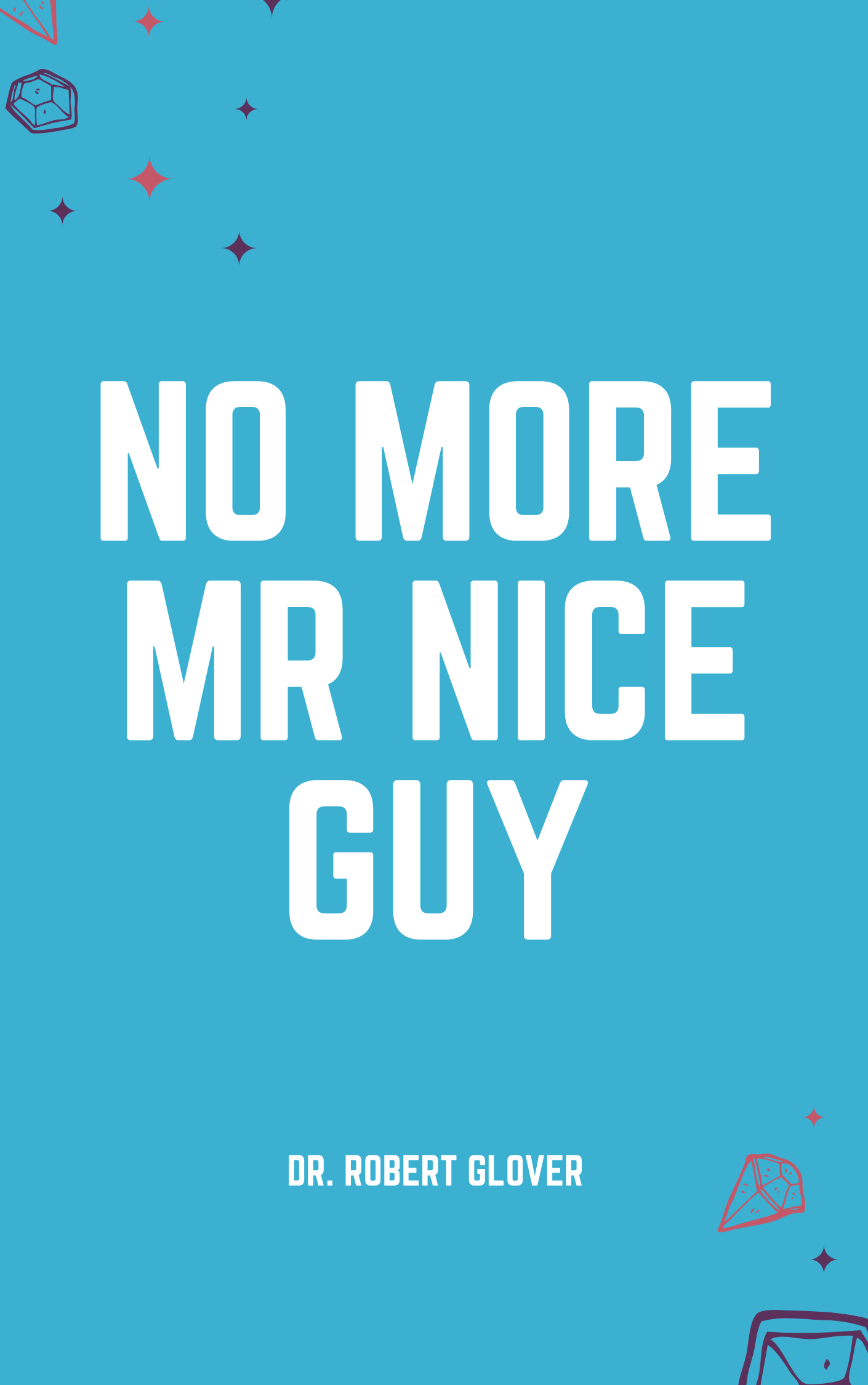
No More Mr. Nice Guy Book Summary
This No More Mr. Nice Guy Book Summary covers the key ideas, lessons, and takeaways in about 20 minutes.
Short Description:
No More Mr. Nice Guy teaches men to live authentically and embrace masculinity.
Helps with these goals
Want the complete 20-minute summary?
- Full structured summary
- Video Summary
- Podcast Summary
- Audio summary
- Key takeaways
- Exercises
- Quiz
- Highlights and notes
- Ask the book with AI
Want a Free Weekly Read?
Get a free summary every week straight to your mailbox.
Preview the No More Mr. Nice Guy book summary
Below is a preview of Sumizeit’s comprehensive human-written summary of No More Mr. Nice Guy by Dr. Robert Glover. The full summary is 15-20 minutes long and covers the book’s key ideas in text, audio, visual, and video formats. Unlock the full 20 Minute Summary
Understanding the Nice Guy Identity
In No More Mr. Nice Guy, Dr. Robert Glover explains that many men develop a behavioral pattern rooted in trying to be excessively good, agreeable, and self-sacrificing to earn approval and avoid rejection. These men—whom Glover labels Nice Guys—believe that if they always behave perfectly, never upset anyone, never show anger, and always put others first, they will be rewarded with appreciation, affection, success, love, sex, and a smooth, conflict-free life.
Rather than expressing their true feelings, opinions, boundaries, and needs, Nice Guys suppress them in favor of maintaining a polished and flawless persona. They see themselves as honest, patient, caring, supportive, and generous—but beneath the surface, they are often resentful, exhausted, angry, sexually frustrated, and profoundly lonely.
Nice Guys assume life follows a hidden, implied bargain:
“If I make everyone happy and never disappoint anyone, then they will take care of me and give me what I want.”
However, this unspoken agreement only exists in their minds. When others inevitably do not reciprocate, Nice Guys feel betrayed and victimized.
Examples include:
A boyfriend cleans the entire house, cooks dinner, and plans a romantic night hoping for gratitude and sex. When his partner simply says she’s tired, he becomes cold and distant, believing she is ungrateful—not recognizing he never expressed what he actually wanted.
A coworker constantly works overtime, covers shifts, and takes on tasks others avoid, expecting recognition or promotion. When someone else is promoted, he spirals into bitterness, telling people that his kindness is never recognized.
A man in a dating relationship never expresses preferences, goes along with everything his partner wants, and suppresses his opinions. Over time she loses attraction and respect, saying she feels like she is dating a child, not a partner.
Glover shows that Nice Guys aren’t really nice—they are indirect and manipulative, using compliance and caretaking to control how others see them and what others give them in return.
Where Nice Guy Syndrome Begins
According to Glover, Nice Guy patterns originate in childhood when boys internalize the belief that parts of themselves are unacceptable. These boys grow up in environments where they feel emotionally abandoned, criticized, or responsible for others’ feelings. They learn to hide emotions such as anger, sadness, fear, spontaneity, and sexuality because expressing them led to punishment, disapproval, or emotional withdrawal from caregivers.
Examples of early conditioning:
A boy’s father shames him for crying, calling it weak or embarrassing. He learns emotional expression equals danger.
A child raised by a single mother becomes her emotional partner, hearing details about her stress, loneliness, or romantic problems. He becomes responsible for fixing her emotions rather than experiencing his own.
A boy grows up with an angry, unpredictable father. He learns to stay quiet and compliant to avoid triggering conflict.
In a perfection-focused family, love is earned only through achievements such as perfect grades or sports performance. The boy learns that failure equals being unworthy.
A boy whose parents constantly fought learns that anger must…
Want the complete 20-minute summary?
- Full structured summary
- Video Summary
- Podcast Summary
- Audio summary
- Key takeaways
- Exercises
- Quiz
- Highlights and notes
- Ask the book with AI
Who should read No More Mr. Nice Guy?
No More Mr. Nice Guy is for men who habitually prioritize others' needs over their own, struggle with setting boundaries, or feel resentful despite being helpful and accommodating. It's also valuable for partners, therapists, and anyone seeking to understand why approval-seeking behavior undermines relationships and personal fulfillment.
Why does No More Mr. Nice Guy matter?
Nice Guy Syndrome creates a widespread pattern of emotional suppression, relationship dysfunction, and unfulfilled potential that affects millions of men today. Dr. Robert Glover's framework helps readers recognize how childhood conditioning leads to manipulative compliance masquerading as kindness, and offers a clear path to authenticity, confidence, and genuine connection.
What are the key themes in No More Mr. Nice Guy?
- Childhood conditioning and toxic shame
- The false bargain of approval-seeking
- Covert contracts and hidden resentment
- Authenticity versus performance in relationships
- Reclaiming healthy masculinity
- Vulnerability as strength, not weakness
- Setting boundaries without guilt
- Purpose over validation
Want the complete 20-minute summary?
- Full structured summary
- Video Summary
- Podcast Summary
- Audio summary
- Key takeaways
- Exercises
- Quiz
- Highlights and notes
- Ask the book with AI
How can you apply ideas from No More Mr. Nice Guy?
- Practice saying no without explanation, apology, or guilt—start with small requests to build the skill
- Identify and articulate your actual needs and desires in relationships, rather than hoping others will guess them
- Notice covert contracts you may have created and communicate expectations directly or release them entirely
- Set one clear boundary this week and enforce it consistently, even if it creates temporary discomfort
- Engage in an activity or pursue a goal purely for your own fulfillment, independent of others' approval
- Build or deepen a friendship with another man based on honesty and mutual support rather than surface-level interaction
- Express a feeling or opinion you've been suppressing in a safe relationship, prioritizing truth over harmony
What common mistakes do readers make with No More Mr. Nice Guy?
- Assuming that being nice will eventually lead to the approval, affection, or success you secretly crave
- Using caretaking and sacrifice as a substitute for honest communication about your needs and boundaries
- Avoiding conflict so thoroughly that you explode unexpectedly, damaging relationships you thought were stable
- Selecting romantic partners based on their problems or need for fixing rather than genuine compatibility and mutual growth
- Continuing to perform and please in relationships while expecting others to somehow know you're unhappy
Sumizeit Exercises Apply what you've learned
Turn ideas from No More Mr. Nice Guy into action with a short guided reflection: identify the biggest takeaway, connect it to your life, and commit to one step you can take in the next 24 hours.
What is the expert analysis of No More Mr. Nice Guy?
Overview
No More Mr. Nice Guy is a seminal work by Dr. Robert Glover, a marriage and family therapist specializing in men’s emotional and relational development. Published in 2003, this book has become a cornerstone in the discourse surrounding male identity, emotional health, and interpersonal dynamics. Glover’s articulation of “Nice Guy Syndrome” has resonated widely within men’s self-help communities and therapeutic settings, marking the book as a significant contribution to understanding the psychological underpinnings of certain maladaptive male behaviors.
Core Thesis
Dr. Glover’s central argument is that many men adopt a “Nice Guy” persona characterized by excessive people-pleasing, emotional suppression, and covert manipulation, all in an unconscious attempt to secure approval and avoid rejection. This behavioral pattern, rooted in childhood conditioning and toxic shame, leads to emotional dysfunction, fractured relationships, and a disconnection from authentic masculinity. The book posits that true fulfillment and healthy masculinity emerge when men reject approval-seeking behaviors and embrace authenticity, emotional honesty, responsibility, and assertiveness—becoming what Glover terms the “Integrated Man.”
Strengths
- Clarity and Accessibility: Glover distills complex psychological dynamics into a clear, relatable framework that resonates with a broad readership, particularly men struggling with identity and relational issues.
- Integration of Developmental Psychology: The book insightfully links early childhood experiences and family dynamics to adult behavioral patterns, providing a developmental lens that enriches understanding.
- Practical Framework for Change: The concept of the “Integrated Man” offers a constructive, actionable roadmap for personal transformation, emphasizing accountability, boundary-setting, and emotional expression.
- Illumination of Covert Manipulation: By exposing the hidden “covert contracts” Nice Guys use, Glover challenges readers to recognize unconscious control mechanisms disguised as kindness.
- Relevance to Contemporary Masculinity Debates: The book contributes meaningfully to ongoing discussions about masculinity, vulnerability, and emotional health, encouraging men to redefine strength beyond traditional stereotypes.
Critiques & Counterarguments
- Evidence Base and Generalizability: While compelling, Glover’s framework relies heavily on clinical observation and anecdotal evidence rather than large-scale empirical research, which may limit its generalizability across diverse populations and cultures.
- Potential Oversimplification: The binary framing of “Nice Guy” versus “Integrated Man” risks oversimplifying complex personality traits and relational dynamics, potentially neglecting nuances such as cultural norms, socioeconomic factors, and intersectional identities.
- Masculinity Constructs: Glover’s model assumes a somewhat traditional view of masculinity that may not fully accommodate non-binary, queer, or alternative masculine expressions, thus limiting inclusivity.
- Competing Psychological Models: Alternative frameworks, such as attachment theory or feminist critiques of masculinity, offer different interpretations of male behavior that emphasize systemic factors over individual pathology, challenging the book’s focus on personal responsibility alone.
- Risk of Pathologizing Kindness: The book’s critique of “niceness” as manipulative might inadvertently discourage genuine altruism and empathy, conflating strategic compliance with authentic kindness.
Who Should Read This
No More Mr. Nice Guy is ideally suited for men who find themselves trapped in cycles of people-pleasing, emotional suppression, and relational dissatisfaction, seeking a pathway toward greater authenticity and emotional health. It is also valuable for therapists, counselors, and coaches working with male clients on issues of identity, intimacy, and masculinity. Readers interested in the intersections of psychology, gender studies, and self-improvement will find Glover’s insights both provocative and practical, though they should approach the book with a critical eye toward its limitations and cultural context.
Frequently asked questions about the No More Mr. Nice Guy book summary
What is No More Mr. Nice Guy about?
No More Mr. Nice Guy by Dr. Robert Glover examines how men develop approval-seeking behavior rooted in childhood conditioning, and how this pattern leads to resentment, relationship dysfunction, and unfulfilled potential. The book provides a framework for recognizing Nice Guy Syndrome and outlines the path to becoming an Integrated Man who lives authentically, sets healthy boundaries, and builds genuine connections based on truth rather than performance.
Who should read No More Mr. Nice Guy?
No More Mr. Nice Guy is for men who struggle with setting boundaries, habitually prioritize others' needs, feel resentful despite being helpful, or sense that approval-seeking is limiting their lives. It's also valuable for partners trying to understand why their partner's people-pleasing creates distance, and for therapists or counselors working with men on emotional development and relationship issues.
What are the main takeaways from No More Mr. Nice Guy?
The core takeaways are that living for approval leads to resentment and unfulfilled potential, that Nice Guys use indirect manipulation rather than genuine kindness, and that true fulfillment comes from authenticity, honest communication, healthy boundaries, and pursuing personal purpose. An Integrated Man accepts himself fully, expresses needs directly, faces fear courageously, and builds relationships based on truth rather than performance or people-pleasing.
Where does Nice Guy Syndrome originate?
According to Dr. Glover, Nice Guy patterns begin in childhood when boys internalize the belief that parts of themselves—such as anger, sadness, sexuality, or spontaneity—are unacceptable. They learn to hide these aspects through parental criticism, emotional abandonment, or being made responsible for others' feelings, adopting survival strategies like perfectionism and invisibility that disconnect them from their authentic identity.
What are covert contracts and why do they damage relationships?
Covert contracts are unspoken agreements Nice Guys create in their minds—such as 'if I'm helpful and kind, I'll earn affection or success.' These contracts only exist in their thinking, so when others don't reciprocate as expected, Nice Guys feel betrayed and resentful. Because the expectations were never communicated directly, the other person is unaware of any bargain and innocent of the perceived betrayal.
How does being a Nice Guy affect sexual relationships?
Nice Guys often experience sexual dysfunction because they approach sex as performance rather than authentic connection, fear judgment of their desires, and use silence instead of honest communication about intimacy. They may expect sex as a reward for being kind without ever requesting it directly, or they may withdraw emotionally when their unspoken expectations aren't met, creating distance and resentment in the relationship.
What is an Integrated Man and how is he different from a Nice Guy?
An Integrated Man, as defined in No More Mr. Nice Guy, accepts himself fully, expresses needs openly, sets boundaries without guilt, faces fear rather than avoiding discomfort, and pursues meaningful purpose. Unlike Nice Guys who rely on approval and performance, Integrated Men make decisions authoritatively, take responsibility for their own happiness, build supportive male relationships, and connect authentically with others based on truth rather than people-pleasing.
Can a Nice Guy change, and what does transformation look like?
Yes, transformation is possible and begins with rejecting approval-seeking in favor of authenticity and responsibility. In practice, this looks like saying no without apology, telling the truth even when it risks conflict, asking directly for what you need, ending toxic relationships rather than hoping they'll improve, and pursuing goals and activities for personal fulfillment rather than external validation. Confidence grows not from fearlessness but from taking action despite discomfort.
About Sumizeit
Sumizeit is a profitable Scomy LLC company based in Miami, Florida. Our founders, Clemens Raemy and Weina Scott, are successful entrepreneurs with several exits. Sumizeit is a popular book summary app / micro learning app used by busy professionals and entrepreneurs with over 2,500 non-fiction book summaries and 10,000 podcast summaries in text, audio, visual, podcast, and video format. We also have stellar retention tools to make ideas stick - such as flashcards with spaced repetition, quizzes, streaks, highlighting and notes, daily challenges, riddles, mini-courses, meditation, and more. You won't only learn the idea, but also remember it. Over 90% of our users change their habits with Sumizeit.
Upgrade Now
Want the complete 20-minute summary?
- Full structured summary
- Video Summary
- Podcast Summary
- Audio summary
- Key takeaways
- Exercises
- Quiz
- Highlights and notes
- Ask the book with AI
Here's why readers love Sumizeit
Join thousands of learners getting smarter every day
"Great experience. Detailed summaries. Loved the gamification feature. Makes learning fun. Good customer service. I recommend Sumizeit to anyone. You'll learn a lot."
"I always felt busy but still wanting to keep up with the book discussion in my friend group. This was a great supplement to help me keep reading the books I find fun while keeping up with important books."
"I love this website. Instead of scrolling social media, I find myself learning a lot. I use it everyday. I recommend this app for anyone who is too busy and wants to get up to speed with their favorite books."
No More Mr. Nice Guy Book Summary PDF
Looking for a No More Mr. Nice Guy Book Summary PDF you can save and revisit offline? Our No More Mr. Nice Guy Book Summary PDF captures the book’s core ideas in a clean, printable format — the key frameworks, takeaways, and structure without the fluff. Download the No More Mr. Nice Guy Book Summary PDF when you want a reference you can annotate, share with your team, or review on the go. Get your No More Mr. Nice Guy Book Summary PDF from the download page below.
Download No More Mr. Nice Guy Book Summary PDFPeople also liked these summaries
Readers who explored No More Mr. Nice Guy often enjoyed these titles next.




Want the complete 20-minute summary?
- Full structured summary
- Video Summary
- Podcast Summary
- Audio summary
- Key takeaways
- Exercises
- Quiz
- Highlights and notes
- Ask the book with AI
Featured Book Titles
Popular Book Summaries at sumizeit, leading book summary app