


Prefer the print book? Buy on Amazon
As an Amazon Associate, Sumizeit earns from qualifying purchases.
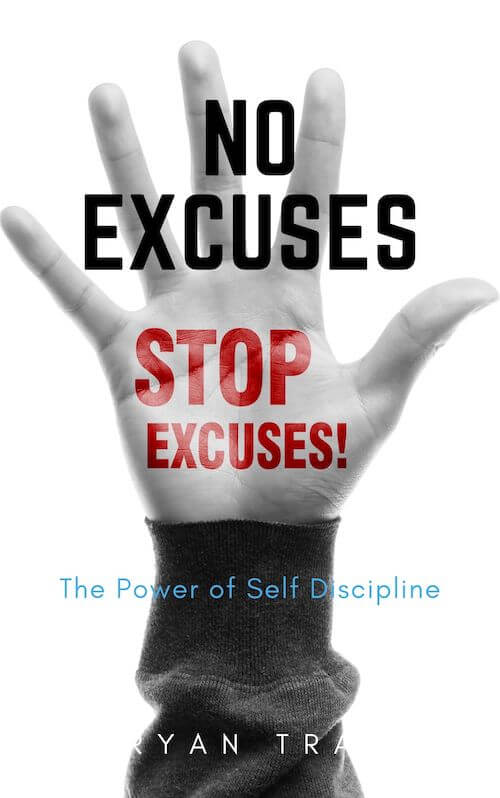
No Excuses Book Summary
This No Excuses Book Summary covers the key ideas, lessons, and takeaways in about 20 minutes.
Short Description:
Take control, set goals, and manage time for meaningful progress.
Helps with these goals
Preview the No Excuses book summary
Below is a preview of Sumizeit’s comprehensive human-written summary of No Excuses by Brian Tracey. The full summary is 15-20 minutes long and covers the book’s key ideas in text, audio, visual, and video formats. Unlock the full 20 Minute Summary
In this book, Brian Tracey asks us to rethink the role of excuses in our life; maybe they’re the only thing truly holding us back. He details ways to take control and make progress towards our goals in everything from relationships to money to physical fitness. Once you reject excuses, understand your goals, and start taking responsibility you’ll find a lot more room for progress.
Successful people know that excuses only hold you back.
Think of the most successful people in your life. Maybe they’ve accrued wealth and found happiness and renown. What are they doing with their days that’s different? How do they get around the obstacles in life that seem to keep us from thriving?
Tracey starts the book by arguing that it’s their self-discipline that sets them apart. These are the people who eat “dinner before dessert” and sacrifice short-term pleasures for long-term outcomes. By hunkering down and working hard on career and happiness goals, anyone can pull away from the pack in this way.
The excuses we make for why we aren’t successful are endless. Maybe we believe that our parents didn’t teach us the right things or that the economy is too difficult to navigate. In reality, most people face these problems, but some people manage to reach the goals they set for themselves despite everything.
The author explains that he too spent his younger life making excuses. When he was 21, he worked in construction, felt chronically lonely, lived in a tiny apartment, and barely made enough to pay his rent. One night, sitting alone in his apartment, he had a realization. He was the only person who could change his situation. This acknowledgment was the first step towards a new life.
Tracey started studying self-help books religiously. He learned that his unhappiness was coming from his tendency to blame everyone but himself for his circumstances. After accepting that he was responsible for his success, or lack thereof, he started to take control of his life.
Tracey writes that learning and practicing principles of self-discipline can help us become the kinds of people we dream of being. Disciplined people tend to have higher self-esteem since they can control their story and know they deserve everything that’s coming to them. It’s extremely empowering to have a sense that you can change any situation that’s non-ideal.
Tracey divides our goals into three categories: personal success; business, sales and finances; and personal life. He argues that these are the areas that you can transform through self-discipline.
Define precisely what success means to you and commit it on paper.
Before setting out on a journey of self-discipline, Tracey asks us to come up with clearly defined goals. Dream up an ideal life in the areas of work, family, health, and finance. Where do you see yourself? With who? What meaningful work are you performing? Be specific. For example, how much money do you want exactly?
Tracey writes that committing your goals on paper helps you understand where to…
Want the complete 20-minute summary?
- Full structured summary
- Video Summary
- Podcast Summary
- Audio summary
- Key takeaways
- Exercises
- Quiz
- Highlights and notes
- Ask the book with AI
Who should read No Excuses?
No Excuses is for anyone who feels held back by their circumstances and wants to take control of their life. Whether you're struggling with procrastination, fear of failure, or simply unclear about your direction, this book speaks to people ready to stop blaming external factors and start building the discipline to achieve their goals. It's ideal for those seeking practical guidance on success across multiple life areas—career, finances, health, and relationships.
Why does No Excuses matter?
In a world where it's easy to blame circumstances beyond our control, Brian Tracy's No Excuses offers a refreshing reminder that personal responsibility and self-discipline are the true drivers of success. The book tackles the mindset shifts necessary to move from feeling stuck to feeling empowered, making it relevant for anyone wanting to maximize their potential. By providing actionable frameworks rather than abstract theory, it bridges the gap between knowing what to do and actually doing it.
What are the key themes in No Excuses?
- Personal responsibility and eliminating excuses
- Self-discipline as the foundation of success
- Clear goal-setting and strategic planning
- Time management and task prioritization
- Continuous learning and skill development
- Financial discipline and delayed gratification
- Relationship building and emotional intelligence
- Overcoming fear and persistence through challenges
How can you apply ideas from No Excuses?
- Write down your specific goals in the areas of work, health, finance, and relationships with exact figures and realistic deadlines to create focus and accountability.
- Apply the ABCDE method to your daily task list to identify your three most important priorities and eliminate low-value activities that consume your time.
- Start your day 30 minutes earlier and dedicate this time to learning about your craft through books, audiobooks, or podcasts to build continuous skill development.
- Implement the One Percent savings formula by saving 1% of your next paycheck and gradually increasing the percentage as you adjust your spending habits.
- Schedule 30 minutes of daily exercise plus regular meals while eliminating processed foods and the 'three whites' (white flour, sugar, salt) to establish a sustainable health routine.
- Use the Disaster Report method to write down a fear holding you back, worst-case outcomes, and realistic solutions to reduce its emotional grip on your decisions.
- Block dedicated family time each week just as you would business meetings, and practice active listening with your partner by confirming understanding without interrupting.
- Identify and study three people who have achieved exactly what you want, research their biography or attend their workshops, and apply their specific strategies to your own journey.
What common mistakes do readers make with No Excuses?
- Blaming external circumstances (upbringing, economy, timing) instead of accepting personal responsibility for the results you're currently getting.
- Setting vague aspirational goals without writing down specific numbers, deadlines, or actionable steps, which makes it impossible to stay focused or measure progress.
- Spending time on urgent-seeming tasks that are actually low-impact while neglecting the 20% of activities that produce 80% of real results.
- Treating fear as a reason to avoid pursuing goals rather than using systematic problem-solving to confront worst-case scenarios and realize they're survivable.
Sumizeit Exercises Apply what you've learned
Turn ideas from No Excuses into action with a short guided reflection: identify the biggest takeaway, connect it to your life, and commit to one step you can take in the next 24 hours.
What is the expert analysis of No Excuses?
Overview
No Excuses is a self-discipline manifesto authored by Brian Tracy, a prolific motivational speaker and self-development writer known for his extensive contributions to business and personal success literature. With over 80 books to his name, Tracy has established himself as a prominent figure in the realm of goal achievement and productivity. This book distills his philosophy that personal accountability and rigorous self-discipline are the foundational pillars of success across all domains of life. Its significance lies in its comprehensive approach to transforming excuses into actionable strategies, appealing to readers seeking practical guidance on overcoming internal barriers to achievement.
Core Thesis
At the heart of No Excuses is the assertion that excuses are the primary impediments to living a fulfilled and successful life. Tracy argues that by adopting unwavering self-discipline, individuals can take full responsibility for their circumstances and systematically pursue their goals. The book posits that success is not contingent upon external factors such as upbringing or economic conditions but rather on the internal transformation of mindset and habits. Through goal clarity, time management, fear confrontation, skill development, and nurturing relationships, self-discipline becomes the catalyst for holistic personal and professional growth.
Strengths
- Comprehensive Framework: Tracy offers a well-structured roadmap that covers diverse life areas including career, finances, health, and relationships, making the guidance broadly applicable.
- Practical Tools and Techniques: The inclusion of actionable methods such as the ABCDE prioritization system, the Disaster Report for fear management, and the One Percent Formula for financial discipline provides readers with tangible steps to implement.
- Emphasis on Personal Responsibility: The book’s insistence on self-accountability resonates with readers seeking empowerment rather than external blame, fostering a mindset conducive to change.
- Integration of Psychological Insights: By addressing self-image, self-ideal, and self-esteem, Tracy connects behavioral change with deeper psychological constructs, enriching the self-discipline narrative.
- Accessible and Motivational Tone: The author’s use of relatable anecdotes and motivational affirmations helps engage readers and sustain their commitment to transformation.
Critiques & Counterarguments
- Oversimplification of Complex Issues: The book tends to reduce multifaceted social and psychological challenges to mere excuses, potentially overlooking systemic barriers such as socioeconomic constraints, mental health issues, or discrimination that cannot be overcome by discipline alone.
- Limited Empirical Evidence: While the strategies are practical, there is scant reference to rigorous scientific studies validating the efficacy of the prescribed methods, relying heavily on anecdotal and experiential claims.
- Potential for Self-Blame: The strong focus on individual responsibility might inadvertently foster guilt or shame in readers who struggle despite their efforts, neglecting the nuance of external factors influencing outcomes.
- Contrasting Psychological Perspectives: Contemporary psychology emphasizes the role of self-compassion and environmental modification alongside self-discipline; exclusive reliance on discipline may lead to burnout or reduced well-being.
- Real-World Variability: The assumption that all readers can uniformly apply these principles ignores cultural, economic, and personal differences that affect goal-setting and achievement strategies.
Who Should Read This
No Excuses is ideally suited for readers who are motivated to take charge of their lives but find themselves hindered by procrastination, fear, or lack of direction. It appeals to individuals seeking a structured, no-nonsense approach to personal development, particularly those interested in enhancing time management, cultivating perseverance, and building disciplined habits. Entrepreneurs, sales professionals, and anyone aspiring to elevate their performance across multiple life domains will find practical value. However, readers looking for nuanced psychological analysis or systemic critiques of success paradigms may need to supplement this book with other perspectives.
Frequently asked questions about the No Excuses book summary
What is No Excuses about?
No Excuses by Brian Tracy is a practical guide to taking full responsibility for your life and using self-discipline to achieve success across career, finances, health, and relationships. The core message is that excuses are the only thing truly holding you back, and by eliminating them and implementing proven strategies, anyone can transform their circumstances and build the life they want.
Who should read No Excuses?
No Excuses is ideal for anyone who feels stuck in their current situation and wants to take control of their life. It's particularly valuable for people struggling with procrastination, fear of failure, unclear goals, poor time management, or difficulty maintaining healthy habits. Whether you're an employee seeking advancement, a business owner wanting growth, or someone struggling across multiple life areas, this book provides actionable frameworks you can implement immediately.
What are the main takeaways from No Excuses?
The main takeaways from No Excuses are: stop making excuses and accept full responsibility for your life; define your goals clearly in writing with specific deadlines; prioritize ruthlessly using the ABCDE method to focus only on high-impact activities; invest continuously in your skills and personal excellence; build financial discipline through delayed gratification; maintain health through simple, consistent habits; and nurture relationships through dedicated time and genuine listening. Tracy emphasizes that self-discipline is the common trait of all successful people.
How does Brian Tracy suggest overcoming fear of failure?
Tracy recommends using the Disaster Report method: write down your specific fear clearly, describe the worst-case scenario in detail, develop realistic solutions to that worst-case outcome, and then brainstorm ways to prevent it from happening. By confronting what you're actually afraid of and realizing it's survivable, fear loses its power over your decisions. He also emphasizes that persistence and positive affirmations help you keep moving forward despite fear.
What is the ABCDE method for task management?
The ABCDE method involves categorizing your daily tasks by importance: A tasks are 'Must Do' items with major consequences if left incomplete; B tasks are 'Should Do' with lesser consequences; C tasks are 'Nice to Do' with no real consequences; D tasks should be delegated to others; and E tasks should be eliminated entirely. By focusing on A tasks first and eliminating distractions, you maximize productivity and ensure your time is spent on what truly matters.
How can I improve my relationships according to No Excuses?
Tracy emphasizes that strong relationships require making them a priority by setting aside dedicated time. The key practices include active listening without interrupting, treating others with courtesy and respect, practicing the three C's (courtesy, concern, consideration), and being willing to forgive past wrongs. For marriages, focus on understanding your partner's perspective; for children, provide unconditional love and be a role model; for friendships, treat people as you'd want to be treated.
What is the One Percent Formula for building wealth?
The One Percent Formula is a method for building financial discipline and savings by starting with saving just 1% of your income while living off the remaining 99%. Once this becomes comfortable, you increase savings to 2% and live off 98%, gradually training yourself to spend less and save more. Over time, this compounds into significant wealth while building the discipline needed to maintain financial control.
About Sumizeit
Sumizeit is a profitable Scomy LLC company based in Miami, Florida. Our founders, Clemens Raemy and Weina Scott, are successful entrepreneurs with several exits. Sumizeit is a popular book summary app / micro learning app used by busy professionals and entrepreneurs with over 2,500 non-fiction book summaries and 10,000 podcast summaries in text, audio, visual, podcast, and video format. We also have stellar retention tools to make ideas stick - such as flashcards with spaced repetition, quizzes, streaks, highlighting and notes, daily challenges, riddles, mini-courses, meditation, and more. You won't only learn the idea, but also remember it. Over 90% of our users change their habits with Sumizeit.
Upgrade Now
Here's why readers love Sumizeit
Join thousands of learners getting smarter every day
"Great experience. Detailed summaries. Loved the gamification feature. Makes learning fun. Good customer service. I recommend Sumizeit to anyone. You'll learn a lot."
"I always felt busy but still wanting to keep up with the book discussion in my friend group. This was a great supplement to help me keep reading the books I find fun while keeping up with important books."
"I love this website. Instead of scrolling social media, I find myself learning a lot. I use it everyday. I recommend this app for anyone who is too busy and wants to get up to speed with their favorite books."
No Excuses Book Summary PDF
Looking for a No Excuses Book Summary PDF you can save and revisit offline? Our No Excuses Book Summary PDF captures the book’s core ideas in a clean, printable format — the key frameworks, takeaways, and structure without the fluff. Download the No Excuses Book Summary PDF when you want a reference you can annotate, share with your team, or review on the go. Get your No Excuses Book Summary PDF from the download page below.
Download No Excuses Book Summary PDFPeople also liked these summaries
Readers who explored No Excuses often enjoyed these titles next.



Ready to read the whole thing?
- Full structured summary
- Video Summary
- Podcast Summary
- Audio summary
- Key takeaways
- Exercises
- Quiz
- Highlights and notes
- Ask the book with AI
Featured Book Titles
Popular Book Summaries at sumizeit, leading book summary app