


As an Amazon Associate, Sumizeit earns from qualifying purchases.
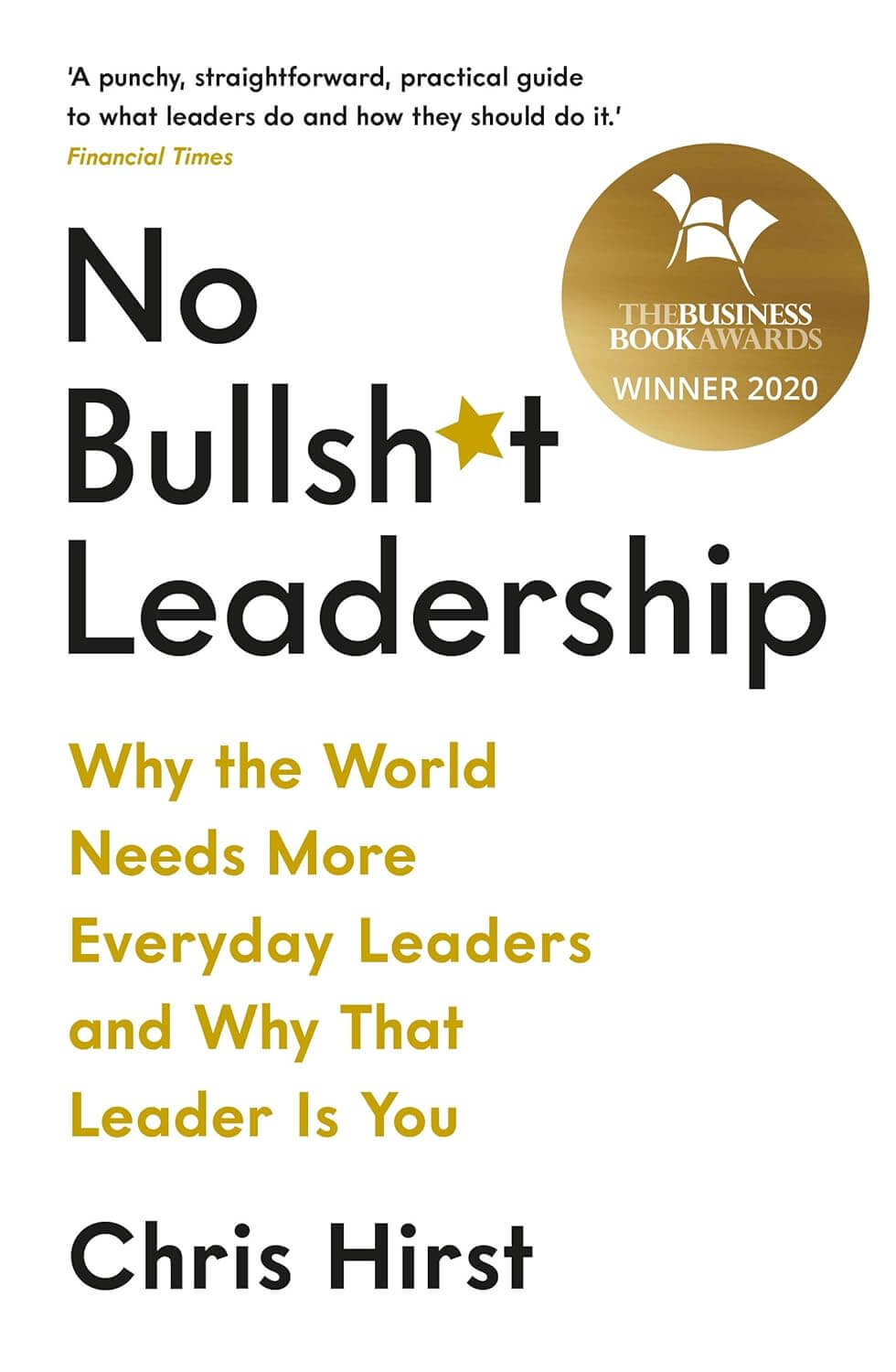
No Bullsh*t Leadership Book Summary
This No Bullsh*t Leadership Book Summary covers the key ideas, lessons, and takeaways in about 20 minutes.
Helps with these goals
Want the complete 20-minute summary?
- Full structured summary
- Video Summary
- Podcast Summary
- Audio summary
- Infographic
- Key takeaways
- Exercises
- Quiz
- Highlights and notes
- Ask the book with AI
What is in the No Bullsh*t Leadership book summary?
Below is a preview of Sumizeit’s expert-written summary of No Bullsh*t Leadership by Chris Hirst. The full summary covers the book’s key ideas in text, audio, and video.
Chris Hirst opens with a blunt premise: leadership isn’t exclusive to corporate titans, decorated generals, celebrity founders, or people with lofty job titles etched onto their business cards. Anyone who influences others, anyone who has people turning to them for direction, protection, or coordination — is a leader. It might be someone responsible for a classroom of children, or a kitchen supervisor with three assistants, or a volunteer organizer coordinating weekend events. Leadership appears in places where problems must be solved and progress must be made.
This framing dismantles the narrative that only a certain “type” of person deserves the title of leader. We often imagine leaders as loud, confident, extroverted, naturally persuasive — but Hirst argues that this is a myth that has excluded millions of capable people from recognizing their own leadership potential. Many people lead without realizing it — they carry responsibility, people depend on them, decisions fall on their shoulders — yet they hesitate to call themselves leaders because they don’t fit the cinematic stereotype. Hirst challenges readers to step into that identity without waiting for permission.
More importantly, he insists leadership is learnable. It is not a genetic gift or personality trait. It is less like eye color and more like fitness — developed through repetition, discomfort, feedback, and real-world practice. Leadership can be messy, chaotic, human — built through mistakes, reflection, and course correction. Thinking of leadership as a skill liberates people: if you can learn it, you can improve at it. Anyone can become a better leader through deliberate effort.
Leadership is fundamentally about responsibility combined with authority. If you have responsibility without authority, you are tasked with outcomes you cannot control — stressful and ineffective. If you have authority without responsibility, you are simply a figurehead. True leadership requires both — and accepting that dual weight is what separates passive participants from active leaders.
Knowing the Starting Point and the Destination
Great leadership does not require grand philosophical manifestos or poetic mission statements crafted by committees. Hirst argues that leadership boils down to movement — taking a team from the current state to a better state. Progress, not perfection. The leader must know two things with clarity: where we are now and where we should go next. These two points — present location and desired destination — form the essence of direction.
The first part requires brutal honesty. Teams often overestimate their performance, exaggerate strengths, or downplay weaknesses. Leaders must look reality in the eye, even if what they see is uncomfortable. This can mean reviewing data without ego, listening to employees candidly instead of defensively, collecting feedback without seeking validation, and welcoming difficult truths about lagging performance or cultural dysfunction. Examining the present is not about blame — it’s about clarity.
The second part — defining the destination — must be simple enough for everyone to remember. Not a 20-page corporate vision booklet, not a jargon-laden slogan filled with buzzwords. Simplicity is power.
Want the complete 20-minute summary?
- Full structured summary
- Video Summary
- Podcast Summary
- Audio summary
- Infographic
- Key takeaways
- Exercises
- Quiz
- Highlights and notes
- Ask the book with AI
Who should read No Bullsh*t Leadership?
No Bullsh*t Leadership is for anyone who influences others or carries responsibility—whether you're a manager, team lead, volunteer coordinator, or emerging professional wondering if you're "leader material." If you've hesitated to call yourself a leader because you don't fit the stereotypical charismatic mold, this book directly challenges that myth. Hirst argues that leadership isn't reserved for corporate executives or naturally gifted speakers; it's a learnable skill accessible to anyone willing to accept responsibility and take action.
Why does No Bullsh*t Leadership matter?
In today's fast-paced, competitive environment, organizations succeed through execution and culture, not perfect strategy or charisma. No Bullsh*t Leadership cuts through corporate jargon and abstract theory to offer practical, actionable guidance grounded in real-world results. As leaders face burnout, talent retention challenges, and the need for rapid decision-making, this book provides a clear framework for building high-performing teams, empowering people at every level, and creating cultures that competitors cannot replicate. It matters because leadership skills have never been more critical—and Hirst proves they're within reach for everyone.
What are the key themes in No Bullsh*t Leadership?
- Leadership is learnable, not innate
- Direction requires knowing current reality and desired destination
- Execution beats perfect planning
- Fast, decisive decision-making creates momentum
- Culture is your competitive advantage
- Decentralized decision-making drives organizational speed
- People are the only asset that truly matters
- Leaders must manage their own energy and resilience
What are the key lessons from the No Bullsh*t Leadership book summary?
Leadership is available to anyone
Leadership isn't exclusive to those with impressive titles or natural charisma. Anyone who influences others, solves problems, or carries responsibility is already leading and can develop this skill through deliberate practice and real-world experience.
Leadership requires both responsibility and authority
True leadership demands the dual weight of being accountable for outcomes while having the authority to make decisions and allocate resources. Without both, you're either a stressed worker with no control or a powerless figurehead.
Know your starting point with brutal honesty
Leadership begins with clear-eyed assessment of present reality—reviewing data without ego, listening to candid feedback, and acknowledging uncomfortable truths about performance and culture. This isn't about blame; it's about clarity.
Define destinations with simplicity and ambition
Effective goals are simple enough for everyone to remember and bold enough to stretch the organization. Avoid jargon-filled manifestos; instead, craft crisp objectives that make 'winning' obvious and force teams to reimagine what's possible.
Execution is the only currency that matters
Strategic brilliance means nothing without action. An average strategy executed well consistently beats a genius strategy executed poorly. Leadership impact is determined by what gets implemented, not what gets discussed.
Act decisively in the 40-70% information zone
Perfect certainty is impossible. Leaders should decide when they have enough information to act responsibly—roughly between 40% and 70% certainty. Below 40% is guesswork; above 70% is paralysis that costs momentum.
Indecision is more costly than imperfect decisions
Not choosing stalls momentum and erodes team confidence. Even imperfect decisions create direction, set boundaries, and give people something to execute. Mistakes can be corrected; inaction cannot.
Culture is strategy that competitors cannot copy
While strategies, products, and processes can be replicated, culture—how people actually behave daily—becomes a self-reinforcing competitive advantage that's nearly impossible to duplicate. Real culture is lived behavior, not posters or slogans.
Changing culture requires breaking the old cement
Surface-level perks and motivational emails don't shift culture. Transformation demands visible, symbolic action—restructuring teams, eliminating toxic behaviors, redesigning spaces, and sometimes letting go of people who block progress.
Ask 'What do you recommend?' to build decision ownership
When someone brings a problem, respond by asking what they recommend rather than solving it yourself. This simple question shifts responsibility back to the individual, cultivates critical thinking, and reduces organizational dependency on leadership.
Eliminate bottlenecks by pushing decisions down
Organizations become sluggish when every decision climbs to the top. Empowered teams learn faster, adapt locally, and build ownership. Speed comes from reducing friction between decisions and execution at appropriate levels.
Remove 'Caesars' who hoard power and suppress ideas
Individuals who discourage initiative, suppress ideas, or hoard authority create fear and stagnation. Building high-performance requires eliminating these obstacles and fostering a culture where people feel safe to test ideas, experiment, and fail.
Hiring for potential matters more than credentials
Focus on finding people with drive, curiosity, coachability, and potential rather than just experience and credentials. A small team of high performers aligned around culture outperforms a large team of mediocre ones.
Retention depends on growth, not comfort
People stay where they feel challenged, supported, and developed. The critical question is whether people are better off because they worked under you. Recognition, autonomy, honest feedback, and mentorship create loyalty naturally.
Leaders must manage their own energy as a resource
Leadership is emotionally taxing. Protecting sleep, scheduling rest, maintaining physical and mental health, and setting boundaries around work aren't indulgences—they're duties. Burnt-out leaders create burnt-out teams.
Emotional discipline separates strength from impulsivity
Leaders must know their triggers, limitations, and stress patterns, then practice responding intentionally rather than reacting impulsively. This requires both the confidence to move forward and the humility to admit uncertainty.
Resilience is non-negotiable for sustained leadership
Progress is uneven; setbacks are inevitable. A leader's steadiness during chaos shapes how the team endures it. The ability to recover after failures and maintain composure signals strength to the entire organization.
Diagnose struggling organizations with brutal honesty
No organization is beyond recovery. Start by observing behaviors, listening deeply, and collecting data about how people actually communicate and behave when leaders aren't watching. Reality often differs from what metrics alone reveal.
Build momentum through early wins with a committed core
Assemble a 'first five'—committed individuals who believe change is possible and become the spark for transformation. Early visible wins demonstrating improvement fuel momentum and prove turnaround is real, not theoretical.
Transparency transforms teams through trust and discretionary effort
Honest communication about challenges, admission of mistakes, and inviting feedback builds the trust that fuels commitment. When people believe, they give discretionary effort—the extra push that drives real change.
Want the complete 20-minute summary?
- Full structured summary
- Video Summary
- Podcast Summary
- Audio summary
- Infographic
- Key takeaways
- Exercises
- Quiz
- Highlights and notes
- Ask the book with AI
How can you apply ideas from No Bullsh*t Leadership?
- Conduct a brutal honesty audit of your team's current state by gathering anonymous feedback and reviewing objective performance data without defensiveness
- Craft a simple, memorable goal statement that anyone on your team can recite and use to guide daily decisions
- Implement a 'What do you recommend?' response when team members bring you problems, building decision ownership throughout your organization
- Schedule a visible, symbolic action that signals culture change—whether restructuring, removing a toxic process, or making a high-profile decision that demonstrates new standards
- Establish a personal energy management routine including sleep, exercise, and work boundaries, then model this behavior openly to normalize sustainable working practices
- Create a 'first five' coalition of committed people to help diagnose and drive turnaround in a struggling team or organization
- Push decision-making authority downward by defining clear decision rights and empowering teams to act within their scope without constant approval
- Conduct stay interviews with high performers to understand what makes them thrive, then systematically remove obstacles to growth and development
What common mistakes do readers make with No Bullsh*t Leadership?
- Assuming leadership requires a specific personality type or natural charisma, causing capable people to dismiss their own leadership potential before ever trying
- Spending excessive time perfecting strategy while neglecting execution—mistaking thinking for progress and planning for results
- Waiting for perfect information and certainty before making decisions, creating paralysis that costs momentum and allows competitors to move faster
- Treating culture as a side project managed through perks and posters rather than through visible actions, symbolic changes, and consistent modeling of expected behavior
- Making every decision yourself instead of pushing decision-making authority downward, creating organizational bottlenecks and preventing teams from building ownership and learning
- Overlooking personal energy management and burnout, not realizing that exhausted leaders inadvertently teach teams that overwork is the path to loyalty
Sumizeit Exercises Apply what you've learned
Turn ideas from No Bullsh*t Leadership into action with a short guided reflection: identify the biggest takeaway, connect it to your life, and commit to one step you can take in the next 24 hours.
What is the expert analysis of No Bullsh*t Leadership?
Overview
No Bullsh*t Leadership is authored by Chris Hirst, a seasoned business leader with extensive experience in transforming underperforming organizations into dynamic, high-achieving teams. Hirst’s practical approach to leadership demystifies the role, stripping away the clichés and elitist notions often associated with leadership. Instead, he presents leadership as an accessible, learnable skill relevant to anyone who influences others, regardless of formal title or organizational hierarchy. This democratization of leadership challenges traditional paradigms and offers a fresh, grounded perspective that resonates across business, education, and volunteer sectors alike.
Core Thesis
At its core, Hirst’s argument is that leadership is fundamentally about responsibility paired with authority, and it is a skill that can be cultivated through deliberate practice rather than an innate trait reserved for a select few. He asserts that effective leadership is less about charisma or theoretical frameworks and more about clear, decisive action that moves teams from their current state to a better future. Leadership requires brutal honesty about reality, simplicity in vision, rapid decision-making, and a culture that empowers individuals to take ownership. Ultimately, leadership is a pragmatic discipline centered on execution, resilience, and continuous learning.
Strengths
- Practical Accessibility: Hirst’s insistence that anyone can lead removes psychological barriers and expands the leadership conversation beyond traditional archetypes, which is empowering for a broad audience.
- Emphasis on Execution: The book’s focus on action over endless planning addresses a common organizational malaise, providing a refreshing call to prioritize tangible progress.
- Clear, Concise Frameworks: By distilling leadership into essential components—direction, decisiveness, culture, talent development, and self-leadership—Hirst offers readers actionable guidance without unnecessary jargon.
- Culture as Competitive Advantage: The nuanced treatment of culture as lived behavior rather than corporate slogans highlights a critical but often overlooked lever for organizational success.
- Balance of Strength and Humility: The integration of resilience, self-awareness, and vulnerability presents leadership as a deeply human endeavor, enhancing its authenticity.
Critiques & Counterarguments
- Potential Oversimplification: While clarity and simplicity are strengths, the reduction of leadership to a few core principles may understate the complexity and contextual nuances that leaders face in diverse environments.
- Limited Engagement with Structural Factors: The book focuses heavily on individual agency but pays less attention to systemic barriers—such as organizational politics, power dynamics, and socio-economic constraints—that can impede leadership effectiveness regardless of personal skill.
- Execution Bias: The privileging of action over reflection or strategic deliberation risks undervaluing the importance of thoughtful planning, especially in highly complex or volatile contexts where premature action can exacerbate problems.
- Competing Research on Decision-Making: Hirst’s advocacy for decisiveness within a 40%-70% information threshold aligns with some leadership theories but contrasts with research emphasizing adaptive decision-making models that incorporate iterative learning and stakeholder engagement to reduce risk.
- Culture Change Challenges: The metaphor of culture as “cement” that must be broken is compelling but may underestimate the deep-rooted emotional and identity-related resistance that can make cultural transformation protracted and fraught.
Who Should Read This
No Bullsh*t Leadership is ideally suited for emerging leaders, mid-level managers, and anyone who finds themselves in positions of informal influence seeking a no-nonsense, actionable guide to leadership. It is particularly valuable for those frustrated by traditional leadership literature that is either overly theoretical or inaccessible. Additionally, entrepreneurs, team leads in creative or fast-moving environments, and individuals responsible for culture and talent development will find Hirst’s frameworks practical and immediately applicable. Readers looking for inspiration grounded in real-world pragmatism rather than charisma or abstract philosophy will appreciate this book’s directness and clarity.
Frequently asked questions about the No Bullsh*t Leadership book summary
What is No Bullsh*t Leadership about?
No Bullsh*t Leadership by Chris Hirst is a practical guide that strips away corporate jargon to reveal the core of effective leadership: clear direction, decisive action, empowered teams, and strong culture. Hirst argues that leadership isn't about charisma or perfection—it's a learnable skill available to anyone willing to accept responsibility and move people forward through clarity, execution, and courage.
Who should read No Bullsh*t Leadership?
This book is for anyone who influences others or carries responsibility—managers, team leads, volunteer coordinators, emerging professionals, and people who've hesitated to call themselves leaders because they don't fit stereotypical images. Hirst specifically targets those who want practical, actionable guidance rather than abstract theory, and anyone struggling to build high-performing teams or drive organizational change.
What are the main takeaways from No Bullsh*t Leadership?
The main takeaways include: leadership is learnable and available to everyone, effective direction requires knowing both present reality and desired destination, execution always beats perfect planning, fast decisions create momentum, culture is your competitive advantage, pushing decisions downward builds organizational speed, people development drives retention, and leaders must manage their own energy and resilience. Leadership ultimately comes down to accepting responsibility, pursuing progress relentlessly, and empowering others.
How does Chris Hirst define leadership?
Hirst defines leadership as the combination of responsibility and authority—the ability to influence others and drive progress while having the power to make decisions and allocate resources. He argues leadership appears wherever problems must be solved and progress made, regardless of job title. Anyone who carries responsibility and helps others move toward a better state is already leading.
What is the 40-70% rule mentioned in No Bullsh*t Leadership?
The 40-70% rule suggests leaders should make decisions when they have sufficient information to act responsibly—roughly between 40% and 70% certainty. Below 40% is uninformed guesswork; above 70% represents paralysis that costs precious momentum. This principle helps leaders avoid both recklessness and the perfectionism that delays action.
How can leaders improve organizational culture according to Hirst?
Hirst argues that real culture change requires dramatic action, not perks or motivational emails. Leaders must take visible, symbolic actions that signal the old ways are over—restructuring teams, eliminating toxic behaviors, redesigning spaces, and sometimes removing people who block progress. Culture change is uncomfortable and disruptive but necessary to accelerate progress and align behavior with new expectations.
What does Hirst say about making hiring decisions?
Hirst emphasizes hiring for potential, drive, curiosity, and coachability rather than just credentials and experience. He argues that a small team of high performers with strong culture outperforms a large team of mediocre ones. Great organizations become magnets where people want to join because the environment enables career growth and development.
How does No Bullsh*t Leadership address personal leadership challenges like burnout?
Hirst argues that leaders must manage their energy as a critical resource by protecting sleep, scheduling rest, maintaining health, and setting boundaries. He stresses this isn't indulgence but duty—burnt-out leaders create burnt-out teams. Leaders must also develop emotional discipline and resilience to respond intentionally during chaos and recover from inevitable setbacks.
About Sumizeit
Sumizeit is a profitable Scomy LLC company based in Miami, Florida. It has been helping readers learn from nonfiction books for 7 years with expert-written summaries in text, audio, podcast, and video.
Want the complete 20-minute summary?
- Full structured summary
- Video Summary
- Podcast Summary
- Audio summary
- Infographic
- Key takeaways
- Exercises
- Quiz
- Highlights and notes
- Ask the book with AI
Here's why readers love Sumizeit
Join thousands of learners getting smarter every day
"Great experience. Detailed summaries. Loved the gamification feature. Makes learning fun. Good customer service. I recommend Sumizeit to anyone. You'll learn a lot."
"I always felt busy but still wanting to keep up with the book discussion in my friend group. This was a great supplement to help me keep reading the books I find fun while keeping up with important books."
"I love this website. Instead of scrolling social media, I find myself learning a lot. I use it everyday. I recommend this app for anyone who is too busy and wants to get up to speed with their favorite books."
No Bullsh*t Leadership Book Summary PDF
Looking for a No Bullsh*t Leadership Book Summary PDF you can save and revisit offline? Our No Bullsh*t Leadership Book Summary PDF captures the book’s core ideas in a clean, printable format — the key frameworks, takeaways, and structure without the fluff. Download the No Bullsh*t Leadership Book Summary PDF when you want a reference you can annotate, share with your team, or review on the go. Get your No Bullsh*t Leadership Book Summary PDF from the download page below.
Download No Bullsh*t Leadership Book Summary PDFPeople also liked these summaries
Readers who explored No Bullsh*t Leadership often enjoyed these titles next.

Want the complete 20-minute summary?
- Full structured summary
- Video Summary
- Podcast Summary
- Audio summary
- Infographic
- Key takeaways
- Exercises
- Quiz
- Highlights and notes
- Ask the book with AI
Featured Book Titles
Popular Book Summaries at sumizeit, leading book summary app
