


Prefer the print book? Buy on Amazon
As an Amazon Associate, Sumizeit earns from qualifying purchases.
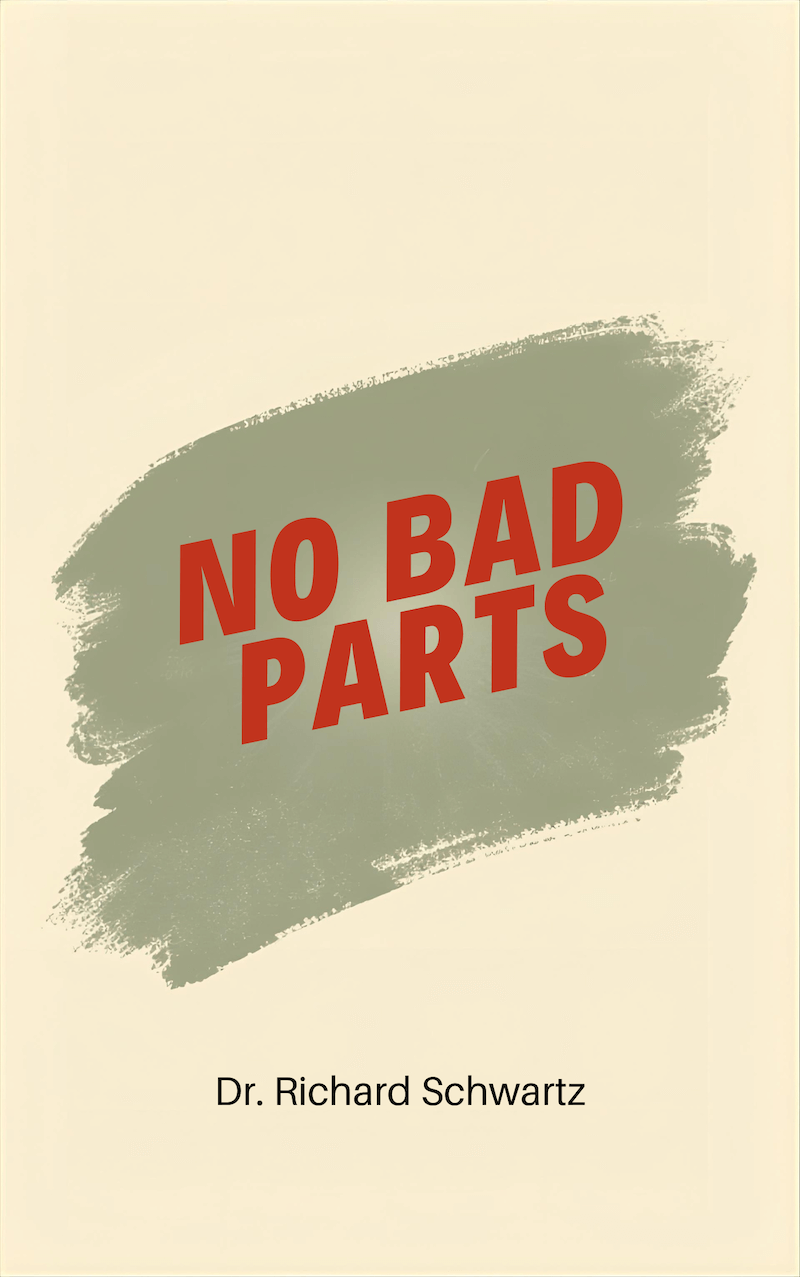
No Bad Parts Book Summary
This No Bad Parts Book Summary covers the key ideas, lessons, and takeaways in about 20 minutes.
Short Description:
A clear, compassionate guide to healing inner wounds using the Internal Family Systems model.
When people learn to access their Self and lead their inner world with compassion, lasting change becomes possible. Instead of battling emotions, they build relationships with them. Instead of suppressing pain, they help it transform. This shift—from inner war to inner cooperation—creates not only emotional relief, but a deeper sense of wholeness and peace.
Helps with these goals
Preview the No Bad Parts book summary
Below is a preview of Sumizeit’s comprehensive human-written summary of No Bad Parts by Dr. Richard Schwartz. The full summary is 15-20 minutes long and covers the book’s key ideas in text, audio, visual, and video formats. Unlock the full 20 Minute Summary
For a long time, most people have believed that the mind works as a single unit. According to this view, thoughts, emotions, reactions, fears, and desires all come from one central “me.” When we feel angry, ashamed, jealous, or scared, we often think, This is who I am.
In No Bad Parts, Dr. Richard Schwartz invites readers to question this assumption entirely. Instead of viewing the mind as one unified voice, he proposes that the human psyche is made up of many inner voices, perspectives, and emotional roles. These inner experiences are not signs of weakness or mental illness. They are natural, universal, and deeply human.
Schwartz’s central message is both radical and comforting: there are no bad parts inside us. Even the behaviors we hate most—self-sabotage, addiction, rage, avoidance, or emotional shutdown—exist for protective reasons. They developed to help us survive.
By learning how these inner parts function and how to lead them with compassion, people can heal old emotional wounds, reduce inner conflict, and live with greater calm and clarity.
Why We Feel So Internally Divided
Most people experience internal contradictions every day.
You may want to speak up in a meeting but feel frozen.
You may promise yourself you’ll eat healthier, then binge later that night.
You may crave closeness but pull away the moment intimacy appears.
These experiences often feel confusing and frustrating. People ask themselves:
“Why do I keep doing this?”
“What’s wrong with me?”
“Why can’t I just change?”
According to Schwartz, these struggles are not failures of willpower. They are the result of internal conflict between different parts of the psyche, each trying to protect you in its own way.
One part wants growth.
Another wants safety.
One seeks connection.
Another fears rejection.
When these parts clash, the result is anxiety, shame, self-criticism, and emotional exhaustion.
Instead of trying to silence these inner voices, IFS teaches people to listen to them.
The Idea That Changed Everything: Inner Multiplicity
At the foundation of Internal Family Systems (IFS) is the idea of multiplicity.
Multiplicity means that the mind is not singular—it is made up of many internal parts, much like a family system. These parts have different ages, emotions, memories, fears, and beliefs. They interact with one another constantly.
This does not mean someone is “broken” or has a disorder. In fact, Schwartz argues that having parts is normal and universal.
You can see multiplicity in everyday language:
“Part of me wants to quit, but part of me wants to try again.”
“A part of me knows this is unhealthy.”
“Something inside me won’t let go.”
These are not metaphors. According to IFS, they are real internal experiences with distinct perspectives.
Problems arise not because we have parts—but because some parts become stuck in extreme roles due to painful experiences.
Why the One-Mind Model Can Cause Harm
Traditional psychology often treats unwanted thoughts or emotions as problems to eliminate.
Want the complete 20-minute summary?
- Full structured summary
- Video Summary
- Podcast Summary
- Audio summary
- Key takeaways
- Exercises
- Quiz
- Highlights and notes
- Ask the book with AI
Who should read No Bad Parts?
No Bad Parts is for anyone struggling with internal conflict, self-sabotage, or harsh self-criticism who wants to understand why they act against their own interests. It's especially valuable for people in therapy, those recovering from trauma, and individuals seeking a compassionate alternative to the idea that parts of themselves are fundamentally broken or bad.
Why does No Bad Parts matter?
In a world that often tells us to suppress difficult emotions and eliminate our flaws, No Bad Parts offers a revolutionary reframe: every part of you exists for a reason, and healing comes through understanding rather than elimination. This perspective is transformative because it replaces shame-based self-judgment with curiosity and compassion, making lasting personal change actually possible instead of just another source of self-blame.
What are the key themes in No Bad Parts?
- The mind is made up of multiple parts, not a single unified voice
- All inner parts, even destructive ones, developed to protect you
- Suppression and judgment of parts creates internal suffering
- The Self is an innate leadership capacity that can guide all parts with compassion
- Healing through compassionate dialogue, not through force or elimination
- Integration allows transformed parts to contribute their strengths positively
How can you apply ideas from No Bad Parts?
- Notice when you say "I am" and catch yourself saying "a part of me feels" instead to create unblending and access more inner space
- Visualize or imagine your critical inner voice as a separate character and ask it what threat it's trying to protect you from rather than trying to silence it
- When triggered emotionally, pause and ask "Which part of me just activated?" to identify the protective or vulnerable part at work
- Practice thanking protective parts for their efforts before asking them to step back, building trust that allows access to deeper work
- Use imagery and symbolic rituals to help vulnerable parts release old burdens and transform into their positive forms
- Create a dialogue between your Self and protective parts to reassure them that you have new tools and the environment is safer than when they formed
- Develop awareness of physical sensations to notice when parts take over, then gently invite them to give you some space
What common mistakes do readers make with No Bad Parts?
- Trying to force parts away or eliminate them rather than understanding their protective intent—this increases internal conflict and resistance
- Treating all intense emotions as problems to suppress rather than recognizing them as signals from parts trying to communicate something important
- Assuming that Self-led healing means parts disappear or that you become emotionally flat—in reality, integration allows parts to relax and contribute constructively
- Attempting deep IFS work without professional guidance when trauma is present, risking retraumatization instead of regulated healing
Sumizeit Exercises Apply what you've learned
Turn ideas from No Bad Parts into action with a short guided reflection: identify the biggest takeaway, connect it to your life, and commit to one step you can take in the next 24 hours.
What is the expert analysis of No Bad Parts?
Overview
No Bad Parts is a seminal work by Dr. Richard Schwartz, the originator of Internal Family Systems (IFS) therapy. Schwartz’s contribution to psychology and trauma treatment has been transformative, challenging conventional single-mind paradigms by introducing a nuanced model of the psyche as a multiplicity of interacting parts. His extensive academic and clinical background, including affiliations with prestigious institutions such as Harvard Medical School, lends significant credibility to his approach. This book is significant because it reframes internal conflict and emotional suffering not as pathology but as natural protective mechanisms within a complex internal family system, thereby offering a compassionate, integrative path toward healing.
Core Thesis
At the heart of No Bad Parts lies the radical assertion that the human mind is not a monolithic entity but a constellation of distinct parts, each with its own emotions, memories, and intentions. Schwartz argues that no internal part is inherently bad; even those manifesting as self-destructive behaviors or painful emotions serve protective roles developed to shield the individual from trauma or emotional pain. Healing, therefore, is not about eliminating these parts but about cultivating the leadership of the Self—a core, compassionate presence capable of harmonizing and guiding these parts toward integration and balance. This shift from suppression and judgment to curiosity and acceptance fundamentally changes how individuals relate to themselves and their inner experiences.
Strengths
- Innovative Framework: Schwartz’s Internal Family Systems model offers a groundbreaking alternative to traditional psychological models by validating multiplicity within the psyche and emphasizing internal cooperation over conflict.
- Compassion-Centered Approach: The book excels in fostering self-compassion, reframing negative internal experiences as protective rather than pathological, which can reduce shame and self-criticism.
- Practical Therapeutic Tools: The detailed explanation of concepts such as “blending,” “unblending,” and “Self-leadership” provides accessible strategies for readers and clinicians to engage with internal parts constructively.
- Holistic Integration: Schwartz’s emphasis on integration rather than elimination of parts aligns with contemporary trauma-informed care and advances a more humane and sustainable model of psychological healing.
- Broader Social Implications: The book insightfully connects inner healing with social empathy and community health, suggesting that personal transformation can ripple outward to reduce societal polarization and enhance relational dynamics.
Critiques & Counterarguments
- Limited Empirical Validation: While IFS has growing clinical support, some critics highlight the relative paucity of rigorous, long-term randomized controlled trials validating its efficacy compared to more established therapies like CBT or EMDR.
- Risk of Overgeneralization: The universal application of the multiplicity model may oversimplify complex psychiatric conditions where biological factors or neurochemical imbalances play a critical role, potentially underemphasizing the need for medical interventions.
- Recovered Memory Controversies: The approach’s openness to accessing deep emotional material can raise concerns about suggestibility and the reliability of recovered memories, a contentious issue in trauma therapy literature.
- Philosophical Challenges: The notion of a singular “Self” as a natural leader within the psyche may conflict with postmodern or non-self theories in psychology and Eastern philosophies that question the existence of a stable, unified self.
- Therapist Dependency: Given the complexity and depth of IFS work, the model’s effectiveness heavily depends on skilled facilitation, which may limit its accessibility or lead to misapplication in less experienced hands.
Who Should Read This
No Bad Parts is essential reading for mental health professionals, therapists, and counselors seeking a compassionate and integrative framework for trauma and internal conflict. It also offers profound insights for individuals interested in self-improvement, emotional healing, and understanding the multiplicity of the mind beyond conventional self-help paradigms. Philosophers and scholars of psychology will find Schwartz’s synthesis of family systems theory and intrapsychic multiplicity intellectually stimulating. Finally, those who have struggled with self-criticism, shame, or self-destructive behaviors may discover an empowering and hopeful perspective that fosters deep internal harmony and resilience.
Frequently asked questions about the No Bad Parts book summary
What is No Bad Parts about?
No Bad Parts by Dr. Richard Schwartz introduces Internal Family Systems (IFS) therapy, which proposes that the human mind is made up of multiple inner parts rather than a single unified voice. The book's core message is that all parts—even those behind self-sabotage, addiction, rage, and avoidance—exist for protective reasons and deserve compassion rather than judgment. Healing happens not by eliminating these parts but by understanding their protective intentions and allowing your innate Self to lead them with wisdom and care.
Who should read No Bad Parts?
No Bad Parts is for anyone struggling with internal conflict, self-sabotage, harsh self-judgment, or behaviors they can't seem to control despite wanting to change. It's especially valuable for people in therapy, trauma survivors, and those seeking to understand why they feel divided against themselves. The book appeals to anyone who has tried willpower-based change and failed, as it offers a fundamentally different framework based on compassion rather than self-criticism.
What are the main takeaways from No Bad Parts?
The main takeaways are: (1) Your mind contains multiple parts, each with its own perspective and protective purpose, and this is normal; (2) All parts, even destructive ones, developed to help you survive and deserve understanding; (3) Healing comes through compassionate dialogue and integration, not suppression or elimination; (4) Your Self is an innate leadership capacity that can guide all parts toward cooperation and wholeness; and (5) When you stop judging yourself, you naturally extend that compassion to others, creating ripples of healing in your relationships and communities.
How does Internal Family Systems therapy work?
IFS works by helping you identify your different inner parts, understand what threats they're protecting you from, and access your Self—a natural inner leader. Through compassionate dialogue, you build trust with protective parts, help vulnerable parts release old emotional burdens, and allow all parts to transform into their positive forms. The goal is integration and cooperation, where the Self leads and parts contribute their strengths without extremism.
What is the difference between vulnerable parts and protective parts?
Vulnerable parts (called exiles) carry emotional wounds like shame, fear, loneliness, and grief, usually formed during childhood when you lacked resources to process pain. Protective parts develop to prevent that pain from surfacing again and fall into two categories: controllers that manage life carefully to prevent danger, and firefighters that react impulsively when pain breaks through. Both types are essential to survival; both need compassion.
What does it mean when a part 'takes over'?
When a part takes over consciousness, it's called blending. You feel consumed by anger, shame, or fear and speak as if you are that emotion: "I am broken" or "I am a failure." Blending causes reactivity because you lose access to curiosity and compassion. Healing begins when you can create distance and say "a part of me feels this," which opens space for your Self to respond wisely rather than react automatically.
Can No Bad Parts help with serious mental health conditions?
No Bad Parts explains IFS concepts that therapists use to treat trauma, anxiety, depression, and addiction. However, Dr. Schwartz strongly emphasizes that deep IFS work—especially with trauma—should be done with trained professionals to ensure safety and proper pacing. The book itself is an introduction to the philosophy, not a replacement for professional treatment when serious mental health conditions are present.
Is IFS supported by research?
Dr. Schwartz acknowledges in the book that IFS has limited long-term research compared to some other therapies, and the field continues to develop evidence. However, IFS is increasingly studied and practiced globally by licensed therapists. The book emphasizes that the approach is grounded in safety, consent, and careful pacing rather than recovered memory techniques, and recommends working with trained professionals for best results.
About Sumizeit
Sumizeit is a profitable Scomy LLC company based in Miami, Florida. Our founders, Clemens Raemy and Weina Scott, are successful entrepreneurs with several exits. Sumizeit is a popular book summary app / micro learning app used by busy professionals and entrepreneurs with over 2,500 non-fiction book summaries and 10,000 podcast summaries in text, audio, visual, podcast, and video format. We also have stellar retention tools to make ideas stick - such as flashcards with spaced repetition, quizzes, streaks, highlighting and notes, daily challenges, riddles, mini-courses, meditation, and more. You won't only learn the idea, but also remember it. Over 90% of our users change their habits with Sumizeit.
Upgrade Now
Here's why readers love Sumizeit
Join thousands of learners getting smarter every day
"Great experience. Detailed summaries. Loved the gamification feature. Makes learning fun. Good customer service. I recommend Sumizeit to anyone. You'll learn a lot."
"I always felt busy but still wanting to keep up with the book discussion in my friend group. This was a great supplement to help me keep reading the books I find fun while keeping up with important books."
"I love this website. Instead of scrolling social media, I find myself learning a lot. I use it everyday. I recommend this app for anyone who is too busy and wants to get up to speed with their favorite books."
No Bad Parts Book Summary PDF
Looking for a No Bad Parts Book Summary PDF you can save and revisit offline? Our No Bad Parts Book Summary PDF captures the book’s core ideas in a clean, printable format — the key frameworks, takeaways, and structure without the fluff. Download the No Bad Parts Book Summary PDF when you want a reference you can annotate, share with your team, or review on the go. Get your No Bad Parts Book Summary PDF from the download page below.
Download No Bad Parts Book Summary PDFPeople also liked these summaries
Readers who explored No Bad Parts often enjoyed these titles next.



Ready to read the whole thing?
- Full structured summary
- Video Summary
- Podcast Summary
- Audio summary
- Key takeaways
- Exercises
- Quiz
- Highlights and notes
- Ask the book with AI
Featured Book Titles
Popular Book Summaries at sumizeit, leading book summary app