


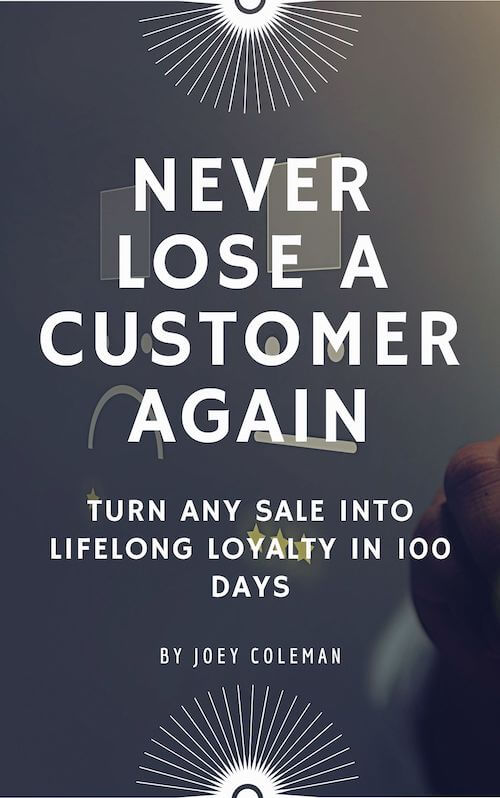
Prefer the print book? Buy on Amazon
As an Amazon Associate, Sumizeit earns from qualifying purchases.
Never Lose a Customer Again Book Summary
This Never Lose a Customer Again Book Summary covers the key ideas, lessons, and takeaways in about 20 minutes.
Short Description:
Customer retention is key; transform customers into loyal a
Helps with these goals
Preview the Never Lose a Customer Again book summary
Below is a preview of Sumizeit’s comprehensive human-written summary of Never Lose a Customer Again by Joey Coleman. The full summary is 15-20 minutes long and covers the book’s key ideas in text, audio, visual, and video formats. Unlock the full 20 Minute Summary
Speaker and business consultant Joey Coleman talks about an under-appreciated and deeply important aspect of business success: customer retention. Rather than focusing on the allure of attracting new clients, Coleman thinks about customer service and the value of loyalty to reflect best business practices for long-term success. Coleman compares customer retention to wooing a romantic partner and uses some unconventional metaphors (like the dentist’s office) to help businesses consider new ways to approach customer retention.
You can learn a lot about excellent customer service from an emergency trip to the dentist.
We don’t think about the dentist as the ideal place for customer service, but for Coleman, this was exactly the place where he began reflecting on customer loyalty. After biting down on hard candy and experiencing sharp pain in his jaw, Coleman made an emergency appointment with a new dentist’s office. He didn’t have high hopes for his experience, but by the end of his medical journey, the receptionist had made him feel like a valued part of the office’s community. He was a customer for life.
So what did the office do that made them stand out? The receptionist recognized the urgency of Coleman’s visit and rearranged the dentist’s schedule to ensure he could be seen sooner rather than later. Having his problem acknowledged and taken seriously made him feel valuable. The receptionist also went the extra mile and made completing introductory paperwork easy, to avoid time spent in a waiting room, writhing in pain. After his trip, the receptionist called back to check on Coleman, and offer him continued support after his painkillers wore off.
The receptionist didn’t just care about Coleman in order to get his business; she wanted him to have a good experience. From this surprising trip to the dentist, Coleman realized that building a loyal customer base is all about ensuring that each client feels valued.
Most businesses spend lots of money on acquiring new customers just to lose them.
Businesses typically spend the majority of their marketing budget acquiring customers, not focusing on keeping them. And yet, research shows that businesses lose between 20 and 70 percent of customers three months after acquiring them. This is true across industries and in companies of all sizes. Customer retention is a universal problem.
Banks, for example, spend up to $300 per customer to find new recruits. They operate under the assumption that once a person opens a bank account, they’ll keep it. But that’s not actually the case - up to ⅓ of those people will leave within a year of opening their new account.
This happens because customers don’t feel valued after a sale. Sometimes this is the result of fine print in a contract that surprises and upsets them, and other times it's a lack of customer support.
Want the complete 20-minute summary?
- Full structured summary
- Video Summary
- Podcast Summary
- Audio summary
- Key takeaways
- Exercises
- Quiz
- Highlights and notes
- Ask the book with AI
Who should read Never Lose a Customer Again ?
Never Lose a Customer Again is essential reading for business leaders, sales managers, and entrepreneurs who want to maximize profitability through customer loyalty. Whether you run a small business or lead a department at a Fortune 500 company, this book is for anyone frustrated by high customer churn rates and ready to invest in retention over constant acquisition.
Why does Never Lose a Customer Again matter?
Most businesses pour resources into acquiring new customers while losing 20-70% of them within months—a costly mistake that undermines growth. Joey Coleman reveals that a customer's lifetime value is roughly ten times their initial sale, making retention a direct path to exponential profit increases. In today's competitive market, building loyal advocates is more valuable than ever.
What are the key themes in Never Lose a Customer Again ?
- Customer retention as a competitive advantage
- The critical first 100 days after purchase
- Proactive customer experience versus reactive customer service
- Building emotional connections and loyalty
- The business case for investing in retention over acquisition
- Turning customers into brand advocates
How can you apply ideas from Never Lose a Customer Again ?
- Audit your customer handoff process: map how customers transition from sales to support and identify where relationship continuity breaks down.
- Implement a 100-day post-purchase engagement calendar with specific touchpoints, surprises, and affirmations timed to prevent buyer's remorse.
- Train your CRM system to capture personal details (interests, family, values) during initial meetings and make those notes accessible to all team members.
- Create an unexpected surprise budget: identify random moments to send personalized gifts with handwritten notes that show you remember and value each customer.
- Design a referral program with incentives that match your product's value tier, making it easy for satisfied customers to recommend you to others.
- Establish metrics for customer lifetime value and retention rates, then tie team incentives and recognition to these metrics alongside acquisition goals.
- Schedule post-purchase check-in calls within the first 100 days to affirm the customer's decision, offer support, and identify any hidden dissatisfaction.
What common mistakes do readers make with Never Lose a Customer Again ?
- Assuming customers will stay because they signed a contract—neglecting them after the sale guarantees churn regardless of contract terms.
- Gifting on expected occasions (birthdays, holidays) instead of surprising customers at unexpected moments when the gesture carries more emotional weight.
- Passing customers from sales to support without continuity or relationship knowledge, forcing customers to re-explain their needs and feel depersonalized.
- Measuring customer experience based on company perception rather than actual customer feedback, creating a false sense of satisfaction while customers quietly leave.
- Spending heavily on acquisition incentives while offering customer support reps less recognition, signaling that keeping customers doesn't matter as much.
- Sending generic gifts or follow-ups instead of personalized gestures that prove you understand and remember who the customer actually is.
Sumizeit Exercises Apply what you've learned
Turn ideas from Never Lose a Customer Again into action with a short guided reflection: identify the biggest takeaway, connect it to your life, and commit to one step you can take in the next 24 hours.
What is the expert analysis of Never Lose a Customer Again ?
Overview
Never Lose a Customer Again is authored by Joey Coleman, a distinguished business consultant and speaker specializing in customer retention. This book stands out in the crowded field of business literature by shifting the focus from the conventional preoccupation with customer acquisition to the often-neglected but crucial domain of customer retention. Drawing on his extensive experience with Fortune 500 companies, Coleman offers a fresh perspective on how businesses can cultivate enduring loyalty through exceptional customer experience, making this work significant for leaders and marketers aiming to sustain long-term growth.
Core Thesis
Coleman’s central argument is that customer retention is not merely a transactional afterthought but a strategic imperative that demands proactive, empathetic engagement from the very first interaction and throughout the critical initial 100 days of the customer journey. He posits that businesses typically squander resources by over-investing in acquisition while neglecting the emotional and experiential dimensions that foster loyalty. By conceptualizing customer relationships as akin to romantic partnerships, Coleman underscores the necessity of continuous nurturing—through personalized communication, timely affirmation, and surprise—to transform customers into lifelong advocates whose value far exceeds their initial purchase.
Strengths
- Innovative Metaphors: Coleman’s use of relatable analogies, such as the emergency dentist visit, effectively humanizes the abstract concept of customer retention, making it accessible and memorable.
- Practical Framework: The delineation of the customer journey into three phases—Assess, Admit, and Affirm—provides a clear, actionable roadmap for businesses to tailor their engagement strategies at each stage.
- Emphasis on Emotional Connection: The book excels in highlighting the emotional underpinnings of customer loyalty, advocating for empathy and personalization as key drivers of retention.
- Quantitative Justification: By citing compelling statistics—such as the potential 25-100% profit increase from a 5% improvement in retention—Coleman grounds his recommendations in tangible business outcomes.
- Focus on Early Engagement: The identification of the first 100 days as a critical window for cementing customer loyalty is a valuable insight for practitioners seeking to optimize resource allocation.
Critiques & Counterarguments
- Overemphasis on Early Phase: While the first 100 days are important, some research suggests that customer loyalty can be influenced by long-term factors such as consistent product quality and evolving customer needs, which Coleman’s framework may underrepresent.
- Limited Industry Nuance: The book tends to generalize across industries, potentially oversimplifying challenges unique to sectors with longer sales cycles or complex B2B relationships where retention dynamics differ significantly.
- Potential Underestimation of Acquisition: Some schools of thought argue that acquisition and retention are synergistic rather than hierarchical, and neglecting acquisition innovation could stifle growth; Coleman’s framing might inadvertently downplay this balance.
- Insufficient Attention to Digital Transformation: Given the increasing role of technology in customer experience, the book’s examples and strategies could benefit from deeper integration of digital tools and data analytics that are reshaping retention strategies.
- Contrasting Research on Surprise Tactics: While surprise gifts can delight, behavioral economics research warns that extrinsic rewards may sometimes undermine intrinsic loyalty, suggesting a more nuanced application than the book proposes.
Who Should Read This
This book is indispensable for business leaders, marketers, and customer experience professionals who seek to deepen their understanding of customer retention beyond conventional metrics. It is particularly valuable for those in service-oriented industries or companies with high customer churn, where fostering loyalty can dramatically impact profitability. Additionally, entrepreneurs and small business owners aiming to build sustainable customer relationships will find Coleman’s insights and practical frameworks highly applicable. However, readers looking for advanced digital strategies or industry-specific retention tactics may need to supplement this work with more specialized resources.
Frequently asked questions about the Never Lose a Customer Again book summary
What is Never Lose a Customer Again about?
Never Lose a Customer Again by Joey Coleman focuses on why businesses lose 20-70% of customers within three months of acquisition and how to fix it. Coleman argues that customer retention, not acquisition, drives long-term profitability and shares a proven framework for building lasting loyalty during the critical first 100 days after purchase.
Who should read Never Lose a Customer Again?
This book is essential for business leaders, sales managers, entrepreneurs, and anyone responsible for customer relationships who wants to reduce churn and increase profitability. It's equally valuable for small businesses and Fortune 500 companies, since high customer loss is a universal problem across all company sizes and industries.
What are the main takeaways from Never Lose a Customer Again?
The core takeaways are: a customer's lifetime value is about ten times their initial purchase, the first 100 days after buying are critical to retention, and you should focus on proactive customer experience rather than reactive service. Coleman also shares the Investigate-Observe-Personalize-Surprise framework for making customers feel valued and turning them into brand advocates.
What is the Investigate-Observe-Personalize-Surprise framework?
This four-step framework helps you build lasting customer loyalty. Investigate their interests through genuine conversation, Observe their values and needs with empathy, Personalize gifts and interactions based on what you've learned, and Surprise them at unexpected moments with thoughtful gestures that show you remember them beyond the sale.
How much can customer retention improve your profits?
According to Joey Coleman, keeping just 5% more customers who might otherwise leave can increase your profits by 25-100%. Additionally, a customer's lifetime value is roughly ten times their initial purchase price, making retention far more valuable than constantly acquiring new customers.
Why do most businesses lose customers after the initial sale?
Most businesses spend heavily on acquiring customers but then hand them off to support teams without relationship continuity or proper attention. Customers feel undervalued after the sale, especially when they encounter hidden fees, poor service, or lack of follow-up. This neglect during the critical first 100 days is the primary reason for high churn rates.
What is the difference between customer service and customer experience?
Customer service is reactive—you respond when customers reach out with a problem. Customer experience is proactive—you intentionally create positive interactions and emotional connections before customers even need to ask. While 80% of companies claim superior customer experience, only 8% of customers agree other companies deliver it, revealing a perception gap caused by focusing on service instead of experience.
How can I turn customers into brand advocates?
Make customers feel genuinely valued through personalized attention, proactive support after the sale, and unexpected surprises during the first 100 days. Then offer referral incentives that match your product's value tier. When customers feel truly cared for, they naturally want to recommend you to others, making word-of-mouth your most powerful marketing tool.
About Sumizeit
Sumizeit is a profitable Scomy LLC company based in Miami, Florida. Our founders, Clemens Raemy and Weina Scott, are successful entrepreneurs with several exits. Sumizeit is a popular book summary app / micro learning app used by busy professionals and entrepreneurs with over 2,500 non-fiction book summaries and 10,000 podcast summaries in text, audio, visual, podcast, and video format. We also have stellar retention tools to make ideas stick - such as flashcards with spaced repetition, quizzes, streaks, highlighting and notes, daily challenges, riddles, mini-courses, meditation, and more. You won't only learn the idea, but also remember it. Over 90% of our users change their habits with Sumizeit.
Upgrade Now
Here's why readers love Sumizeit
Join thousands of learners getting smarter every day
"Great experience. Detailed summaries. Loved the gamification feature. Makes learning fun. Good customer service. I recommend Sumizeit to anyone. You'll learn a lot."
"I always felt busy but still wanting to keep up with the book discussion in my friend group. This was a great supplement to help me keep reading the books I find fun while keeping up with important books."
"I love this website. Instead of scrolling social media, I find myself learning a lot. I use it everyday. I recommend this app for anyone who is too busy and wants to get up to speed with their favorite books."
Never Lose a Customer Again Book Summary PDF
Looking for a Never Lose a Customer Again Book Summary PDF you can save and revisit offline? Our Never Lose a Customer Again Book Summary PDF captures the book’s core ideas in a clean, printable format — the key frameworks, takeaways, and structure without the fluff. Download the Never Lose a Customer Again Book Summary PDF when you want a reference you can annotate, share with your team, or review on the go. Get your Never Lose a Customer Again Book Summary PDF from the download page below.
Download Never Lose a Customer Again Book Summary PDFPeople also liked these summaries
Readers who explored Never Lose a Customer Again often enjoyed these titles next.

Ready to read the whole thing?
- Full structured summary
- Video Summary
- Podcast Summary
- Audio summary
- Key takeaways
- Exercises
- Quiz
- Highlights and notes
- Ask the book with AI
Featured Book Titles
Popular Book Summaries at sumizeit, leading book summary app