
Question 1 of 10


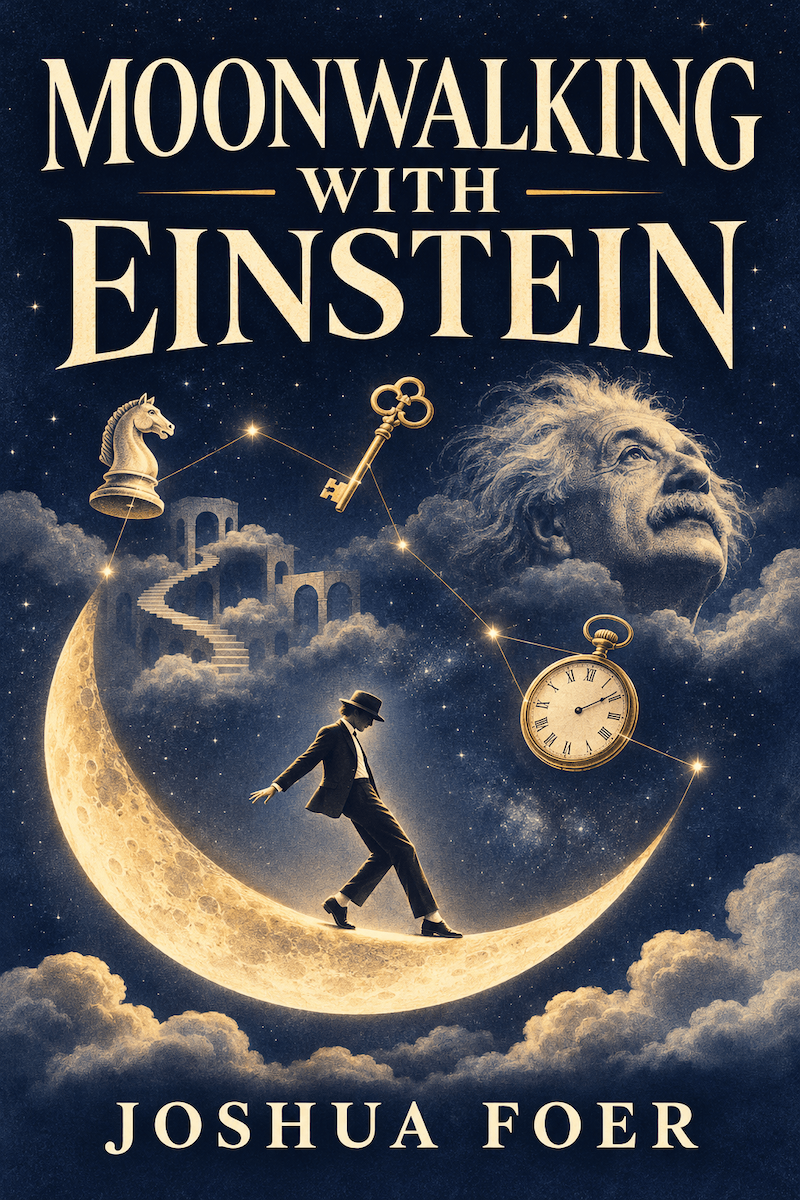
Prefer the print book? Buy on Amazon
As an Amazon Associate, Sumizeit earns from qualifying purchases.
Book Summary
Moonwalking With Einstein Book Summary
This Moonwalking With Einstein Book Summary covers the key ideas, lessons, and takeaways in about 20 minutes.
Short Description:
How a reporter with an average memory trained for a year and became US champion
A great memory is a skill you build. It runs on a few old tricks that turn dull information into vivid pictures and set them in places you know well, and on the kind of focused, uncomfortable practice that improves any skill. Foer went from forgetting where he put his keys to national champion in a year, and the scientist who tracked him said most people could do the same if they put in the work. Still, he doesn't come away arguing that you should memorize card decks. His point is that remembering starts with paying attention, and that what you carry in your head shapes how you see everything new. Phones and notebooks can store facts for us, but connecting those facts into ideas, humor, and a sense of who we are still happens inside our own heads. A life that leaves a lot of memories also feels longer when you look back on it.
Helps with these goals
Preview the Moonwalking With Einstein book summary
Below is a preview of Sumizeit’s comprehensive human-written summary of Moonwalking With Einstein by Joshua Foer. The full summary is 15-20 minutes long and covers the book’s key ideas in text, audio, visual, and video formats. Unlock the full 20 Minute Summary
In 2005 Joshua Foer was a young journalist with a perfectly ordinary memory. He had been trying to figure out who the smartest person in the world might be, and the search kept leading him to Ben Pridmore, the reigning world memory champion. Curious, Foer talked Slate into letting him cover the US Memory Championship.
He expected a room full of geniuses. What he found were people who swore they were nothing special. Tony Buzan, Lukas Amsüss, and a young British grand master named Ed Cooke all told him the same thing. Their memories were average. They had learned a set of very old techniques, and anyone willing to practice an hour a day could be competing within a year. Ed offered to coach him. Foer said yes, mostly because it sounded like a good piece of participatory journalism.
The book is the record of that year. It's half memoir and half popular science, and it jumps between Foer's training and everything he picked up along the way from neuroscientists, historians, savants, and the strange little tribe of people who memorize shuffled decks of cards for sport. Twelve months after he showed up as a reporter, he came back as a contestant and won the whole thing.
What a memory is
Your brain is a huge web of neurons, and a memory is a particular pattern of connections among them. That much is known. How cells actually hold a memory is not. Nobody has ever seen one. Scientists can watch which regions light up while someone thinks, and they know a lot about what happens inside individual brain cells, but the thing in between is still mostly a mystery.
What they do know is that memories aren't filed in order like books on a shelf. They sit in a tangle of associations. Think of chocolate and you also get sweetness, the color brown, maybe Valentine's Day. This is why you can't search your own head the way you search a hard drive. You need a cue. If you've forgotten someone's name, you think about where you met them or what they do for work, and you follow the threads until the name shows up.
Foer also learned that "memory" is really several systems. Declarative memories are the ones you know you have. Some of those are episodic, tied to a time and place, like what you had for dinner last night. Others are semantic, plain facts with no time stamp, like knowing dinner is the evening meal. Nondeclarative memories are the unconscious ones, like riding a bike or tying your shoes. You use them constantly and never think about them.
Then there is the split between working memory and long term memory. Working memory holds whatever you're paying attention to this second, and it's tiny. It tops out at somewhere between five and nine items. It works as a filter, and only what the brain judges worth keeping gets passed along to long term storage.
Want the complete 20-minute summary?
- Full structured summary
- Video Summary
- Podcast Summary
- Audio summary
- Key takeaways
- Exercises
- Quiz
- Highlights and notes
- Ask the book with AI
Who should read Moonwalking With Einstein?
Moonwalking With Einstein is perfect for anyone curious about how memory actually works and how to train it. Whether you're a student struggling to retain information, a professional seeking better focus, or simply someone interested in cognitive science and human potential, this book offers practical insights wrapped in an engaging personal narrative. It's especially valuable for those who assume memory is a fixed trait rather than a trainable skill.
Why does Moonwalking With Einstein matter?
In an age of smartphones and constant external storage, we've outsourced our memories and forgotten what our brains are capable of doing. Joshua Foer's work shows that memory training isn't just a curiosity—it reveals fundamental truths about how learning, expertise, and identity itself are built. Understanding memory helps you grasp why some people seem brilliant, how to actually improve at any skill, and why the experiences you remember shape the person you become.
What are the key themes in Moonwalking With Einstein?
- Memory is a trainable skill, not an innate talent
- Expert performance depends more on memory and recognition than raw intelligence
- Vivid, emotionally engaging memories stick far better than abstract facts
- What you remember shapes your identity and how you perceive the world
- Deliberate, uncomfortable practice drives improvement more than passive experience
- Memory palace techniques harness our brain's natural strength with spatial navigation
- The external tools we use change how we think about memory and knowledge
How can you apply ideas from Moonwalking With Einstein?
- Use the memory palace technique to memorize a shopping list, presentation, or any sequence of information by placing vivid images in familiar spaces
- Apply the Major System (digit-to-consonant code) to remember phone numbers, PINs, and important numerical information
- Chunk related information when studying or learning new skills to increase how much your working memory can hold
- Practice difficult material at the edge of your ability rather than reviewing what you already know, then get immediate feedback
- Create unusual, emotionally engaging mental images when you need to remember facts, since your brain can't ignore vivid or vulgar imagery
- Deliberately fill your life with novel, memorable experiences to make time feel longer and richer in retrospect
- Connect new facts to your existing knowledge rather than trying to memorize in isolation, since associations are what make memories stick
What common mistakes do readers make with Moonwalking With Einstein?
- Assuming memory is a fixed trait based on genetics rather than recognizing it as a trainable skill that improves with deliberate practice
- Using repetition and passive review as the main study strategy instead of active, focused practice that stretches your current abilities
- Believing that people who seem brilliant at their field are simply smarter rather than recognizing they've built massive recognition systems through years of specialized practice
- Trying to memorize abstract symbols and words directly instead of converting them into vivid, concrete images and spatial locations
Sumizeit Exercises Apply what you've learned
Turn ideas from Moonwalking With Einstein into action with a short guided reflection: identify the biggest takeaway, connect it to your life, and commit to one step you can take in the next 24 hours.
What is the expert analysis of Moonwalking With Einstein?
Overview
Moonwalking With Einstein, authored by Joshua Foer, stands as a seminal work at the intersection of popular science, memoir, and cognitive psychology. Foer, a journalist turned memory champion, offers readers an intimate and rigorously researched exploration of human memory. Published in 2011, the book gained international acclaim for demystifying the art and science of memory enhancement through the lens of Foer’s own transformative journey from an average rememberer to a national memory champion. Its significance lies not only in recounting a fascinating personal narrative but also in reviving interest in ancient mnemonic techniques and their relevance in the digital age.
Core Thesis
Foer’s central argument is that memory is not a fixed trait but a skill that can be cultivated through deliberate practice and the application of time-tested mnemonic strategies. He posits that the brain excels at remembering vivid images and spatial relationships rather than abstract data, and that by harnessing these natural strengths—primarily through the method of loci or “memory palace”—any motivated individual can dramatically improve their memory. Moreover, Foer emphasizes that memory shapes identity and perception of time, underscoring its foundational role in how humans understand and engage with the world.
Strengths
- Engaging Narrative Style: Foer’s blend of memoir, reportage, and scientific exposition makes complex neuroscience accessible and compelling, appealing to both lay readers and intellectually curious audiences.
- Comprehensive Exploration: The book traverses a wide intellectual terrain—from neuroscience and psychology to history and philosophy—providing a multidimensional understanding of memory.
- Empirical Grounding: Foer draws on robust research, including seminal studies by Ericsson and Chase, and incorporates firsthand experiences with memory athletes, neuroscientists, and savants, lending credibility and depth.
- Revival of Ancient Techniques: By tracing the history of mnemonic arts from classical antiquity through the Renaissance to modern competitions, Foer situates memory training within a rich cultural tradition often overlooked in contemporary education.
- Practical Application: The detailed exposition of mnemonic systems such as the Major System and Person-Action-Object technique provides readers with actionable tools to enhance their own memory skills.
Critiques & Counterarguments
- Limited Impact on Everyday Memory: While Foer demonstrates impressive gains in competitive memory tasks, he acknowledges—and research concurs—that these techniques have limited transfer to everyday memory demands, particularly in an era dominated by digital external memory aids.
- Overemphasis on Visual-Spatial Mnemonics: The book privileges the method of loci and image-based mnemonics, which may not suit all cognitive styles or cultural contexts; alternative memory enhancement methods emphasizing semantic or emotional encoding receive less attention.
- Potential Oversimplification of Expertise: Foer leans heavily on Ericsson’s deliberate practice model, which, while influential, has been contested by scholars emphasizing innate cognitive differences or the role of domain-specific knowledge beyond memory alone.
- Romanticizing Memory Competitors: The portrayal of memory athletes as “ordinary brains” may understate subtle neurocognitive differences or motivational factors that contribute to their success, as emerging neuroscience suggests a complex interplay of innate and acquired traits.
- Neglect of Socio-Cultural Factors: The book largely sidesteps how socio-economic background, education systems, and cultural attitudes toward memory influence one’s ability and motivation to develop mnemonic skills, which could limit the universality of Foer’s claims.
Who Should Read This
Moonwalking With Einstein is ideally suited for readers fascinated by the workings of the human mind, especially those interested in cognitive psychology, neuroscience, and self-improvement. It appeals to intellectuals and practitioners alike—educators seeking to understand the decline and potential revival of memorization in schooling, professionals curious about enhancing cognitive performance, and anyone intrigued by the limits and possibilities of human memory. Moreover, its accessible prose and rich storytelling make it a rewarding read for a general audience eager to explore how ancient mnemonic arts remain relevant in the digital era.
Discussion questions for Moonwalking With Einstein Short questions you can actually use in a conversation
Frequently asked questions about the Moonwalking With Einstein book summary
What is Moonwalking With Einstein about?
Moonwalking With Einstein is Joshua Foer's memoir of spending a year learning ancient memory techniques and competing in the US Memory Championship. The book traces his transformation from an ordinary journalist with an average memory to a national champion, while exploring the science of how memory works, why we forget, and how experts in any field develop their seemingly superhuman abilities.
Who should read Moonwalking With Einstein?
Anyone interested in psychology, learning, human potential, or how expertise actually develops will find value in this book. It appeals to students seeking better study strategies, professionals wanting to improve focus and retention, curious readers interested in cognitive science, and anyone skeptical that they can change their abilities through training.
What are the main takeaways from Moonwalking With Einstein?
The key insights are that memory is a trainable skill built through deliberate practice, that expert performance relies far more on memory and pattern recognition than raw intelligence, and that vivid imagination and spatial memory are powerful tools for learning anything. The book also argues that what you remember shapes your identity and life satisfaction, and that in an age of external storage devices, training your memory remains worthwhile for thinking, connecting ideas, and understanding who you are.
What is the Method of Loci and how does it work?
The Method of Loci, also called a memory palace, is an ancient technique that works by placing abstract information you need to remember into vivid, unusual images and setting those images in familiar physical spaces you know well. To recall the information, you mentally walk through the space again and collect the images. It works because the brain naturally excels at remembering places and visual scenes, transforming weak abstract memory into powerful spatial memory.
Can anyone become a memory champion like Joshua Foer did?
According to Foer and the memory scientists he cites, yes—any motivated person with average intelligence can reach elite memory levels through focused training. The limiting factor isn't genetics but willingness to practice deliberately and consistently. Foer notes that the researcher who tracked his progress said most college students could achieve what he did with similar commitment to practice.
What is the difference between how experts think and how beginners think?
Experts don't think harder or calculate better than beginners; they recognize patterns instantly from years of experience. A chess master sees the right move in seconds while a novice must laboriously calculate. This applies to all fields—expertise is recognition built through massive amounts of practice that trains your memory for domain-specific patterns.
What is the OK plateau and how do you break through it?
The OK plateau is the point where a skill becomes automatic and comfortable, so most people stop improving because they're no longer paying conscious attention. To break through, you must deliberately practice at the edge of your ability where you fail, get immediate feedback, and focus on correcting mistakes. This uncomfortable, deliberate practice is where real improvement happens.
How does Joshua Foer's everyday memory work after becoming a champion?
Interestingly, Foer's everyday memory for things like where he parked his car remained average after the championship. The memory techniques work brilliantly for information you deliberately encode into palaces, but don't transfer automatically to daily life. This suggests memory training is powerful for specific, deliberate learning but doesn't create a generally superior memory for all situations.
About Sumizeit
Sumizeit is a profitable Scomy LLC company based in Miami, Florida. Our founders, Clemens Raemy and Weina Scott, are successful entrepreneurs with several exits. Sumizeit is a popular book summary app / micro learning app used by busy professionals and entrepreneurs with over 2,500 non-fiction book summaries and 10,000 podcast summaries in text, audio, visual, podcast, and video format. We also have stellar retention tools to make ideas stick - such as flashcards with spaced repetition, quizzes, streaks, highlighting and notes, daily challenges, riddles, mini-courses, meditation, and more. You won't only learn the idea, but also remember it. Over 90% of our users change their habits with Sumizeit.
Upgrade Now
Here's why readers love Sumizeit
Join thousands of learners getting smarter every day
"Great experience. Detailed summaries. Loved the gamification feature. Makes learning fun. Good customer service. I recommend Sumizeit to anyone. You'll learn a lot."
"I always felt busy but still wanting to keep up with the book discussion in my friend group. This was a great supplement to help me keep reading the books I find fun while keeping up with important books."
"I love this website. Instead of scrolling social media, I find myself learning a lot. I use it everyday. I recommend this app for anyone who is too busy and wants to get up to speed with their favorite books."
Moonwalking With Einstein Book Summary PDF
Looking for a Moonwalking With Einstein Book Summary PDF you can save and revisit offline? Our Moonwalking With Einstein Book Summary PDF captures the book’s core ideas in a clean, printable format — the key frameworks, takeaways, and structure without the fluff. Download the Moonwalking With Einstein Book Summary PDF when you want a reference you can annotate, share with your team, or review on the go. Get your Moonwalking With Einstein Book Summary PDF from the download page below.
Download Moonwalking With Einstein Book Summary PDFPeople also liked these summaries
Readers who explored Moonwalking With Einstein often enjoyed these titles next.




Ready to read the whole thing?
- Full structured summary
- Video Summary
- Podcast Summary
- Audio summary
- Key takeaways
- Exercises
- Quiz
- Highlights and notes
- Ask the book with AI
Featured Book Titles
Popular Book Summaries at sumizeit, leading book summary app
Atomic Habits Book Summary Rich Dad Poor Dad Book Summary The Four Agreements Book Summary The 48 Laws of Power Book Summary When Breath Becomes Air Book Summary Think and Grow Rich Book Summary