


As an Amazon Associate, Sumizeit earns from qualifying purchases.
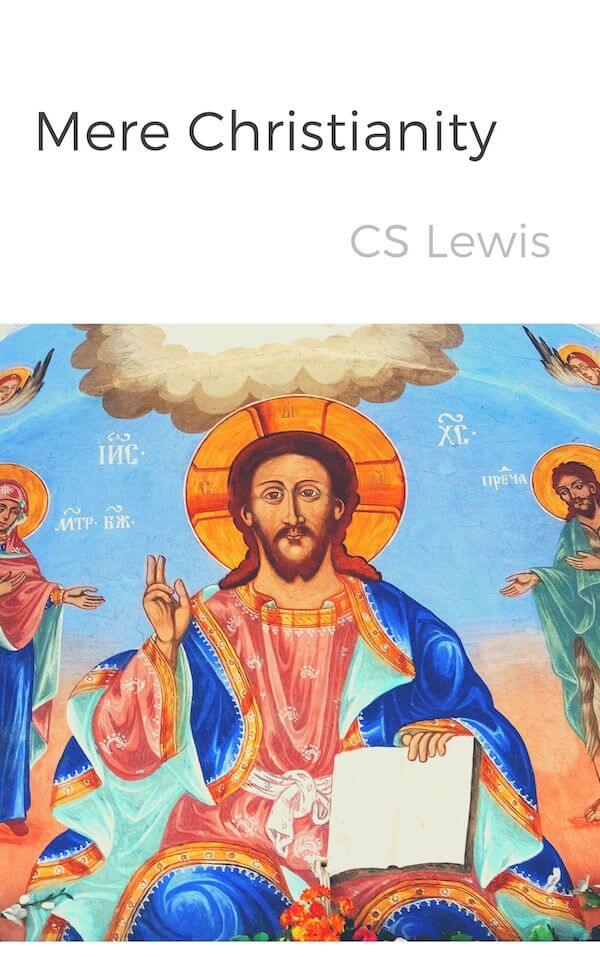
Mere Christianity Book Summary
This Mere Christianity Book Summary covers the key ideas, lessons, and takeaways in about 20 minutes.
Helps with these goals
Want the complete 20-minute summary?
- Full structured summary
- Video Summary
- Podcast Summary
- Audio summary
- Key takeaways
- Exercises
- Quiz
- Highlights and notes
- Ask the book with AI
What is in the Mere Christianity book summary?
Below is a preview of Sumizeit’s expert-written summary of Mere Christianity by C.S. Lewis. The full summary covers the book’s key ideas in text, audio, and video.
Human beings are born with an intuitive knowledge of universal moral laws. This means they have an innate understanding of moral virtues, and react negatively when something happens that offends their moral principles. Most moral virtues remain the same across time, location, and cultures.
The existence of a universal moral law indicates that the presence of a caring, intelligent being was affiliated with the creation of the universe because these moral virtues are designed to encourage human beings to love and care for each other. Jesus Christ was both divine and human, so his life represents the virtuous ideal that all Christians should strive to emulate. However, free will enables some humans to choose to behave in a way that corrupts goodness and leads to evil on earth.
Christians must strive to avoid materialistic temptations and selfish desires and instead live according to their beliefs, especially the three basic virtues of hope, faith, and charity. Christianity is an advantageous spiritual trait that has helped humanity to survive and thrive because it has helped people to understand and live according to the universal moral law and to live together in harmony.
Morality Is A Universal Natural Law
Human beings are bound to have conflicts and disagreements. However, unlike animals, human beings are the only creatures who are able to use words instead of violence to resolve conflicts. While sometimes human disagreements turn into physical altercations, most disagreements are verbal. People quarrel with one another. Both children and adults are prone to quarreling, because they intuitively take issue with situations that offend their internal knowledge of universal moral law.
Human beings have an innate sense of what is fair and honest. Fairness and honesty are both examples of moral principles, and people, even children, have an internal understanding of these principles. They expect others to adhere to these same moral principles, so when someone commits certain actions, like lying or cheating, that offends these moral principles, they are understood to have done something wrong.
Even the offending party, more often than not, agrees that their actions have violated some innate principle. They rarely try to justify the action or argue the case that the moral standard is wrong. Instead, most people make excuses for why their circumstances justified their breaking of the moral principle. For example, someone might say they really needed cash as an excuse for stealing, but they would not argue the case that stealing itself is a moral action.
Most people know when they have done something wrong, because they have an intuitive sense of right and wrong, just and unjust, and fair and unfair behavior. This is because principles of good and morality are a universal law of nature. While humans are free to break these moral laws - unlike, say the law of gravitation - it is still an innate part of human existence. It is not an arbitrary invention, but rather a part of a natural and universal standard of morality.
Moral Values Are Consistent Across…
Want the complete 20-minute summary?
- Full structured summary
- Video Summary
- Podcast Summary
- Audio summary
- Key takeaways
- Exercises
- Quiz
- Highlights and notes
- Ask the book with AI
Who should read Mere Christianity?
Mere Christianity is ideal for Christians seeking deeper understanding of their faith, as well as skeptics and nonbelievers curious about what Christianity actually teaches. Philosophers and anyone interested in exploring universal morality, the existence of God, and the nature of virtue will find Lewis's reasoned approach compelling. This book works for both longtime believers and those encountering Christian thought for the first time.
Why does Mere Christianity matter?
C.S. Lewis's Mere Christianity addresses timeless questions about morality, suffering, and meaning that remain relevant today. In an age of moral relativism and spiritual uncertainty, Lewis argues that humans share an innate universal moral law—a claim with profound implications for how we understand ourselves and society. The book bridges faith and reason, showing that Christianity is intellectually defensible, not merely a blind leap of faith.
What are the key themes in Mere Christianity?
- Universal moral law as evidence of God's existence
- The divinity and redemptive power of Jesus Christ
- Inner character and intention matter more than external actions
- Free will as the source of evil in a just universe
- Virtue as the path to true fulfillment and joy
- Christianity as an evolved spiritual trait benefiting human survival
- The tension between material desires and genuine human flourishing
What are the key lessons from the Mere Christianity book summary?
Humans Have an Innate Sense of Right and Wrong
People instinctively know when they've violated moral principles, even when they make excuses for their behavior. This internal moral compass is not learned but universal across all humans.
Moral Values Are Consistent Across Cultures and History
Despite cultural differences, virtues like honesty, fairness, bravery, and kindness are valued everywhere. This consistency points to morality being a natural law rather than arbitrary cultural invention.
The Existence of Universal Morality Points to God
A cold, purely materialistic universe cannot explain why humans have a shared moral conscience. The presence of universal moral law suggests an intelligent, caring being designed the universe.
Jesus's Claims Leave Only Three Options
Either Jesus was telling the truth about being divine, he was knowingly lying, or he was delusional. Given his character and teachings, the most rational conclusion is that he was truthful about his divinity.
Evil Exists Because of Human Free Will, Not God's Failure
God gave humans freedom to choose, and evil results from humans corrupting that freedom. A universe without free will would be one where genuine morality is impossible.
Evil Is Parasitic on Goodness
Evil cannot stand alone but only exists by corrupting something good. Goodness is self-sufficient and primary, while evil is secondary and dependent.
True Morality Requires Internal Transformation, Not Just Rule-Following
Acting moral for the sake of reward or punishment does not make someone a moral person. Genuine morality comes from a transformed character and righteous intentions.
Christ Exemplifies True Human Virtue
Jesus lived the ideal virtuous life, balancing divine nature with human experience. Christians should strive to emulate his character as the closest humans can come to God-like virtue.
Hope, Faith, and Charity Are the Core Christian Virtues
These three virtues help Christians transcend selfish desires: hope sustains us toward eternal life, faith maintains conviction through trials, and charity cultivates genuine love for others.
Material Pleasures Bring Fleeting Satisfaction
Earthly desires and possessions provide short-term pleasure but ultimately leave people empty. True, lasting joy comes from living virtuously.
Christianity Is Compatible with Evolution
Rather than contradicting evolution, Christianity represents humanity's spiritual evolution—a useful trait that helped humans survive by enabling them to live harmoniously under universal moral law.
Virtue Strengthens Individuals and Communities
Communities built on virtuous principles and moral behavior are stronger and more resilient when facing challenges and suffering.
Faith and Reason Are Complementary, Not Opposed
Christian faith is not blind belief but arrives through reasonable thought. Faith sustains conviction in those reasonable beliefs through difficult times.
Charity Must Be Extended Even to Difficult People
True Christian love requires extending kindness to those who are hard to like. Practicing charity transforms our genuine feelings toward others over time.
Science Cannot Answer 'Why'—Only Philosophy and Faith Can
Science describes what and how in the universe, but questions about ultimate purpose and meaning require turning inward to philosophy and spirituality.
Self-Improvement Requires Acknowledging Past Failings
Before embracing a Christian life, people must first understand the emptiness of their previous ways and genuinely desire transformation.
Heaven Is Prepared Through Virtuous Living on Earth
Christians should strive to develop their souls through moral action during life on earth, making their souls as heavenly as possible in preparation for the afterlife.
People Rarely Defend Immoral Actions as Moral
When caught doing wrong, people make excuses or cite circumstances rather than arguing the immoral act itself is acceptable, revealing their innate knowledge of moral law.
Goodness Is Self-Satisfying
Good actions can be performed purely for their own sake and carry intrinsic reward. Evil, by contrast, requires corrupting something good to exist.
Want the complete 20-minute summary?
- Full structured summary
- Video Summary
- Podcast Summary
- Audio summary
- Key takeaways
- Exercises
- Quiz
- Highlights and notes
- Ask the book with AI
How can you apply ideas from Mere Christianity?
- Use your innate moral compass to reflect on daily choices and align your behavior with what you intuitively know is right, rather than justifying exceptions
- Practice the virtue of charity by deliberately extending kindness and respect to difficult people, allowing genuine love to develop over time
- Examine your motivations for good actions—are you acting morally for the right reasons or seeking reward and recognition, and how can you cultivate purer intentions
- Develop hope by maintaining perspective that temporary earthly struggles are small compared to the promise of eternal meaning and fulfillment
- Study the life of Jesus through the gospels to understand virtue in action and identify specific ways you can emulate his character in your own life
- Cultivate faith by grounding your beliefs in reason first, then trusting those beliefs through doubt and difficulty
- Build stronger relationships and communities by upholding shared moral values that transcend cultural differences, recognizing our common human nature
What common mistakes do readers make with Mere Christianity?
- Assuming morality is relative to culture when in fact universal moral principles appear across all societies and throughout history
- Believing that following rules and performing good external actions automatically makes you a moral person without examining your internal character and intentions
- Thinking that material success and earthly pleasures will bring lasting happiness when they only provide fleeting satisfaction
- Rejecting Jesus as a good moral teacher while denying his divinity, which Lewis shows creates a logical contradiction about his character
Sumizeit Exercises Apply what you've learned
Turn ideas from Mere Christianity into action with a short guided reflection: identify the biggest takeaway, connect it to your life, and commit to one step you can take in the next 24 hours.
What is the expert analysis of Mere Christianity?
Overview
Mere Christianity is a seminal work by C.S. Lewis, a distinguished scholar, theologian, and literary figure renowned for his ability to bridge complex theological concepts with accessible prose. First published in the mid-20th century, this book has become a cornerstone of Christian apologetics, offering a rational and moral case for Christianity that transcends denominational boundaries. Lewis’s background as a scholar at Oxford and Cambridge, combined with his literary prowess, lends the work both intellectual rigor and eloquence, making it a lasting influence in religious and philosophical discourse.
Core Thesis
At the heart of Mere Christianity lies the argument that morality is not a social construct but a universal, innate law that points to the existence of a moral, intelligent Creator. Lewis posits that humans possess an intuitive understanding of right and wrong, which transcends cultural and historical contexts, and that this moral law implies a benevolent divine designer. He further contends that Jesus Christ embodies the ultimate moral ideal, whose life and teachings provide the blueprint for true virtue. The existence of free will explains the presence of evil, while Christian virtues such as hope, faith, and charity offer a path toward genuine moral transformation and spiritual fulfillment.
Strengths
- Clarity and Accessibility: Lewis’s prose is lucid and engaging, making complex theological and philosophical ideas approachable without sacrificing depth.
- Universal Appeal: By focusing on "mere" Christianity—the core beliefs shared across Christian denominations—Lewis avoids sectarian disputes, broadening the book’s relevance.
- Integration of Reason and Faith: The work skillfully balances rational argumentation with spiritual insight, appealing to both skeptics and believers.
- Timeless Moral Insight: Lewis’s exploration of the universality of moral law remains compelling, inviting readers to reflect on the nature of ethics beyond cultural relativism.
- Philosophical Rigor: The trilemma regarding Jesus’s divinity is a notable example of Lewis’s logical approach to theological claims.
Critiques & Counterarguments
- Empirical Basis of Moral Universality: While Lewis argues for innate moral laws, contemporary moral psychology and anthropology reveal significant cultural variation and plasticity in moral norms, challenging the notion of absolute universality.
- Naturalistic Explanations of Morality: Evolutionary biology and social sciences provide robust frameworks explaining morality as a product of social cooperation and survival strategies, without necessitating a divine lawgiver.
- The Problem of Evil and Free Will: Lewis’s attribution of evil solely to human free will may oversimplify complex theological and philosophical debates about theodicy, ignoring natural evils and systemic suffering.
- Jesus’s Divinity Trilemma: Critics argue that the trilemma oversimplifies historical and textual scholarship, neglecting alternative interpretations of Jesus’s self-understanding and the development of early Christian doctrine.
- Faith and Reason Dichotomy: Although Lewis attempts to harmonize faith and reason, some philosophers contend that faith inherently involves elements beyond rational justification, which Lewis’s framework may underemphasize.
Who Should Read This
Mere Christianity is ideally suited for readers seeking a thoughtful and accessible introduction to Christian theology and moral philosophy. It appeals to:
- Christians desiring a deeper intellectual understanding of their faith’s foundations.
- Skeptics and seekers interested in exploring the rational arguments for Christianity without denominational bias.
- Philosophy and religion students looking for a classic text that bridges faith and reason.
- Anyone curious about the interplay between morality, spirituality, and human nature from a Christian perspective.
Frequently asked questions about the Mere Christianity book summary
What is Mere Christianity about?
Mere Christianity by C.S. Lewis is a defense of Christian faith based on reason and universal human morality. Lewis argues that all humans share an innate sense of right and wrong that points to God's existence, demonstrates that Jesus logically must be divine based on his character, and explains how Christians can live virtuous lives that emulate Christ. The book addresses both believers seeking deeper understanding and skeptics evaluating Christianity's claims.
Who should read Mere Christianity?
Mere Christianity is for Christians wanting to understand their faith more deeply, nonbelievers and skeptics curious about Christianity's intellectual basis, and anyone interested in philosophy, morality, and religion. Lewis writes for both longtime believers and those encountering Christian thought for the first time, making his reasoned approach accessible regardless of your starting point.
What are the main takeaways from Mere Christianity?
The main takeaways are that humans possess a universal moral law indicating God's existence, Jesus is divine based on logical analysis of his character and claims, evil results from human free will rather than God's failure, and true morality requires internal character transformation and virtuous living. Lewis emphasizes that Christianity offers the best path to genuine fulfillment through emulating Christ and practicing the virtues of hope, faith, and charity.
Does C.S. Lewis think Christianity contradicts evolution?
No, Lewis argues that Christianity and evolution are complementary rather than opposed. He views Christianity as a spiritual trait that aided human survival by enabling people to sense God's moral law and live harmoniously together. Far from contradicting evolution, Christianity represents humanity's spiritual evolution toward greater virtue and community cohesion.
How does Lewis explain evil and suffering if God is good?
Lewis explains that evil exists because God gave humans free will, which is essential for genuine morality. Without freedom to choose wrongly, humans cannot choose rightly. Evil is parasitic—it can only corrupt something good—whereas goodness is self-sufficient. God is just and good; human free will, not God, is the source of evil in the world.
Why does Lewis say acting morally for reward doesn't make you moral?
Lewis distinguishes between acting morally and being moral. Someone who performs good actions only to earn Heaven or avoid punishment hasn't transformed their character or intentions. True morality comes from genuine internal change and doing good for its own sake, not from external compliance with rules.
What are the three basic Christian virtues Lewis describes?
Lewis identifies hope, faith, and charity as the three basic Christian virtues. Hope means looking forward to eternal life with joy, faith means maintaining conviction in Christian doctrine through reason and trials, and charity means practicing genuine love and respect for all people, even difficult ones.
About Sumizeit
Sumizeit is a profitable Scomy LLC company based in Miami, Florida. It has been helping readers learn from nonfiction books for 7 years with expert-written summaries in text, audio, podcast, and video.
Want the complete 20-minute summary?
- Full structured summary
- Video Summary
- Podcast Summary
- Audio summary
- Key takeaways
- Exercises
- Quiz
- Highlights and notes
- Ask the book with AI
Here's why readers love Sumizeit
Join thousands of learners getting smarter every day
"Great experience. Detailed summaries. Loved the gamification feature. Makes learning fun. Good customer service. I recommend Sumizeit to anyone. You'll learn a lot."
"I always felt busy but still wanting to keep up with the book discussion in my friend group. This was a great supplement to help me keep reading the books I find fun while keeping up with important books."
"I love this website. Instead of scrolling social media, I find myself learning a lot. I use it everyday. I recommend this app for anyone who is too busy and wants to get up to speed with their favorite books."
Mere Christianity Book Summary PDF
Looking for a Mere Christianity Book Summary PDF you can save and revisit offline? Our Mere Christianity Book Summary PDF captures the book’s core ideas in a clean, printable format — the key frameworks, takeaways, and structure without the fluff. Download the Mere Christianity Book Summary PDF when you want a reference you can annotate, share with your team, or review on the go. Get your Mere Christianity Book Summary PDF from the download page below.
Download Mere Christianity Book Summary PDFPeople also liked these summaries
Readers who explored Mere Christianity often enjoyed these titles next.



Want the complete 20-minute summary?
- Full structured summary
- Video Summary
- Podcast Summary
- Audio summary
- Key takeaways
- Exercises
- Quiz
- Highlights and notes
- Ask the book with AI
Featured Book Titles
Popular Book Summaries at sumizeit, leading book summary app