
Question 1 of 10


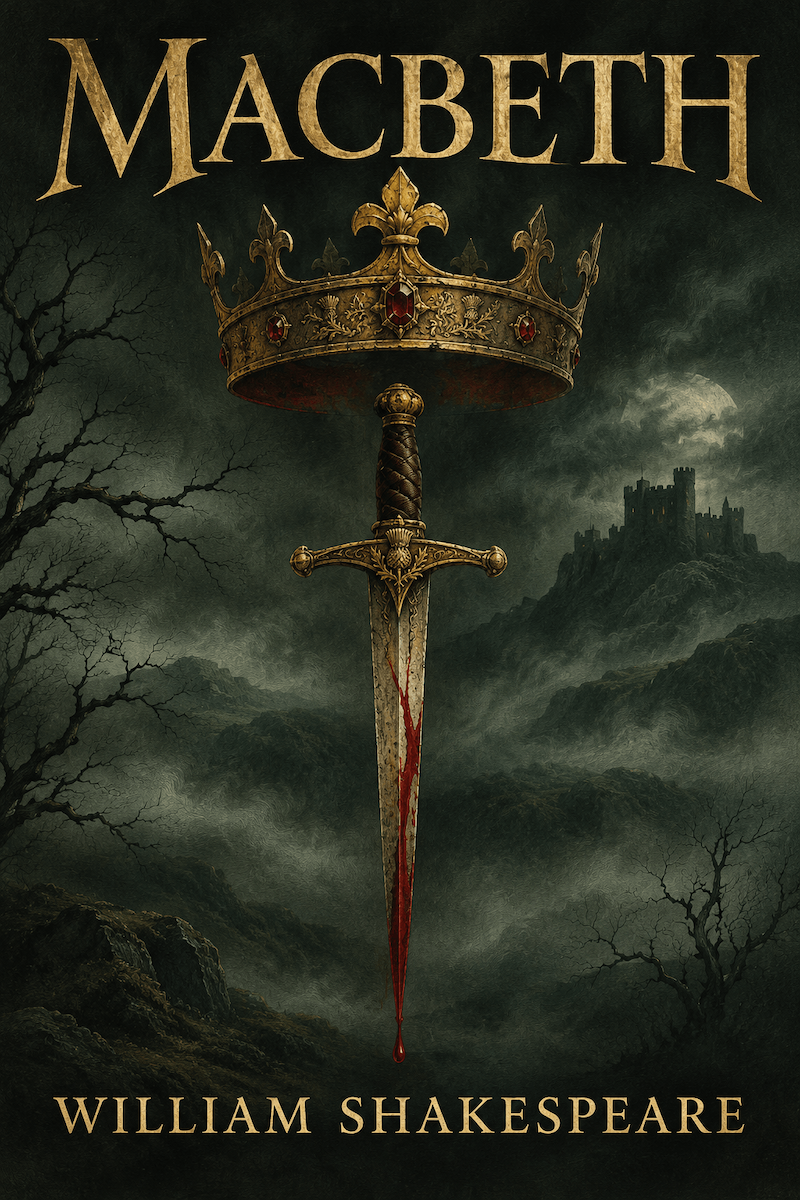
Prefer the print book? Buy on Amazon
As an Amazon Associate, Sumizeit earns from qualifying purchases.
Book Summary
Macbeth Book Summary
This Macbeth Book Summary covers the key ideas, lessons, and takeaways in about 20 minutes.
Short Description:
Macbeth summary covering all five acts, the main themes, and Shakespeare’s life
Macbeth shows that getting what you want by betraying what you know is right costs more than the prize is worth. Macbeth starts the play as a brave and admired man with a loving wife and a king who trusts him. He trades all of that for a crown, and the crown brings him fear, sleepless nights, and a life he calls meaningless. No outside force destroys him. The witches only gave him an idea, and he chose to act on it, then chose again and again until he had no way back. Shakespeare lets us hear his thoughts at every step, so we understand him even as we recoil. The warning is uncomfortable. Ordinary people with a conscience can talk themselves into terrible acts, and the first step makes each one after it easier.
Helps with these goals
Preview the Macbeth book summary
Below is a preview of Sumizeit’s comprehensive human-written summary of Macbeth by William Shakespeare. The full summary is 15-20 minutes long and covers the book’s key ideas in text, audio, visual, and video formats. Unlock the full 20 Minute Summary
Macbeth is Shakespeare's shortest tragedy and one of his darkest. It follows a Scottish general who hears a prophecy that he will be king, murders his way to the throne, and then loses everything he killed for. The play runs five acts and moves fast. Most of the violence happens at night, and almost every character spends the story either lying or being lied to.
Shakespeare wrote it around 1606, a few years after King James of Scotland also became King of England. James was fascinated by witchcraft and believed he descended from Banquo, one of the play's few honorable men. So the play flatters the king while asking a question that would have made any ruler nervous. What happens to a country when the wrong man takes the crown?
Macbeth is hard to shake because he is no simple villain. He knows murder is wrong before he does it. He tells us so, in detail. Then he does it anyway. The rest of the play is the bill coming due, first for him and his wife and then for all of Scotland.
Act One. The Prophecy and the Plan
The play opens with three witches on a stormy heath. They agree to meet Macbeth after a battle and chant that fair is foul and foul is fair. That line sets the rule for everything that follows. In this world, what looks good is often rotten, and you can't trust appearances.
We then hear about Macbeth before we meet him. A wounded captain tells King Duncan how Macbeth cut through a rebel army and killed its leader, Macdonwald. Macbeth also helped beat back an invasion from Norway. The Thane of Cawdor, a Scottish noble, betrayed the king during the fighting. Duncan orders him executed and gives his title to Macbeth as a reward.
Macbeth doesn't know this yet when he and his friend Banquo run into the witches. They greet him with three titles. He is Thane of Glamis, which he already is. He is Thane of Cawdor, which makes no sense to him. And he will be king. They tell Banquo that he will never rule but his descendants will. Then they vanish. Minutes later, messengers arrive and tell Macbeth he is the new Thane of Cawdor. One prediction has come true on the spot, and Macbeth's thoughts jump straight to murder. The idea scares him so much that his hair stands on end. Banquo warns him that dark forces often tell small truths to win our trust and then betray us on the big things. Macbeth doesn't listen.
Duncan thanks Macbeth warmly and then names his own son Malcolm as heir. Macbeth now sees Malcolm as an obstacle in his path. He writes to his wife about the witches, and Lady Macbeth takes over from there. She worries her husband is too kind to grab what he wants.
Want the complete 20-minute summary?
- Full structured summary
- Video Summary
- Podcast Summary
- Key takeaways
- Exercises
- Quiz
- Highlights and notes
- Ask the book with AI
Who should read Macbeth?
Macbeth speaks to anyone interested in understanding how ambition corrupts character and leads to self-destruction. Students of literature, theater enthusiasts, and readers exploring timeless questions about power, guilt, and conscience will find this tragedy deeply relevant. It's essential reading for anyone who wants to understand why Shakespeare remains the most performed playwright in the world.
Why does Macbeth matter?
Macbeth asks uncomfortable questions about how ordinary people with a conscience can rationalize terrible acts, making it strikingly relevant to modern ethical dilemmas. Written in 1606 for King James I, the play explores what happens when the wrong person holds power—a theme that resonates across centuries. Its psychological depth reveals guilt as a physical and mental force, anticipating modern psychology by centuries. The play's brevity and propulsive narrative make it accessible yet profound.
What are the key themes in Macbeth?
- Ambition and its destructive consequences
- Fate versus free will and personal responsibility
- Guilt manifested in the body and mind
- The corruption of power and tyranny
- Deception and the unreliability of appearances
- Masculinity and honor
- Sleep, rest, and psychological torment
How can you apply ideas from Macbeth?
- Examine your own motivations before making major decisions—Macbeth acts on ambition without questioning whether the prize is worth the cost
- Listen to warnings from people who care about you, especially when they contradict what you want to believe
- Recognize that the first compromise makes the second one easier; establish ethical boundaries early to prevent escalation
- Be alert to how language can mislead—witches tell truths that mean something entirely different; similar deception happens in contracts, arguments, and politics
- Notice how guilt manifests in unexpected ways in yourself and others—insomnia, obsessive behavior, and intrusive thoughts often signal moral distress
- Resist using shame or questions of courage to pressure others into actions they question morally
- Reflect on whether your pursuit of success has crowded out the relationships and values that made your life meaningful before ambition took over
What common mistakes do readers make with Macbeth?
- Assuming the witches cause Macbeth to sin—they predict but never command; Macbeth chooses murder and must own that choice
- Viewing Lady Macbeth as the villain—she shares guilt but Macbeth continues killing long after she stops enabling him
- Missing the play's psychological insights because the language is unfamiliar—read it aloud or use performance recordings to access the emotional texture
- Forgetting that Macbeth is not a monster but a good man who chooses evil, which makes his fall far more instructive than a simple villain's story
Sumizeit Exercises Apply what you've learned
Turn ideas from Macbeth into action with a short guided reflection: identify the biggest takeaway, connect it to your life, and commit to one step you can take in the next 24 hours.
What is the expert analysis of Macbeth?
Overview
Macbeth stands as one of William Shakespeare’s most intense and compact tragedies, written circa 1606 during the reign of King James I. Shakespeare, the preeminent playwright of the English Renaissance, crafted this play not only as a gripping psychological drama but also as a subtle political commentary tailored to flatter and caution the newly unified Scottish-English monarchy. The play’s significance lies in its exploration of ambition, power, and moral decay, themes that resonate universally and continue to captivate audiences and scholars alike. Shakespeare’s ability to probe the human psyche with poetic precision makes Macbeth a cornerstone of both literary and theatrical canon.
Core Thesis
At its core, Macbeth interrogates the corrosive effects of unchecked ambition and the moral consequences of betraying one’s ethical compass for power. The play posits that while fate may present opportunities or temptations, it is individual choice—driven by desire and fear—that precipitates downfall. Macbeth’s tragic trajectory illustrates how the pursuit of power through immoral means leads not to fulfillment but to paranoia, isolation, and destruction. Shakespeare also weaves in complex considerations of gender, fate versus free will, and the psychological manifestations of guilt, thereby creating a multifaceted meditation on human nature and governance.
Strengths
- Psychological Depth: Shakespeare masterfully renders Macbeth’s internal conflict, allowing audiences intimate access to his vacillations between ambition and conscience. The vivid hallucinations and sleeplessness dramatize guilt in a way that transcends time.
- Economy and Pacing: As Shakespeare’s shortest tragedy, Macbeth maintains relentless momentum, with swift narrative progression that heightens tension and underscores the inevitability of the protagonist’s ruin.
- Symbolism and Atmosphere: The pervasive motifs of darkness, blood, and supernatural elements create a haunting atmosphere that amplifies the themes of moral ambiguity and chaos.
- Political and Historical Resonance: The play’s subtle flattery of King James I and its reflection on the legitimacy and dangers of kingship provide a rich historical context that deepens its interpretive layers.
- Complex Female Characters: Lady Macbeth’s invocation of spirits to “unsex” her and her psychological unraveling challenge contemporary gender norms and enrich the play’s exploration of power dynamics.
Critiques & Counterarguments
- Ambiguity of the Witches’ Role: While the witches serve as catalysts, their ambiguous influence raises questions about determinism versus free will. Some critics argue that Shakespeare’s equivocation on their power leaves the moral responsibility overly centered on Macbeth, potentially oversimplifying the interplay between external forces and internal choice.
- Historical Anachronism and Flattery: The play’s alignment with King James’s interests—particularly the glorification of Banquo’s descendants—may detract from its universality, suggesting a political agenda that colors character portrayals and plot developments.
- Limited Exploration of Other Characters: Figures such as Banquo and Macduff, while pivotal, receive comparatively less psychological development, which some interpret as a missed opportunity to deepen the moral complexity and provide counterpoints to Macbeth’s descent.
- Opposing Views on Ambition: Contrasting philosophies, such as Nietzschean affirmation of will to power or Machiavellian pragmatism, might contest the play’s implicit moral condemnation of ambition, arguing instead that ruthless pursuit of power is a necessary and even admirable trait in leadership.
- Modern Psychological Interpretations: Contemporary research into psychopathy and moral disengagement might suggest that Macbeth’s behavior aligns with pathological traits rather than a purely moral failing, complicating the traditional reading of his character as a tragic hero undone by ambition alone.
Who Should Read This
Macbeth is essential reading for scholars and enthusiasts of literature, drama, and history who seek to understand the enduring complexities of human ambition, morality, and power. It appeals to students of psychology and philosophy interested in ethical dilemmas and the nature of evil. Additionally, readers fascinated by political theory and leadership will find the play’s exploration of tyranny and legitimacy profoundly relevant. Finally, anyone drawn to rich, poetic language and intense character studies will appreciate Shakespeare’s unparalleled craftsmanship in this dark, compelling tragedy.
Discussion questions for Macbeth Short questions you can actually use in a conversation
Frequently asked questions about the Macbeth book summary
What is Macbeth about?
Macbeth is William Shakespeare's tragedy about a Scottish general who hears a prophecy that he will be king, murders his way to the throne, and then descends into tyranny and madness. The play follows how ambition corrupts him, how each crime demands another, and ultimately how his actions destroy everything he valued, leaving him with a hollow crown and a meaningless life.
Who should read Macbeth?
Anyone interested in understanding power, ambition, guilt, and the psychology of moral corruption should read Macbeth. It's essential for students of literature and theater, but also valuable for readers exploring why good people sometimes do terrible things. The play's brevity and urgent pacing make it more accessible than many of Shakespeare's longer works.
What are the main takeaways from Macbeth?
The main takeaway is that achieving goals through betraying your conscience costs far more than the prize is worth. The play also shows that one crime makes the next one easier, that guilt manifests in the body and mind, and that tyranny isolates and hollows out even those who gain power. Ultimately, Macbeth demonstrates that ordinary people with a conscience can rationalize terrible acts if they ignore warning signs and allow ambition to override ethics.
Why do the witches' prophecies come true in unexpected ways?
The witches speak truth but deliberately phrase it to mislead. When they say no man born of a woman can harm Macbeth, they mean it literally—but Macduff was 'from his mother's womb untimely ripped,' never born in the ordinary sense. When they say Birnam Wood will march to Dunsinane, it's impossible—until soldiers cut branches to hide their numbers. The witches exploit Macbeth's assumptions, showing that language can be true yet deceptive.
How does Lady Macbeth change throughout the play?
Lady Macbeth begins as the driving force behind Duncan's murder, calling on evil spirits to strip away her softness. But after the initial crime, she is shut out of Macbeth's planning and watches him become increasingly tyrannical without her. By the end, she sleepwalks in torment, trying to wash imaginary bloodstains from her hands, and ultimately dies—likely by suicide—while Macbeth barely reacts, showing how guilt and isolation have destroyed her.
What does Macbeth's 'tomorrow and tomorrow' speech mean?
In this famous soliloquy, Macbeth describes life as creeping along toward death, a brief candle, a poor actor strutting for an hour—a tale told by an idiot that means nothing. The speech reveals that despite achieving his crown, he has lost all sense of meaning and purpose. It shows the ultimate cost of his ambition: success has left him empty.
Why does Macbeth continue killing after becoming king?
Macbeth kills Banquo and his family because the witches predicted that Banquo's descendants will be kings, meaning Macbeth has damned his soul for a crown he can't pass on. Fear and the momentum of violence drive him to act on impulse without restraint. His killings escalate from calculated murder to senseless slaughter, showing how unchecked ambition and tyranny feed on themselves.
How does nature reflect the moral state of Scotland in Macbeth?
After Duncan's murder, nature goes wrong: darkness persists unnaturally, owls kill falcons, and horses break loose and eat each other. These disturbances signal that regicide has thrown the natural order into chaos. Shakespeare uses nature as a mirror of moral corruption, suggesting that evil has cosmic consequences beyond the guilty parties themselves.
About Sumizeit
Sumizeit is a profitable Scomy LLC company based in Miami, Florida. Our founders, Clemens Raemy and Weina Scott, are successful entrepreneurs with several exits. Sumizeit is a popular book summary app / micro learning app used by busy professionals and entrepreneurs with over 2,500 non-fiction book summaries and 10,000 podcast summaries in text, audio, visual, podcast, and video format. We also have stellar retention tools to make ideas stick - such as flashcards with spaced repetition, quizzes, streaks, highlighting and notes, daily challenges, riddles, mini-courses, meditation, and more. You won't only learn the idea, but also remember it. Over 90% of our users change their habits with Sumizeit.
Upgrade Now
Here's why readers love Sumizeit
Join thousands of learners getting smarter every day
"Great experience. Detailed summaries. Loved the gamification feature. Makes learning fun. Good customer service. I recommend Sumizeit to anyone. You'll learn a lot."
"I always felt busy but still wanting to keep up with the book discussion in my friend group. This was a great supplement to help me keep reading the books I find fun while keeping up with important books."
"I love this website. Instead of scrolling social media, I find myself learning a lot. I use it everyday. I recommend this app for anyone who is too busy and wants to get up to speed with their favorite books."
Macbeth Book Summary PDF
Looking for a Macbeth Book Summary PDF you can save and revisit offline? Our Macbeth Book Summary PDF captures the book’s core ideas in a clean, printable format — the key frameworks, takeaways, and structure without the fluff. Download the Macbeth Book Summary PDF when you want a reference you can annotate, share with your team, or review on the go. Get your Macbeth Book Summary PDF from the download page below.
Download Macbeth Book Summary PDFPeople also liked these summaries
Readers who explored Macbeth often enjoyed these titles next.



Ready to read the whole thing?
- Full structured summary
- Video Summary
- Podcast Summary
- Key takeaways
- Exercises
- Quiz
- Highlights and notes
- Ask the book with AI
Featured Book Titles
Popular Book Summaries at sumizeit, leading book summary app
Atomic Habits Book Summary Rich Dad Poor Dad Book Summary The Four Agreements Book Summary The 48 Laws of Power Book Summary When Breath Becomes Air Book Summary Think and Grow Rich Book Summary