


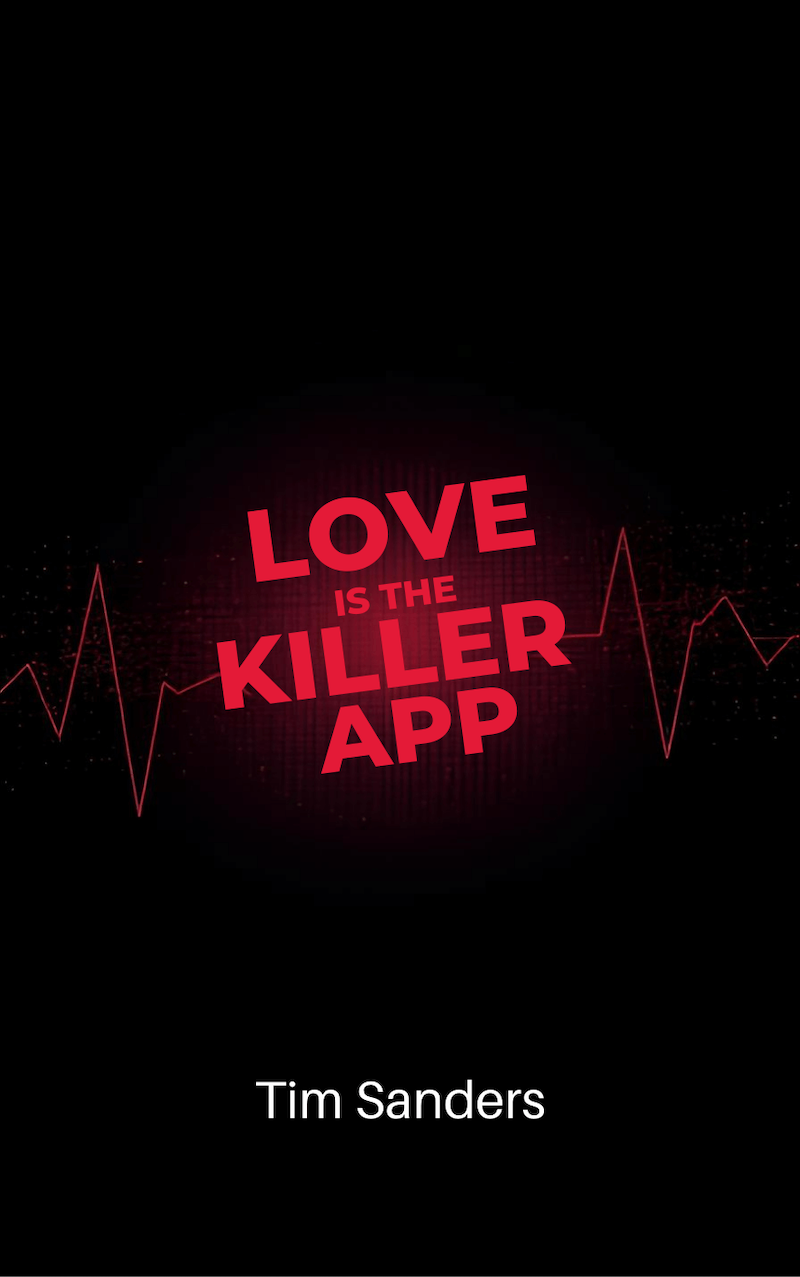
Prefer the print book? Buy on Amazon
As an Amazon Associate, Sumizeit earns from qualifying purchases.
Love Is the Killer App Book Summary
This Love Is the Killer App Book Summary covers the key ideas, lessons, and takeaways in about 20 minutes.
Short Description:
Love Is the Killer App teaches love through generosity and connection.
People remember how you make them feel. Knowledge builds credibility, networks expand opportunity, and compassion builds trust. When these three forces operate together, they create unstoppable momentum and a magnetic personal brand. Lovecats rise not because they push others down, but because they lift them up.
Ultimately, Sanders challenges readers to consider what type of professional legacy they want to leave: one defined by fear, competition, and scarcity—or one defined by connection, generosity, and transformation. He argues convincingly that love is not sentimental—it is strategic, measurable, and profoundly powerful.
Helps with these goals
Want a Free Weekly Read?
Get a free summary every week straight to your mailbox.
Preview the Love Is the Killer App book summary
Below is a preview of Sumizeit’s comprehensive human-written summary of Love Is the Killer App by Tim Sanders. The full summary is 15-20 minutes long and covers the book’s key ideas in text, audio, visual, and video formats. Unlock the full 20 Minute Summary
Tim Sanders’ Love Is the Killer App reshapes traditional ideas about what drives real achievement in the professional world. Instead of praising aggressive tactics, secrecy, and cutthroat competition, Sanders argues that the most effective professionals succeed because they genuinely care about the growth of others. He calls this philosophy bizlove, and he suggests that the greatest competitive advantage comes from helping other people win—freely sharing ideas, opportunities, and emotional support.
Sanders illustrates how traditional business environments often glorify self-interest. For example, many companies historically taught employees to guard information, avoid helping colleagues who might become rivals, and focus solely on personal advancement. Yet Sanders notes that this mindset produces transactional relationships, low trust, and fragile networks. In contrast, professionals who embrace generosity build reputations that attract lasting opportunities. He described leaders he encountered early in his career who became stars inside companies because they were the first to tutor struggling coworkers, share useful research, or proactively connect people in different departments. Even when positioned low in the hierarchy, their influence grew faster and more sustainably than that of those who competed fiercely.
The shift Sanders calls for reflects a broader transformation in the modern economy: success no longer depends on hoarding scarce resources but on expanding access to them. When someone becomes a resource who improves the success of others, their relevance and value increase exponentially. This mindset, Sanders argues, is the core of becoming a lovecat—a person whose career is accelerated because people love working with them.
Knowledge as the Foundation of Personal Value
Sanders stresses that knowledge is the most important professional asset, but only when actively used to help others. He argues that reading widely—particularly books with depth—gives individuals the ability to analyze complex problems and provide powerful insight. He shares personal examples of how reading changed his career trajectory: early on, he built a personal library of business books and created detailed notes summarizing key concepts. When coworkers approached him for help preparing for presentations, solving customer problems, or refining strategy, he used that learning to offer high-quality guidance. Eventually, people across different divisions began seeking him out, and his reputation grew organically.
In another example, Sanders describes a colleague in sales who dramatically improved performance by reading books on negotiation, psychology, and product strategy—then voluntarily teaching what he learned to his team every Friday morning. Although he wasn’t the most senior team member, his willingness to share what he learned caused senior executives to recognize his leadership potential, resulting in a promotion.
Sanders encourages readers to build structured reading systems. He suggests marking pages, keeping notebooks of quotes and insights, and reviewing summaries before important meetings. He provides an example of attending meetings where participants struggled to understand industry trends, and he stood out by referencing research and specific case studies from books he had read. This gave him influence beyond his job title because others associated him with clarity and intellectual confidence.
Networking Without Expectation or Transaction
Sanders critiques traditional networking by…
Want the complete 20-minute summary?
- Full structured summary
- Video Summary
- Podcast Summary
- Audio summary
- Key takeaways
- Exercises
- Quiz
- Highlights and notes
- Ask the book with AI
Who should read Love Is the Killer App?
Love Is the Killer App is ideal for professionals seeking sustainable career growth beyond competitive tactics and those who believe genuine relationships drive business success. It appeals to leaders, entrepreneurs, and team members who want to build influence through generosity rather than self-interest, and to anyone tired of transactional workplace dynamics.
Why does Love Is the Killer App matter?
In today's knowledge economy, success depends less on hoarding resources and more on becoming indispensable by helping others win. Tim Sanders demonstrates that the most magnetic professionals—those with lasting influence and opportunity—succeed through a philosophy of business love: freely sharing knowledge, making meaningful connections, and practicing sincere compassion. This approach builds trust, loyalty, and networks that traditional competitive strategies cannot match.
What are the key themes in Love Is the Killer App?
- Business love and genuine generosity as competitive advantages
- Knowledge sharing as a path to credibility and influence
- Authentic networking without transactional expectations
- Compassion and emotional intelligence in professional settings
- Building lasting reputation through memorable actions
- Vulnerability and resilience in helping others
- Integration of knowledge, networks, and compassion
- Creating unforgettable experiences that strengthen relationships
How can you apply ideas from Love Is the Killer App?
- Build a structured reading system with marked pages and quote notebooks to create a knowledge base you can actively share with colleagues
- Make one meaningful introduction per week between people whose needs or interests complement each other, expecting nothing in return
- Send handwritten thank-you notes or thoughtful gifts with personalized context to people who have supported your growth
- Dedicate time each week to mentoring or teaching what you've learned—through formal sessions, email summaries, or one-on-one conversations
- When a colleague is visibly stressed or struggling, invite them to talk privately and offer genuine support without advice or judgment
- Practice asking clarifying questions in networking situations to understand what others genuinely need, then connect them to resources or people
- Create a personal brand around specific expertise by consistently sharing relevant insights and connecting people who benefit from your knowledge
What common mistakes do readers make with Love Is the Killer App?
- Offering help with transactional expectations, hoping for favors in return rather than giving freely and allowing goodwill to accumulate naturally
- Reading widely but failing to organize or share insights, keeping knowledge private instead of positioning yourself as a trusted source of clarity
- Networking to collect contacts or extract opportunities rather than genuinely listening to people's challenges and needs before offering connections
- Avoiding vulnerability or compassion in professional settings, assuming emotional support is unprofessional rather than recognizing it as a differentiator
Sumizeit Exercises Apply what you've learned
Turn ideas from Love Is the Killer App into action with a short guided reflection: identify the biggest takeaway, connect it to your life, and commit to one step you can take in the next 24 hours.
What is the expert analysis of Love Is the Killer App?
Overview
Love Is the Killer App by Tim Sanders stands as a compelling intervention in the discourse on professional success and organizational culture. Sanders, a respected business thought leader and former Chief Solutions Officer at Yahoo!, challenges entrenched paradigms of competition and self-interest, advocating instead for a model of generosity and compassion he terms "bizlove." The book's significance lies in its synthesis of emotional intelligence, knowledge sharing, and networking generosity as strategic assets in the modern economy, positioning love not as sentimental softness but as a potent, measurable driver of influence and achievement.
Core Thesis
The central argument of Sanders’ work is that genuine professional success emerges from a deliberate practice of love—manifested through knowledge sharing, selfless networking, and compassionate engagement—rather than from traditional competitive tactics. By becoming a "lovecat," an individual cultivates a magnetic personal brand rooted in trust and reciprocity, which accelerates career growth and creates durable, transformative relationships. This thesis reframes love as a strategic business force that expands access to resources and opportunities, fundamentally altering the dynamics of influence and leadership.
Strengths
- Innovative Reframing: Sanders effectively reconceptualizes love and compassion as pragmatic tools for professional advancement, challenging the conventional wisdom that views emotional openness as a liability in business.
- Integrative Approach: The book skillfully weaves together knowledge acquisition, networking, and compassion into a coherent framework, demonstrating how their intersection produces outsized career impact.
- Rich Anecdotal Evidence: Through vivid, relatable stories from Sanders’ own career and those of colleagues, the book concretizes abstract principles into actionable behaviors.
- Practical Guidance: Sanders offers tangible strategies, such as structured reading systems and thoughtful networking practices, making the philosophy accessible and implementable.
- Emphasis on Emotional Intelligence: The focus on compassion and vulnerability foregrounds the often-overlooked emotional dimensions of leadership and workplace culture.
Critiques & Counterarguments
- Potential Oversimplification: While the book champions generosity, it may understate the complexity of competitive dynamics in certain industries where zero-sum outcomes prevail, such as high-stakes finance or litigation, where strategic withholding of information can be critical.
- Limited Empirical Support: The reliance on anecdotal narratives, although compelling, lacks robust quantitative evidence or longitudinal studies to substantiate claims about the universal efficacy of "bizlove."
- Risk of Exploitation: The model presumes reciprocity and goodwill, but in practice, such openness might be exploited by less scrupulous actors, raising questions about safeguards and boundary-setting beyond the brief mentions Sanders provides.
- Contrasting Theories of Power: Competing schools of thought, such as Machiavellian or realist perspectives in organizational behavior, argue that power often requires strategic manipulation and guardedness, suggesting that love alone may be insufficient or even detrimental in some contexts.
- Contextual Variability: The book’s principles may resonate more strongly in collaborative, knowledge-driven sectors but less so in hierarchical or highly regulated environments where formal authority and compliance override relational dynamics.
Who Should Read This
Love Is the Killer App is ideally suited for professionals seeking to cultivate authentic influence and leadership through relational intelligence rather than positional power. It will resonate with managers, entrepreneurs, and knowledge workers in sectors valuing innovation, collaboration, and emotional intelligence. Additionally, readers interested in the intersection of business ethics, organizational psychology, and personal development will find Sanders’ insights both inspiring and practically valuable. However, those operating in hyper-competitive or adversarial fields may need to adapt the principles thoughtfully to their specific contexts.
Frequently asked questions about the Love Is the Killer App book summary
What is Love Is the Killer App about?
Love Is the Killer App by Tim Sanders argues that the greatest competitive advantage in business comes from practicing genuine generosity—sharing knowledge freely, making meaningful connections without expectation, and showing sincere compassion to colleagues. Sanders demonstrates that professionals who help others succeed build magnetic reputations and lasting networks that far exceed what self-interested strategies can produce.
Who should read Love Is the Killer App?
This book is ideal for professionals seeking sustainable career growth, leaders wanting to build authentic influence, entrepreneurs connecting stakeholders, and anyone tired of transactional workplace dynamics. It appeals to those who believe genuine relationships drive business success and who want to understand how generosity and emotional intelligence create undeniable competitive advantages.
What are the main takeaways from Love Is the Killer App?
The core message is that knowledge, networking, and compassion—when practiced together—create unstoppable professional momentum. Key takeaways include: share your learning actively to build credibility, make introductions generously without expecting credit, show genuine care during colleagues' struggles, create memorable experiences through thoughtful gestures, and recognize that people remember how you make them feel more than what you achieved alone.
How does Tim Sanders define 'bizlove' and 'lovecats'?
Bizlove is Sanders' philosophy that the most effective professionals succeed by genuinely caring about the growth of others—freely sharing ideas, opportunities, and emotional support. A lovecat is someone whose career is accelerated because people love working with them, built through consistent practice of knowledge sharing, generous networking, and authentic compassion.
How can I build influence without a senior job title?
Sanders demonstrates that influence grows fastest when you become a trusted source of knowledge, connections, and encouragement. Build this by reading deeply and sharing insights, making introductions between people with complementary needs, and offering emotional support during colleagues' challenges. Your reputation for integrity and helpfulness will eventually attract opportunities and visibility regardless of your formal position.
How do I balance generosity with professional boundaries?
Sanders acknowledges that early in his career he overcommitted and had to backtrack, risking credibility. The solution is learning to recognize your limits honestly and committing only to help you can genuinely deliver. Sincere apologies and adjustments preserve trust better than defensiveness, and sustainable generosity requires protecting your energy and capacity.
Can compassion and emotional support really impact business outcomes?
Yes—Sanders provides examples showing that compassion builds unwavering loyalty, accelerates team recovery from mistakes, improves morale and productivity, and creates networks of advocates who support you for years. Emotional trust is not soft sentiment; it produces measurable results through faster decision-making, reduced turnover, and unexpected revenue opportunities.
About Sumizeit
Sumizeit is a profitable Scomy LLC company based in Miami, Florida. Our founders, Clemens Raemy and Weina Scott, are successful entrepreneurs with several exits. Sumizeit is a popular book summary app / micro learning app used by busy professionals and entrepreneurs with over 2,500 non-fiction book summaries and 10,000 podcast summaries in text, audio, visual, podcast, and video format. We also have stellar retention tools to make ideas stick - such as flashcards with spaced repetition, quizzes, streaks, highlighting and notes, daily challenges, riddles, mini-courses, meditation, and more. You won't only learn the idea, but also remember it. Over 90% of our users change their habits with Sumizeit.
Upgrade Now
Here's why readers love Sumizeit
Join thousands of learners getting smarter every day
"Great experience. Detailed summaries. Loved the gamification feature. Makes learning fun. Good customer service. I recommend Sumizeit to anyone. You'll learn a lot."
"I always felt busy but still wanting to keep up with the book discussion in my friend group. This was a great supplement to help me keep reading the books I find fun while keeping up with important books."
"I love this website. Instead of scrolling social media, I find myself learning a lot. I use it everyday. I recommend this app for anyone who is too busy and wants to get up to speed with their favorite books."
Love Is the Killer App Book Summary PDF
Looking for a Love Is the Killer App Book Summary PDF you can save and revisit offline? Our Love Is the Killer App Book Summary PDF captures the book’s core ideas in a clean, printable format — the key frameworks, takeaways, and structure without the fluff. Download the Love Is the Killer App Book Summary PDF when you want a reference you can annotate, share with your team, or review on the go. Get your Love Is the Killer App Book Summary PDF from the download page below.
Download Love Is the Killer App Book Summary PDFPeople also liked these summaries
Readers who explored Love Is the Killer App often enjoyed these titles next.



Ready to read the whole thing?
- Full structured summary
- Video Summary
- Podcast Summary
- Audio summary
- Key takeaways
- Exercises
- Quiz
- Highlights and notes
- Ask the book with AI
Featured Book Titles
Popular Book Summaries at sumizeit, leading book summary app