
Question 1 of 10


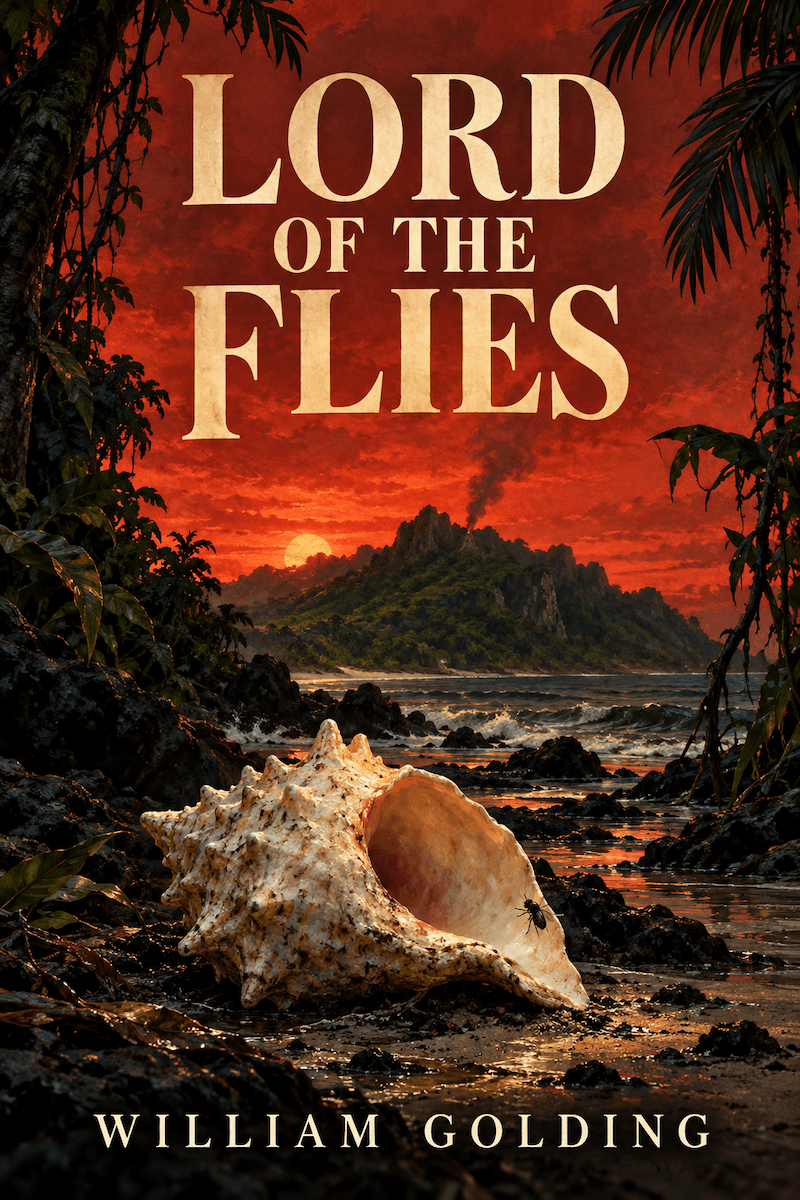
Prefer the print book? Buy on Amazon
As an Amazon Associate, Sumizeit earns from qualifying purchases.
Book Summary
Lord of the Flies Book Summary
This Lord of the Flies Book Summary covers the key ideas, lessons, and takeaways in about 20 minutes.
Short Description:
A chapter by chapter guide to Golding’s tale of boys, power, and savagery.
Lord of the Flies argues that civilization is thin, and that the savagery people fear in the world is already inside them. The beast isn't a monster on a mountain. It's the part of us that wants power, craves fear, and enjoys hurting others when nothing stops it. Rules, reason, and kindness are what hold that part in check, and they take constant work to keep alive.
Helps with these goals
Preview the Lord of the Flies book summary
Below is a preview of Sumizeit’s comprehensive human-written summary of Lord of the Flies by William Golding. The full summary is 15-20 minutes long and covers the book’s key ideas in text, audio, visual, and video formats. Unlock the full 20 Minute Summary
A plane carrying a group of British schoolboys crashes onto a remote tropical island. A war is raging somewhere in the world, and the boys were being evacuated when their plane went down. The pilot is dead. No adult survived. The oldest boys are around twelve, and the youngest, called littluns, are maybe six.
What follows is Golding's answer to a simple question. What happens when you take away grown ups, rules, and consequences? Do kids build a little civilization, or does something darker take over? The book says darker, and it says it without a lot of mercy.
Chapter 1, The sound of the shell
Ralph, a fair and athletic boy, wanders out of the jungle and meets Piggy, a chubby, asthmatic kid who wears thick glasses. Piggy is smart but nobody listens to him. He nags at Ralph to find the other survivors. When they find a big conch shell in the lagoon, Piggy knows what it is, and Ralph blows it. The sound pulls the scattered boys together.
A choir of boys in black robes marches up the beach, led by a red haired, sharp tempered boy named Jack Merridew. Jack expects to be in charge. The group votes instead, and Ralph wins. Jack sulks until Ralph hands him the choir as his hunters. Ralph, Jack, and a quiet choirboy named Simon go off to explore. They climb a mountain and confirm they're on an island. On the way back they find a piglet caught in vines. Jack lifts his knife to kill it and can't do it. He swears next time he will.
Chapter 2, Fire on the mountain
Ralph calls a meeting and sets up the basic rules. Whoever holds the conch gets to speak, and no one can interrupt. It feels like a game, but it works. Jack says the hunters will keep order, and everyone should keep a fire going so passing ships can see them.
A small boy with a birthmark on his face says he saw a snake thing in the dark. The older boys laugh it off, but fear has entered the group. Then the boys pile up wood on the mountain and use Piggy's glasses to light it. The fire grows out of control and sweeps through the forest. Afterward the boy with the birthmark is gone. Nobody says it out loud, but he almost surely burned to death. It's the first death on the island, and it's treated like an accident to forget.
Chapter 3, Huts on the beach
Jack has become obsessed with hunting. He studies the forest floor, tracks pigs, and loses himself in the chase. Ralph, meanwhile, is tired and frustrated. He's trying to build shelters, but the other boys wander off to swim and play. Only Simon pitches in. Ralph and Jack argue, and each realizes the other doesn't understand what matters.
Simon slips away into the jungle to a quiet, hidden clearing full of flowers. He sits alone there.
Want the complete 20-minute summary?
- Full structured summary
- Video Summary
- Podcast Summary
- Audio summary
- Key takeaways
- Exercises
- Quiz
- Highlights and notes
- Ask the book with AI
Who should read Lord of the Flies?
Lord of the Flies is essential reading for students, educators, and anyone interested in understanding human nature and social dynamics. It appeals to readers who want to explore what happens when civilizing forces disappear and how quickly order can collapse. This book challenges assumptions about inherent goodness and forces readers to confront uncomfortable truths about themselves and society.
Why does Lord of the Flies matter?
William Golding's 1954 novel remains profoundly relevant because it demonstrates how fragile civilization truly is and how easily people abandon reason for power and fear. In an era of polarization and social breakdown, the book's central insight—that the beast lives inside all of us—offers a cautionary tale about what lurks beneath social structures. Understanding these themes helps readers recognize dangerous patterns in groups, institutions, and themselves.
What are the key themes in Lord of the Flies?
- The fragility of civilization and social order
- The capacity for savagery within human nature
- Power, leadership, and the corrupting influence of authority
- The loss of innocence and childhood
- Fear as a tool for control and manipulation
- Rationality versus instinct and primal impulse
- Morality without external enforcement
How can you apply ideas from Lord of the Flies?
- Recognize how quickly groups can turn to scapegoating when fear and uncertainty increase
- Understand the psychology of how charismatic leaders exploit fear and tribal instincts to gain power
- Question why rational solutions often fail to persuade people compared to emotional appeals and spectacle
- Identify how anonymity, masks, and distance from consequences can remove moral restraints in group settings
- Examine how symbols of order and fairness can lose all power once the group's agreement to respect them breaks down
- Reflect on the role you play in groups: Do you actively resist harmful dynamics or passively accept them for comfort and belonging?
- Observe how easily people participate in cruelty when wrapped in the appearance of play, ritual, or necessity
What common mistakes do readers make with Lord of the Flies?
- Assuming that educated or civilized people are immune to savagery; Golding's British schoolboys are well-raised, yet moral collapse is swift
- Believing that external threats create unity; instead, fear and threats are exploited by those seeking power
- Thinking that removing authority figures allows freedom; often it allows the most ruthless to gain control
- Underestimating how quickly most people will abandon principles for social belonging and immediate comfort
Sumizeit Exercises Apply what you've learned
Turn ideas from Lord of the Flies into action with a short guided reflection: identify the biggest takeaway, connect it to your life, and commit to one step you can take in the next 24 hours.
What is the expert analysis of Lord of the Flies?
Overview
Lord of the Flies, authored by William Golding, stands as a seminal work in 20th-century literature that probes the fragile veneer of civilization and the latent darkness within human nature. Golding, a British novelist and Nobel laureate, drew upon his harrowing wartime experiences to craft a narrative that transcends its surface story of stranded schoolboys. Since its publication in 1954, the novel has become a cornerstone in discussions of psychology, morality, and societal constructs, resonating across disciplines and generations.
Core Thesis
At its core, Lord of the Flies advances the argument that the constructs of civilization—rules, order, and moral restraint—are tenuous and require constant vigilance. When these structures dissolve, the inherent savagery and primal instincts within humans emerge unchecked. Golding posits that the "beast" feared by the boys is not an external monster but a manifestation of their own inner darkness, a metaphor for humanity’s capacity for cruelty, power lust, and chaos. The novel suggests that this savage impulse is universal and ever-present, restrained only by societal norms and collective conscience.
Strengths
- Psychological Depth: Golding’s exploration of the human psyche is profound, illustrating how fear, power dynamics, and group psychology unravel social order.
- Symbolism and Allegory: The use of symbols—such as the conch shell, the painted faces, and the Lord of the Flies itself—imbues the narrative with layers of meaning, inviting multifaceted interpretations.
- Character Archetypes: The characters represent various facets of humanity: Ralph embodies order and leadership; Jack, primal aggression; Piggy, intellect and reason; Simon, innate goodness and spirituality.
- Timelessness: Despite its mid-20th-century setting, the novel’s themes remain strikingly relevant, reflecting ongoing human struggles with authority, morality, and social cohesion.
- Concise and Evocative Prose: Golding’s writing style is economical yet vivid, creating an immersive atmosphere that heightens the tension and emotional impact.
Critiques & Counterarguments
- Oversimplification of Human Nature: Critics argue that Golding’s portrayal leans towards a pessimistic determinism, minimizing the complexity and variability of human behavior. Alternative perspectives, such as Rousseau’s belief in the inherent goodness of man corrupted by society, challenge this view.
- Limited Representation: The novel’s focus on British schoolboys in isolation may limit its applicability to broader human experiences, particularly regarding cultural and gender diversity in social dynamics.
- Deterministic View of Savagery: Some psychological and anthropological research suggests that cooperation and altruism are equally fundamental human traits, often prevailing even in adverse conditions, which the novel underrepresents.
- Absence of Adult Influence: While the removal of adults serves the allegorical purpose, it arguably simplifies the complex interplay between individual impulses and societal institutions that shape behavior.
- Historical Context and War Influence: Golding’s wartime experiences heavily color the narrative’s bleak outlook, which might not universally resonate with readers from different historical or cultural backgrounds.
Who Should Read This
Lord of the Flies is essential reading for those interested in the intersections of literature, psychology, philosophy, and political theory. It appeals to scholars and readers who seek to understand the precarious balance between order and chaos within societies and individuals. Educators, students of human behavior, and anyone fascinated by the moral questions surrounding authority, group dynamics, and the nature of evil will find this novel compelling. Its enduring relevance also makes it a critical text for discussions on leadership, ethics, and the human condition in both academic and personal contexts.
Discussion questions for Lord of the Flies Short questions you can actually use in a conversation
Frequently asked questions about the Lord of the Flies book summary
What is Lord of the Flies about?
Lord of the Flies by William Golding is about a group of British schoolboys stranded on a remote tropical island after a plane crash, who attempt to create their own society without adults or external rules. The novel explores what happens when civilizing forces are removed, showing how the boys gradually descend from order and democracy into violence, ritual, and savagery. At its core, the book argues that the darkness people fear in the world—the 'beast'—is not external but exists within all humans, waiting to emerge when restraint and social structures collapse.
Who should read Lord of the Flies?
Lord of the Flies is essential for students studying literature, human nature, and social dynamics, as well as for anyone interested in understanding group psychology and the fragility of civilization. It appeals to readers who want to explore uncomfortable truths about human behavior and what happens when communities break down. The novel remains relevant for educators, leaders, and anyone seeking to understand how quickly moral systems can fail when external authority disappears.
What are the main takeaways from Lord of the Flies?
The central insight of Lord of the Flies is that civilization is thin and dependent on constant effort—the beast lives inside all of us, and it emerges when rules, reason, and consequences disappear. The novel demonstrates that power attracts the ruthless, that charisma and fear are more persuasive than rational arguments, and that innocence, once lost, cannot be recovered. It also shows how quickly groups scapegoat, how anonymity removes moral restraints, and how complicity is easier than resistance for most people.
Why does Jack become a better leader than Ralph in Lord of the Flies?
Jack doesn't become a better leader in objective terms, but he becomes more effective at gaining followers because he appeals to immediate desires and emotions rather than abstract principles. Jack offers spectacle, hunting, feasting, and the thrill of power, while Ralph demands discipline, work on shelters, and maintenance of the signal fire. People are drawn to Jack's tribe for food, community, and the sense of belonging to something powerful and primitive, even though Ralph's leadership is actually more rational and moral.
What does the conch represent in Lord of the Flies?
The conch represents order, democracy, and the rule of law—whoever holds it has the right to speak without interruption. As long as the boys respect the conch, they maintain a functional assembly and democratic process. However, once Jack's tribe begins to challenge Ralph's authority, the conch loses its power, and its destruction by Roger's boulder signals the complete collapse of civilized order on the island.
What is the Lord of the Flies in the novel?
The Lord of the Flies is literally a pig's head left on a stick by Jack's hunters as a gift to appease the beast. Figuratively, it represents the evil and savagery within human nature itself. When Simon encounters the head in his clearing, it speaks to him and reveals that the beast isn't a real creature but lives inside all of them—making clear that the real threat to the boys comes from their own capacity for violence and cruelty, not from any external monster.
How does Lord of the Flies reflect William Golding's experiences?
William Golding served in the Royal Navy during World War II and witnessed the Normandy landings and other horrors of combat. His firsthand experience with the capacity for violence and destruction led him to write a pessimistic view of human nature. Lord of the Flies, published in 1954, reflects his belief that civilization is fragile and that savagery lies just beneath the surface of even educated, supposedly civilized people like British schoolboys.
About Sumizeit
Sumizeit is a profitable Scomy LLC company based in Miami, Florida. Our founders, Clemens Raemy and Weina Scott, are successful entrepreneurs with several exits. Sumizeit is a popular book summary app / micro learning app used by busy professionals and entrepreneurs with over 2,500 non-fiction book summaries and 10,000 podcast summaries in text, audio, visual, podcast, and video format. We also have stellar retention tools to make ideas stick - such as flashcards with spaced repetition, quizzes, streaks, highlighting and notes, daily challenges, riddles, mini-courses, meditation, and more. You won't only learn the idea, but also remember it. Over 90% of our users change their habits with Sumizeit.
Upgrade Now
Here's why readers love Sumizeit
Join thousands of learners getting smarter every day
"Great experience. Detailed summaries. Loved the gamification feature. Makes learning fun. Good customer service. I recommend Sumizeit to anyone. You'll learn a lot."
"I always felt busy but still wanting to keep up with the book discussion in my friend group. This was a great supplement to help me keep reading the books I find fun while keeping up with important books."
"I love this website. Instead of scrolling social media, I find myself learning a lot. I use it everyday. I recommend this app for anyone who is too busy and wants to get up to speed with their favorite books."
Lord of the Flies Book Summary PDF
Looking for a Lord of the Flies Book Summary PDF you can save and revisit offline? Our Lord of the Flies Book Summary PDF captures the book’s core ideas in a clean, printable format — the key frameworks, takeaways, and structure without the fluff. Download the Lord of the Flies Book Summary PDF when you want a reference you can annotate, share with your team, or review on the go. Get your Lord of the Flies Book Summary PDF from the download page below.
Download Lord of the Flies Book Summary PDFPeople also liked these summaries
Readers who explored Lord of the Flies often enjoyed these titles next.

Ready to read the whole thing?
- Full structured summary
- Video Summary
- Podcast Summary
- Audio summary
- Key takeaways
- Exercises
- Quiz
- Highlights and notes
- Ask the book with AI
Featured Book Titles
Popular Book Summaries at sumizeit, leading book summary app
Atomic Habits Book Summary Rich Dad Poor Dad Book Summary The Four Agreements Book Summary The 48 Laws of Power Book Summary When Breath Becomes Air Book Summary Think and Grow Rich Book Summary