
Question 1 of 10


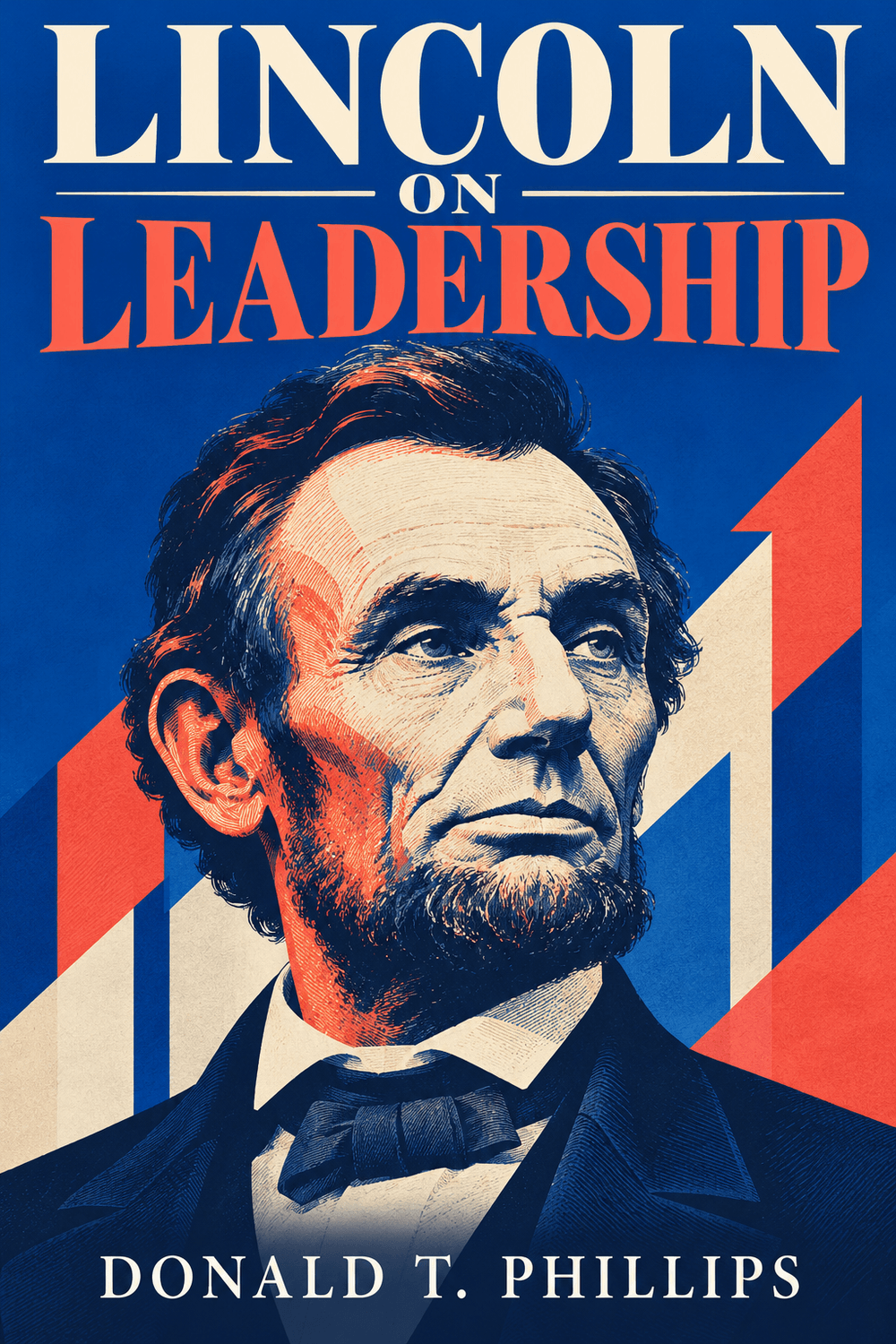
Prefer the print book? Buy on Amazon
As an Amazon Associate, Sumizeit earns from qualifying purchases.
Book Summary
Lincoln on Leadership Book Summary
This Lincoln on Leadership Book Summary covers the key ideas, lessons, and takeaways in about 20 minutes.
Short Description:
A practical guide to Lincoln’s people skills, ethics, and decision making.
Great leadership comes from how you treat people, who you are when it counts, and how you decide. Phillips shows Lincoln doing all three at once. He stayed reachable and built real relationships, he held to his values and kept his ego out of the way, and he listened widely before making each final call himself and sticking to a clear plan. You don't need a war to use any of this. Be easy to talk to, be honest, stay calm under criticism, give credit, take blame, and keep your eyes on the goal.
Helps with these goals
Preview the Lincoln on Leadership book summary
Below is a preview of Sumizeit’s comprehensive human-written summary of Lincoln on Leadership by Donald T. Phillips. The full summary is 15-20 minutes long and covers the book’s key ideas in text, audio, visual, and video formats. Unlock the full 20 Minute Summary
Most books about Abraham Lincoln focus on what he did. He was president from 1861 to 1865, he led the Union to victory in the Civil War, and he signed the Emancipation Proclamation, which began the end of slavery in America. Phillips asks a different question. How did Lincoln pull it off?
To answer it, Phillips digs into Lincoln's speeches, documents, and major events and turns them into a leadership style you can use yourself. He splits it into three areas. How Lincoln dealt with people, how he held himself to a moral standard, and how he made decisions. Each area comes with two lessons.
Working with others
Phillips starts with how Lincoln communicated and how he treated the people around him. The two lessons here are about being easy to reach and about building real relationships with the people closest to you.
Lesson one, make yourself accessible
Phillips says a leader should be open, friendly, and easy to approach. That means being around when people want to talk and having a welcoming manner. When your people know they can reach you and that you listen, they trust and respect you. They see that you care what they think. Talking with people at every level of your organization also teaches you how things really work and what could work better, so you have good information when it's time to decide something.
Lincoln lived this way. He spent a huge part of his time talking with people, from generals and politicians to ordinary soldiers and farmers. He visited them where they lived and worked, and he kept an open door so anyone could come see him at any time. His manner helped too. He was friendly, joked easily, rarely barked orders, and used plain language so he could connect with whoever was in front of him.
Lesson two, build strong relationships
Phillips also says to put extra effort into the people who work directly under you. Get to know them as people, not only as workers. That clears up misunderstandings and helps you find common ground, even with people who disliked you at first or disagreed with your views. Once those relationships are solid, your direct reports understand what you want. They do better work, and they need little or no oversight from you.
Lincoln did exactly this with his closest advisers, generals, and political allies. He visited their homes and met their families to get a feel for who they were. That showed him how each of them saw the world and how he could best use their strengths. He even built working relationships with former rivals and with people who opposed many of his policies.
Leading ethically
Phillips argues that technique alone doesn't make a great leader. You also need to make moral, ethical decisions, which means deciding what your organization stands for and then running it by those principles. Lincoln held himself to a high moral standard the whole way through. Phillips pulls two lessons from his conduct.
Want the complete 20-minute summary?
- Full structured summary
- Video Summary
- Podcast Summary
- Audio summary
- Key takeaways
- Exercises
- Quiz
- Highlights and notes
- Ask the book with AI
Who should read Lincoln on Leadership?
Lincoln on Leadership is for managers, executives, and anyone in a leadership position who wants to deepen their understanding of what makes truly effective leadership. Whether you lead a small team or a large organization, this book offers timeless principles drawn from one of history's greatest leaders that apply to modern business and organizational challenges.
Why does Lincoln on Leadership matter?
In today's fast-paced, often chaotic business environment, many leaders focus solely on strategy and results while neglecting the human element. Lincoln on Leadership reminds us that sustainable success comes from how you treat people, the ethical standards you uphold, and the clarity of your vision. These principles have endured for over 150 years and remain remarkably relevant to contemporary leadership challenges.
What are the key themes in Lincoln on Leadership?
- Accessibility and open communication with all levels of an organization
- Building genuine relationships with direct reports and colleagues
- Leading with unwavering ethical standards and personal integrity
- Emotional control and avoiding ego-driven decisions
- Consulting broadly before making final decisions independently
- Setting clear long-term goals and maintaining strategic focus
How can you apply ideas from Lincoln on Leadership?
- Hold regular open-door hours or town halls where any employee can speak with you without filtering through middle management.
- Schedule one-on-one meetings with direct reports to learn about their backgrounds, families, and career aspirations beyond their current role.
- Publicly acknowledge and give credit to employees when their ideas lead to success, even when you made the final decision.
- When receiving criticism, pause before responding; thank the person for their perspective and take time to reflect privately before deciding how to act.
- Set a clear three- to five-year vision for your team or organization and check major decisions against that vision before approving them.
- Practice addressing problems by first gathering input from affected employees, then communicating your decision and reasoning clearly to the whole team.
- Establish a small group of trusted advisors from different departments who can give you candid feedback on organizational direction without fear of retaliation.
What common mistakes do readers make with Lincoln on Leadership?
- Confusing accessibility with approachability—being available but distant or dismissive discourages people from speaking up, defeating the purpose of an open door.
- Making decisions unilaterally without gathering input, then expecting people to execute with enthusiasm and creativity.
- Ignoring ethical violations or allowing double standards, which erodes trust faster than any positive action can build it.
- Letting ego drive responses to criticism, creating a culture where people hide problems rather than bringing them to your attention.
- Changing long-term strategy too frequently based on short-term market pressures or personal mood, leaving people confused about what actually matters.
Sumizeit Exercises Apply what you've learned
Turn ideas from Lincoln on Leadership into action with a short guided reflection: identify the biggest takeaway, connect it to your life, and commit to one step you can take in the next 24 hours.
What is the expert analysis of Lincoln on Leadership?
Overview
Lincoln on Leadership by Donald T. Phillips stands out as a significant contribution to leadership literature by distilling the qualities and methods of one of America’s most revered presidents, Abraham Lincoln, into actionable lessons for contemporary leaders. Phillips, an established author in the leadership genre, moves beyond traditional biography to focus on the practical application of Lincoln’s leadership style, making this work particularly relevant for managers, business leaders, and anyone interested in ethical and effective leadership.
Core Thesis
Phillips’ central argument is that Lincoln’s extraordinary success as a leader arose not merely from his historical circumstances but from a distinct leadership style characterized by accessibility, strong interpersonal relationships, unwavering ethical standards, emotional discipline, inclusive consultation, and steadfast commitment to a clear vision. The book asserts that these elements—rooted in how Lincoln engaged with people, upheld moral integrity, and made decisions—form a replicable model for effective leadership in any organizational context.
Strengths
- Practical Framework: Phillips effectively translates Lincoln’s complex leadership into six concrete lessons, making the abstract qualities of leadership tangible and applicable.
- Ethical Emphasis: The focus on morality and values as foundational to leadership distinguishes the book from more technique-driven leadership manuals, highlighting the importance of character.
- Historical Insight with Modern Relevance: By grounding lessons in historical examples—such as Lincoln’s open-door policy and his handling of criticism—the book provides vivid illustrations that resonate with contemporary readers.
- Balanced Leadership Approach: The dual emphasis on empathy and decisiveness captures the nuanced demands of leadership, avoiding simplistic prescriptions.
- Accessible Language: Phillips’ clear and straightforward prose mirrors the accessibility he advocates, making the book approachable for a broad audience without sacrificing depth.
Critiques & Counterarguments
- Idealization of Lincoln: The portrayal of Lincoln’s leadership is somewhat hagiographic, potentially glossing over the complexities, contradictions, and failures inherent in his presidency and leadership style.
- Contextual Limitations: The book’s lessons, while broadly applicable, derive from a very specific historical and cultural context—mid-19th century America during civil war—which may limit their direct transferability to modern organizational challenges.
- Oversimplification of Leadership Dynamics: The neat categorization into six lessons risks oversimplifying the messy, iterative, and often ambiguous nature of leadership decisions and interpersonal dynamics.
- Competing Leadership Theories: Contemporary leadership scholarship emphasizes adaptive leadership, emotional intelligence, and systemic thinking, which are underexplored here. For instance, theories from scholars like Heifetz or Goleman might challenge the book’s relatively top-down decision-making model.
- Evidence and Source Criticism: Phillips relies heavily on Lincoln’s speeches and documented behavior but offers limited critical engagement with primary sources or historiographical debates, which could have enriched or complicated the leadership portrait.
Who Should Read This
This book is ideal for readers seeking a historically grounded yet practical guide to leadership, particularly those in management, entrepreneurship, or organizational development who value ethical leadership and personal integrity. It will also appeal to students of history and leadership looking for a concise synthesis of Lincoln’s leadership style without wading through dense biography. However, readers with a preference for critical, theory-heavy leadership studies or those seeking a comprehensive historical analysis might find the book somewhat introductory or selectively framed.
Discussion questions for Lincoln on Leadership Short questions you can actually use in a conversation
Frequently asked questions about the Lincoln on Leadership book summary
What is Lincoln on Leadership about?
Lincoln on Leadership by Donald T. Phillips examines how Abraham Lincoln led the nation through the Civil War and applies his proven methods to modern organizational management. The book distills Lincoln's approach into six core lessons organized around three areas: how he worked with people, how he maintained ethical standards, and how he made major decisions. These timeless principles show that great leadership comes from accessibility, genuine relationships, personal integrity, emotional control, consultation, and unwavering focus on long-term vision.
Who should read Lincoln on Leadership?
Lincoln on Leadership is ideal for managers, executives, entrepreneurs, and anyone in a leadership position who wants to improve how they lead people and make decisions. The book appeals to both those new to leadership and experienced leaders seeking to deepen their approach. Readers who value history, business strategy, ethics, and character development will all find relevant insights that transcend industry and organizational size.
What are the main takeaways from Lincoln on Leadership?
The main takeaways center on six core practices: be accessible and easy to reach, build genuine relationships with your direct reports, stick to your ethical values without exception, keep your ego and emotions in check, consult widely before making final decisions alone, and maintain clear long-term vision for your organization. Together, these practices create a leadership style that builds trust, attracts talented people, and delivers sustainable results through ethical means and genuine human connection.
How did Lincoln apply accessibility as a leadership principle?
Lincoln spent enormous amounts of time talking with people at every organizational level—generals, politicians, soldiers, and farmers. He visited them in their own environments and kept an open door so anyone could meet with him. His friendly manner, use of plain language, and willingness to listen made people feel genuinely welcomed. This accessibility taught him how his organization really worked and built deep trust with his people.
What does Lincoln on Leadership say about ethical leadership?
The book argues that personal integrity is central to great leadership because your values become your organization's values. Lincoln's reputation for honesty shaped his entire culture; he didn't tolerate ethical violations, sometimes demoting or firing people who didn't share his values. He also controlled his emotions rather than acting on ego or anger, understanding that unethical decisions serving ego undermine your authority and discourage honest feedback from your team.
How should leaders approach decision-making according to Lincoln on Leadership?
Phillips recommends consulting widely with people at different levels to gather diverse perspectives and ideas, then making the final decision yourself. This approach combines input with unified direction and lets you give credit for successes while accepting blame for failures. Once you decide, maintain focus on your long-term strategy and replace leaders who can't execute that vision, ensuring consistency and clarity throughout the organization.
Can Lincoln on Leadership principles apply to modern business?
Yes, the principles are remarkably timeless. Accessibility, relationship-building, ethical consistency, emotional control, and strategic focus address fundamental human dynamics that haven't changed since Lincoln's era. While specific contexts differ, the core practices of treating people well, leading by example, and maintaining clear vision remain highly relevant to contemporary management challenges across industries and organization sizes.
About Sumizeit
Sumizeit is a profitable Scomy LLC company based in Miami, Florida. Our founders, Clemens Raemy and Weina Scott, are successful entrepreneurs with several exits. Sumizeit is a popular book summary app / micro learning app used by busy professionals and entrepreneurs with over 2,500 non-fiction book summaries and 10,000 podcast summaries in text, audio, visual, podcast, and video format. We also have stellar retention tools to make ideas stick - such as flashcards with spaced repetition, quizzes, streaks, highlighting and notes, daily challenges, riddles, mini-courses, meditation, and more. You won't only learn the idea, but also remember it. Over 90% of our users change their habits with Sumizeit.
Upgrade Now
Here's why readers love Sumizeit
Join thousands of learners getting smarter every day
"Great experience. Detailed summaries. Loved the gamification feature. Makes learning fun. Good customer service. I recommend Sumizeit to anyone. You'll learn a lot."
"I always felt busy but still wanting to keep up with the book discussion in my friend group. This was a great supplement to help me keep reading the books I find fun while keeping up with important books."
"I love this website. Instead of scrolling social media, I find myself learning a lot. I use it everyday. I recommend this app for anyone who is too busy and wants to get up to speed with their favorite books."
Lincoln on Leadership Book Summary PDF
Looking for a Lincoln on Leadership Book Summary PDF you can save and revisit offline? Our Lincoln on Leadership Book Summary PDF captures the book’s core ideas in a clean, printable format — the key frameworks, takeaways, and structure without the fluff. Download the Lincoln on Leadership Book Summary PDF when you want a reference you can annotate, share with your team, or review on the go. Get your Lincoln on Leadership Book Summary PDF from the download page below.
Download Lincoln on Leadership Book Summary PDFPeople also liked these summaries
Readers who explored Lincoln on Leadership often enjoyed these titles next.




Ready to read the whole thing?
- Full structured summary
- Video Summary
- Podcast Summary
- Audio summary
- Key takeaways
- Exercises
- Quiz
- Highlights and notes
- Ask the book with AI
Featured Book Titles
Popular Book Summaries at sumizeit, leading book summary app
Atomic Habits Book Summary Rich Dad Poor Dad Book Summary The Four Agreements Book Summary The 48 Laws of Power Book Summary When Breath Becomes Air Book Summary Think and Grow Rich Book Summary