


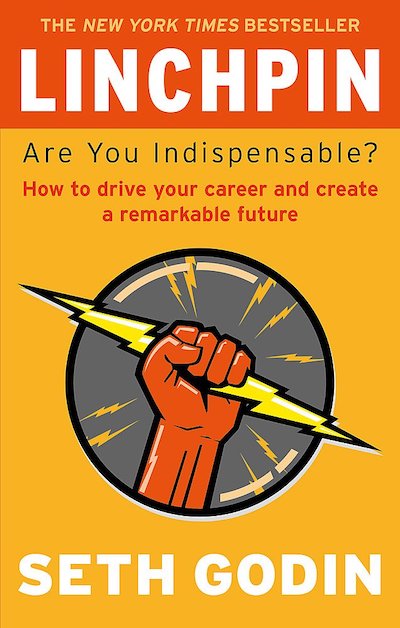
Prefer the print book? Buy on Amazon
As an Amazon Associate, Sumizeit earns from qualifying purchases.
Linchpin Book Summary
This Linchpin Book Summary covers the key ideas, lessons, and takeaways in about 20 minutes.
Short Description:
Linchpin urges being indispensable by bringing creativity and passion to work.
Helps with these goals
Want the complete 20-minute summary?
- Full structured summary
- Video Summary
- Podcast Summary
- Audio summary
- Key takeaways
- Exercises
- Quiz
- Highlights and notes
- Ask the book with AI
Want a Free Weekly Read?
Get a free summary every week straight to your mailbox.
Preview the Linchpin book summary
Below is a preview of Sumizeit’s comprehensive human-written summary of Linchpin by Seth Godin. The full summary is 15-20 minutes long and covers the book’s key ideas in text, audio, visual, and video formats. Unlock the full 20 Minute Summary
Forget being a drone at work and make yourself truly indispensable. With the help of Seth Godin’s Linchpin: Are You Indispensable you get all the tips and tricks to learn how to become a linchpin at work by pouring all of your energy into the right things.
By making yourself a linchpin at work, you will find that you enjoy your career, find work more rewarding, and also make a better impression within your company.
How Linchpin: Are You Indispensable will help make you less likely to be replaced at work
In Linchpin, you will learn ways to make yourself irreplaceable at work, while also making your chosen career more rewarding for yourself.
You will also come to realize that if you are simply following instructions all day, you really can be replaced with ease.
Looking back at the Industrial Revolution, we are reminded that highly skilled people are not always necessary to manufacture products that may seem complicated. The production process for many things can be broken into different steps that make the process much easier. In turn, this lets companies hire workers that are unskilled to get the job done.
Because of this, manufacturing jobs are considered relatively simple since employees are only required to show up to work and follow instructions. These workers are just “cogs in a machine.”
For these types of workers, you are easily replaceable because there are plenty of other people who can show up and follow instructions. This also means that you are not in a position where you can potentially ask for more money or benefits.
Today, even jobs that are considered white-collar, and less likely to be outsourced are being threatened. Everyone from secretaries, travel agents, and stockbrokers among others, are finding their jobs being outsourced as they are found to be replaceable.
If a job requires you to simply follow the instructions, it can be done anywhere and by anyone, leaving you easily replaced.
The best jobs go to linchpins who are considered harder to replace
There are a lot of people who simply show up to work in order to get their paycheck. They often find work to be a chore that is tedious and a “necessary evil.”
However, this mindset does not go unnoticed. This apparent lack of motivation is something management pays attention to, and when times are hard, these are the workers that lose their jobs first.
These workers in turn help provide an opportunity for someone who wants to be irreplaceable because they will not be considered unremarkable. It is these people we consider to be linchpins.
One does not need to be a CEO to be a linchpin. In many cases, it is the worker with the most passion for their job that is considered to be a linchpin, because it will not be easy to replace them and the passion they bring to work.
You would almost consider a linchpin to be like an artist because of all the passion and heart…
Want the complete 20-minute summary?
- Full structured summary
- Video Summary
- Podcast Summary
- Audio summary
- Key takeaways
- Exercises
- Quiz
- Highlights and notes
- Ask the book with AI
Who should read Linchpin?
Linchpin is for anyone who feels stuck in a replaceable job or fears they could be easily replaced by automation or outsourcing. Whether you're an employee seeking greater security and fulfillment, an entrepreneur building your brand, or someone looking to transform your work into something meaningful, this book offers a roadmap to becoming truly indispensable in your field.
Why does Linchpin matter?
In today's economy, following instructions and doing the minimum is no longer enough to guarantee job security or career advancement. Seth Godin's Linchpin challenges the outdated factory-worker mentality and shows why emotional investment, creativity, and genuine contribution are the only sustainable paths to professional irreplaceability. The book's insights become more relevant as AI and outsourcing continue to threaten routine jobs across all industries.
What are the key themes in Linchpin?
- Becoming indispensable through emotional investment in your work
- Overcoming fear and the lizard brain to stand out from the crowd
- Treating your work as art rather than a transaction
- Delivering results without waiting for perfect instructions
- Giving genuine value without expecting immediate returns
- Choosing to be exceptional rather than following the herd
Want the complete 20-minute summary?
- Full structured summary
- Video Summary
- Podcast Summary
- Audio summary
- Key takeaways
- Exercises
- Quiz
- Highlights and notes
- Ask the book with AI
How can you apply ideas from Linchpin?
- Identify one task in your current role and approach it with artist's passion—add creativity, care, and emotional investment to transform how it's perceived and executed
- Create multiple career paths or skill-development goals so that fear of failure in one direction doesn't paralyze you from moving forward
- Practice giving value without immediate expectation of return—offer genuine help, mentorship, or insight to colleagues without keeping score
- Push yourself to produce and ship work before it feels perfect; set a deadline and commit to delivering something imperfect rather than waiting indefinitely
- Distinguish between constructive and harmful criticism in feedback you receive; actively use constructive feedback to improve while ignoring the noise
- Document a decision you made without waiting for detailed instructions, and reflect on how that autonomy created value your manager didn't anticipate
What common mistakes do readers make with Linchpin?
- Waiting for perfect conditions or complete instructions before taking action, which delays growth and signals that you need to be managed
- Believing that credentials, title, or years of experience automatically make you indispensable without emotional investment or exceptional contribution
- Giving value only with the expectation of immediate or visible return, which creates transactional relationships rather than genuine loyalty
- Allowing fear of criticism or standing out to keep you invisible and replaceable instead of pushing through that discomfort to develop your unique voice
Sumizeit Exercises Apply what you've learned
Turn ideas from Linchpin into action with a short guided reflection: identify the biggest takeaway, connect it to your life, and commit to one step you can take in the next 24 hours.
What is the expert analysis of Linchpin?
Overview
Linchpin: Are You Indispensable? is a provocative work by Seth Godin, a renowned entrepreneur and marketing guru known for his influential contributions to business thinking and modern marketing strategies. Godin challenges conventional workplace norms by urging readers to transcend the role of mere “cogs in the machine” and instead become indispensable contributors—linchpins—who infuse creativity, emotional labor, and initiative into their work. The book’s significance lies in its timely critique of industrial-era work models and its call for a paradigm shift towards individual agency and artistry in professional life.
Core Thesis
At the heart of Linchpin is the argument that in an increasingly automated and outsourced economy, the only way to secure one’s professional relevance and fulfillment is to become irreplaceable by embodying qualities that machines and routine processes cannot replicate. Godin posits that linchpins are those who bring passion, creativity, emotional investment, and courageous individuality to their roles. They do not merely follow instructions; they innovate, solve problems independently, and willingly expose themselves to vulnerability and risk in order to add unique value. This transformation from replaceable worker to indispensable artist is framed as a conscious choice that requires overcoming fear and embracing generosity without expectation of reward.
Strengths
- Compelling Reframing of Work: Godin’s metaphor of the linchpin as an artist elevates everyday labor into a creative and meaningful endeavor, inspiring readers to rethink their relationship with their jobs.
- Accessible and Motivational: The book’s language and examples resonate broadly, offering practical encouragement to a wide audience regardless of industry or educational background.
- Insightful Critique of Industrial-Era Employment: By tracing how the division of labor has historically devalued individual skill and creativity, Godin contextualizes the urgency of his message.
- Focus on Emotional Labor and Generosity: Highlighting the importance of emotional investment and giving without expectation introduces a nuanced dimension often overlooked in business literature.
- Psychological Realism: The discussion of the “lizard brain” and fear of standing out acknowledges deep-seated human anxieties, making the call to action psychologically grounded.
Critiques & Counterarguments
- Overgeneralization of Work Roles: The book tends to dichotomize workers into replaceable drones versus linchpins, which oversimplifies the complex spectrum of roles and contributions in modern organizations.
- Limited Empirical Support: Godin’s assertions rely heavily on anecdotal evidence and motivational rhetoric rather than rigorous empirical research, which may weaken the book’s prescriptive power in certain professional contexts.
- Neglect of Structural Constraints: The emphasis on individual choice and agency underplays systemic factors such as organizational culture, economic inequality, and labor market dynamics that limit workers’ ability to become linchpins.
- Competing Views on Job Security: Research in labor economics and organizational behavior suggests that specialization and standardization can also create job security and efficiency, challenging the idea that only creative individuality ensures indispensability.
- Potential for Burnout: The call to pour emotional labor and passion into work may inadvertently promote unrealistic expectations and contribute to worker burnout, especially in environments lacking adequate support.
Who Should Read This
Linchpin is ideally suited for professionals at any stage who seek to invigorate their careers with purpose and creativity. It is particularly valuable for individuals feeling trapped in monotonous roles or those aspiring to leadership and innovation within their fields. Entrepreneurs, creatives, and knowledge workers will find Godin’s insights especially resonant. However, readers should approach the book with a critical mindset, recognizing its motivational tone and considering how structural workplace realities may affect the feasibility of becoming a linchpin.
Frequently asked questions about the Linchpin book summary
What is Linchpin about?
Linchpin: Are You Indispensable? by Seth Godin explores how to become truly indispensable at work by moving beyond instruction-following and investing emotional energy into your role. The book argues that in a modern economy, standing out through passion, creativity, and genuine contribution is the only way to secure lasting career success and avoid being replaced by automation or outsourcing.
Who should read Linchpin?
Linchpin is ideal for employees who feel stuck or replaceable, entrepreneurs building personal brands, and anyone worried about job security in an increasingly competitive market. It's particularly valuable for those struggling to move beyond routine work or who want to transform their career into something more meaningful and secure.
What are the main takeaways from Linchpin?
The core message is that to be indispensable, you must invest yourself emotionally in your work, overcome fear of standing out, produce consistently despite imperfection, and give genuine value without expecting immediate rewards. Success requires choosing to be a linchpin—a decision to break from conformity and treat your work as art.
How can I become a linchpin in my current job?
Start by identifying one area where you can inject more creativity, care, and emotional investment. Take initiative on decisions without waiting for detailed instructions, deliver work despite imperfection, and give value to colleagues without keeping score. The key is consistent emotional commitment to excellence rather than minimum compliance.
Does Linchpin require special talent or credentials?
No. Godin emphasizes that you don't need an Ivy League degree or rare talent to become indispensable. What matters is your willingness to push past fear, invest emotionally in your work, and choose to stand out from the crowd—qualities available to anyone willing to make that commitment.
What does Godin mean by treating work as art?
Treating work as art means approaching it with the same passion, care, and emotional investment an artist brings to their craft. It involves making thoughtful decisions, being creative within your role, and focusing on the emotional impact and quality of your contribution rather than just following instructions or getting paid.
How do I overcome my fear of standing out?
Godin suggests acknowledging that your lizard brain creates this fear, then actively pushing past it through consistent action. Having multiple backup plans reduces the stakes of any single failure, making it easier to tolerate visibility and criticism as you grow into your indispensable role.
About Sumizeit
Sumizeit is a profitable Scomy LLC company based in Miami, Florida. Our founders, Clemens Raemy and Weina Scott, are successful entrepreneurs with several exits. Sumizeit is a popular book summary app / micro learning app used by busy professionals and entrepreneurs with over 2,500 non-fiction book summaries and 10,000 podcast summaries in text, audio, visual, podcast, and video format. We also have stellar retention tools to make ideas stick - such as flashcards with spaced repetition, quizzes, streaks, highlighting and notes, daily challenges, riddles, mini-courses, meditation, and more. You won't only learn the idea, but also remember it. Over 90% of our users change their habits with Sumizeit.
Upgrade Now
Want the complete 20-minute summary?
- Full structured summary
- Video Summary
- Podcast Summary
- Audio summary
- Key takeaways
- Exercises
- Quiz
- Highlights and notes
- Ask the book with AI
Here's why readers love Sumizeit
Join thousands of learners getting smarter every day
"Great experience. Detailed summaries. Loved the gamification feature. Makes learning fun. Good customer service. I recommend Sumizeit to anyone. You'll learn a lot."
"I always felt busy but still wanting to keep up with the book discussion in my friend group. This was a great supplement to help me keep reading the books I find fun while keeping up with important books."
"I love this website. Instead of scrolling social media, I find myself learning a lot. I use it everyday. I recommend this app for anyone who is too busy and wants to get up to speed with their favorite books."
Linchpin Book Summary PDF
Looking for a Linchpin Book Summary PDF you can save and revisit offline? Our Linchpin Book Summary PDF captures the book’s core ideas in a clean, printable format — the key frameworks, takeaways, and structure without the fluff. Download the Linchpin Book Summary PDF when you want a reference you can annotate, share with your team, or review on the go. Get your Linchpin Book Summary PDF from the download page below.
Download Linchpin Book Summary PDFPeople also liked these summaries
Readers who explored Linchpin often enjoyed these titles next.


Want the complete 20-minute summary?
- Full structured summary
- Video Summary
- Podcast Summary
- Audio summary
- Key takeaways
- Exercises
- Quiz
- Highlights and notes
- Ask the book with AI
Featured Book Titles
Popular Book Summaries at sumizeit, leading book summary app