

Prefer the print book? Buy on Amazon
As an Amazon Associate, Sumizeit earns from qualifying purchases.
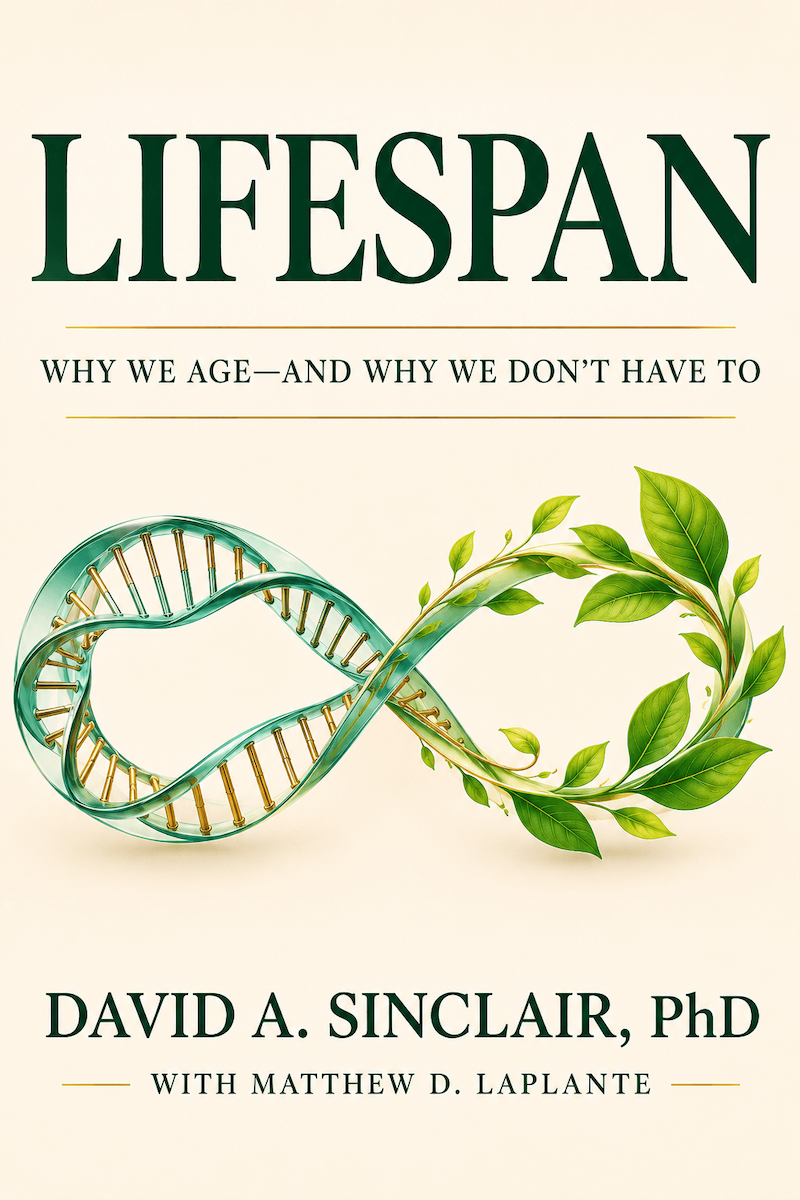
Lifespan Book Summary
This Lifespan Book Summary covers the key ideas, lessons, and takeaways in about 20 minutes.
Short Description:
Why David Sinclair calls aging a treatable disease and how you can slow it down
Helps with these goals
Preview the Lifespan book summary
Below is a preview of Sumizeit’s comprehensive human-written summary of Lifespan by David Sinclair. The full summary is 15-20 minutes long and covers the book’s key ideas in text, audio, visual, and video formats. Unlock the full 20 Minute Summary
Most of us treat getting old as a law of nature. You're born, you get a few good decades, your body wears out, and that's that. David Sinclair thinks we've been looking at it wrong. He's a Harvard geneticist who has spent his career arguing that aging is a disease. In his view it's the deadliest one we have, and it can be treated like any other.
He goes further than that. Sinclair says beating aging is inevitable. Each new drug and each new technology will add healthy years to our lives, and at some point the idea of a maximum human lifespan will stop making sense. People will stay young and well for as long as they like.
He knows how that sounds. His answer is that plenty of things sounded just as absurd a century ago. Nobody in the 1920s would have believed we'd one day edit DNA letter by letter, and now CRISPR lets us do exactly that. He also points out that the first pieces are already here. Stem cell therapies can ease some of the damage we link to old age, including arthritis and Alzheimer's disease.
The book moves through three questions. Why do we age? What can we do about it? And what happens to the world if we succeed?
Why evolution lets us fall apart
People have accepted aging for as long as there have been people. Very few have stopped to ask why it happens at all.
The oldest answer goes back to Aristotle. We grow old and die to clear space for the next generation, so death is good for the species. Biologists call this kind of thinking group selection, and it lost its standing in the 1950s. Evolution doesn't work for the good of the group.
The view that replaced it is colder. Evolution only cares that you live long enough to have children. After that, you're on your own. The technical name is antagonistic pleiotropy, which means the same genes that help you survive and reproduce when you're young also wear you down once you're past breeding age. Nature never had a reason to fix that second part.
There's a pattern across species that backs this up. Animals evolve to breed fast or to live long. They don't do both. Building a body that lasts takes a huge amount of energy, and so does raising lots of offspring. Almost no species has had enough resources to pay for both at once.
The DNA damage theory and why Sinclair rejects it
Sinclair cares less about why we age than about how. What is physically going wrong inside us?
The popular answer is that our DNA takes hits over a lifetime. Random mutations, sunlight and other radiation, pollution, and many other things chip away at our genes. The damage piles up until our cells can't do their jobs.
Sinclair says cloning proves this wrong. Scientists can take a cell from an old, sick animal and use it to grow a young,…
Want the complete 20-minute summary?
- Full structured summary
- Video Summary
- Podcast Summary
- Audio summary
- Key takeaways
- Exercises
- Quiz
- Highlights and notes
- Ask the book with AI
Who should read Lifespan?
Lifespan is for anyone concerned about aging, health, and longevity—whether you're looking to live longer or simply want to understand the biology behind getting older. It appeals to people curious about cutting-edge genetics, those interested in preventive health strategies, and readers who wonder whether the future might hold radical life extension.
Why does Lifespan matter?
As medical science advances and lifespans increase globally, understanding aging as a disease rather than an inevitable fate reshapes how we approach health and longevity. David Sinclair's work challenges conventional assumptions about old age and offers practical strategies available today, while also raising urgent questions about society's readiness for extended lifespans and the ethical implications of life-extension treatments.
What are the key themes in Lifespan?
- Aging as a treatable disease rather than natural destiny
- Epigenetic noise and the loss of genetic information over time
- Stress and hormesis as tools for cellular repair and longevity
- The gap between lifespan and healthspan
- Technology and innovation as solutions to biological aging
- Societal transformation needed to support radically extended lifespans
- The role of sirtuins and Yamanaka factors in reversing aging
- Inequality and access in life-extension treatments
How can you apply ideas from Lifespan?
- Adopt intermittent fasting or time-restricted eating to trigger cellular repair pathways without extreme dieting
- Increase exercise intensity and cold exposure to maximize telomere protection and stress-induced longevity benefits
- Reduce meat consumption or adopt vegetarian eating patterns to activate survival mechanisms similar to calorie restriction
- Use wearable biometric devices and regular health screenings to catch diseases before symptoms emerge
- Design a personalized diet and exercise plan informed by your genetic risk factors and daily biometric data
What common mistakes do readers make with Lifespan?
- Assuming aging is purely genetic and inevitable, overlooking the role of epigenetic control that can be reset
- Focusing treatment on individual age-related diseases rather than slowing aging as the root cause of multiple conditions
- Neglecting hormesis and mild stress as longevity tools, only viewing stress as harmful
- Dismissing long-term environmental and social responsibility because you don't expect to live to see distant consequences
Sumizeit Exercises Apply what you've learned
Turn ideas from Lifespan into action with a short guided reflection: identify the biggest takeaway, connect it to your life, and commit to one step you can take in the next 24 hours.
What is the expert analysis of Lifespan?
Overview
Lifespan is a provocative and scientifically grounded exploration of aging authored by David Sinclair, a distinguished Harvard geneticist renowned for his pioneering research on the biology of aging and sirtuins. Sinclair challenges the entrenched notion of aging as an immutable natural process, instead framing it as a disease amenable to treatment and eventual cure. Published in 2019, the book synthesizes cutting-edge genetic research, emerging biotechnologies, and philosophical reflections on the implications of radically extended human life, making it a landmark contribution to contemporary discourse on longevity and human health.
Core Thesis
Sinclair’s central argument is that aging is not an inevitable decline but a pathological process driven primarily by epigenetic deterioration—what he terms the "Information Theory of Aging." Contrary to the dominant DNA damage theory, Sinclair posits that while the genetic code remains intact, the epigenome—the regulatory system that controls gene expression—degrades over time, causing cells to lose their identity and function. This epigenetic "noise" can potentially be reversed or mitigated, thereby extending both lifespan and healthspan. Through interventions ranging from lifestyle modifications like intermittent fasting and hormesis to advanced therapies involving sirtuin activation, senolytics, and Yamanaka factors, Sinclair envisions a future where aging can be slowed, halted, or even reversed.
Strengths
- Interdisciplinary Integration: Sinclair adeptly weaves genetics, molecular biology, evolutionary theory, and emerging medical technologies into a cohesive narrative that is accessible yet intellectually rigorous.
- Innovative Framework: The Information Theory of Aging offers a compelling alternative to traditional DNA damage paradigms, shifting focus to epigenetic regulation and opening new therapeutic avenues.
- Practical Guidance: The book balances visionary science with actionable advice, such as intermittent fasting and exercise, grounding futuristic concepts in present-day lifestyle choices.
- Ethical and Societal Reflection: Sinclair does not shy away from the profound societal challenges posed by longevity, including inequality, overpopulation, and cultural stagnation, demonstrating a nuanced awareness of the broader implications.
- Optimistic yet Cautious Tone: While optimistic about scientific progress, Sinclair acknowledges the experimental nature of many therapies and the uncertainties ahead, lending credibility to his claims.
Critiques & Counterarguments
- Minority Position on DNA Damage: Sinclair’s rejection of the DNA damage theory remains contentious. A substantial body of research continues to support DNA mutations and oxidative damage as central to aging, suggesting that epigenetic changes may be one of multiple interacting mechanisms rather than the sole driver.
- Evidence Base for Reversal: While animal studies on senolytics and Yamanaka factors are promising, human applications remain preliminary. The translation from murine models to humans is notoriously fraught, and long-term safety and efficacy are unproven.
- Oversimplification of Evolutionary Dynamics: The evolutionary arguments, particularly antagonistic pleiotropy, while well-established, may understate the complexity of aging’s multifactorial origins, including stochastic events and environmental interactions.
- Societal and Ethical Challenges Underestimated: Although Sinclair discusses potential societal impacts, critics argue that the book is overly optimistic about humanity’s capacity to manage issues like inequality and resource allocation, which are deeply entrenched and politically fraught.
- Technological and Economic Access: The assumption that longevity therapies will become widely accessible is debatable, given current disparities in healthcare infrastructure and the high costs associated with advanced biotechnologies.
Who Should Read This
Lifespan is essential reading for scholars and practitioners in genetics, gerontology, and biomedical research, as well as policymakers and ethicists grappling with the future of human health. It also appeals to intellectually curious lay readers interested in the science of aging, longevity, and the ethical dimensions of life extension. Those seeking a rigorous yet hopeful vision of how biotechnology might transform human aging will find Sinclair’s work both inspiring and thought-provoking, while readers looking for a balanced critique of aging theories will appreciate the book’s engagement with competing ideas.
Frequently asked questions about the Lifespan book summary
What is Lifespan about?
Lifespan by David Sinclair argues that aging is a treatable disease caused by epigenetic noise—the loss of genetic information over time—rather than inevitable biological decline. The book explains the science of aging, describes emerging treatments available today and in development, and explores the societal changes needed if humans achieve radical life extension.
Who should read Lifespan?
Anyone interested in longevity, health, genetics, or the future of human civilization will find value in Lifespan. It appeals to readers curious about cutting-edge science, those seeking practical strategies to live longer and healthier, and people concerned about how society must adapt to extended lifespans.
What are the main takeaways from Lifespan?
The main takeaways are that aging is a disease with identifiable causes and potential cures; epigenetic noise, not DNA damage, drives aging; practical tools like fasting and exercise can slow aging today; and emerging treatments like senolytics and Yamanaka factors may one day reverse aging. Additionally, achieving extended lifespans requires fundamental changes to healthcare, economics, and long-term thinking.
What is the information theory of aging?
Sinclair's information theory proposes that aging occurs when the epigenome—the system controlling which genes switch on and off—accumulates noise over time. The genetic instructions remain intact, but static in the system prevents them from being read correctly, causing cells to malfunction and bodies to decline. Clearing this noise, rather than repairing DNA, is the path to reversing aging.
What are sirtuins and why do they matter for aging?
Sirtuins are enzymes that manage the epigenome and respond to cellular stress by turning genes on and off, repairing DNA, and calming inflammation. As we age, sirtuins become overwhelmed by constant DNA breaks and get pulled away from their regular duties, creating epigenetic chaos. Helping sirtuins work better is central to Sinclair's approach to slowing or reversing aging.
What are Yamanaka factors and how could they reverse aging?
Yamanaka factors are four genes discovered by researcher Shinya Yamanaka that can revert adult cells back to immature stem cells capable of becoming any cell type. Sinclair believes these factors, combined with other treatments, could one day wipe away epigenetic damage across the entire body and reset a person's biological clock, though he estimates it will take at least ten more years to develop a safe, effective human treatment.
What practical steps can I take today to slow aging?
You can start immediately with intermittent fasting, increased exercise (especially in cold), reduced meat consumption, and stress from mild hardship to activate repair pathways. Wearable devices and regular health checkups help catch disease early. These hormesis-based approaches activate the body's ancient survival programs that promote cellular repair and longevity.
What are the main concerns about extending human lifespan?
Sinclair identifies three key risks: stagnation, as generational turnover slows without deaths; inequality, as the wealthy gain centuries before others; and overpopulation, straining resources and environment. He argues these challenges are solvable through human ingenuity and that historical trends show longer lives correlate with better conditions for most people, not worse.
About Sumizeit
Sumizeit is a profitable Scomy LLC company based in Miami, Florida. Our founders, Clemens Raemy and Weina Scott, are successful entrepreneurs with several exits. Sumizeit is a popular book summary app / micro learning app used by busy professionals and entrepreneurs with over 2,500 non-fiction book summaries and 10,000 podcast summaries in text, audio, visual, podcast, and video format. We also have stellar retention tools to make ideas stick - such as flashcards with spaced repetition, quizzes, streaks, highlighting and notes, daily challenges, riddles, mini-courses, meditation, and more. You won't only learn the idea, but also remember it. Over 90% of our users change their habits with Sumizeit.
Upgrade Now
Here's why readers love Sumizeit
Join thousands of learners getting smarter every day
"Great experience. Detailed summaries. Loved the gamification feature. Makes learning fun. Good customer service. I recommend Sumizeit to anyone. You'll learn a lot."
"I always felt busy but still wanting to keep up with the book discussion in my friend group. This was a great supplement to help me keep reading the books I find fun while keeping up with important books."
"I love this website. Instead of scrolling social media, I find myself learning a lot. I use it everyday. I recommend this app for anyone who is too busy and wants to get up to speed with their favorite books."
Lifespan Book Summary PDF
Looking for a Lifespan Book Summary PDF you can save and revisit offline? Our Lifespan Book Summary PDF captures the book’s core ideas in a clean, printable format — the key frameworks, takeaways, and structure without the fluff. Download the Lifespan Book Summary PDF when you want a reference you can annotate, share with your team, or review on the go. Get your Lifespan Book Summary PDF from the download page below.
Download Lifespan Book Summary PDFPeople also liked these summaries
Readers who explored Lifespan often enjoyed these titles next.
Ready to read the whole thing?
- Full structured summary
- Video Summary
- Podcast Summary
- Audio summary
- Key takeaways
- Exercises
- Quiz
- Highlights and notes
- Ask the book with AI
Featured Book Titles
Popular Book Summaries at sumizeit, leading book summary app