


Prefer the print book? Buy on Amazon
As an Amazon Associate, Sumizeit earns from qualifying purchases.
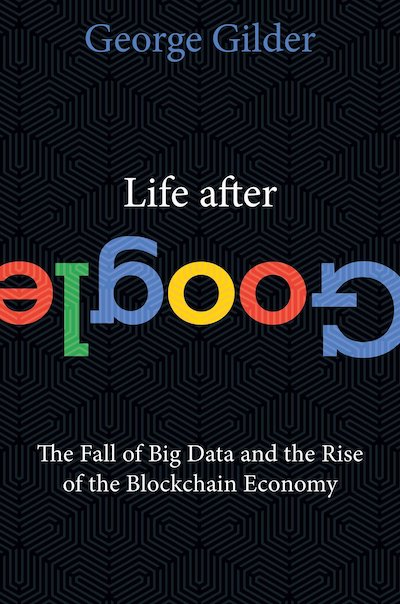
Life After Google Book Summary
This Life After Google Book Summary covers the key ideas, lessons, and takeaways in about 20 minutes.
Short Description:
Life After Google predicts blockchain will replace centralized big data models.
Want a Free Weekly Read?
Get a free summary every week straight to your mailbox.
Preview the Life After Google book summary
Below is a preview of Sumizeit’s comprehensive human-written summary of Life After Google by George Gilder. The full summary is 15-20 minutes long and covers the book’s key ideas in text, audio, visual, and video formats. Unlock the full 20 Minute Summary
There is no denying that Google is a modern powerhouse of information.
But, what happens if one day Google just disappears?
Where will all our free knowledge go?
Who will swoop in to save us?
This is where cryptocurrencies, blockchain, and bitcoin enter the scene.
In “Life After Google” George Gilder explores how Google is certain to come to an end in the future. And, how cryptocurrencies, blockchain, and bitcoin will replace it.
“Yet I believe the Google system of the world will fail, indeed be swept away in our time (and I am seventy-eight!). It will fail because its every major premise will fail.”- George Gilder
By understanding how technology is changing and how Google will no longer suit us in the future, you will be able to see the ever-changing world through Gilder’s eyes.
It’s All About That Big Data
Google’s system has most definitely defined the world today. Google informs the technology we use every day. It defines our institutions. And, it shapes our lives with the knowledge it gives to us.
Google’s vision is set up around big data. It collects all the information that’s put out into the internet universe. With that information it extracts new information from it through their famous ever-changing algorithms.
Google started with a database of just internet information. But, since then it has come to include maps, books, and even face recognition! Google wants to know everything, so privacy does not go hand-in-hand with their vision.
On top of that, they have expanded to Google Docs, Google Sheets, Gmail, you name it!
Google makes their money through advertising. People are paying Google by showing them attention, rather than sending them a subscription fee.
“Google offers to its “customers” is free. Internet searches are free. Email is free. The vast resources of the data centers, costing Google an estimated thirty billion dollars to build, are provided essentially for free. Free is not by accident. If your business plan is to have access to the data of the entire world, then free is an imperative.”- George Gilder
Though Google seems like it has everything under the sun to offer, it has gained the title of “Siren Server” by Jason Lanier, who argues that Google is going to be the death of itself in the future.
Artificial Intelligence
The field of artificial intelligence is growing. And, people involved with the cause understand that though it is dangerous work, it is inevitable. So, even though they are working toward the cause, they believe in informing people of its danger too.
Though, for artificial intelligence to really be a threat, it needs to be a complete system. That means it has one theory that covers everything. And, for that it would have to be specifically programmed that way.
But, any logical system depends on the situation, so it cannot be complete. There always needs to be an external authority or force.
“Whereas Google envisages an era of machine dominance through artificial intelligence, you will rule…
Want the complete 20-minute summary?
- Full structured summary
- Video Summary
- Podcast Summary
- Audio summary
- Key takeaways
- Exercises
- Quiz
- Highlights and notes
- Ask the book with AI
Who should read Life After Google?
Life After Google is for technologists, entrepreneurs, and forward-thinking professionals who want to understand how decentralized systems will reshape the digital world. If you're curious about blockchain, cryptocurrency, and the future of internet infrastructure beyond today's tech giants, this book provides a compelling vision of what comes next.
Why does Life After Google matter?
As centralized platforms like Google dominate our data and attention, George Gilder argues this system is unsustainable and will be replaced by blockchain-based alternatives that restore individual privacy and control. Understanding this shift is critical for anyone investing in, building on, or simply navigating emerging technologies that will define the next era of the internet.
What are the key themes in Life After Google?
- The inevitable decline of centralized tech monopolies
- Blockchain and cryptocurrency as liberating technologies
- Privacy, security, and individual data ownership
- Decentralization as the future of digital architecture
- The limitations of artificial intelligence and big data systems
- Hardware innovation and parallel processing
- Smart contracts and automated trust
How can you apply ideas from Life After Google?
- Adopt decentralized alternatives to Google services to regain control over your personal data and reduce surveillance exposure
- Invest in or build on blockchain platforms and smart contract systems rather than reinforcing centralized cloud infrastructure
- Use hardware wallets and private key management to secure cryptocurrency holdings and ensure personal custody of digital assets
- Support or participate in blockchain-based identity systems that let you prove who you are without sharing personal information
- Explore decentralized app (dApp) platforms like Ethereum or Blockstack for services you currently source from centralized providers
- Develop parallel processing architectures for computing-intensive tasks to reduce reliance on centralized data centers
What common mistakes do readers make with Life After Google?
- Assuming Google's dominance is permanent rather than understanding the cyclical nature of technological disruption
- Conflating bitcoin's limitations as a currency with the broader revolutionary potential of blockchain technology itself
- Trusting centralized platforms with sensitive data without considering the privacy costs of free services
- Waiting for institutions and universities to lead innovation adoption rather than embracing experimental decentralized alternatives
Sumizeit Exercises Apply what you've learned
Turn ideas from Life After Google into action with a short guided reflection: identify the biggest takeaway, connect it to your life, and commit to one step you can take in the next 24 hours.
What is the expert analysis of Life After Google?
Overview
Life After Google is a provocative work by George Gilder, a renowned American economist, writer, and technology advocate. Gilder, known for his influential contributions to supply-side economics and his foresight into technological trends, offers a compelling critique of Google's dominance in the digital age. The book is significant for its bold prediction of the eventual decline of Google’s centralized data empire and its argument that blockchain technology and cryptocurrencies will redefine the future of information, privacy, and online security. Gilder’s background as a thinker at the intersection of economics and technology lends weight to his analysis, making this book a critical read for those interested in the evolving landscape of digital power and innovation.
Core Thesis
Gilder’s central argument is that Google’s centralized model—based on massive data aggregation and control—is inherently unsustainable and destined to fail. He posits that the future belongs to decentralized technologies such as blockchain and cryptocurrencies, which empower individuals by returning control over personal data and digital identity. This shift, he argues, will dismantle the “Siren Server” model epitomized by Google, replacing it with a more secure, private, and user-controlled internet ecosystem. The book suggests that artificial intelligence, rather than dominating humans, will become a tool subservient to individual users, programmed and controlled by them. Gilder envisions a technological renaissance driven by decentralized hardware, smart contracts, and new economic models that challenge the monopolistic hold of current tech giants.
Strengths
- Visionary Perspective: Gilder offers a forward-looking critique that challenges the prevailing narrative of tech monopolies as permanent fixtures, encouraging readers to reconsider the trajectory of digital power.
- Integration of Technology and Economics: The book adeptly connects economic principles with technological innovation, particularly in explaining how blockchain disrupts centralized data economies.
- Clear Explanation of Complex Concepts: Gilder demystifies blockchain, cryptocurrencies, and smart contracts, making these technical subjects accessible to a broad audience without sacrificing depth.
- Emphasis on Privacy and Security: The analysis highlights the critical importance of personal data sovereignty in an era increasingly dominated by surveillance capitalism.
- Engagement with Contemporary Debates: By referencing figures like Vitalik Buterin and institutions such as the Thiel Fellowship, Gilder situates his argument within ongoing technological and entrepreneurial movements.
Critiques & Counterarguments
- Overstated Imminence of Google’s Decline: While Google faces challenges, its entrenched infrastructure, vast user base, and continuous innovation suggest a more gradual evolution rather than abrupt collapse.
- Technological Optimism and Oversimplification: Gilder’s faith in blockchain as a panacea may underestimate the scalability issues, energy consumption, and regulatory hurdles that currently limit widespread adoption.
- Limited Engagement with Privacy Trade-offs: The book celebrates decentralization but does not fully address the complexities of user responsibility and potential vulnerabilities in decentralized systems.
- Contrasting Views on AI: Gilder’s assertion that AI will remain a tool controlled by humans contrasts with research highlighting risks of autonomous AI systems and ethical dilemmas, suggesting a more nuanced future.
- Economic Critiques of Bitcoin’s Stability: The debate over bitcoin’s suitability as a “gold standard” remains unresolved, with critics pointing to volatility and limited practical use as barriers to its role as a stable currency.
Who Should Read This
Life After Google is ideal for readers who are intellectually curious about the intersection of technology, economics, and society. It will resonate with entrepreneurs, technologists, policy makers, and scholars interested in the future of digital infrastructure and data sovereignty. Those skeptical of centralized tech monopolies or fascinated by blockchain’s disruptive potential will find Gilder’s insights particularly compelling. However, readers should approach the book with a critical mindset, balancing Gilder’s optimistic vision with awareness of the practical and theoretical challenges inherent in the technologies he champions.
Frequently asked questions about the Life After Google book summary
What is Life After Google about?
Life After Google by George Gilder argues that Google's centralized data-collection model will inevitably collapse and be replaced by blockchain-based decentralized systems. The book explores how cryptocurrencies, smart contracts, and distributed ledger technology will restore privacy, security, and individual control over digital life in ways that Google's surveillance-dependent architecture cannot sustain.
Who should read Life After Google?
Life After Google is essential reading for entrepreneurs, technologists, investors, and policymakers interested in the future of digital infrastructure and internet architecture. Anyone concerned about privacy, corporate data monopolies, or the emerging blockchain ecosystem will find Gilder's vision of decentralized alternatives compelling and thought-provoking.
What are the main takeaways from Life After Google?
The main takeaways from Life After Google are that centralized tech monopolies like Google are fundamentally unsustainable, blockchain technology offers a viable decentralized alternative, and individual users will regain control over their data and privacy. Gilder also argues that cryptographic security, smart contracts, and distributed systems will reshape digital commerce and transform how we interact with technology entirely.
How does blockchain technology work according to Gilder?
According to Life After Google, blockchain uses distributed networks where transactions are verified across multiple computers and recorded in timestamped blocks linked chronologically. The system is unhackable because any tampering would be immediately detected across the network, and users control their identity through public-private key encryption that proves who they are without revealing personal information.
Why does Gilder believe Google will fail?
Gilder argues in Life After Google that Google's centralized hub model violates fundamental logical principles—no complete system can exist without external verification. Additionally, as hardware costs drop and parallel processing systems become viable, decentralized alternatives will outcompete Google's expensive centralized infrastructure, making surveillance capitalism economically obsolete.
What role do smart contracts play in Gilder's vision of the future?
In Life After Google, smart contracts on platforms like Ethereum enable trustless transactions where assets are held in escrow and released automatically when conditions are met. This eliminates the need for intermediaries and central authorities, allowing individuals to transact directly with guaranteed execution of agreements through code rather than legal systems.
Is Gilder optimistic or pessimistic about artificial intelligence?
In Life After Google, Gilder is cautiously realistic about AI—he acknowledges its power but argues it cannot achieve complete dominance because all logical systems require external authority. He envisions humans as 'oracles' who program and control their machines rather than surrendering agency to algorithmic governance.
About Sumizeit
Sumizeit is a profitable Scomy LLC company based in Miami, Florida. Our founders, Clemens Raemy and Weina Scott, are successful entrepreneurs with several exits. Sumizeit is a popular book summary app / micro learning app used by busy professionals and entrepreneurs with over 2,500 non-fiction book summaries and 10,000 podcast summaries in text, audio, visual, podcast, and video format. We also have stellar retention tools to make ideas stick - such as flashcards with spaced repetition, quizzes, streaks, highlighting and notes, daily challenges, riddles, mini-courses, meditation, and more. You won't only learn the idea, but also remember it. Over 90% of our users change their habits with Sumizeit.
Upgrade Now
Here's why readers love Sumizeit
Join thousands of learners getting smarter every day
"Great experience. Detailed summaries. Loved the gamification feature. Makes learning fun. Good customer service. I recommend Sumizeit to anyone. You'll learn a lot."
"I always felt busy but still wanting to keep up with the book discussion in my friend group. This was a great supplement to help me keep reading the books I find fun while keeping up with important books."
"I love this website. Instead of scrolling social media, I find myself learning a lot. I use it everyday. I recommend this app for anyone who is too busy and wants to get up to speed with their favorite books."
Life After Google Book Summary PDF
Looking for a Life After Google Book Summary PDF you can save and revisit offline? Our Life After Google Book Summary PDF captures the book’s core ideas in a clean, printable format — the key frameworks, takeaways, and structure without the fluff. Download the Life After Google Book Summary PDF when you want a reference you can annotate, share with your team, or review on the go. Get your Life After Google Book Summary PDF from the download page below.
Download Life After Google Book Summary PDFPeople also liked these summaries
Readers who explored Life After Google often enjoyed these titles next.


Ready to read the whole thing?
- Full structured summary
- Video Summary
- Podcast Summary
- Audio summary
- Key takeaways
- Exercises
- Quiz
- Highlights and notes
- Ask the book with AI
Featured Book Titles
Popular Book Summaries at sumizeit, leading book summary app