As an Amazon Associate, Sumizeit earns from qualifying purchases.
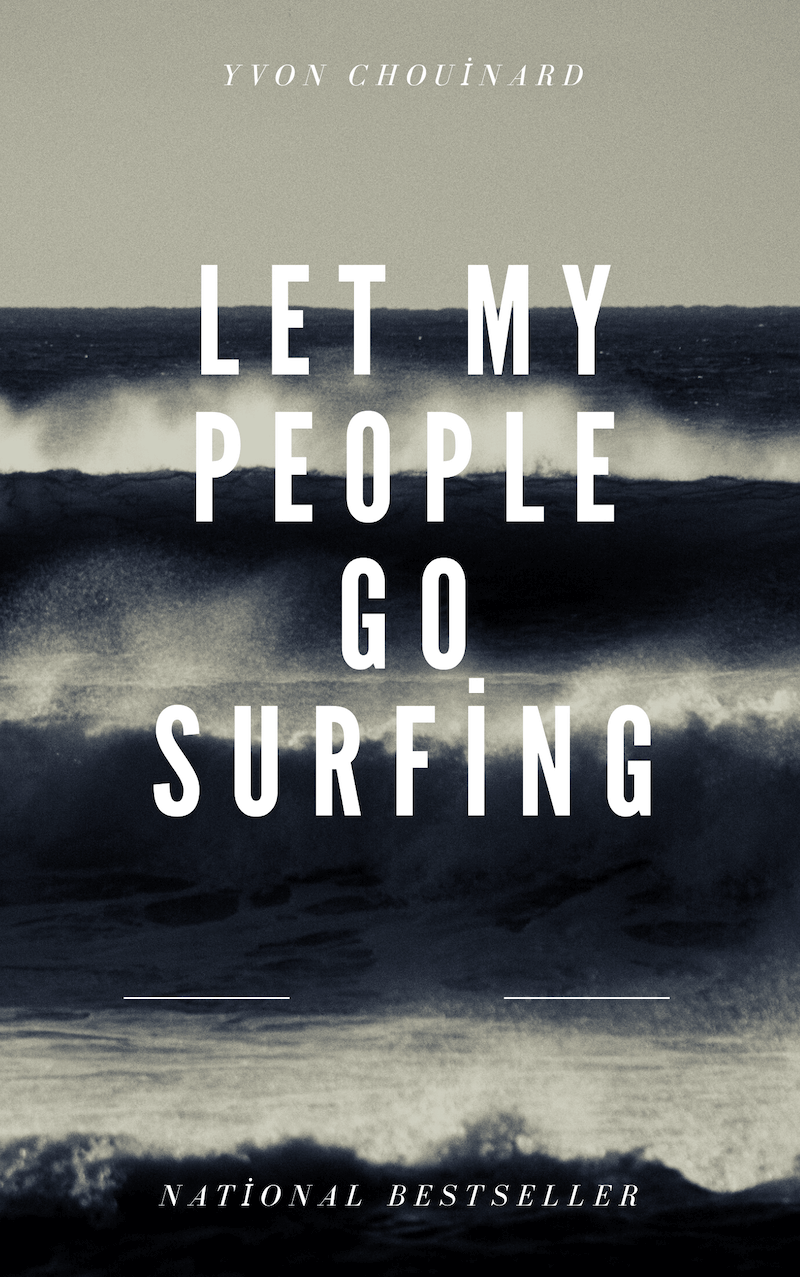
Let My People Go Surfing Book Summary
This Let My People Go Surfing Book Summary covers the key ideas, lessons, and takeaways in about 20 minutes.
- Success does not require compromising values.
- Growth is only justified if it improves the world.
- Employee freedom drives excellence.
- Transparency builds trust and accountability.
- Profit is what happens when you “do everything else right.”
Chouinard’s story is proof that ethical business can outperform conventional capitalism and that companies must become agents of regeneration rather than destruction.
Helps with these goals
Want the complete 20-minute summary?
- Full structured summary
- Video Summary
- Podcast Summary
- Audio summary
- Key takeaways
- Exercises
- Quiz
- Highlights and notes
- Ask the book with AI
What is in the Let My People Go Surfing book summary?
Below is a preview of Sumizeit’s expert-written summary of Let My People Go Surfing by Yvon Chouinard. The full summary covers the book’s key ideas in text, audio, and video.
Let My People Go Surfing begins by tracing Yvon Chouinard’s evolution from a lonely, rebellious kid into the founder of one of the world’s most respected purpose-driven companies. As a child, Chouinard found traditional schooling suffocating and authority figures overwhelming. He was small, shy, and constantly searching for independence and identity. The outdoors provided that. His first true passion was falconry—he spent hours climbing cliffs to retrieve young hawks, an activity that gradually led him into technical rock climbing.
In the late 1950s and early 1960s, climbing was not a commercial industry but a fringe counterculture. Climbers gathered in Yosemite’s Camp 4—now a historic site—where they shared gear, lived on pennies, and attempted bold first ascents. Chouinard was part of the crew that redefined the sport’s standards, alongside legends like Royal Robbins, Yvon’s close friend Tom Frost, and Warren Harding. They climbed dangerous walls like the Nose of El Capitan, often stuck for days in storms, sleeping in hammocks thousands of feet above the ground.
Because the climbing market barely existed, Chouinard saw an opportunity to craft his own gear. Using an old anvil, a coal forge, and a hand-hammer, he made stronger steel pitons that could withstand multiple placements without bending. At first, production was extremely slow—he made them one at a time—and his company consisted of selling hardware from the back of his car or sending items through mail order printed on hand-stapled catalogs.
The turning point came when the growing popularity of climbing led to environmental damage. The iconic granite of Yosemite and other climbing destinations was being permanently scarred by repeated hammering. Chouinard and Frost realized they were contributing to destruction. In 1972, they discontinued their most profitable product—the steel piton—and published an influential catalog article urging climbers to switch to removable chocks. Sales of chocks tripled within months and clean climbing became an international movement.
This decision—sacrificing financial success to protect nature—set the ethical standard Patagonia would follow for decades.
Transforming Outdoor Apparel Through Innovation, Experimentation & Cultural Insight
Patagonia began by accident. Climbers constantly tore their clothes while climbing, and Chouinard looked for tougher options. He found British rugby shirts with rubber buttons and durable collars and began importing them, soon customizing them with reinforced patches. These shirts became a staple in climbing communities. He recognized a growing demand for outdoor clothing that balanced functionality, durability, and style.
From there, Patagonia revolutionized the outdoor industry with multiple innovations:
Synthetic pile fleece: Inspired by a material used in dog blankets and carpet liners, Patagonia collaborated with Malden Mills to engineer a high-performance fleece that was warm, lightweight, and moisture-resistant. This product disrupted wool-based systems that froze when wet.
Recycled polyester fleece: Patagonia pioneered fleece made from recycled soda bottles, establishing a closed-loop material system and reducing millions of pounds of plastic waste.
Regulator layering system: Patagonia introduced modular clothing systems—base layers, insulation layers, and shells—now standard across all technical apparel companies.
At a time when outdoor clothing used dull colors—brown, grey, black, and olive—Patagonia introduced…

Want the complete 20-minute summary?
- Full structured summary
- Video Summary
- Podcast Summary
- Audio summary
- Key takeaways
- Exercises
- Quiz
- Highlights and notes
- Ask the book with AI
Who should read Let My People Go Surfing?
This book is essential for entrepreneurs, business leaders, and anyone interested in building companies with purpose and integrity. It's also valuable for employees seeking inspiration about workplace culture and activists wanting to understand how business can be a force for environmental protection. Whether you're starting a venture or questioning your career path, Chouinard's unconventional approach offers a compelling alternative to traditional corporate models.
Why does Let My People Go Surfing matter?
At a time when consumer trust in corporations is eroding and climate concerns demand urgent action, Let My People Go Surfing demonstrates that profitability and environmental responsibility aren't opposing forces. Chouinard's 40-year experiment with Patagonia proves that companies can thrive by prioritizing values, transparency, and regeneration over extraction. His 2022 decision to give away Patagonia entirely to environmental causes signals a fundamental reimagining of corporate ownership and legacy in the 21st century.
What are the key themes in Let My People Go Surfing?
- Purpose-driven business as a competitive advantage
- Environmental responsibility embedded in operations, not marketing
- Employee freedom and trust as drivers of excellence
- Activism as core strategy, not philanthropy
- Long-term thinking over quarterly profits
- Transparency and accountability in supply chains
- Personal values shaping organizational culture
What are the key lessons from the Let My People Go Surfing book summary?
Start with a genuine problem you want to solve
Chouinard created climbing pitons because he and his friends needed better gear, not because he identified a market opportunity. Authentic problems lead to products people actually want.
Sacrifice profit to protect what you love
Discontinuing profitable steel pitons to protect Yosemite's granite demonstrated that values must override revenue. This decision defined Patagonia's entire ethical foundation.
Innovation comes from real-world testing, not theory
Patagonia tests products in extreme environments with actual users rather than focus groups, ensuring designs solve real problems experienced by athletes and adventurers.
Color and aesthetics matter as much as function
Introducing bright, landscape-inspired colors transformed outdoor gear from utilitarian brown into culturally iconic fashion, proving that form and function aren't opposed.
Embrace creative constraints to force innovation
Limited budgets and materials in Patagonia's early days forced resourcefulness that led to breakthrough designs competitors with bigger budgets couldn't achieve.
Crisis can reset organizational purpose
The 1990s recession and forced layoffs became Patagonia's moment to rebuild around core values, leading to the three-part mission that guided the company forward.
Investigate the true cost of your supply chain
Chouinard's discovery of how conventional cotton farming poisoned workers and soil justified the difficult transition to organic cotton, which eventually became industry standard.
Take responsibility for products across their entire lifecycle
Programs like Worn Wear and take-back recycling treat garments as lifetime relationships with customers, not single transactions, changing how companies think about durability and waste.
Trust employees with freedom to live their values
The policy of letting employees surf or ski when conditions are good proves that measuring output instead of hours increases both morale and productivity.
Build culture through hiring people aligned with your mission
Patagonia hires slowly and deliberately for environmental commitment and outdoor passion, creating a self-reinforcing culture of people who want to be there.
Neutrality in the face of injustice is complicity
Chouinard argues companies must take public positions on environmental and social issues, using lawsuits, advertising, and donations as business tools rather than keeping politics separate.
Support small grassroots groups over large established nonprofits
Patagonia's donation strategy favors local, risk-taking organizations that challenge systems over well-funded institutions, believing impact requires courage and flexibility.
Transparency builds customer loyalty and accountability
Publishing supply chain information, environmental costs, and factory conditions creates trust that marketing campaigns cannot, making customers true partners in the mission.
Growth is only valuable if it serves the mission
Patagonia questions whether expansion creates positive impact; growth for its own sake is rejected if it compromises values or strains the company's ability to do good.
Profit is the byproduct of doing everything else right
Rather than pursuing profit as the primary goal, Patagonia focuses on quality, ethics, and environmental protection, allowing profit to follow naturally from excellent execution.
Create ownership structures that align profit with purpose
Transferring 100% of Patagonia to a purpose trust and nonprofit ensures future leadership cannot compromise the mission for short-term gains, securing the vision permanently.
Listen to employees' expertise and life outside work
Employees are athletes, experts, and adventurers; their knowledge of mountains, oceans, and wilderness directly improves products in ways corporate hierarchy cannot.
Challenge industry norms through advertising and messaging
A campaign telling customers not to buy a jacket or placing political messages inside tags uses brand platforms to question consumption and inspire action, not just awareness.
Community childcare is both an ethical imperative and a business investment
On-site, high-quality childcare prevents employee turnover and demonstrates that caring for workers' families is inseparable from business success and company culture.
Your personal story and values are your greatest competitive asset
Chouinard's authentic journey from climber to activist to entrepreneur created Patagonia's credibility in ways that no marketing team could manufacture.
Want the complete 20-minute summary?
- Full structured summary
- Video Summary
- Podcast Summary
- Audio summary
- Key takeaways
- Exercises
- Quiz
- Highlights and notes
- Ask the book with AI
How can you apply ideas from Let My People Go Surfing?
- Audit your supply chain to identify hidden environmental and social costs, then commit to transparent reporting even when results are unflattering
- Design products based on problems you personally experience or that your most passionate users face, not market research projections
- Implement flexible work policies that measure results rather than time spent, allowing employees to integrate their passions with their jobs
- Establish a product take-back or repair program to extend lifecycle and reduce waste, turning customers into partners in sustainability
- Create clear organizational values and make hiring decisions slowly, prioritizing cultural fit and mission alignment over rapid growth
- Use your company's platform and resources to publicly support causes aligned with your values, treating activism as strategy not marketing
- Review your organizational structure to ensure ownership aligns with long-term mission, considering trusts or nonprofits that protect your values beyond your lifetime
What common mistakes do readers make with Let My People Go Surfing?
- Treating sustainability as a marketing campaign rather than integrating it into operations, supply chains, and decision-making at every level
- Growing too fast without maintaining cultural cohesion, leading to diluted values and operational chaos that requires painful corrections
- Assuming employees need tight control and surveillance to be productive, when autonomy and trust actually drive better results
- Creating corporate social responsibility programs separate from core business, rather than building ethics into the products, processes, and purpose itself
Sumizeit Exercises Apply what you've learned
Turn ideas from Let My People Go Surfing into action with a short guided reflection: identify the biggest takeaway, connect it to your life, and commit to one step you can take in the next 24 hours.
What is the expert analysis of Let My People Go Surfing?
Overview
Let My People Go Surfing is a seminal work by Yvon Chouinard, the founder of Patagonia, a company renowned for its pioneering commitment to environmental sustainability and ethical business practices. The book is significant not only as a memoir chronicling Chouinard’s transformation from an adventurous climber to an innovative entrepreneur but also as a manifesto advocating for a radical redefinition of capitalism. Chouinard’s unique blend of personal narrative, business philosophy, and environmental activism offers a compelling blueprint for integrating purpose with profit in the modern corporate world.
Core Thesis
At its core, the book argues that businesses can and must operate in harmony with the planet rather than at its expense. Chouinard contends that success in business does not require sacrificing ethical values or environmental stewardship. Instead, he proposes a regenerative economic model where companies prioritize sustainability, transparency, employee autonomy, and activism. Patagonia exemplifies this model by embedding environmental responsibility into every facet of its operations—from product design and supply chain management to corporate culture and political engagement—demonstrating that profitability and planetary health are not mutually exclusive but mutually reinforcing.
Strengths
- Authentic Narrative: Chouinard’s personal journey from climber to entrepreneur grounds the book in genuine experience, lending credibility and emotional resonance to its lessons.
- Innovative Business Practices: The detailed account of Patagonia’s product innovations, such as recycled materials and modular layering systems, showcases practical applications of sustainability in industry.
- Ethical Leadership: The book’s emphasis on values-driven decision-making, including sacrificing short-term profits for environmental protection, challenges conventional business paradigms.
- Cultural Insights: By describing Patagonia’s unique work culture—centered on freedom, passion, and trust—Chouinard illustrates how employee well-being can drive productivity and innovation.
- Activism as Strategy: The integration of activism into core business strategy, rather than as mere marketing, positions Patagonia as a model for corporate responsibility and influence.
Critiques & Counterarguments
- Scalability Questions: While Patagonia’s model is inspiring, critics might question its applicability to larger, less niche companies or those in more resource-intensive industries where environmental trade-offs are more complex.
- Economic Trade-offs: The book tends to underplay the financial risks and operational challenges involved in pioneering sustainability, such as the near-collapse during the organic cotton transition, which may deter replication by risk-averse businesses.
- Selective Idealism: Chouinard’s narrative sometimes glosses over the contradictions inherent in consumerism and outdoor apparel production, including the carbon footprint of global supply chains and the environmental impact of shipping and manufacturing.
- Opposing Economic Views: Traditional capitalist theorists might argue that Chouinard’s model, while laudable, is not viable at scale without regulatory frameworks or consumer willingness to pay premiums, highlighting a tension between idealism and market realities.
- Empirical Ambiguity: Although Patagonia’s success is evident, there is limited rigorous empirical data in the book to conclusively prove that its ethical approach universally leads to superior financial performance, inviting skepticism from evidence-focused economists.
Who Should Read This
Let My People Go Surfing is essential reading for business leaders, entrepreneurs, and sustainability advocates seeking a visionary yet pragmatic approach to integrating ethics with enterprise. It will also resonate with readers interested in environmental activism, corporate social responsibility, and innovative organizational culture. Those in the outdoor industry or consumer goods sectors will find particularly rich insights, but the book’s broader philosophical and practical lessons offer value to anyone grappling with the future of capitalism and the role of business in society.
Frequently asked questions about the Let My People Go Surfing book summary
What is Let My People Go Surfing about?
Let My People Go Surfing is Yvon Chouinard's memoir about building Patagonia into a globally respected company while prioritizing environmental protection, employee freedom, and activism over profit maximization. The book traces his journey from a rebellious climber in Yosemite to founder of a business that fundamentally challenges how corporations should operate and what they should stand for.
Who should read Let My People Go Surfing?
This book is essential for entrepreneurs, business leaders, and anyone interested in building purpose-driven companies. It's also valuable for employees seeking inspiration about workplace culture, activists wanting to understand corporate power for good, and consumers curious about where their products come from and what companies truly believe in.
What are the main takeaways from Let My People Go Surfing?
The core message is that ethical business can outperform conventional capitalism and that profit should result from doing everything else right—quality, transparency, employee trust, and environmental responsibility—not from extraction and compromise. Let My People Go Surfing also demonstrates that companies can use their platforms and resources for serious activism, that employee freedom drives productivity, and that ownership structures can be redesigned to serve values permanently.
How did Patagonia become an environmental leader?
Patagonia investigated the true environmental and social cost of every aspect of its business—from cotton farming to factory conditions to product waste—then made difficult changes like switching to 100% organic cotton and creating take-back programs. The company also used its platform, profits, and lawsuits to support environmental activism and protect wild places, treating conservation as a core business strategy rather than a side initiative.
What is the 'Let My People Go Surfing' policy?
It's Patagonia's approach to work-life integration where employees are trusted to surf, ski, or pursue outdoor activities when conditions are right, rather than being chained to fixed schedules. The policy measures productivity by output and results rather than hours worked, proving that autonomy and freedom actually increase both employee satisfaction and business performance.
Why did Yvon Chouinard give away Patagonia?
In 2022, Chouinard transferred 100% ownership of Patagonia to a purpose trust and nonprofit to ensure that approximately $100 million in annual profits would fund environmental defense indefinitely. This move guarantees that future leadership cannot compromise the company's values for short-term gain, making Patagonia's mission permanent and protecting the company from being acquired or restructured for profit.
Can businesses truly be profitable while prioritizing the environment and employees?
Let My People Go Surfing proves they can. Patagonia has demonstrated for decades that companies committing to quality, transparency, employee freedom, and environmental responsibility outperform competitors focused solely on profit. The book argues that profit naturally follows when you do everything else right, not the other way around.
About Sumizeit
Sumizeit is a profitable Scomy LLC company based in Miami, Florida. It has been helping readers learn from nonfiction books for 7 years with expert-written summaries in text, audio, podcast, and video.
Want the complete 20-minute summary?
- Full structured summary
- Video Summary
- Podcast Summary
- Audio summary
- Key takeaways
- Exercises
- Quiz
- Highlights and notes
- Ask the book with AI
Here's why readers love Sumizeit
Join thousands of learners getting smarter every day
"Great experience. Detailed summaries. Loved the gamification feature. Makes learning fun. Good customer service. I recommend Sumizeit to anyone. You'll learn a lot."
"I always felt busy but still wanting to keep up with the book discussion in my friend group. This was a great supplement to help me keep reading the books I find fun while keeping up with important books."
"I love this website. Instead of scrolling social media, I find myself learning a lot. I use it everyday. I recommend this app for anyone who is too busy and wants to get up to speed with their favorite books."
Let My People Go Surfing Book Summary PDF
Looking for a Let My People Go Surfing Book Summary PDF you can save and revisit offline? Our Let My People Go Surfing Book Summary PDF captures the book’s core ideas in a clean, printable format — the key frameworks, takeaways, and structure without the fluff. Download the Let My People Go Surfing Book Summary PDF when you want a reference you can annotate, share with your team, or review on the go. Get your Let My People Go Surfing Book Summary PDF from the download page below.
Download Let My People Go Surfing Book Summary PDFPeople also liked these summaries
Readers who explored Let My People Go Surfing often enjoyed these titles next.
Want the complete 20-minute summary?
- Full structured summary
- Video Summary
- Podcast Summary
- Audio summary
- Key takeaways
- Exercises
- Quiz
- Highlights and notes
- Ask the book with AI
Featured Book Titles
Popular Book Summaries at sumizeit, leading book summary app