


Prefer the print book? Buy on Amazon
As an Amazon Associate, Sumizeit earns from qualifying purchases.
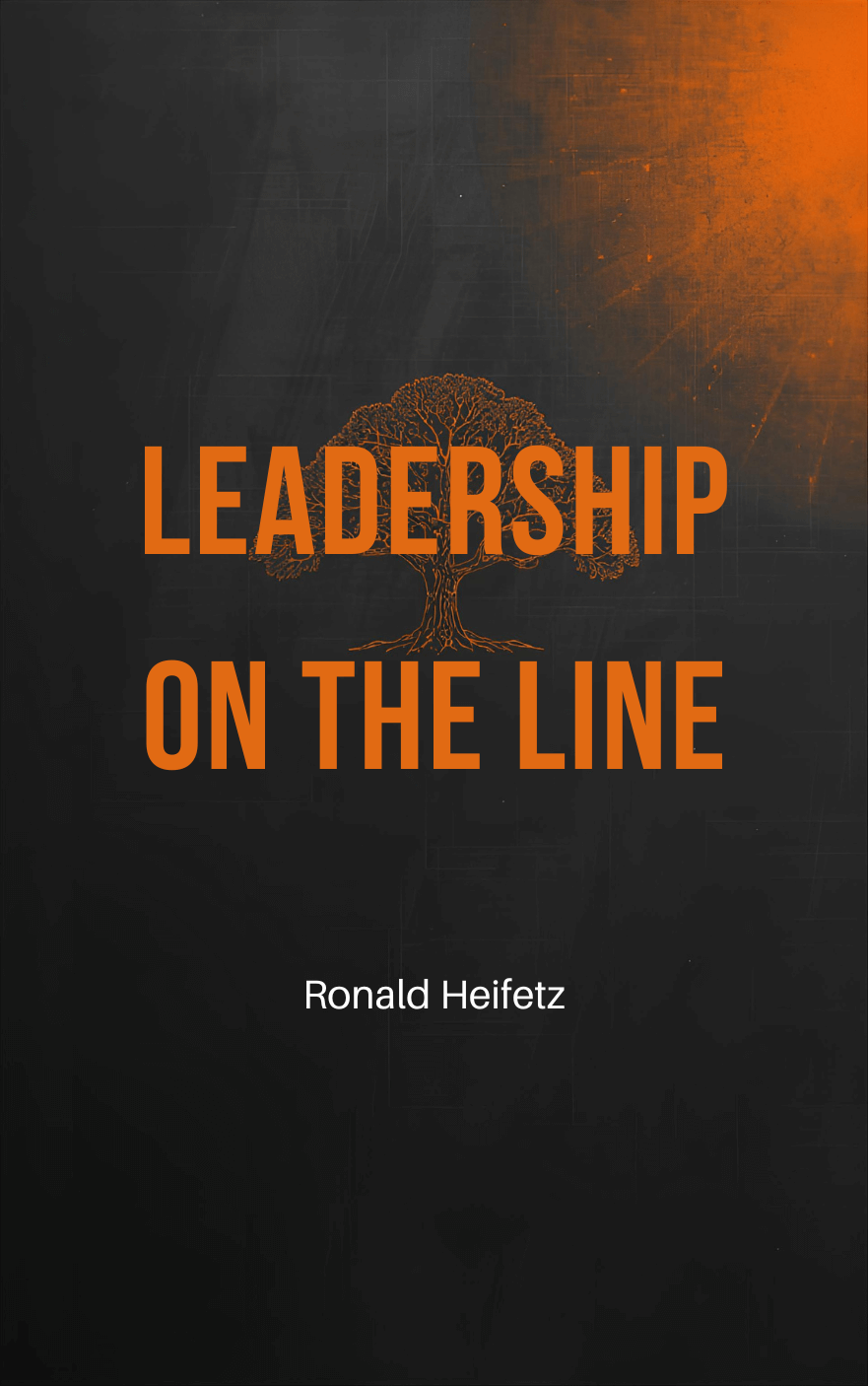
Leadership on the Line Book Summary
This Leadership on the Line Book Summary covers the key ideas, lessons, and takeaways in about 20 minutes.
Short Description:
Lead change without losing yourself—lessons on resilience, conflict, and adaptive leadership.
Enduring leadership requires resilience, humility, and a willingness to let others struggle productively. By regulating conflict, engaging resistance, and anchoring change in shared values, leaders can guide transformation without losing themselves in the process.
Helps with these goals
Preview the Leadership on the Line book summary
Below is a preview of Sumizeit’s comprehensive human-written summary of Leadership on the Line by Ronald Heifetz. The full summary is 15-20 minutes long and covers the book’s key ideas in text, audio, visual, and video formats. Unlock the full 20 Minute Summary
Leadership that truly matters almost always comes with personal cost. The authors argue that when you attempt to move a group, organization, or society forward, you inevitably disturb comfort, habits, and power structures. This disturbance creates resistance—not just from others, but within yourself. The work of leadership is therefore not only strategic or technical; it is deeply human and emotionally demanding.
Unlike conventional leadership books that focus on authority, charisma, or decision-making frameworks, this work emphasizes the internal strain leaders experience when they challenge entrenched norms. When people feel threatened, they often redirect their anxiety toward the leader. This can appear as criticism, sabotage, or personal attacks. Leaders who are unprepared for this reality may retreat, overreact, or lose their moral compass.
The authors stress that the ability to remain steady under pressure is not innate; it is cultivated. Leadership is less about maintaining control and more about staying present when the heat rises—without becoming defensive, disconnected, or reckless.
Why Leadership Exposes Your Unresolved Needs
Holding responsibility magnifies unresolved personal desires. The book identifies three powerful human drives that intensify under leadership pressure: the desire to exert control, the hunger for recognition, and the need for closeness. When left unchecked, these forces quietly sabotage judgment and behavior.
Leaders who crave control may cling to outdated systems, suppress disagreement, or refuse to delegate. Their fear of uncertainty can prevent adaptation. The authors illustrate this through a major public infrastructure project where a leader’s insistence on handling problems alone led to hidden failures and eventual removal from office.
The need for validation can be equally dangerous. Leaders driven by approval may ignore warnings, rush initiatives, or surround themselves with supporters who reinforce their worldview. The book highlights how political leaders who pursued ambitious reforms too quickly—without preparing allies or listening to dissent—ultimately weakened their influence.
Finally, the longing for intimacy can distort boundaries. Isolation, stress, and constant scrutiny can push leaders toward risky personal choices that undermine credibility and trust. These examples underscore a core lesson: leadership does not create flaws—it reveals them.
Separating Who You Are from the Role You Play
A recurring theme in the book is the danger of merging identity with position. When leaders equate their self-worth with their title, they become vulnerable to emotional collapse when criticized or removed. Praise feels intoxicating, while opposition feels deeply personal.
The authors encourage leaders to distinguish between their role—shaped by others’ expectations—and their deeper sense of self, which is rooted in values, life experiences, and personal ethics. Without this separation, leaders are more likely to react defensively or cling to power long after their usefulness has passed.
The book draws on political and literary examples to show how individuals who over-identify with leadership positions often discover, too late, that privileges and admiration were attached to the office—not the person. Leaders who maintain perspective, on the other hand, are better able to absorb criticism, adjust course, and remain grounded.
This distinction allows leaders to hear feedback without internalizing it and to…
Want the complete 20-minute summary?
- Full structured summary
- Video Summary
- Podcast Summary
- Audio summary
- Key takeaways
- Exercises
- Quiz
- Highlights and notes
- Ask the book with AI
Who should read Leadership on the Line?
Leadership on the Line is essential for anyone in a position of authority—executives, managers, politicians, nonprofit leaders, and organizational change agents. This book is particularly valuable for leaders who feel the emotional weight of their roles or who struggle with resistance from their teams and stakeholders. It's also for those seeking to understand why personal integrity and emotional resilience matter as much as strategy and decision-making.
Why does Leadership on the Line matter?
In an era of rapid organizational and social change, leaders face mounting pressure to move people forward while managing their own unexamined fears and desires. Leadership on the Line reveals that the biggest obstacles to effective leadership are often internal—rooted in how leaders handle criticism, manage their need for control or approval, and maintain their humanity under stress. Understanding these dynamics is critical for leaders who want to create lasting change without burning out or losing their moral compass.
What are the key themes in Leadership on the Line?
- The personal cost and emotional demands of leadership
- Unresolved internal needs that sabotage leadership judgment
- Separating identity from position and role
- Curiosity and empathy as survival skills in adaptive work
- Managing conflict and resistance as sources of learning
- Building resilience through personal sanctuaries and trusted confidants
- Distinguishing adaptive challenges from technical problems
- Using symbols and timing to mobilize change
How can you apply ideas from Leadership on the Line?
- Develop a personal practice or sanctuary (physical space, ritual, or relationship) that restores emotional balance and provides grounding during high-stress periods
- Conduct a self-audit of your core needs for control, approval, and connection to identify which drives may be sabotaging your judgment in your leadership role
- Create feedback loops that bring skeptics and opponents into early conversations about change, extracting their concerns as valuable information rather than dismissing them as obstacles
- Establish a clear separation between your role-based identity and your deeper sense of self by regularly revisiting your core values and life experiences outside your position
- Build a trusted confidant network of people with no stake in your power who can challenge your self-deception and offer honest perspective when you're under pressure
- Design parallel structures or forums where controversial ideas and uncomfortable truths can be explored without destabilizing the broader organization
- Practice asking questions and maintaining genuine curiosity about opposing views instead of defaulting to certainty when you feel threatened or uncertain
What common mistakes do readers make with Leadership on the Line?
- Merging your self-worth with your title, leaving you vulnerable to emotional collapse when criticized or removed from a position
- Moving too quickly with change initiatives without assessing the adaptive capacity of your organization or allowing people time to process loss and grief
- Confiding sensitive doubts and vulnerabilities to allies or subordinates who have a stake in your power, rather than to true confidants with no political interest
- Treating adaptive challenges (requiring belief and value change) as technical problems that can be solved with expertise alone, resulting in temporary relief but no lasting transformation
Sumizeit Exercises Apply what you've learned
Turn ideas from Leadership on the Line into action with a short guided reflection: identify the biggest takeaway, connect it to your life, and commit to one step you can take in the next 24 hours.
What is the expert analysis of Leadership on the Line?
Overview
Leadership on the Line is a seminal work co-authored by Ronald Heifetz and Marty Linsky, both distinguished figures in leadership theory and practice. Heifetz, renowned for pioneering the concept of adaptive leadership, and Linsky, a seasoned practitioner and educator, combine their expertise to explore the often-overlooked emotional and psychological toll of leadership. This book stands out in the crowded field of leadership literature by shifting focus away from traditional notions of authority and charisma, instead delving into the internal struggles leaders face when driving change in complex social and organizational systems.
Core Thesis
The central argument of Leadership on the Line is that leadership inherently involves personal risk and emotional strain because it disrupts established norms, power structures, and comfort zones. The authors contend that effective leadership is less about exerting control or deploying technical solutions and more about enduring the human and emotional challenges that arise when mobilizing people through adaptive change. Crucially, they emphasize that leadership resilience is cultivated through self-awareness, emotional regulation, and the ability to maintain presence amid resistance and conflict. The book posits that leadership reveals unresolved personal needs—such as the desire for control, recognition, and intimacy—that can sabotage judgment if left unchecked.
Strengths
- Psychological Depth: The book excels in articulating the internal dynamics of leadership, offering a nuanced understanding of how personal vulnerabilities intersect with professional responsibilities.
- Adaptive Leadership Framework: It advances the adaptive leadership model by distinguishing technical problems from adaptive challenges, thereby providing a sophisticated lens for diagnosing and addressing complex organizational issues.
- Practical Wisdom: Through rich, real-world examples—ranging from political leaders to organizational change agents—the authors illustrate abstract concepts with concrete scenarios, enhancing the book’s applicability.
- Emphasis on Emotional Resilience: The focus on cultivating inner stability, managing conflict, and regulating emotional temperature offers valuable guidance for sustaining leadership effectiveness over time.
- Ethical and Humanistic Perspective: The insistence on maintaining empathy and ethical courage under pressure elevates leadership beyond mere strategy to a moral endeavor.
Critiques & Counterarguments
- Potential Overemphasis on Internal Struggles: While the focus on personal cost is insightful, some readers may find the emphasis on internal emotional battles overshadowing broader systemic or structural factors that constrain leadership effectiveness.
- Limited Engagement with Power Dynamics: The book discusses power disruption but could delve deeper into how entrenched power asymmetries and institutional inertia complicate adaptive work beyond individual resilience.
- Risk of Idealizing Emotional Regulation: The call for leaders to remain emotionally present and steady might underestimate situations where strong emotional expression or confrontation is necessary to catalyze change.
- Competing Schools of Thought: Transformational leadership theories often emphasize vision and charisma as drivers of change, contrasting with Heifetz and Linsky’s subdued view of control and certainty. Similarly, some organizational behavior research highlights structural interventions over individual adaptability.
- Real-World Evidence of Leadership Failure: Numerous case studies in crisis leadership suggest that even highly self-aware and emotionally resilient leaders can fail due to external unpredictability, suggesting that internal mastery, while necessary, is not sufficient.
Who Should Read This
This book is essential reading for experienced leaders, executives, and change agents who face complex adaptive challenges that transcend technical fixes. It is particularly valuable for those interested in the psychological and ethical dimensions of leadership, including scholars and practitioners in organizational development, public administration, and political leadership. Additionally, aspiring leaders seeking to understand the personal costs and emotional demands of transformative work will find this a profound and practical guide. Its insights are less suited for readers looking for quick-fix leadership formulas or purely strategic frameworks.
Frequently asked questions about the Leadership on the Line book summary
What is Leadership on the Line about?
Leadership on the Line by Ronald Heifetz and Marty Linsky explores the personal and emotional dimensions of leadership, arguing that meaningful change inevitably disturbs comfort and power structures, creating resistance from both others and within leaders themselves. The book focuses on how leaders can manage their unexamined internal needs, navigate backlash, and maintain their humanity and integrity under pressure.
Who should read Leadership on the Line?
This book is essential for executives, managers, organizational leaders, politicians, and anyone responsible for driving change in their institution or community. It's particularly valuable for leaders who struggle with resistance, feel emotionally drained by their role, or want to understand why their personal integrity and resilience matter as much as their strategy and decision-making skills.
What are the main takeaways from Leadership on the Line?
The core lessons include: leadership requires staying present under pressure rather than seeking control; unresolved personal desires sabotage judgment; separating your identity from your role protects your integrity; curiosity and empathy are survival skills; resistance contains valuable information; and building inner stability before crises hit is essential. Ultimately, enduring leadership depends on resilience, humility, and emotional engagement rather than authority alone.
What does Heifetz mean by adaptive versus technical challenges?
Technical challenges can be solved using existing expertise and knowledge—like fixing a broken process. Adaptive challenges require people to change beliefs, values, or habits and cannot be solved by experts alone. Heifetz emphasizes that treating adaptive challenges (like organizational culture change) as technical problems (like implementing new software) provides only temporary relief and prevents necessary transformation.
How can leaders manage resistance and conflict according to Leadership on the Line?
Rather than eliminating conflict, leaders should regulate it to maintain productive tension that motivates learning without causing shutdown. The book recommends engaging opponents early to extract valuable information, creating safe spaces to explore controversial ideas, and treating resistance as a signal to listen more carefully rather than push harder. Understanding what people stand to lose helps leaders address underlying fears.
Why does Heifetz emphasize the importance of personal sanctuaries and confidants?
Leadership intensifies internal pressures and external scrutiny, which can overwhelm leaders without emotional anchors. Personal routines, sanctuaries, and relationships that restore perspective are survival mechanisms preventing burnout and disconnection from values. Similarly, true confidants—people with no stake in your power—offer honest feedback that allies cannot provide, protecting leaders from self-deception.
How does separating identity from role change how leaders respond to criticism?
When leaders equate self-worth with their title, criticism feels deeply personal and praise feels intoxicating, leaving them vulnerable to emotional collapse or defensiveness. By maintaining perspective that their role is shaped by others' expectations while their deeper self is rooted in values and experiences, leaders can absorb feedback without internalizing it, adjust course more objectively, and step away from authority without losing purpose.
About Sumizeit
Sumizeit is a profitable Scomy LLC company based in Miami, Florida. Our founders, Clemens Raemy and Weina Scott, are successful entrepreneurs with several exits. Sumizeit is a popular book summary app / micro learning app used by busy professionals and entrepreneurs with over 2,500 non-fiction book summaries and 10,000 podcast summaries in text, audio, visual, podcast, and video format. We also have stellar retention tools to make ideas stick - such as flashcards with spaced repetition, quizzes, streaks, highlighting and notes, daily challenges, riddles, mini-courses, meditation, and more. You won't only learn the idea, but also remember it. Over 90% of our users change their habits with Sumizeit.
Upgrade Now
Here's why readers love Sumizeit
Join thousands of learners getting smarter every day
"Great experience. Detailed summaries. Loved the gamification feature. Makes learning fun. Good customer service. I recommend Sumizeit to anyone. You'll learn a lot."
"I always felt busy but still wanting to keep up with the book discussion in my friend group. This was a great supplement to help me keep reading the books I find fun while keeping up with important books."
"I love this website. Instead of scrolling social media, I find myself learning a lot. I use it everyday. I recommend this app for anyone who is too busy and wants to get up to speed with their favorite books."
Leadership on the Line Book Summary PDF
Looking for a Leadership on the Line Book Summary PDF you can save and revisit offline? Our Leadership on the Line Book Summary PDF captures the book’s core ideas in a clean, printable format — the key frameworks, takeaways, and structure without the fluff. Download the Leadership on the Line Book Summary PDF when you want a reference you can annotate, share with your team, or review on the go. Get your Leadership on the Line Book Summary PDF from the download page below.
Download Leadership on the Line Book Summary PDFPeople also liked these summaries
Readers who explored Leadership on the Line often enjoyed these titles next.




Ready to read the whole thing?
- Full structured summary
- Video Summary
- Podcast Summary
- Audio summary
- Key takeaways
- Exercises
- Quiz
- Highlights and notes
- Ask the book with AI
Featured Book Titles
Popular Book Summaries at sumizeit, leading book summary app