


As an Amazon Associate, Sumizeit earns from qualifying purchases.
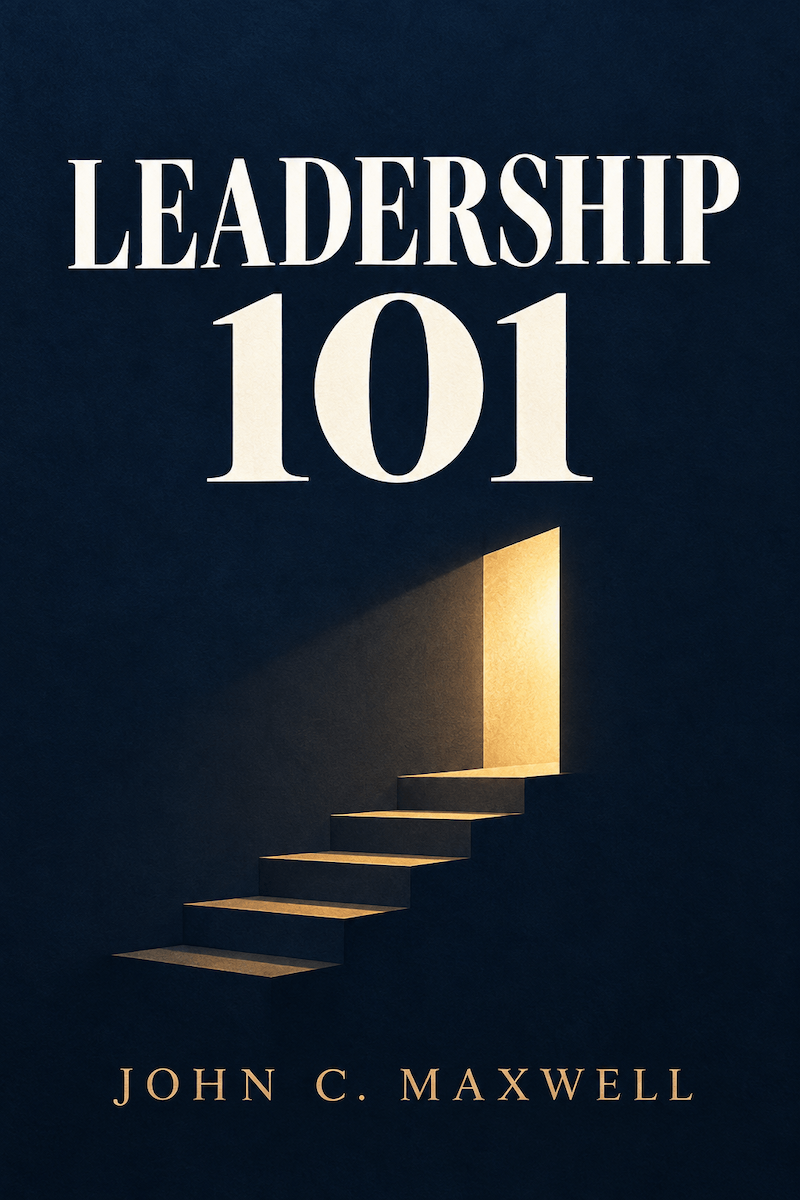
Leadership 101 Book Summary
This Leadership 101 Book Summary covers the key ideas, lessons, and takeaways in about 20 minutes.
Helps with these goals
Want the complete 20-minute summary?
- Full structured summary
- Video Summary
- Podcast Summary
- Audio summary
- Key takeaways
- Exercises
- Quiz
- Highlights and notes
- Ask the book with AI
What is in the Leadership 101 book summary?
Below is a preview of Sumizeit’s expert-written summary of Leadership 101 by John C. Maxwell. The full summary covers the book’s key ideas in text, audio, and video.
Maxwell opens with what he calls the Law of the Lid, and it's the idea the whole book hangs off. Your ability to lead determines how far anything else you do can go. You can be talented, driven, and full of great ideas, but if your leadership skills stay weak, that weakness caps your results no matter how hard you work.
He tells the McDonald's story to make the point land. Dick and Mac McDonald built a genuinely great restaurant concept. Fast service, a simple menu, an efficient kitchen layout. They had real business instincts. But they never turned that concept into anything bigger than a few restaurants in California, because running an empire took a kind of leadership they didn't have. Ray Kroc did. He saw the same restaurant the brothers had, and instead of admiring it, he built a systemized franchise machine out of it, bought up land around new locations, and turned that land into leverage over every operator who wanted to open a store. The brothers had the idea. Kroc had the lid high enough to build something out of it.
Maxwell's point isn't that talent doesn't matter. It's that talent gets bottlenecked by leadership capacity. Raise the leadership, and everything else you're capable of finally has room to work.
He backs this up with a rough equation. Imagine your dedication and hustle rated an 8 out of 10, but your leadership skill sits at a 1. Your overall output stays low, because that 1 drags everything down. Now imagine raising your leadership to an 8 as well. Your effectiveness doesn't just add up, it multiplies. That's because leadership isn't really about what you personally get done. It's about getting other people's efforts pointed in the same direction as yours. A leader with real skill turns one person's hustle into a team's hustle.
This is also, Maxwell notes, why organizations reach for new leadership when things go wrong. A country in economic trouble elects a new president. A losing team fires the coach. Nobody thinks the old systems or the old players are suddenly worthless, they just recognize that results trace back to whoever's steering, so a struggling group's first instinct is almost always to change who's at the top.
Leadership is built, not born
The next chunk of the book pushes back on the idea that some people are just born leaders and everyone else is out of luck. Maxwell insists leadership is a skill set, the same way playing an instrument or learning a language is a skill set. You develop it through deliberate effort over years, not through a personality quiz result.
He compares it to investing. Nobody gets rich overnight through the market without taking on absurd risk. Real wealth comes from putting money in consistently and letting time do the compounding. Leadership works the same way. You don't wake up one day able to influence a room.
Want the complete 20-minute summary?
- Full structured summary
- Video Summary
- Podcast Summary
- Audio summary
- Key takeaways
- Exercises
- Quiz
- Highlights and notes
- Ask the book with AI
Who should read Leadership 101?
Leadership 101 is for anyone in a position of influence—managers, entrepreneurs, team leads, or aspiring leaders—who wants to understand why their leadership capacity directly limits their results. Whether you're struggling with a struggling team, hitting a ceiling in your career, or simply recognizing that a title alone doesn't make people follow you, this book speaks to the practical work of becoming a leader people actually want to follow.
Why does Leadership 101 matter?
In today's workplace, leadership has become the scarcest resource. Organizations everywhere are drowning in talented people working at odds with each other, and the difference between success and failure almost always traces back to leadership quality. John C. Maxwell's Leadership 101 cuts through the noise by showing you that leadership isn't a personality type or a gift you're born with—it's a skill you can deliberately build, no matter where you're starting from.
What are the key themes in Leadership 101?
- Leadership capacity acts as a ceiling on all other abilities
- Leadership is a learnable skill, not an inborn trait
- Self-discipline forms the foundation of effective leadership
- Trust is built through competence, connection, and character
- Vision must serve others, not just the leader
- The highest leadership work is developing other leaders
- Leadership deepens through five distinct levels of influence
- Legacy is measured by what endures after you're gone
What are the key lessons from the Leadership 101 book summary?
The Law of the Lid
Your leadership ability directly caps how far your talent, effort, and ideas can take you. No matter how hard you work or how gifted you are, weak leadership creates a ceiling that no amount of hustle can break through.
Leadership Multiplies Results
Leadership isn't additive—it's multiplicative. When you raise your leadership ability, your effectiveness doesn't just improve incrementally; it compounds because you're now able to coordinate and leverage other people's effort in addition to your own.
Leadership Is Built Through Stages
Everyone moves through predictable stages: not knowing what you don't know, discovering the gap between position and influence, deliberately practicing and improving, and finally leading through instinct. This progression takes years, but it's learnable.
Self-Discipline Is Non-Negotiable
Without self-discipline, no other leadership quality matters. It's the foundation that lets you stay focused on what actually moves the needle instead of being pulled toward whatever is loudest or easiest in the moment.
The Pareto Principle Applies to Leadership
About 80 percent of your results come from roughly 20 percent of your effort. A leader's job is identifying which activities produce outsized returns and ruthlessly protecting time for those, while delegating or eliminating the rest.
Prioritization Requires Three Questions
Ask yourself: What can only I do? What produces the biggest return relative to effort? What genuinely engages me? These three filters separate the activities that deserve your time from the busy work that fills your day.
Trust Is Built From Three Pillars
Competence, connection, and character all matter, but character is foundational because a single character violation can collapse trust outright, whereas lapses in competence or connection are repairable.
Vision Must Be Both Personal and Expansive
A genuine vision starts from your own values and experiences, but it has to expand beyond what serves only you. The most powerful visions connect your personal mission to what other people actually need.
Developing Leaders Is the Real Job
A manager accumulates followers and keeps decisions centralized. A leader multiplies by developing other leaders, which allows the organization to keep growing well past what any single person could produce.
Leadership Deepens Through Five Levels
You progress from being followed because of your position, to being followed because of relationship, to being followed because of results, to being followed because you develop people, to finally influencing entire organizations through your character and legacy.
Position Authority Is the Weakest Form of Influence
A title alone forces compliance within a narrow job description, but it doesn't inspire loyalty or discretionary effort. Real leadership moves beyond positional authority into permission and production.
Connection Requires Genuine Relationship
People follow you at the permission level because they feel respected and understood, not managed. This kind of trust is built through honest interaction and demonstrated care for their growth.
Production Proves Leadership Worth
When people see you consistently deliver results, they want to be part of what you're building. Your track record becomes the evidence that following you is the right call.
Mentor With a Deliberate Process
Develop others by honestly assessing where they stand, modeling the standard you want, expressing real confidence, gradually handing over responsibility, giving consistent feedback, and eventually letting go entirely.
Sustainability Matters More Than This Quarter
A leader's real test is whether the organization keeps thriving after they're no longer at the wheel. That requires building systems and leaders that don't depend on your personal presence.
Succession Planning Starts Early
Develop potential successors long before you need one. The organization's future depends on having leaders ready to step up, not on you staying in control as long as possible.
Legacy Is Not About Your Achievements
True legacy is measured by whether the people and organization you leave behind keep thriving. It's not what you personally accomplished; it's what endures after you're gone.
Stepping Aside Takes Humility
Knowing when to move aside requires genuine self-awareness and putting the organization's future ahead of your comfort. Most leaders struggle with this because of insecurity and fear of being replaced.
Lasting Achievement Requires a Team
Even a highly skilled leader working alone will always be limited by their personal capacity. Building a strong team of leaders around you is what lets an organization navigate future challenges.
Competence, Connection, and Character Each Play a Role
All three pillars of trust matter, but they're not equally forgiving. Character violations collapse trust instantly, while lapses in competence or connection can be rebuilt with effort and honest communication.
Want the complete 20-minute summary?
- Full structured summary
- Video Summary
- Podcast Summary
- Audio summary
- Key takeaways
- Exercises
- Quiz
- Highlights and notes
- Ask the book with AI
How can you apply ideas from Leadership 101?
- Identify the 20 percent of your current activities that produce 80 percent of your results, then protect that time ruthlessly and delegate the rest.
- Assess a team member's current level of readiness across a skill you want them to develop, then model the standard, express confidence, and gradually hand over responsibility.
- Run a trust audit on a key relationship: rate yourself on competence, connection, and character from their perspective, then identify which pillar needs shoring up.
- Write out your personal vision and honestly assess whether it only serves you or expands to address what other people need, then adjust it if necessary.
- Schedule a conversation with someone you lead to ask what would help them grow and what barriers are in their way, then commit to removing at least one barrier.
- List your current responsibilities and apply the three prioritization questions to each one: Can only I do this? Does it produce outsized returns? Does it genuinely engage me?
- Identify one area where your self-discipline is weakest and design a small, daily practice to build it, then track your progress for 30 days.
What common mistakes do readers make with Leadership 101?
- Assuming a title or position automatically creates influence. Position authority is the weakest form of leadership, and compliance it generates doesn't translate to loyalty or discretionary effort.
- Trying to do everything yourself instead of developing other leaders. This caps the organization at your personal capacity and sets it up to fail when you're no longer around.
- Waiting for a crisis to think about succession. By then it's often too late. Strong successors need years to develop.
- Treating all priorities as equal instead of ruthlessly identifying which activities actually move the needle. This freezes you with indecision and wastes energy on low-leverage work.
- Rebuilding trust by addressing competence or connection while ignoring character violations. A single lie or broken promise can collapse trust faster than years of effort can rebuild it.
- Building a vision that only serves you instead of expanding it to address what other people need. Selfish visions rarely attract followers or resources.
Sumizeit Exercises Apply what you've learned
Turn ideas from Leadership 101 into action with a short guided reflection: identify the biggest takeaway, connect it to your life, and commit to one step you can take in the next 24 hours.
What is the expert analysis of Leadership 101?
Overview
Leadership 101 by John C. Maxwell stands as a foundational text in the vast landscape of leadership literature. Maxwell, a prolific author and speaker renowned for his expertise in leadership development, distills decades of experience into an accessible, practical guide aimed at demystifying leadership. His reputation as a thought leader is well established through his numerous bestselling works and global influence, making this book significant for anyone seeking to understand or enhance their leadership capacity.
Core Thesis
At the heart of Leadership 101 lies the compelling argument that leadership ability functions as a limiting factor—or "the lid"—on personal and organizational achievement. Maxwell asserts that no matter how talented or driven an individual may be, without the requisite leadership skills, their potential remains capped. Leadership is not an innate trait but a skill set cultivated through deliberate effort, self-discipline, and sustained growth. The book emphasizes that true leadership multiplies efforts by aligning and empowering others, rather than merely increasing individual output.
Strengths
- Clarity and Accessibility: Maxwell’s prose is straightforward yet profound, making complex leadership concepts digestible for a broad audience without sacrificing depth.
- Practical Frameworks: The introduction of models such as the "Law of the Lid," the four stages of leadership development, and the five levels of leadership influence provide readers with concrete tools to assess and grow their leadership capacity.
- Emphasis on Development: By framing leadership as a skill built over time, Maxwell offers a hopeful and actionable perspective that counters fatalistic views of leadership as an innate gift.
- Holistic Approach: The book integrates critical leadership components—self-discipline, trust, vision, prioritization, and legacy—painting a comprehensive picture of what effective leadership entails.
- Legacy and Sustainability Focus: Maxwell’s insistence on building leadership that endures beyond the individual leader elevates the discourse from short-term success to long-term organizational health.
Critiques & Counterarguments
- Oversimplification of Leadership Complexity: While Maxwell’s frameworks are useful, they may gloss over the nuanced and often messy realities of leadership in diverse cultural, political, and organizational contexts. Leadership is not always linear or stage-based as suggested.
- Limited Engagement with Power Dynamics: The book largely sidesteps the complex interplay of power, privilege, and systemic barriers that influence leadership opportunities and effectiveness, which contemporary leadership theories increasingly emphasize.
- Reliance on Anecdotal Evidence: Maxwell’s use of illustrative stories (e.g., McDonald brothers vs. Ray Kroc, Jerry Rice) while compelling, lacks rigorous empirical support, which may weaken the argument for readers seeking evidence-based leadership science.
- Contrasting Leadership Theories: Competing schools of thought, such as transformational leadership or servant leadership, offer more relational and ethical dimensions that sometimes challenge Maxwell’s pragmatic and capacity-focused approach.
- Real-World Contradictions: In some organizational environments, leadership changes do not automatically translate into improved outcomes, highlighting the importance of systemic factors beyond individual leadership capacity that Maxwell’s thesis may underplay.
Who Should Read This
Leadership 101 is ideally suited for emerging leaders, managers transitioning into leadership roles, and professionals seeking a foundational understanding of leadership principles. Its accessible style and actionable advice make it valuable for those who desire a structured roadmap to develop leadership skills intentionally. Additionally, educators and coaches in leadership development will find Maxwell’s frameworks useful as teaching tools. However, readers looking for a deep academic treatise or critical analysis of leadership’s sociopolitical dimensions may need to supplement this text with more specialized literature.
Frequently asked questions about the Leadership 101 book summary
What is Leadership 101 about?
Leadership 101 by John C. Maxwell is a practical guide to understanding and developing leadership as a learnable skill. The book argues that your leadership ability directly determines how far your talent and effort can take you—a concept Maxwell calls the Law of the Lid. Rather than treating leadership as an inborn trait, Maxwell walks through the specific skills, disciplines, and mindsets that build real influence over time.
Who should read Leadership 101?
Leadership 101 is for anyone in a position of influence—managers, entrepreneurs, team leads, or aspiring leaders—who wants to understand why their leadership capacity limits their results. It's particularly valuable for people who've hit a ceiling in their effectiveness and recognize that a title alone doesn't make people follow you, or for anyone building an organization and wanting to create leaders rather than just followers.
What are the main takeaways from Leadership 101?
Leadership 101's core takeaways are: leadership is a learnable skill, not an inborn trait; your leadership capacity directly caps everything else you try to accomplish; self-discipline is the foundation everything else rests on; trust is built from competence, connection, and character; and a leader's real job is developing other leaders, not accumulating followers. Maxwell argues that your true legacy isn't measured by what you personally achieve, but by what endures after you're gone.
What is the Law of the Lid in Leadership 101?
The Law of the Lid is Maxwell's central concept: your leadership ability acts as a ceiling on everything else you try to accomplish. No matter how talented, driven, or hardworking you are, weak leadership creates a limit that effort alone cannot break through. Maxwell uses Ray Kroc and the McDonald brothers as his example—the brothers had a great restaurant concept but couldn't scale it because their leadership capacity was too small, while Kroc had the leadership vision to build an empire from the same concept.
How does Maxwell explain the five levels of leadership?
Maxwell describes five deepening levels of leadership influence: Position (people follow because your title requires it), Permission (people follow because they trust and respect you), Production (people follow because of your track record), People Development (people follow because you invest in their growth), and Personhood (your character and integrity shape entire organizations or industries). Most leaders never move beyond level two or three, but climbing these levels is what separates lasting influence from positional authority alone.
What does Maxwell say about developing other leaders?
Maxwell argues that a leader's real job isn't accumulating followers, but developing other leaders. He outlines a practical process: assess where someone currently stands, model the standard you want them to hit, express real confidence in their ability, hand over responsibility gradually as they demonstrate readiness, give consistent feedback, and eventually let go entirely. A leader who multiplies through developing others creates something that outlasts their personal involvement, while a leader who only manages caps the organization at their own capacity.
Why does Maxwell emphasize self-discipline as foundational to leadership?
Maxwell treats self-discipline as the foundation every other leadership trait depends on. Without self-discipline, you won't have the consistency to stay focused on what actually matters instead of being pulled toward whatever is loudest or easiest in the moment. He uses Jerry Rice as an example—Rice's success came not from superior physical talent, but from the discipline to train harder than everyone else. Without that discipline, your vision, your values, and your intentions all fail to translate into action.
How should leaders think about legacy according to Leadership 101?
Maxwell argues that a leader's real test is whether an organization keeps thriving after they're no longer at the wheel. True legacy isn't measured by your personal achievements, but by what endures after you're gone. This requires developing other leaders, building systems that don't depend on your presence, and having the humility to step aside. Most leaders struggle with this because of insecurity and fear of being replaced, but putting the organization's future ahead of your comfort is what separates lasting legacy from temporary success.
About Sumizeit
Sumizeit is a profitable Scomy LLC company based in Miami, Florida. It has been helping readers learn from nonfiction books for 7 years with expert-written summaries in text, audio, podcast, and video.
Want the complete 20-minute summary?
- Full structured summary
- Video Summary
- Podcast Summary
- Audio summary
- Key takeaways
- Exercises
- Quiz
- Highlights and notes
- Ask the book with AI
Here's why readers love Sumizeit
Join thousands of learners getting smarter every day
"Great experience. Detailed summaries. Loved the gamification feature. Makes learning fun. Good customer service. I recommend Sumizeit to anyone. You'll learn a lot."
"I always felt busy but still wanting to keep up with the book discussion in my friend group. This was a great supplement to help me keep reading the books I find fun while keeping up with important books."
"I love this website. Instead of scrolling social media, I find myself learning a lot. I use it everyday. I recommend this app for anyone who is too busy and wants to get up to speed with their favorite books."
Leadership 101 Book Summary PDF
Looking for a Leadership 101 Book Summary PDF you can save and revisit offline? Our Leadership 101 Book Summary PDF captures the book’s core ideas in a clean, printable format — the key frameworks, takeaways, and structure without the fluff. Download the Leadership 101 Book Summary PDF when you want a reference you can annotate, share with your team, or review on the go. Get your Leadership 101 Book Summary PDF from the download page below.
Download Leadership 101 Book Summary PDFPeople also liked these summaries
Readers who explored Leadership 101 often enjoyed these titles next.



Want the complete 20-minute summary?
- Full structured summary
- Video Summary
- Podcast Summary
- Audio summary
- Key takeaways
- Exercises
- Quiz
- Highlights and notes
- Ask the book with AI
Featured Book Titles
Popular Book Summaries at sumizeit, leading book summary app