

Leadership funnels down from those in charge at the top to the team of workers at the bottom executing the operations of the organization. The results of their outputs, in turn, flow back up to the top and are realized by those in charge. Within this system lies a Circle of Safety, and when that Circle is broken by ineffective leadership (destructive abundance, a result of valuing numbers over people, and the distance bred by abstraction in an increasingly isolated work culture), then the organization as a whole suffers. When leaders eat last, or in other words, put the needs of their teams before their own personal gains and use profits to fuel team culture, then the organization thrives.
Helps with these goals
As an Amazon Associate, Sumizeit earns from qualifying purchases.
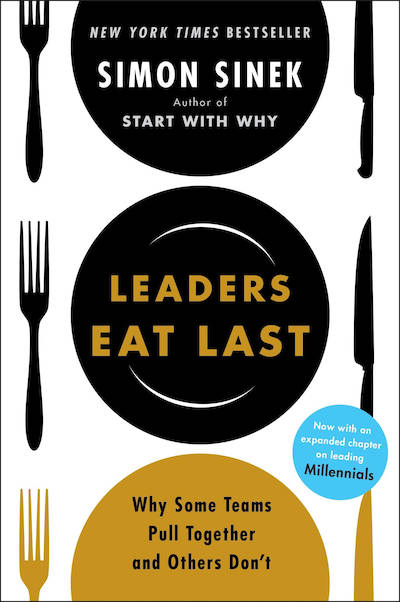
Walk into a United States Marine Corps mess hall and you'll notice something odd. The youngest, lowest ranking Marines get their food first. The most senior officers stand at the back of the line. Nobody writes this down as a rule. It just happens. Simon Sinek saw this and built a whole book around it.
His argument is simple to say and hard to live. A leader's first job is to take care of the people in their charge, even when it costs the leader something. Put their needs ahead of your own and ahead of this quarter's profit. Do that and people will trust you, work together, take smart risks, and stick with you when things get rough. Skip it and you get a group of nervous people protecting themselves, which is a terrible way to run anything.
Sinek doesn't frame this as a nice idea about kindness. He frames it as biology. Humans evolved to survive in small groups, and our brains still reward us for acting in ways that kept those groups alive. A good workplace works with that wiring. A bad one fights it.
One thing worth flagging up front. Sinek talks about the leader's needs and the team's needs as if you have to pick one. Plenty of readers push back on that. A team that feels supported is more focused and more motivated, which makes the leader look good too. So you could argue that caring for your people is already in your own interest. Seeing it that way makes the whole idea easier to act on, since you don't feel like you're giving something up.
The core idea of the book is what Sinek calls the circle of safety. Think of it as the boundary around a group where people feel protected. Outside that circle, the world is full of danger. Competitors want your customers. The economy shifts. New technology makes your product old. Those threats are real and nobody can control them.
Inside the circle, though, the leader can decide how safe people feel. When people trust that their boss and their coworkers have their backs, they stop spending energy watching out for each other. They put that energy into facing the outside threats together.
How does a leader build this circle? By paying attention. Sinek says you have to actually notice your people, learn what they need, and then do something about it. That shows them you see them as human beings and not as line items on a budget. Once they believe that, they relax. And relaxed people do their best work.
Here's a quick example. Say a manager named John notices that his employee Emily seems scattered all week. He asks what's up. Her kids are sick at home. John gives her paid time off so she can take care of them without panicking about work. That choice costs the company a little in the short run. But Emily now knows her boss cares about her as a person. She stops seeing her coworkers as rivals for the boss's approval. She starts helping them, covering shifts, sharing credit when a project goes well. One act of care ripples outward.
Why would people compete for a boss's attention in the first place? Because attention and support are basic human needs, a lot like food and shelter. Early humans fought over scarce resources to survive. When a workplace hands out support only to the top earners, people fight over it the same way. When support is plentiful, people feel secure enough to share it.
A safe team does two things better than a scared one. It collaborates and it innovates.
Collaboration comes first. In a supportive place, nobody has to compete for the leader's care, so people help each other freely. In an unsupportive place, care is rare and usually goes to whoever brings in the most money. Everyone else sees their coworkers as competition.
Innovation needs safety too. New ideas are risky. They cost money, and they often fail. People will only try them if they believe the boss will stand behind them when an experiment flops. A lot of research backs this up. Teams that feel it's okay to fail end up experimenting more, learning faster, and adapting better. Google made this famous with its policy of letting engineers spend about a fifth of their time on side projects of their choosing. When the whole group trusts each other, it can meet outside threats with creative answers instead of freezing up.
Sinek spends a good chunk of the book on brain chemistry. He points to four chemicals that shape how we behave at work. Two of them are selfish, and two are social.
Endorphins are the first selfish one. They mask physical pain. Runners feel them as the runner's high. They helped early hunters keep going long after their bodies wanted to quit. Laughter releases them too, which is part of why teams that joke together often push through hard stretches.
Dopamine is the second selfish chemical. It gives you a hit of satisfaction when you finish a task or reach a goal. It's why checking items off a list feels so good. It also helps your brain remember what worked so you can repeat it. The downside is that dopamine is the same chemical behind addiction. Chase it too hard and you start craving quick wins at any cost.
Serotonin is the first social chemical. It shows up when you feel proud or respected by others. It's the warm feeling you get when your parents watch you graduate, or when your team cheers your work. Serotonin ties us to the people who helped us and makes us want to make them proud. It's also linked to status. Sinek says this is why groups have always given leaders perks like better pay, the corner office, and first pick of the food. We give them those things because we expect them to protect us when danger shows up. The perks aren't free. They're payment for a job, and that job is looking after the group.
Oxytocin is the second social chemical and the star of the book. It's what you feel when you trust someone, when you're with friends, when you do something kind or someone does something kind for you. It builds bonds and makes us want to help each other.
According to Sinek, oxytocin comes from social contact. When you connect with people, work with them, or put their needs first, your brain rewards you with a feeling of trust and warmth. That feeling makes you want to do it again.
What's neat is that it works on both sides. The person being helped gets a boost, and so does the helper. Even someone who just watches an act of kindness can feel it. So one leader acting with care sets off a chain reaction. People start trusting each other, then helping each other, and the good behavior spreads through the team.
Scientists have a broader name for this, emotional contagion. When you talk with someone, you copy their facial expressions, posture, and tone without meaning to. That copying pushes your brain toward the same emotion they feel. For a leader, the lesson is plain. Show the feelings you want your team to have. If you walk around frustrated, frustration spreads. If you show care, care spreads.
Here's the frustrating part. Oxytocin builds slowly. Unlike dopamine, which hits fast and hard, oxytocin grows the more time you spend with someone. That means a supportive culture doesn't show up after one team lunch. It takes months or years of steady effort before it starts paying off.
Sinek says the slow build is a survival trick. For early humans, trusting the wrong person could get you killed. So our brains learned to hold back and watch before trusting anyone. A leader has to earn trust the same way, by showing up for people again and again until they believe it's real.
There's one exception worth knowing. Oxytocin floods the body quickly during childbirth and breastfeeding. That makes sense, since a parent who didn't bond with a newborn right away might neglect it. But at work, where instant bonding isn't a matter of life and death, the slow build is the rule.
Newer research adds another wrinkle Sinek doesn't cover. Oxytocin doesn't always make you feel good. With people you already know and trust, in a calm setting, it brings warmth. With strangers, or under heavy stress, it can actually raise suspicion and even hostility toward outsiders. That pushes people to stick with their own small circles. Inside a company, this can create cliques that don't trust each other and start fighting. Leaders can fight this by lowering stress and reminding everyone they're one team. Giving people time to get to know each other helps too, since strangers slowly become friends and the chemical starts working in the group's favor.
Now flip it around. When a leader stops putting people first, Sinek says the leader becomes a threat. They lose their empathy. They start seeing employees as tools for profit. They only notice and reward the people who bring in money.
In that setting, nobody feels safe. People spend their energy protecting their jobs. They hide mistakes. They hold back ideas. The company splits into self interested individuals and stops growing.
Picture an employee named Robert. He has a smart idea to market the company's products to a bigger audience. It could make a lot of money. But it would take time and budget, and it might not pay off right away. Robert's boss only backs people who deliver quick profits. So Robert keeps quiet. He protects his position instead. The idea dies, and the company stays stuck.
Other writers agree with Sinek here but add a caveat. In The Dichotomy of Leadership, Jocko Willink and Leif Babin say leaders should coach struggling team members hard. But leaders also owe something to the whole group. If someone keeps falling short after real support, keeping them hurts everyone else. At that point letting them go is part of caring for the team.
Sinek points to one more chemical, cortisol, to explain why scared teams stop working together. Cortisol is the stress hormone. When you sense danger, it puts your body on high alert and shuts down anything that isn't needed for survival, so you can find the threat fast.
One of the things cortisol shuts down is oxytocin. So when people feel unsafe at work, they literally lose the chemical that helps them trust and care about each other. They start treating coworkers as threats. You see it in people who belittle others, steal credit, or boss around peers when they aren't the boss. That behavior is usually a grab for attention and security.
Cortisol also kills creativity. When early humans spotted a lion, they got a burst of adrenaline, ran or fought, and the stress cleared once the danger passed. Modern threats don't work that way. A pile of work or a boss who might fire you isn't a lion. You can't run from it. So the cortisol hangs around for days, weeks, or months. People stay distracted and can't think clearly about new ideas.
The cost goes beyond creativity. Long term stress wears down the immune system and raises the risk of depression. A workplace that keeps people on edge loses output and makes people sick.
Sinek draws many of his best stories from the armed forces, because that's where people trust each other with their lives.
One is about an Air Force pilot with the call sign Johnny Bravo. Flying over Afghanistan one night, he heard that ground troops were pinned down under fire. Thick clouds blocked his view. The safe move was to stay above them. Instead he dropped below the clouds, into the mountains, in the dark, to see the troops and help them. He took that risk because he felt a bond with the soldiers on the ground, even though he'd never met them. Sinek says that's what the circle of safety feels like when it's working. People put themselves on the line for each other because they know the others would do the same.
Another story is about Army Captain William Swenson, who earned the Medal of Honor in Afghanistan. Helmet camera footage shows him carrying a badly wounded soldier to a rescue helicopter. After loading the man aboard, Swenson leans in and kisses him on the head before heading back into the fight. Sinek asks why people like Swenson act this way. His answer is that they come from cultures where leaders look after their people, so their people look after each other.
And of course there are the Marines who let the most junior troops eat first. The officers don't lose status by eating last. They gain it. That's the whole point.
So how do you build a stronger circle of safety? Sinek offers a few strategies. The first is to focus on long term goals over short term ones.
Instead of fixating on this year's profit, think about the impact you want to have five or ten years from now. That puts your daily choices in the context of lasting change. Big, distant goals also force people to work together for a long time, and as we saw, time spent working together is what builds oxytocin.
Jerry Porras and Jim Collins, in Built to Last, describe a few types of long term goals. Some set a numeric target, like selling a huge number of products in a decade. Some aim to beat a specific rival. Some try to match a company you admire. Others aim to fix a weak product or reputation and replace it with something better. They say these goals take anywhere from ten to thirty years and demand deep teamwork.
The problem with short term goals is that they feed dopamine, not oxytocin. Every hit of dopamine feels great, and it's instant. Oxytocin takes years to pay off. So many leaders chase the quick wins. They obsess over daily numbers and ignore how their choices affect people or the company's future. The more they chase dopamine, the less oxytocin they make, the less empathy they feel, and the weaker the team gets.
It gets worse over time. Like any drug, dopamine builds tolerance. You need bigger and bigger wins to feel the same thrill, which can push people toward reckless choices. Stepping away from constant quick rewards for a while can reset that sensitivity.
The second strategy is to unite people against a common struggle. When a group faces a hard challenge together, the brain rewards that teamwork with extra oxytocin. People remember bonds formed under pressure much more vividly than bonds formed on an easy day, and those strong memories make the bonds last.
Most companies do this by building a higher purpose. A higher purpose is like a long term goal, but bigger and fuzzier. It gives people a reason to work that goes beyond money or market share. It usually has no end date. The fear of failing at something that matters is enough pressure to pull people together.
Many leaders struggle with this because they see work as a simple deal. You pay people, and people do the minimum. That belief feeds itself. The leader hands out rewards for hitting narrow targets. Employees chase those targets and ignore everything else. The leader sees people doing only the minimum and feels proven right. The fix is for leaders to remember that most people want to feel engaged at work. A real purpose taps into that without constant bribes.
Sinek says a good higher purpose has two traits.
First, it has to be out of reach right now. If you can easily hit it, it won't create the pressure that pulls people together. The team needs to keep stretching for it. That gap between where you are and where you want to be creates what's often called creative tension. Your brain hates the mismatch and pushes you to close it. Writing your purpose down, and writing down how far you are from it, makes the tension sharper and helps you remember it.
Second, it has to serve others. Helping people is inspiring, and inspired people work harder and stay loyal. Sinek suggests helping others releases more oxytocin, which keeps the good feelings going. A selfish goal, like being number one in your industry or hitting a revenue number, only helps the company. It won't light anyone up.
Amazon's stated vision is a decent example. It aims to be the most customer focused company on earth, a place where people can find anything they want to buy online. That target keeps moving as technology and customer expectations change, so the company can never quite finish it. And it's about serving customers, which gives employees something to believe in.
Some thinkers push back. Nassim Nicholas Taleb argues in Skin in the Game that people paid on commission do work harder for pure profit, since their pay depends on it. Fair enough. But that's motivation driven by money. It lasts only as long as the money does. Inspiration, driven by helping others, lasts much longer and makes people happier whatever their pay setup.
The third strategy is to fight abstraction. That means making sure you and your team see customers, suppliers, and each other as real people and not as ideas or numbers on a screen.
Oxytocin comes from contact, especially physical contact like a handshake. When you stop seeing someone in person, your brain stops making oxytocin for them. They turn into an abstraction. And once people become abstract, you stop caring about them.
When that happens, everyone falls back on the one thing they can see clearly, their own safety. Leaders make choices that boost profit without thinking about who gets hurt. Employees follow orders even when they know those orders will harm customers or the company.
Sinek backs this with the famous Milgram experiments from the 1960s. Volunteers were told to give what they thought were electric shocks to a stranger in another room whenever that person got an answer wrong. Many kept raising the voltage just because a man in a lab coat told them to. But when the volunteer could see the person being shocked, or had to touch them, far fewer went all the way. Distance made cruelty easy. Closeness made it hard.
Sinek links this to big business. When a company grows huge, the people at the top can't see the people affected by their choices. They lay off thousands to hit a number, and it doesn't feel like hurting anyone. He criticizes leaders who ran companies by the spreadsheet in the 1980s and 1990s, treating mass layoffs as a normal way to please investors.
Size matters here too. Anthropologist Robin Dunbar found that humans can keep real relationships with about 150 people. Past that, we need rules and systems, and people start becoming abstract. Sinek notes that W. L. Gore and Associates, the fabric maker, deliberately keeps each building at around 150 people so everyone can know each other.
To fight abstraction, Sinek offers two habits.
A word of caution goes with the second habit. People who spend a lot of time with others in pain can develop what's called empathy fatigue. Feeling someone's stress as your own is exhausting, and after a while you pull away to protect yourself. The very people you meant to help turn abstract again. So watch how helping affects you. Sleep, eat well, do things you enjoy, and spend time with loved ones who aren't in crisis.
Sinek shares stories of business leaders who put people first, even when it cost them.
Bob Chapman runs Barry Wehmiller, a manufacturing company. When the 2008 recession hit, orders dried up and the board expected layoffs. Chapman refused. Instead, every employee, from the top down, took four weeks of unpaid leave, spread out however they liked. People even traded leave, with those who could afford more time off taking extra so a struggling coworker could take less. Nobody lost their job. Morale went up, not down, and the company came out of the recession strong.
Charlie Kim, who founded the tech company Next Jump, went further and adopted a policy of lifetime employment. People don't get fired for poor performance. They get coached. If someone struggles, the company works to help them grow. The idea is that you don't fire your kids when they have a bad year. You help them.
These leaders aren't soft. They run tight businesses and expect a lot. They just believe people perform best when they know their leader will protect them.
Sinek also warns about what he calls the danger of abundance. Humans evolved in scarcity. When resources were tight, we had to rely on each other. When resources pile up, we need each other less, and we forget how to cooperate.
He's critical of how the Baby Boomer generation came to run business. Many grew up in an era of plenty and made profit the main measure of success. Companies started treating people as costs to cut. Executive pay shot up while workers were laid off. The circle of safety shrank to include only the people at the very top.
Later editions of the book add thoughts on younger workers. Sinek says many grew up with instant rewards from phones and social media, which feed dopamine all day. That can leave people anxious, impatient, and short on deep relationships. He argues leaders need to help them build patience and real connection, and to put down the phone during meetings and meals.
Sinek's final point is that leadership isn't a rank. Anyone can lead. A leader is someone who chooses to look after the people around them, whether they have a title or not. And authority without care isn't leadership at all. It's just power.
He also says leaders have to take the hit when things go wrong. They go first into danger. They give up their own comfort so others can be safe. In return, the group gives them trust, loyalty, and effort that no amount of pay could buy. That's the real deal between leaders and followers, and it goes back to the earliest human tribes.
Leaders Eat Last makes one argument over and over, and it's worth hearing. People do their best work when they feel safe, and making them feel safe is the leader's job. Our brains are built to trust and help each other, but only when the people in charge show they'll protect us first. Chase short term wins, treat people as numbers, and let stress take over, and you'll get a scared, divided team that can't think straight. Stay patient, build a purpose bigger than profit, keep your people close enough to see as human, and give up your own comfort when it counts. Do that and your team will fight for each other and for you. The perks of leadership are real, but they come with a bill, and the bill is care.
Simon Sinek is a British American author and speaker best known for his ideas on leadership and purpose. He was born in 1973 in Wimbledon, England, and grew up in South Africa, England, Hong Kong, and the United States. He studied cultural anthropology at Brandeis University and later worked in advertising before starting his own marketing consultancy.
He became widely known through his 2009 TED talk, How Great Leaders Inspire Action, which introduced his Golden Circle idea and remains one of the most watched TED talks ever. His first book, Start With Why, grew out of that talk. Leaders Eat Last followed in 2014, with an expanded edition in 2017. He has also written Together Is Better, Find Your Why, and The Infinite Game. Today he runs a company that helps people and organizations find their purpose, and he speaks to groups ranging from small businesses to the military.
Looking for a Leaders Eat Last Book Summary PDF you can save and revisit offline? Our Leaders Eat Last Book Summary PDF captures the book’s core ideas in a clean, printable format — the key frameworks, takeaways, and structure without the fluff. Download the Leaders Eat Last Book Summary PDF when you want a reference you can annotate, share with your team, or review on the go. Get your Leaders Eat Last Book Summary PDF from the download page below.
Download Leaders Eat Last Book Summary PDFGet full access to 2,500+ book summaries with audio and video
Start Free Trial →