
Question 1 of 10


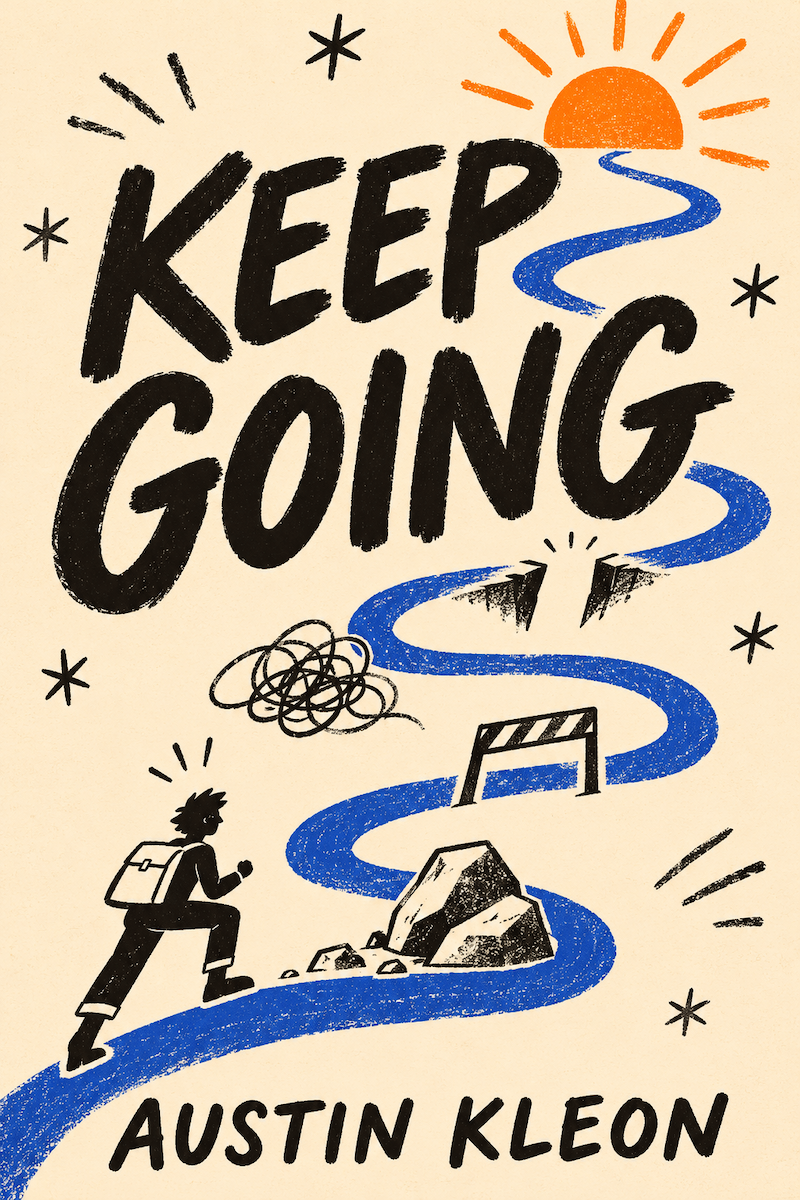
Prefer the print book? Buy on Amazon
As an Amazon Associate, Sumizeit earns from qualifying purchases.
Book Summary
Keep Going Book Summary
This Keep Going Book Summary covers the key ideas, lessons, and takeaways in about 20 minutes.
Short Description:
Why chasing money and likes burns you out, and how to enjoy creating again
Staying creative has less to do with talent or discipline than with what you ask your work to do for you. Ask it for money or applause and it turns into pressure, and pressure turns into burnout. Ask it only to be something you enjoy doing, and it can last. Kleon's advice all points the same way. Enjoy the making, keep your attention on today, give yourself a quiet and slightly messy place to work, slow down enough to notice ordinary things, and put your life and the people in it ahead of the art. Do that, forgive yourself for the slow seasons, and you'll still be making things years from now.
Helps with these goals
Preview the Keep Going book summary
Below is a preview of Sumizeit’s comprehensive human-written summary of Keep Going by Austin Kleon. The full summary is 15-20 minutes long and covers the book’s key ideas in text, audio, visual, and video formats. Unlock the full 20 Minute Summary
You start making things because it feels good. Then one day it doesn't. You're tired, the work feels like a chore, and you can't stop checking how many people liked the last thing you posted. Austin Kleon wrote Keep Going for that exact moment. He lays out 10 principles for staying creative through burnout, self doubt, and a world that feels like too much. They boil down to three ideas. Want the right things from your work. Keep your attention on today. And build a life that's healthy enough to make things in.
His starting point is that most creative burnout comes from chasing the wrong goal. Kleon splits creative goals into two kinds. Some are about results, meaning what the work gets you once it's done. Others are about the process, meaning the making itself. He thinks the first kind wears you down. When the finished product is all that counts, you stop noticing the part you used to enjoy, and you feel pushed to keep producing more. That pressure is where burnout comes from.
What happens when your passion has to pay the rent
Money is the first result Kleon warns you about. Turn a hobby into an income and something flips. The thing that used to take pressure off your life now adds to it. It becomes an obligation.
He isn't telling you to never earn money from your art. He's saying a bigger income shouldn't be the main goal. Be realistic about what your creative work will pay, then live within that amount so you never have to squeeze more cash out of it. For some people that means a tight budget and living on creative work alone. For others it means keeping the day job, and Kleon treats that as a perfectly good choice.
Stop checking the likes
The second trap is approval. Make work to collect likes and shares, and you slowly start making what other people enjoy and stop making what you enjoy. Then a post flops and you feel like you're not good enough.
Kleon's fix is simple and a little uncomfortable. Wait before you look at the response to something you've posted. The less attention you give approval, the less you care about it. He also suggests making some work you never post at all.
Make something nobody will see, then make a gift
So what do you chase instead? The making. When the process is the goal, the work becomes something you look forward to, and nobody is standing over you waiting for the result. Kleon offers two ways to get there.
The first is to make art only for yourself. Put it in a drawer when you finish. Destroy it if you want to. You got the practice and you enjoyed it, and that was the whole point of the exercise.
The second is to make something as a gift for a person you love. How you feel about them carries you through the work, and you get to…
Want the complete 20-minute summary?
- Full structured summary
- Video Summary
- Podcast Summary
- Audio summary
- Key takeaways
- Exercises
- Quiz
- Highlights and notes
- Ask the book with AI
Who should read Keep Going?
Keep Going is for anyone whose creative passion has started to feel like a burden. If you're an artist, writer, designer, or maker who's experiencing burnout, chasing likes instead of genuine fulfillment, or struggling to balance creative work with financial reality, this book offers a lifeline. It's also valuable for people managing the transition from hobby to income-generating work.
Why does Keep Going matter?
Creative burnout is epidemic in our attention-driven world, where artists face constant pressure to monetize their work and perform for algorithms. Keep Going by Austin Kleon addresses the root causes of this burnout—the wrong goals, approval-seeking, and imbalance—offering timeless principles that feel especially urgent today. The book reminds us that sustainable creativity requires protecting your process, your attention, and your life itself from the demands that drain your joy.
What are the key themes in Keep Going?
- Process over results: Focus on the making itself, not what the finished work gets you
- Attention as currency: Guard your mental attention from approval-seeking and information overload
- Creative sustainability: Build a life that supports your art, not one sacrificed to it
- Presence and daily rhythms: Stay grounded in today rather than anxious about tomorrow
- The ethics of creative work: Good art comes from a healthy life and healthy person
- Ordinary observation: Deep attention to everyday life generates fresh ideas
- Community and growth: Engage with people different from you to expand your creative thinking
How can you apply ideas from Keep Going?
- Replace 'How many likes did it get?' with 'Did I enjoy making it?' as your measure of success for each project
- Set a specific time each day or week for social media and news, then stay off outside those windows to reclaim attention for deep work
- Create a dedicated workspace—even a corner of a room—that you use only for creative work to trigger focus and ideas
- Make one piece per month with zero intention of sharing it; keep it private or destroy it after finishing
- Sketch or take a mindful walk daily, paying close attention to ordinary objects and details you normally ignore
- Build a daily creative routine around your natural energy patterns; if you're a morning person, protect those hours for your best work
- Seek out one conversation this month with someone whose views differ from yours but who respects you, to intentionally expand your perspective
What common mistakes do readers make with Keep Going?
- Assuming you must turn your passion into full-time income to validate it; many sustainable creative lives include day jobs
- Checking likes and engagement metrics immediately after posting, which locks you into approval-seeking cycles that corrupt your instincts
- Creating only for an external audience and never making work purely for yourself; this erases the joy from the process
- Trying to maintain a perfect, minimalist workspace instead of allowing the productive mess that sparks unexpected ideas
- Judging yourself for creative dry spells as though they're personal failures rather than natural, predictable rhythms
Sumizeit Exercises Apply what you've learned
Turn ideas from Keep Going into action with a short guided reflection: identify the biggest takeaway, connect it to your life, and commit to one step you can take in the next 24 hours.
What is the expert analysis of Keep Going?
Overview
Keep Going is a compelling work by Austin Kleon, a poet and visual artist renowned for his unique blackout poems and insightful books on creativity such as Steal Like an Artist and Show Your Work. This book addresses the emotional and psychological challenges faced by creators who find their passion turning into pressure, offering practical guidance to sustain creative practice amid burnout and self-doubt. Kleon’s approachable yet profound style makes this book significant for anyone engaged in creative endeavors, whether professional artists or hobbyists navigating the precarious balance between making art and managing life’s demands.
Core Thesis
Kleon’s central argument is that sustaining creativity is less about innate talent or sheer discipline and more about the intentions we set for our work. When creative output is pursued for external validation—such as financial gain or social approval—it becomes a source of pressure that leads to burnout. Instead, he advocates for valuing the process of making itself, focusing on the present moment, and cultivating a life that supports creativity rather than undermining it. This reorientation from results to process, from future anxieties to daily presence, forms the backbone of his ten principles for creative endurance.
Strengths
- Pragmatic and Accessible Advice: Kleon’s guidance is grounded in everyday realities, such as managing social media distractions and creating a dedicated workspace, making his principles actionable for a wide audience.
- Emphasis on Mental Health and Balance: The book challenges the romanticized myth of the “tortured artist,” prioritizing wellbeing and ethical living over the pursuit of artistic greatness at any cost.
- Clear Distinction Between Process and Product: By separating goals oriented around results from those focused on the creative process, Kleon offers a nuanced framework that helps readers reframe their relationship with their work.
- Encouragement of Mindfulness and Presence: His advice to “shrink your world to a single day” and slow down information intake resonates with contemporary psychological insights on attention and flow.
- Inclusivity of Different Creative Lifestyles: Kleon validates both those who live solely off their art and those who maintain day jobs, acknowledging diverse economic realities.
Critiques & Counterarguments
- Potential Oversimplification of Burnout Causes: While Kleon rightly identifies pressure from external goals as a burnout trigger, burnout is multifaceted, often involving systemic issues such as economic insecurity, workplace exploitation, or mental health disorders, which the book touches on only lightly.
- Limited Engagement with Structural Barriers: The book’s focus on individual mindset and habits may underplay how social and institutional factors constrain creative freedom and sustainability, especially for marginalized creators.
- Romanticizing the Process May Not Suit All: Some creators thrive on external feedback and measurable success; Kleon’s caution against seeking approval might not resonate universally and could risk isolating those who find motivation in audience engagement.
- Competing Research on Motivation: Psychological studies on intrinsic versus extrinsic motivation suggest a more complex interplay than a strict dichotomy Kleon proposes; some extrinsic rewards can coexist with sustained intrinsic interest without necessarily leading to burnout.
- Real-World Economic Pressures: Kleon’s advice to “live within what your creative work pays” is idealistic in contexts where creative fields are undervalued economically, and many artists must navigate precarious financial situations that demand constant output and marketing.
Who Should Read This
Keep Going is ideally suited for creative professionals and hobbyists who find themselves at a crossroads of enthusiasm and exhaustion—those who have experienced the joy of making art but are now grappling with the pressures of sustaining that practice. It is particularly valuable for readers seeking a compassionate, psychologically informed approach to creativity that emphasizes balance, presence, and self-kindness over relentless productivity. Additionally, anyone interested in the intersection of creativity, mental health, and modern work culture will find Kleon’s insights both refreshing and practical.
Discussion questions for Keep Going Short questions you can actually use in a conversation
Frequently asked questions about the Keep Going book summary
What is Keep Going about?
Keep Going by Austin Kleon is a guide to staying creative through burnout, doubt, and the pressures of modern creative life. The book identifies why creative work turns into a burden—chasing money, likes, and approval—and offers ten practical principles to reclaim the joy of making, protect your attention, and build a life that sustains rather than drains your creativity.
Who should read Keep Going?
Keep Going is essential for artists, writers, designers, makers, and anyone whose creative work has started to feel like a chore rather than a joy. It's especially valuable for people managing the transition from hobby to income, those struggling with social media validation, or creators experiencing burnout despite external success.
What are the main takeaways from Keep Going?
The core message is that sustainable creativity depends on wanting the right things from your work. Focus on the process itself rather than results; guard your attention from approval-seeking and information overload; protect a daily routine and dedicated workspace; and prioritize your life and wellbeing over your art. When you remove the pressure and reclaim the joy, you can keep making things you love for decades.
How does Austin Kleon address creative burnout?
Kleon traces burnout to chasing the wrong goals—mainly money, likes, and external validation—rather than enjoying the making itself. He recommends shifting to process-driven goals, limiting your attention to approval metrics, making work solely for yourself or as gifts, maintaining a daily routine, and building a healthy life that supports creativity rather than sacrifices to it.
Should I quit my day job to pursue creative work full-time?
Keep Going argues that keeping your day job while pursuing creative work is a perfectly valid and often healthier choice. Kleon advises being realistic about what creative work will pay, then living within that budget so you're never forced to squeeze unsustainable income from your art. For many people, the day job removes financial pressure and allows them to create for the right reasons.
What does Austin Kleon say about social media and likes?
Kleon warns that chasing likes and shares corrupts your creative instincts because you begin making what others enjoy rather than what you enjoy. His practical fix is to wait before checking engagement metrics; the less attention you give approval, the less you care about it. He also recommends making work you never post at all to fully separate the making from the feedback.
How do I protect my creativity from burnout?
Keep Going recommends several interlocking practices: build a daily creative routine; create a dedicated, slightly messy workspace; focus on the process rather than results; limit your exposure to news and social media; and prioritize your health, relationships, and character over career success. The overarching principle is that a good life enables good art, not the reverse.
What is the tortured artist myth and why does Kleon reject it?
The tortured artist myth holds that great work requires personal suffering and sacrifice of wellbeing. Kleon firmly rejects this, arguing that art should leave the world better off, including the person making it. He values being a good, ethical person and living a healthy life above artistic achievement, and he shows that sustainable, meaningful creativity comes from care rather than suffering.
About Sumizeit
Sumizeit is a profitable Scomy LLC company based in Miami, Florida. Our founders, Clemens Raemy and Weina Scott, are successful entrepreneurs with several exits. Sumizeit is a popular book summary app / micro learning app used by busy professionals and entrepreneurs with over 2,500 non-fiction book summaries and 10,000 podcast summaries in text, audio, visual, podcast, and video format. We also have stellar retention tools to make ideas stick - such as flashcards with spaced repetition, quizzes, streaks, highlighting and notes, daily challenges, riddles, mini-courses, meditation, and more. You won't only learn the idea, but also remember it. Over 90% of our users change their habits with Sumizeit.
Upgrade Now
Here's why readers love Sumizeit
Join thousands of learners getting smarter every day
"Great experience. Detailed summaries. Loved the gamification feature. Makes learning fun. Good customer service. I recommend Sumizeit to anyone. You'll learn a lot."
"I always felt busy but still wanting to keep up with the book discussion in my friend group. This was a great supplement to help me keep reading the books I find fun while keeping up with important books."
"I love this website. Instead of scrolling social media, I find myself learning a lot. I use it everyday. I recommend this app for anyone who is too busy and wants to get up to speed with their favorite books."
Keep Going Book Summary PDF
Looking for a Keep Going Book Summary PDF you can save and revisit offline? Our Keep Going Book Summary PDF captures the book’s core ideas in a clean, printable format — the key frameworks, takeaways, and structure without the fluff. Download the Keep Going Book Summary PDF when you want a reference you can annotate, share with your team, or review on the go. Get your Keep Going Book Summary PDF from the download page below.
Download Keep Going Book Summary PDFPeople also liked these summaries
Readers who explored Keep Going often enjoyed these titles next.

Ready to read the whole thing?
- Full structured summary
- Video Summary
- Podcast Summary
- Audio summary
- Key takeaways
- Exercises
- Quiz
- Highlights and notes
- Ask the book with AI
Featured Book Titles
Popular Book Summaries at sumizeit, leading book summary app
Atomic Habits Book Summary Rich Dad Poor Dad Book Summary The Four Agreements Book Summary The 48 Laws of Power Book Summary When Breath Becomes Air Book Summary Think and Grow Rich Book Summary