
Question 1 of 10


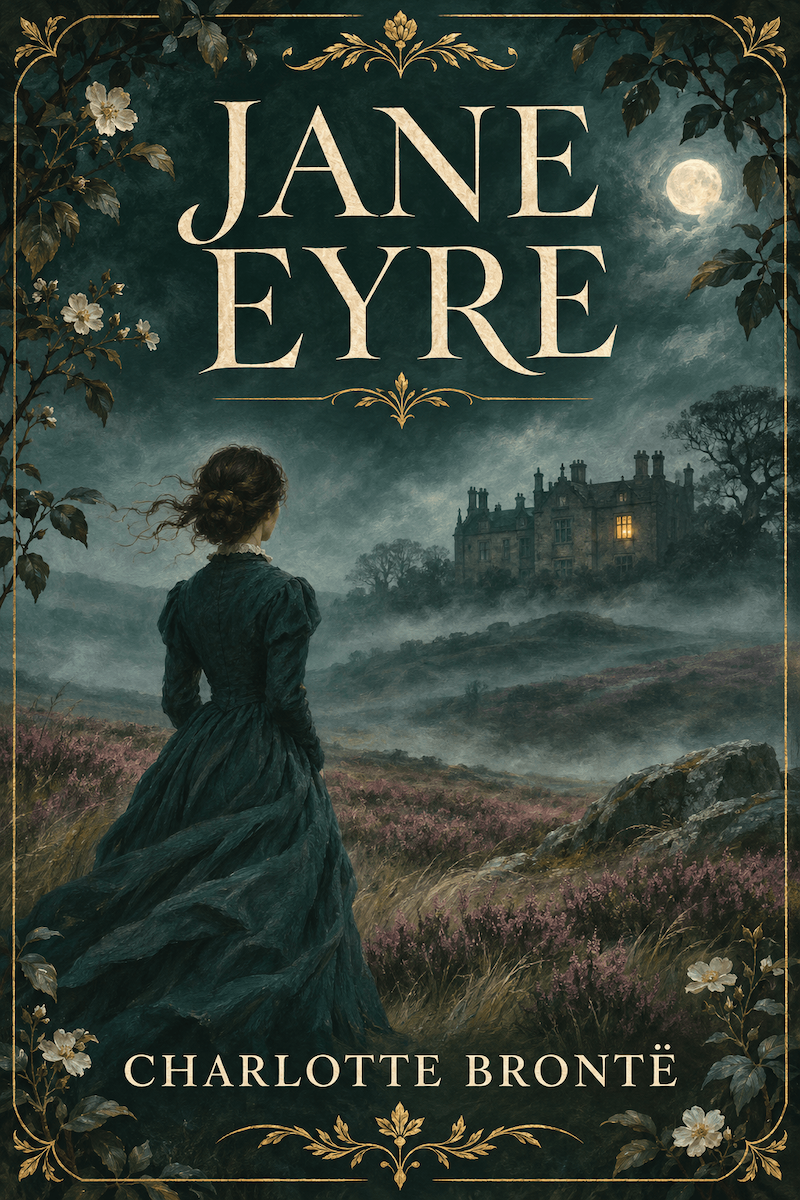
Prefer the print book? Buy on Amazon
As an Amazon Associate, Sumizeit earns from qualifying purchases.
Book Summary
Jane Eyre Book Summary
This Jane Eyre Book Summary covers the key ideas, lessons, and takeaways in about 20 minutes.
Short Description:
An orphan governess chooses self respect over love and duty.
Jane Eyre is a love story, but the love that matters most is the respect Jane has for herself. Twice she is offered a life that would make her smaller. Rochester offers passion without honor, and St. John offers duty without love. She walks away from both, though the first choice nearly kills her and the second looks like turning her back on God. She gets her happy ending only when she can meet Rochester as an equal, with her own money and her own family, and with her conscience clear. Brontë's point is that you do not have to choose between feeling deeply and living by your principles. But you may have to wait, and suffer, until you can have both on honest terms. No amount of poverty or plainness or loneliness makes you worth less, and nobody who truly loves you will ask you to act as if it did.
Helps with these goals
Preview the Jane Eyre book summary
Below is a preview of Sumizeit’s comprehensive human-written summary of Jane Eyre by Charlotte Brontë. The full summary is 15-20 minutes long and covers the book’s key ideas in text, audio, visual, and video formats. Unlock the full 20 Minute Summary
A boy of fourteen throws a heavy book at his cousin's head. She falls, cuts herself on the door, and bleeds. Then she does something nobody in the house expects. She hits back, and she tells him he is like a murderer and a slave driver. She is ten, an orphan, and she lives on his family's charity. For this she gets locked in the room where her uncle died.
That is how we meet Jane Eyre, and the scene sets the terms for everything after it. Jane is poor, plain, small, and alone. The world keeps telling her those facts decide her worth. She keeps answering that they do not. Charlotte Brontë published the novel in 1847 as "An Autobiography", and Jane tells it herself, looking back as a grown woman. What follows is the story of how a girl with no money and no family learns to hold on to herself, even when the cost is the one person she loves.
The red room
Jane lives at Gateshead Hall with her aunt, Mrs. Reed, and three cousins named John, Eliza, and Georgiana. Her father was a poor clergyman. Her mother married him against her family's wishes and was cut off for it. Both died of typhus while Jane was a baby. Her uncle Reed took her in and, on his deathbed, made his wife promise to raise Jane as one of her own children. Mrs. Reed kept the letter of that promise and none of its spirit.
The book opens on a cold wet afternoon. Jane hides in a window seat behind a red curtain with a book about British birds. John Reed finds her, reminds her that she owns nothing in the house, and throws the book at her. When she fights back, the servants drag her to the red room, a cold, grand bedroom that nobody uses because Mr. Reed died there nine years earlier. As it gets dark Jane sees a light move across the wall. She is sure her uncle's ghost is coming. She screams and begs to be let out. Mrs. Reed pushes her back in and locks the door, and Jane faints.
She wakes in the nursery with a kind apothecary, Mr. Lloyd, at her bedside. He asks if she would like to go to school, and she says yes. Anything is better than Gateshead. Bessie, the nursemaid, is the only person in the house who shows her some warmth, and even Bessie scolds her half the time.
Before school comes an interview with Mr. Brocklehurst, a tall clergyman in black who runs a charity school called Lowood. He asks Jane how she plans to avoid hell. Her answer is one of the funniest lines in the book. "I must keep in good health, and not die." Mrs. Reed tells him in front of Jane that the girl is a liar and that the teachers should be warned. Once he leaves, Jane turns on her aunt.
Want the complete 20-minute summary?
- Full structured summary
- Video Summary
- Podcast Summary
- Audio summary
- Key takeaways
- Exercises
- Quiz
- Highlights and notes
- Ask the book with AI
Who should read Jane Eyre?
Jane Eyre is for readers who value stories about personal integrity and self-respect above all else. If you're drawn to coming-of-age narratives about characters who refuse to be diminished by circumstance, or if you're interested in examining what it means to love without losing yourself, this classic novel speaks directly to you. The book appeals equally to those exploring the tension between passion and principle, and to anyone who has ever felt overlooked or underestimated by the world.
Why does Jane Eyre matter?
Published in 1847, Jane Eyre was revolutionary for centering a poor, plain, orphaned woman as the narrator and hero of her own story at a time when such characters were expected to disappear into the background. The novel's core argument—that your worth is not determined by your wealth, appearance, or social status—remains profoundly relevant today. Charlotte Brontë raises urgent questions about female independence, the right to refuse, and what happens when love asks you to compromise your principles, making this far more than a historical romance.
What are the key themes in Jane Eyre?
- Self-respect as the foundation of a meaningful life
- The danger of confusing love with self-erasure
- Class, poverty, and inherited worth
- Female independence and autonomy
- Forgiveness as an act of personal freedom
- The cost of maintaining integrity under pressure
How can you apply ideas from Jane Eyre?
- Notice when someone is trying to make you feel small because of your circumstances, and push back firmly—just as Jane does with her cousin John—rather than internalizing the message that you are less worthy
- Build friendships with people who share your intellectual level and lived experience rather than those who pity you, since genuine connection requires equality
- When you face a choice between passion and principle, recognize that short-term happiness gained by compromising yourself often leads to long-term self-contempt, and that waiting for circumstances where you can have both is worth the cost
- Develop the habit of observing your own feelings about your feelings, so you can distinguish between what you think you should feel and what you actually feel, and trust that awareness in making decisions
- If you lack financial independence, work toward it deliberately, understanding that true autonomy requires both freedom of conscience and the material resources to make choices
- Practice forgiving people who have hurt you—not to restore the relationship necessarily, but to free yourself from bitterness and the energy required to hold onto resentment
- When someone claims they want what is best for you while ignoring your own sense of what that is, recognize this as a warning sign regardless of how good their intentions sound
What common mistakes do readers make with Jane Eyre?
- Confusing romantic intensity with genuine love, and accepting mistreatment or dishonesty from someone who makes you feel powerful emotions
- Believing that being poor, plain, or socially powerless actually makes you worth less, rather than recognizing these as external circumstances that have nothing to do with your true value
- Sacrificing your own judgment to someone else's claim to moral authority or divine knowledge, especially when that person is certain and you are uncertain
- Staying in situations where you are disrespected or made smaller because leaving feels impossible, when the novel shows that impossible things can be done when your self-respect is at stake
Sumizeit Exercises Apply what you've learned
Turn ideas from Jane Eyre into action with a short guided reflection: identify the biggest takeaway, connect it to your life, and commit to one step you can take in the next 24 hours.
What is the expert analysis of Jane Eyre?
Overview
Jane Eyre, penned by Charlotte Brontë and published in 1847, stands as a seminal work in Victorian literature and feminist narrative. Brontë, a Yorkshire-born author whose own life experiences as an orphan and governess deeply informed her writing, crafted a novel that transcends its gothic romance trappings to interrogate issues of social class, gender roles, and personal integrity. The novel’s enduring significance lies in its pioneering portrayal of a strong, self-respecting female protagonist who demands equality and moral autonomy in a rigidly hierarchical society.
Core Thesis
At its heart, Jane Eyre asserts that true love and self-respect are not mutually exclusive but must coexist on equal terms. Jane’s journey is one of self-discovery and assertion: she refuses to accept diminished worth due to poverty, gender, or social standing. The novel posits that authentic relationships require mutual respect, and that personal principles should never be sacrificed for passion or duty alone. Jane’s insistence on maintaining her moral and emotional independence, even when faced with profound loneliness and hardship, articulates a powerful argument for individual dignity and integrity.
Strengths
- Complex Characterization: Jane is a richly drawn protagonist whose psychological depth and moral clarity invite readers to engage with her struggles and triumphs intimately.
- Feminist Undertones: Brontë boldly challenges 19th-century gender norms by giving Jane a voice that demands equality and self-determination, making the novel a proto-feminist text.
- Social Critique: The novel critiques the class system, charity institutions, and the limited roles available to women, exposing societal hypocrisies and injustices.
- Symbolism and Gothic Elements: The use of settings like the red room, Thornfield Hall, and the moors enriches the narrative with symbolic meaning, enhancing themes of entrapment, freedom, and emotional turbulence.
- Emotional and Moral Complexity: The tension between passion and principle is explored with nuance, especially in Jane’s relationships with Rochester and St. John Rivers.
Critiques & Counterarguments
- Idealization of Self-Reliance: While Jane’s independence is inspiring, some critics argue that the novel’s emphasis on individual moral fortitude can overshadow the importance of community and collective support, which are also vital for personal growth.
- Ambiguity in Social Mobility: Jane’s eventual inheritance and marriage to Rochester restore her social standing, which may suggest that financial security is a prerequisite for true autonomy—an idea at odds with the novel’s earlier critique of class constraints.
- Portrayal of Bertha Mason: The character of Bertha has been criticized for reinforcing colonial and racial stereotypes, embodying the “madwoman in the attic” trope that problematically marginalizes the ‘Other’ as savage and irrational.
- Religious and Moral Absolutism: St. John Rivers’ depiction as cold and unloving may reflect Brontë’s skepticism of rigid religious duty, but some readers might find the dichotomy between duty and love overly simplistic, ignoring more integrative approaches to faith and emotion.
- Historical Context and Gender Dynamics: Although progressive for its time, the novel still operates within a patriarchal framework, and Jane’s ultimate happiness is tied to marriage, which some modern readers might view as a concession to traditional gender roles.
Who Should Read This
Jane Eyre is essential reading for those interested in Victorian literature, feminist theory, and the evolution of the novel as a form. Scholars and readers fascinated by psychological realism, social critique, and the complexities of moral agency will find Jane’s story deeply rewarding. It also appeals to readers who appreciate gothic atmospheres intertwined with profound ethical questions. For anyone seeking a narrative that challenges societal norms while celebrating the resilience of the human spirit, Brontë’s masterpiece remains a timeless and compelling choice.
Discussion questions for Jane Eyre Short questions you can actually use in a conversation
Frequently asked questions about the Jane Eyre book summary
What is Jane Eyre about?
Jane Eyre by Charlotte Brontë is the first-person narrative of an orphaned girl who refuses to accept that her poverty and lack of family make her worth less than anyone else. The novel follows her journey from a mistreated child through brutal schooling, work as a governess, and a passionate love affair, all while holding steadfastly to her principles about self-respect and integrity. Ultimately it is a story about choosing yourself, even when that choice costs you everything you want most.
Who should read Jane Eyre?
Jane Eyre appeals to readers who care about stories of personal integrity, independence, and self-respect, particularly those exploring what it means to love without losing yourself. It is essential reading for anyone interested in how literature can challenge social hierarchies, in female characters who refuse to be diminished, and in the tension between passion and principle. The novel remains relevant to anyone navigating the question of how to live authentically in a world that constantly tries to make you smaller.
What are the main takeaways from Jane Eyre?
The central message of Jane Eyre is that your worth is inherent and cannot be diminished by poverty, plainness, or loneliness, and that self-respect must come before romantic love. Charlotte Brontë argues that women need meaningful work and intellectual engagement, not just ornament or duty; that true love requires equality and honesty; and that you can—and sometimes must—walk away from both passion without principle and principle without love until you can have both on honest terms. The novel insists that your principles matter most exactly when you are most tempted to abandon them.
Is Jane Eyre a romance novel?
Jane Eyre contains a love story, but it is far more than a conventional romance. The novel prioritizes Jane's self-respect and independence over her relationship with Rochester, and it shows her turning down his offer of a passionate but dishonest union. The romance matters because it tests whether Jane will compromise her principles for love, and when she refuses, she becomes the author of her own happy ending. The book is ultimately about the respect Jane has for herself, which is the love that matters most.
Why is the red room scene important in Jane Eyre?
The red room scene establishes Jane's character and the novel's central conflict in one devastating moment. When Jane fights back against her cousin John, she is punished by being locked in the room where her uncle died—the room that supposedly holds his ghost. The terror she experiences, combined with her aunt's cold cruelty, shows Jane that the world will try to punish her for refusing to accept mistreatment. Yet Jane survives and emerges with her resistance intact, setting the pattern for the rest of her life: she will not accept being made smaller, no matter the cost.
What does Jane's choice at the end of the novel reveal about her character?
Jane's decision to marry Rochester only after she has financial independence of her own, cousins who love her, and the knowledge that he has suffered consequences for his past actions, reveals that she has learned she can have love and self-respect together. She makes the choice consciously and from a position of strength, not desperation. As she tells Rochester, she can build a house next door if she wishes; she stays because she chooses to, not because she has no other option. This demonstrates that she has achieved the autonomy and self-knowledge she has been seeking throughout the novel.
How does Charlotte Brontë use class and poverty in Jane Eyre?
Class and poverty are not obstacles Jane must overcome but rather the central moral stakes of the novel. Brontë shows how quickly poverty makes a respectable woman into a beggar, and how her characters treat Jane depends entirely on whether they see her circumstances as reflecting her worth. The novel's radical argument is that Jane's value has nothing to do with money or rank, while simultaneously recognizing that financial independence is necessary for genuine freedom. Jane's inheritance transforms her not by validating her worth, but by giving her the material basis to make free choices.
What is the significance of the mysterious voice calling Jane's name?
When St. John Rivers is wearing down Jane's resistance to marrying him and becoming a missionary's wife, she hears Rochester's voice calling her name across the distance, full of pain and need. Later Rochester confirms he called her name that very night in despair. The mysterious voice represents the power of genuine connection and love to reach across any barrier, and it functions as the moment Jane's true will reasserts itself against the pressure to conform to someone else's vision of her life. It is Brontë's most romantic moment precisely because it prioritizes mutual love over duty.
About Sumizeit
Sumizeit is a profitable Scomy LLC company based in Miami, Florida. Our founders, Clemens Raemy and Weina Scott, are successful entrepreneurs with several exits. Sumizeit is a popular book summary app / micro learning app used by busy professionals and entrepreneurs with over 2,500 non-fiction book summaries and 10,000 podcast summaries in text, audio, visual, podcast, and video format. We also have stellar retention tools to make ideas stick - such as flashcards with spaced repetition, quizzes, streaks, highlighting and notes, daily challenges, riddles, mini-courses, meditation, and more. You won't only learn the idea, but also remember it. Over 90% of our users change their habits with Sumizeit.
Upgrade Now
Here's why readers love Sumizeit
Join thousands of learners getting smarter every day
"Great experience. Detailed summaries. Loved the gamification feature. Makes learning fun. Good customer service. I recommend Sumizeit to anyone. You'll learn a lot."
"I always felt busy but still wanting to keep up with the book discussion in my friend group. This was a great supplement to help me keep reading the books I find fun while keeping up with important books."
"I love this website. Instead of scrolling social media, I find myself learning a lot. I use it everyday. I recommend this app for anyone who is too busy and wants to get up to speed with their favorite books."
Jane Eyre Book Summary PDF
Looking for a Jane Eyre Book Summary PDF you can save and revisit offline? Our Jane Eyre Book Summary PDF captures the book’s core ideas in a clean, printable format — the key frameworks, takeaways, and structure without the fluff. Download the Jane Eyre Book Summary PDF when you want a reference you can annotate, share with your team, or review on the go. Get your Jane Eyre Book Summary PDF from the download page below.
Download Jane Eyre Book Summary PDFPeople also liked these summaries
Readers who explored Jane Eyre often enjoyed these titles next.



Ready to read the whole thing?
- Full structured summary
- Video Summary
- Podcast Summary
- Audio summary
- Key takeaways
- Exercises
- Quiz
- Highlights and notes
- Ask the book with AI
Featured Book Titles
Popular Book Summaries at sumizeit, leading book summary app
Atomic Habits Book Summary Rich Dad Poor Dad Book Summary The Four Agreements Book Summary The 48 Laws of Power Book Summary When Breath Becomes Air Book Summary Think and Grow Rich Book Summary