


Prefer the print book? Buy on Amazon
As an Amazon Associate, Sumizeit earns from qualifying purchases.
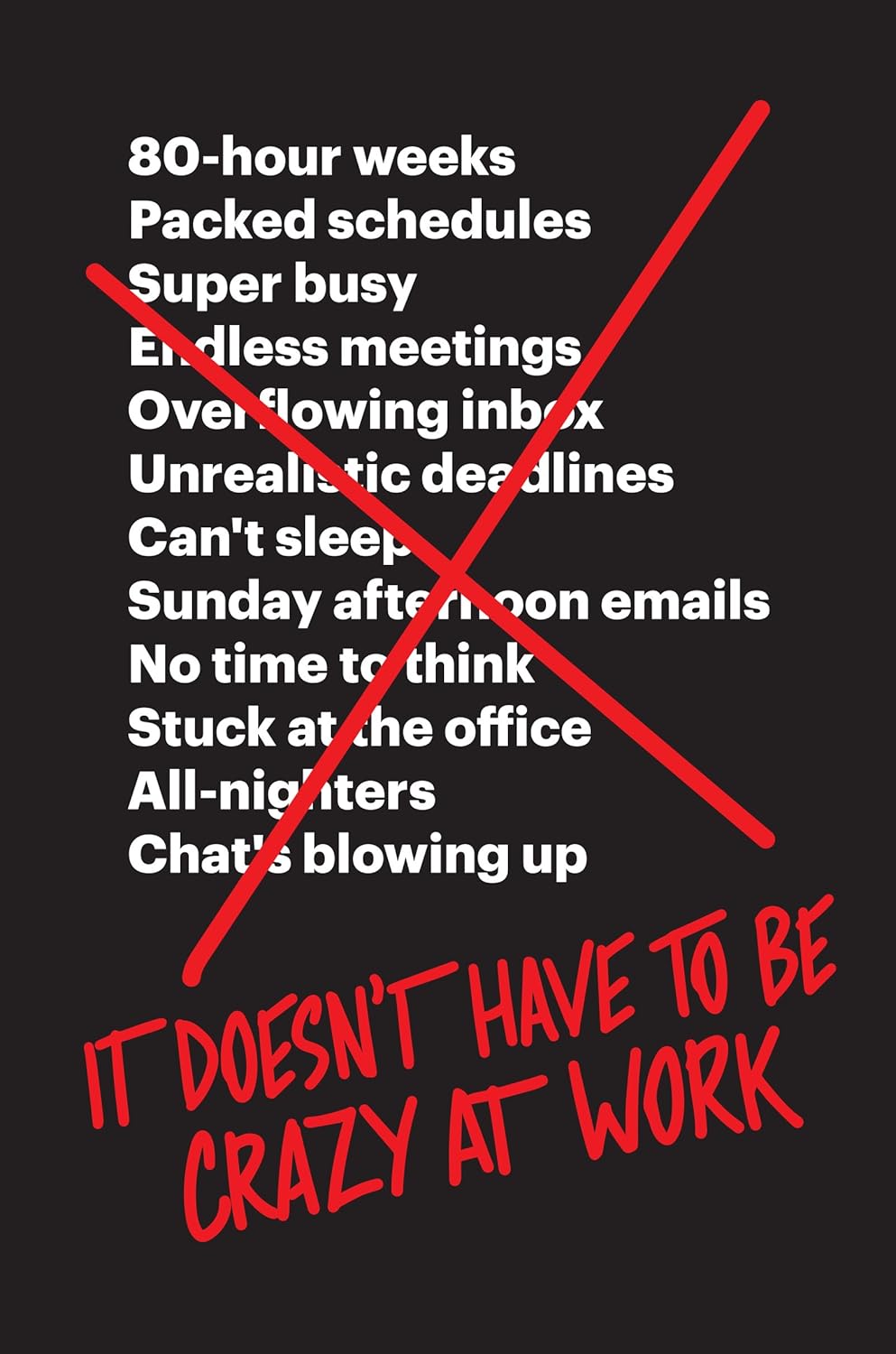
It Doesn’t Have to Be Crazy at Work Book Summary
This It Doesn’t Have to Be Crazy at Work Book Summary covers the key ideas, lessons, and takeaways in about 20 minutes.
Short Description:
It Doesn’t Have to Be Crazy at Work promotes calm, sustainable productivity.
By protecting uninterrupted time, favoring thoughtful communication, setting realistic expectations, and treating employees as long-term partners, companies can achieve sustainable productivity. Calm workplaces are not lazy or unambitious; they are disciplined, focused, and humane.
Ultimately, the book argues that work should support life, not consume it. When organizations honor this principle, they create environments where people can do meaningful work, earn a living, and still have the time and energy to live fully.
Helps with these goals
Preview the It Doesn’t Have to Be Crazy at Work book summary
Below is a preview of Sumizeit’s comprehensive human-written summary of It Doesn’t Have to Be Crazy at Work by Jason Fried. The full summary is 15-20 minutes long and covers the book’s key ideas in text, audio, visual, and video formats. Unlock the full 20 Minute Summary
Modern professional culture often glorifies exhaustion. The ideal employee is portrayed as someone who is always online, perpetually available, and willing to sacrifice evenings, weekends, and personal well-being for the sake of productivity. Long hours are treated as a badge of honor, stress is framed as evidence of importance, and burnout is normalized as the cost of ambition. In It Doesn’t Have to Be Crazy at Work, Jason Fried (along with co-author David Heinemeier Hansson) challenges this narrative at its core.
The book argues that the frantic pace dominating many workplaces is neither inevitable nor effective. Instead of producing better outcomes, constant urgency erodes focus, damages morale, and leads to shallow work that must be redone repeatedly. Fried contends that calm, well-structured environments consistently outperform chaotic ones—not because people work harder, but because they work more thoughtfully.
This philosophy is not theoretical. It is grounded in the authors’ experience running 37signals, the company behind Basecamp, where they deliberately rejected hustle culture in favor of steady, humane operations. Over many years, they built a profitable company without endless growth targets, punishing schedules, or a culture of anxiety. Their central claim is simple but radical: work can be productive without being stressful, and success does not require sacrificing one’s life outside the office.
Redefining Success: Stability Over Relentless Growth
A core theme of the book is the rejection of growth as the default measure of success. In many organizations, growth is treated as a moral imperative. Bigger revenues, more users, larger teams, and expanding markets are assumed to be inherently good. Fried argues that this assumption is deeply flawed.
Endless growth creates a treadmill effect. Each milestone immediately becomes insufficient, replaced by an even larger target. Employees are never allowed to feel finished or satisfied. What was once celebrated becomes the new baseline, and pressure intensifies rather than subsides. Over time, this erodes motivation and creates a persistent sense of failure, even when the organization is objectively successful.
Financial strain is another consequence of growth obsession. Companies that chase expansion often spend aggressively, assuming future success will justify present risk. This puts constant pressure on teams to perform flawlessly. When survival depends on hitting ever-rising numbers, mistakes feel catastrophic. Fear replaces creativity, and employees focus on avoiding failure rather than doing excellent work.
Growth-at-all-costs environments also distort values. When metrics dominate decision-making, ethical considerations are more likely to be compromised. Promises to customers are bent, shortcuts are taken, and integrity becomes negotiable. Fried argues that when hitting numbers matters more than doing right by people, the culture inevitably suffers.
As an alternative, the book proposes a different definition of success: stability. Instead of constantly expanding, organizations can choose to remain intentionally small, focused, and sustainable. Stability means setting clear, repeatable goals and refining how well they are achieved. It means being profitable without being maximalist. It means improving quality rather than scale.
This approach does not reject progress. Instead, it emphasizes incremental improvement over explosive growth.
Want the complete 20-minute summary?
- Full structured summary
- Video Summary
- Podcast Summary
- Audio summary
- Key takeaways
- Exercises
- Quiz
- Highlights and notes
- Ask the book with AI
Who should read It Doesn’t Have to Be Crazy at Work?
It Doesn't Have to Be Crazy at Work is for managers, entrepreneurs, and knowledge workers who feel trapped in high-pressure environments and want a different approach to productivity. If you're exhausted by hustle culture, skeptical of endless growth targets, or simply tired of chaos masquerading as ambition, this book offers a practical alternative.
Why does It Doesn’t Have to Be Crazy at Work matter?
Burnout and chronic stress have become normalized in modern workplaces, yet they don't actually produce better results—they produce shallow work, poor decisions, and damaged lives. Jason Fried and David Heinemeier Hansson show that calm, intentionally structured organizations outperform chaotic ones, making this book essential for anyone tired of the myth that success requires self-destruction.
What are the key themes in It Doesn’t Have to Be Crazy at Work?
- Stability and sustainable productivity over relentless growth
- Calm as a strategic competitive advantage
- Deep focus and uninterrupted work time
- Asynchronous communication and thoughtful collaboration
- Trust-based management over fear-driven culture
- Work as part of life, not its replacement
How can you apply ideas from It Doesn’t Have to Be Crazy at Work?
- Establish clear, repeatable goals rather than always chasing larger targets—define what 'enough' looks like for your organization
- Implement no-meeting blocks or company-wide focus days to protect uninterrupted work time
- Shift critical communication to written, asynchronous formats with documented decision logs rather than relying on real-time chat
- Make employee schedules private or semi-private to reduce interruptions and protect deep work periods
- Set realistic project timelines with buffer time rather than aggressive deadlines that drive evening and weekend work
- Create designated office hours for consultations and collaboration rather than allowing constant ad hoc interruptions
- Review and reduce mandatory meetings quarterly—rigorously assess whether each meeting could be handled through written updates
What common mistakes do readers make with It Doesn’t Have to Be Crazy at Work?
- Assuming growth is always good—organizations often chase expansion at the cost of stability and employee well-being without questioning whether growth actually serves their values
- Treating urgency as normal—companies normalize chronic crisis and emergency management when better planning could prevent most urgent situations
- Relying on visible busyness as a productivity metric—leaders often reward long hours and constant activity rather than actual results and quality output
- Ignoring the cost of interruptions—organizations implement open offices and instant messaging without measuring the cognitive damage from fragmented attention
Sumizeit Exercises Apply what you've learned
Turn ideas from It Doesn’t Have to Be Crazy at Work into action with a short guided reflection: identify the biggest takeaway, connect it to your life, and commit to one step you can take in the next 24 hours.
What is the expert analysis of It Doesn’t Have to Be Crazy at Work?
Overview
It Doesn’t Have to Be Crazy at Work is a seminal work co-authored by Jason Fried and David Heinemeier Hansson, founders of the software company Basecamp. The book stands out as a critical intervention in contemporary business literature by challenging the pervasive hustle culture that equates nonstop busyness and stress with productivity and success. Fried, a respected entrepreneur and thought leader, leverages his extensive experience in building a sustainable, profitable company without succumbing to the pressures of relentless growth or burnout. This book is significant for its contrarian stance and practical insights, offering a humane alternative to the dominant narratives of work in the 21st century.
Core Thesis
The central argument of the book is that the frenetic pace and constant urgency so often glorified in modern workplaces are neither necessary nor beneficial for achieving meaningful success. Instead, Fried advocates for a work culture grounded in calm, stability, and thoughtful productivity. He posits that organizations that prioritize sustainable practices—such as protecting uninterrupted work time, embracing asynchronous communication, setting reasonable expectations, and investing in employees as long-term partners—can outperform those mired in chaos and stress. The thesis fundamentally reframes success away from growth-at-all-costs and busyness-as-virtue, towards a model where work supports life rather than consumes it.
Strengths
- Practical Wisdom Grounded in Experience: The book draws on the authors’ real-world experience running Basecamp, lending credibility and actionable insights rather than abstract theory.
- Clear Critique of Hustle Culture: Fried effectively dismantles the myth that stress and overwork are prerequisites for productivity, offering a compelling alternative that resonates with contemporary concerns about burnout.
- Emphasis on Psychological Safety and Trust: The advocacy for calm leadership and trust-based accountability aligns with modern organizational psychology research on motivation and creativity.
- Focus on Sustainable Productivity: By promoting realistic timelines and reasonable workloads, the book addresses a critical but often overlooked aspect of long-term organizational health.
- Innovative Communication Strategies: The recommendation to prioritize asynchronous communication and reduce unnecessary meetings is both timely and practical, especially in increasingly remote and hybrid work environments.
Critiques & Counterarguments
- Limited Scope of Applicability: While the book’s principles work well for small to medium-sized knowledge work organizations, they may be less applicable to industries requiring rapid scaling, high-stakes crisis management, or frontline operations where immediacy is essential.
- Potential Oversimplification of Growth Dynamics: The rejection of growth as a default goal, though refreshing, may underappreciate the complexities and necessities of scaling in competitive markets, particularly for startups seeking venture capital or market dominance.
- Evidence Base and Nuance: The book relies heavily on anecdotal evidence and the authors’ own business experience, which, while valuable, may not capture the diversity of organizational contexts or the nuances of different cultural attitudes toward work.
- Contrasting Research on Urgency and Innovation: Some organizational studies suggest that a degree of urgency and pressure can catalyze innovation and rapid problem-solving, indicating that a blanket rejection of urgency might overlook scenarios where it is beneficial.
- Challenges in Implementing Asynchronous Communication: While asynchronous methods have advantages, they may also slow decision-making in fast-moving environments and risk miscommunication without the immediacy of real-time feedback.
Who Should Read This
This book is essential reading for business leaders, managers, and entrepreneurs seeking to cultivate healthier, more sustainable workplace cultures. It will resonate strongly with knowledge workers, HR professionals, and organizational designers interested in reducing burnout and improving employee well-being without sacrificing productivity. Additionally, readers fatigued by the relentless pace of modern work and those exploring alternative management philosophies will find Fried’s insights both validating and inspiring. However, executives in high-growth startups or industries with critical time-sensitive operations should approach the book’s prescriptions with a discerning eye, adapting its principles thoughtfully to their unique contexts.
Frequently asked questions about the It Doesn’t Have to Be Crazy at Work book summary
What is It Doesn't Have to Be Crazy at Work about?
It Doesn't Have to Be Crazy at Work, by Jason Fried and David Heinemeier Hansson, challenges the cultural norm that success requires stress, overwork, and endless growth. The book argues that calm, well-structured organizations actually outperform chaotic ones, and provides practical strategies for creating workplaces where people can do meaningful work without sacrificing their health and personal lives.
Who should read It Doesn't Have to Be Crazy at Work?
This book is ideal for managers, entrepreneurs, team leaders, and knowledge workers who are exhausted by hustle culture and want an alternative approach. It's also valuable for anyone skeptical of growth-at-all-costs mentality or tired of working in environments that treat stress and long hours as badges of honor.
What are the main takeaways from It Doesn't Have to Be Crazy at Work?
The main takeaways are: calm workplaces are more productive than chaotic ones; protecting uninterrupted focus time is essential; asynchronous communication produces better results than constant real-time interaction; sustainable productivity beats relentless growth; and work should support life, not consume it. The book demonstrates these principles are practical, not idealistic.
How can I implement calm at work if my industry is fast-paced?
Calm doesn't mean slow or lazy—it means deliberate, focused work without artificial urgency. You can protect deep focus time, replace unnecessary meetings with written updates, set realistic timelines, and clearly distinguish between true emergencies and manufactured urgency. Even fast-paced industries benefit from focused effort over constant chaos.
Does It Doesn't Have to Be Crazy at Work recommend eliminating all meetings?
No—the book doesn't advocate eliminating meetings entirely, but rather rigorously questioning their necessity. Many meetings could be handled through written communication. When meetings are essential, they should be purposeful, limited in scope, and respectful of participants' time, not defaulting to constant convening.
Is It Doesn't Have to Be Crazy at Work only for business leaders?
While it's particularly valuable for leaders and managers, individual contributors benefit too. Employees can use the book's principles to advocate for focus time, propose asynchronous communication practices, and protect their own productivity. The ideas also apply to how you structure your own work and boundaries.
How does Jason Fried's experience at Basecamp support the book's arguments?
Fried co-founded 37signals (now Basecamp) and deliberately built it without following hustle culture norms—no aggressive growth targets, no punishing schedules, no culture of anxiety. The company remains profitable and successful while maintaining this philosophy, proving the book's arguments aren't theoretical but grounded in real business experience.
About Sumizeit
Sumizeit is a profitable Scomy LLC company based in Miami, Florida. Our founders, Clemens Raemy and Weina Scott, are successful entrepreneurs with several exits. Sumizeit is a popular book summary app / micro learning app used by busy professionals and entrepreneurs with over 2,500 non-fiction book summaries and 10,000 podcast summaries in text, audio, visual, podcast, and video format. We also have stellar retention tools to make ideas stick - such as flashcards with spaced repetition, quizzes, streaks, highlighting and notes, daily challenges, riddles, mini-courses, meditation, and more. You won't only learn the idea, but also remember it. Over 90% of our users change their habits with Sumizeit.
Upgrade Now
Here's why readers love Sumizeit
Join thousands of learners getting smarter every day
"Great experience. Detailed summaries. Loved the gamification feature. Makes learning fun. Good customer service. I recommend Sumizeit to anyone. You'll learn a lot."
"I always felt busy but still wanting to keep up with the book discussion in my friend group. This was a great supplement to help me keep reading the books I find fun while keeping up with important books."
"I love this website. Instead of scrolling social media, I find myself learning a lot. I use it everyday. I recommend this app for anyone who is too busy and wants to get up to speed with their favorite books."
It Doesn’t Have to Be Crazy at Work Book Summary PDF
Looking for a It Doesn’t Have to Be Crazy at Work Book Summary PDF you can save and revisit offline? Our It Doesn’t Have to Be Crazy at Work Book Summary PDF captures the book’s core ideas in a clean, printable format — the key frameworks, takeaways, and structure without the fluff. Download the It Doesn’t Have to Be Crazy at Work Book Summary PDF when you want a reference you can annotate, share with your team, or review on the go. Get your It Doesn’t Have to Be Crazy at Work Book Summary PDF from the download page below.
Download It Doesn’t Have to Be Crazy at Work Book Summary PDFPeople also liked these summaries
Readers who explored It Doesn’t Have to Be Crazy at Work often enjoyed these titles next.



Ready to read the whole thing?
- Full structured summary
- Video Summary
- Podcast Summary
- Audio summary
- Key takeaways
- Exercises
- Quiz
- Highlights and notes
- Ask the book with AI
Featured Book Titles
Popular Book Summaries at sumizeit, leading book summary app