
Question 1 of 10


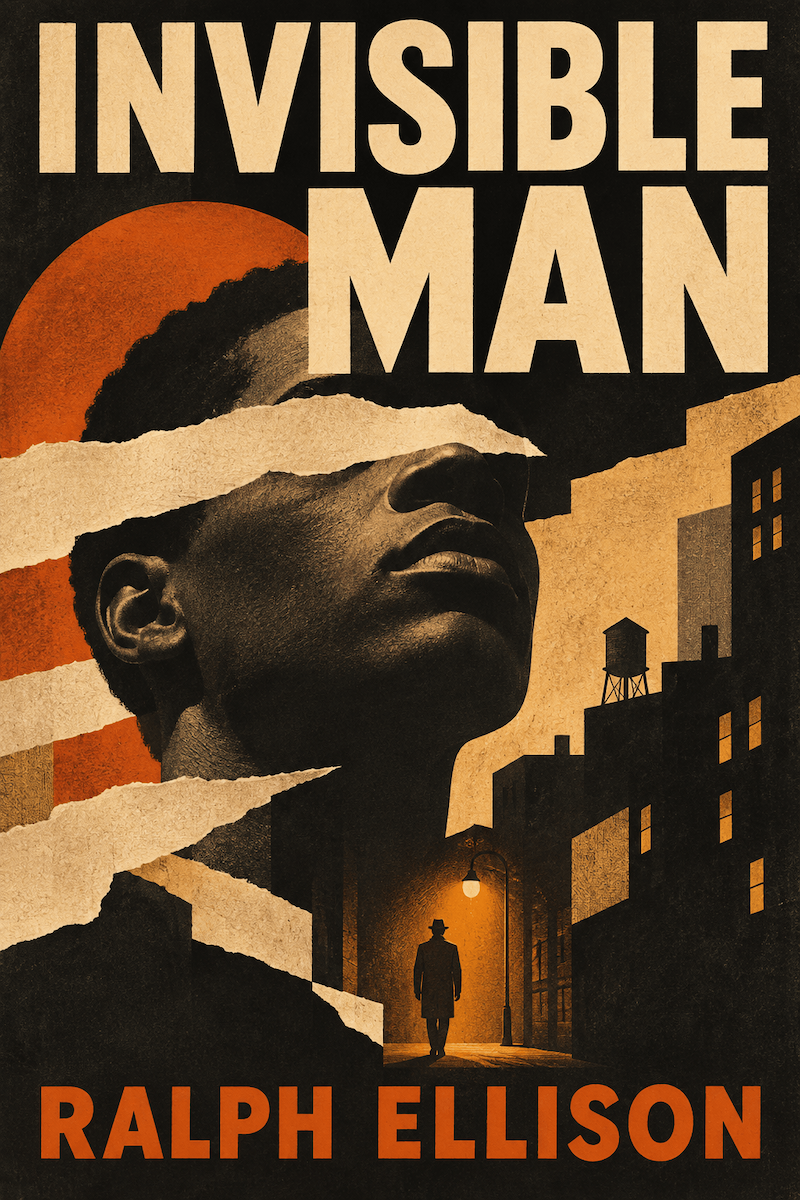
Prefer the print book? Buy on Amazon
As an Amazon Associate, Sumizeit earns from qualifying purchases.
Book Summary
Invisible Man Book Summary
This Invisible Man Book Summary covers the key ideas, lessons, and takeaways in about 20 minutes.
Short Description:
A clear, chapter by chapter guide to Ellison’s novel about being unseen.
Ellison's novel says that being seen is not the same as being known, and that a person can lose years chasing approval from groups who only want to use him. The narrator tries college, business, and politics, and each one hands him a role to play, a mask that serves someone else's purpose. His escape is not a clever move or a political victory. It's the slow work of figuring out who he is when nobody is watching, and speaking honestly from that place. The book asks every reader, Black or white, whether they have been hiding inside someone else's script, and whether they have done the same to other people.
Helps with these goals
Preview the Invisible Man book summary
Below is a preview of Sumizeit’s comprehensive human-written summary of Invisible Man by Ralph Ellison. The full summary is 15-20 minutes long and covers the book’s key ideas in text, audio, visual, and video formats. Unlock the full 20 Minute Summary
The book opens with a narrator who has no name and lives in a forgotten cellar in a building that was once whites only. He has wired the place with 1,369 light bulbs, all running on electricity he steals from the power company. He plays a Louis Armstrong record over and over, sometimes five at once, and he pours sloe gin over vanilla ice cream for dinner. It sounds like a joke, but he means it as a serious point about how he lives.
He tells us up front that he is invisible. Nobody has cut off his body or turned him into a ghost. People just refuse to see him. They look at him and see their own ideas about who he is. He tells a story about bumping into a tall white man on the street, getting insulted, and nearly beating the man to death before he realizes the man never saw him at all. The man was fighting a shadow.
He is writing all this down from underground, and the rest of the novel is his flashback. He wants to explain how he got there, and why hiding turned out to be the only honest place left for him.
A grandfather's strange advice
The story starts in the South, with a young Black man who believes in hard work and doing right. On his deathbed, his grandfather said something that haunted the family. He called himself a traitor all his life, and told the boy to keep up the fight by saying yes to the white world, smiling at it, and agreeing it to death. The narrator never understood this, and he spends the novel chasing the meaning.
As a high school graduate, he is invited to give his valedictory speech to the leading white men of his town. Before he can talk, he is dragged into the "battle royal." Ten Black boys are blindfolded and made to fight each other in a ring while drunk businessmen shout and laugh. After that, the boys are told to grab fake gold coins off a rug, which turns out to be electrified. The narrator takes the shocks, bleeds, and then gives his speech through a swollen mouth. Near the end he slips and says "social equality" instead of "social responsibility." The room goes quiet, and he has to take it back.
He still gets his reward, a briefcase and a scholarship to a Black college. That night he dreams his grandfather tells him to open the case. Inside is an envelope, and inside that is another, and so on, until he finds a note saying "Keep this boy running." The dream sets the pattern for the whole book. Every time he thinks he is being handed something valuable, it turns out to be a way of steering him.
College and the trustee
The college is a lovely, orderly place with brick buildings, flowering paths, and a statue of the Founder, a Black man shown lifting a veil from the…
Want the complete 20-minute summary?
- Full structured summary
- Video Summary
- Podcast Summary
- Audio summary
- Key takeaways
- Exercises
- Quiz
- Highlights and notes
- Ask the book with AI
Who should read Invisible Man?
Invisible Man speaks to anyone grappling with questions of identity, belonging, and authenticity in a world that tries to define them. It's essential reading for those interested in the African American experience, social movements, and the human cost of conformity, as well as for readers seeking a profound meditation on what it means to be truly seen.
Why does Invisible Man matter?
Ralph Ellison's masterpiece remains urgently relevant because it exposes how institutions, ideologies, and even well-intentioned movements can exploit individuals by forcing them into predetermined roles. In an era of social fragmentation and competing narratives, the novel's exploration of invisibility—being overlooked, misunderstood, or used—speaks to anyone caught between who they are and who the world expects them to be.
What are the key themes in Invisible Man?
- The cost of invisibility and the human need to be truly seen
- How systems and institutions exploit individuals through assigned roles
- The search for authentic identity amid conflicting social pressures
- The danger of chasing approval from those who wish to use you
- The power of self-knowledge over external validation
- Complicity and the moral ambiguity of survival
How can you apply ideas from Invisible Man?
- Examine the roles you play in different contexts—at work, in your family, with friends—and ask whether any of them conflict with or diminish your authentic self.
- Practice noticing when organizations or groups reward compliance over independent thinking, and recognize this as a warning sign rather than an advantage.
- Identify moments in your life when you felt truly seen and understood, and create space for more of that kind of authentic connection.
- Develop the habit of questioning narratives and scripts you're handed, whether from institutions, media, or social movements, rather than simply accepting them.
- Find small ways to assert your own voice and agency within systems you cannot easily leave, without requiring permission from those in power.
- Reflect on how you might be invisible to others—overlooked, misunderstood, or defined by their assumptions—and consider how to make your true self more visible.
- Build relationships with people who know you beyond your social role or position, and invest in knowing others in that same depth.
What common mistakes do readers make with Invisible Man?
- Assuming that belonging to a prestigious institution or movement will finally provide validation and a stable identity, when in fact it may demand more self-sacrifice.
- Believing that hard work and rule-following will earn you recognition, without recognizing that systems often value your usefulness more than your humanity.
- Thinking that hiding or staying silent is the same as being safe, when invisibility in the sense the novel describes is itself a kind of harm.
- Failing to notice when you are complicit in systems that hurt others, or when you have internalized the values of those who have hurt you.
Sumizeit Exercises Apply what you've learned
Turn ideas from Invisible Man into action with a short guided reflection: identify the biggest takeaway, connect it to your life, and commit to one step you can take in the next 24 hours.
What is the expert analysis of Invisible Man?
Overview
Invisible Man, authored by Ralph Ellison and published in 1952, stands as a seminal work in American literature, particularly within the canon of African American and existential narrative traditions. Ellison, a writer deeply engaged with the cultural and political currents of mid-20th century America, crafted a novel that transcends its immediate historical context to probe universal questions of identity, invisibility, and social recognition. Awarded the National Book Award in 1953, the novel remains a touchstone for discussions on race, individuality, and the complexities of selfhood in a racially stratified society.
Core Thesis
At its heart, Invisible Man argues that the struggle for identity and recognition in a racially prejudiced society often renders individuals "invisible"—not literally unseen, but misunderstood and misrepresented by the dominant culture. The narrator’s journey illustrates how societal roles and imposed masks serve to obscure authentic selfhood. Ellison’s central insight is that true visibility requires transcending externally imposed identities and embracing an honest, self-defined existence, even if that means retreating from the public eye to find one’s voice.
Strengths
- Complex Characterization: Ellison’s unnamed narrator embodies a richly layered psychological portrait, capturing the tension between personal identity and societal expectation with profound nuance.
- Symbolic Depth: The novel’s use of metaphor—such as the "Optic White" paint that conceals blackness—provides a powerful commentary on race, assimilation, and erasure.
- Interweaving of Historical and Cultural Context: The narrative deftly integrates the realities of Jim Crow segregation, Harlem Renaissance politics, and Cold War-era ideological struggles, offering a textured socio-political backdrop.
- Philosophical Inquiry: Beyond race, the novel probes existential themes of invisibility, freedom, and authenticity, inviting readers to reflect on the human condition more broadly.
- Literary Innovation: Ellison’s narrative structure—framing the story as a flashback from an underground hideout—and his blending of realism with surreal and symbolic elements create a compelling and original storytelling approach.
Critiques & Counterarguments
- Ambiguity of the Grandfather’s Advice: The grandfather’s paradoxical counsel to "agree to it to death" has been critiqued for its opacity, sometimes leaving readers uncertain about the novel’s stance on accommodation versus resistance.
- Political Ambivalence: Some critics argue that Ellison’s portrayal of political movements like the Brotherhood is somewhat one-dimensional, emphasizing their failures without fully engaging with their complexities or potential benefits.
- Limited Female Perspectives: The novel’s focus on male experiences and its treatment of women as secondary figures or symbols has drawn feminist critiques for underrepresenting or simplifying female agency.
- Competing Schools of Thought: The novel’s skepticism toward collective political action contrasts with contemporaneous Black nationalist and Marxist movements that advocated for systemic change, suggesting a tension between individual existentialism and collective struggle.
- Real-World Evidence: While the narrator’s invisibility is a powerful metaphor, some sociological research emphasizes the importance of community solidarity and visible political engagement in combating racial oppression, offering a counterpoint to the novel’s emphasis on individual withdrawal and self-definition.
Who Should Read This
Invisible Man is essential reading for scholars and students of American literature, African American studies, and philosophy, as well as for anyone interested in the intersections of race, identity, and power. It appeals to readers who appreciate literary complexity and are willing to engage with challenging questions about selfhood and society. Furthermore, those invested in understanding the historical and ongoing struggles for racial justice will find Ellison’s insights both illuminating and deeply relevant. Its layered narrative rewards multiple readings and thoughtful reflection, making it a vital work for a sophisticated, critical audience.
Discussion questions for Invisible Man Short questions you can actually use in a conversation
Frequently asked questions about the Invisible Man book summary
What is Invisible Man about?
Invisible Man by Ralph Ellison is a novel about a nameless Black narrator who chronicles his journey from the South to New York, moving through education, employment, and political activism, only to conclude that he is invisible—not physically, but because the world refuses to see him as an individual rather than a symbol or tool. The narrative unfolds as a flashback from the narrator's current life underground, where he has retreated to understand how he became unseen and what authentic identity might mean.
Who should read Invisible Man?
Anyone interested in understanding identity, power, and authenticity should read Invisible Man, particularly those exploring African American history and literature, the dangers of institutional conformity, or the human need for genuine recognition. The novel speaks universally to readers who have questioned whether they are living their own lives or playing roles assigned by others.
What are the main takeaways from Invisible Man?
The novel teaches that being seen is not the same as being known, that institutions exploit individuals by assigning them roles that serve others' purposes, and that authentic identity emerges only when you stop seeking approval from systems designed to use you. Ellison argues that honest self-knowledge and authentic speech, spoken from a place of genuine understanding, matter more than power, status, or belonging to any group.
Why does the narrator live underground in Invisible Man?
The narrator retreats to a basement cellar to escape the systems and movements that have tried to use him—college, corporations, political organizations—and to gain perspective on his journey. He describes this underground space not as defeat but as a place of clarity where he can finally think for himself and prepare to speak honestly about what he has learned.
What does the briefcase symbolize in Invisible Man?
The briefcase appears first as a reward for the narrator's valedictory speech and later contains items representing each false identity he has adopted—his diploma, his job, his Brotherhood name. Burning these items in the basement represents his rejection of the lies and roles those documents symbolized.
What is the significance of the Battle Royal in Invisible Man?
The Battle Royal scene establishes the novel's central pattern: the narrator is blindfolded, forced to compete against other Black boys for the amusement of white men, and then tricked into taking electric shocks while seeking rewards. It demonstrates how systems extract value and entertainment from Black bodies while pretending to reward merit and success.
How does Invisible Man reflect on identity and race?
The novel argues that racial identity becomes a tool for control when others define it for you, and that true freedom requires resisting both external definitions and the internalized shame they create. Ellison suggests that authentic identity transcends the categories others try to impose, though the cost of that freedom is often isolation and invisibility.
What does Rinehart represent in Invisible Man?
Rinehart represents a kind of freedom through multiplicity—he is simultaneously a gambler, preacher, lover, and numbers runner, and people accept each version of him without demanding he choose one fixed identity. To the narrator, Rinehart suggests that chaos and contradiction might be as real and valid as the order and consistency that institutions demand.
About Sumizeit
Sumizeit is a profitable Scomy LLC company based in Miami, Florida. Our founders, Clemens Raemy and Weina Scott, are successful entrepreneurs with several exits. Sumizeit is a popular book summary app / micro learning app used by busy professionals and entrepreneurs with over 2,500 non-fiction book summaries and 10,000 podcast summaries in text, audio, visual, podcast, and video format. We also have stellar retention tools to make ideas stick - such as flashcards with spaced repetition, quizzes, streaks, highlighting and notes, daily challenges, riddles, mini-courses, meditation, and more. You won't only learn the idea, but also remember it. Over 90% of our users change their habits with Sumizeit.
Upgrade Now
Here's why readers love Sumizeit
Join thousands of learners getting smarter every day
"Great experience. Detailed summaries. Loved the gamification feature. Makes learning fun. Good customer service. I recommend Sumizeit to anyone. You'll learn a lot."
"I always felt busy but still wanting to keep up with the book discussion in my friend group. This was a great supplement to help me keep reading the books I find fun while keeping up with important books."
"I love this website. Instead of scrolling social media, I find myself learning a lot. I use it everyday. I recommend this app for anyone who is too busy and wants to get up to speed with their favorite books."
Invisible Man Book Summary PDF
Looking for a Invisible Man Book Summary PDF you can save and revisit offline? Our Invisible Man Book Summary PDF captures the book’s core ideas in a clean, printable format — the key frameworks, takeaways, and structure without the fluff. Download the Invisible Man Book Summary PDF when you want a reference you can annotate, share with your team, or review on the go. Get your Invisible Man Book Summary PDF from the download page below.
Download Invisible Man Book Summary PDFPeople also liked these summaries
Readers who explored Invisible Man often enjoyed these titles next.




Ready to read the whole thing?
- Full structured summary
- Video Summary
- Podcast Summary
- Audio summary
- Key takeaways
- Exercises
- Quiz
- Highlights and notes
- Ask the book with AI
Featured Book Titles
Popular Book Summaries at sumizeit, leading book summary app
Atomic Habits Book Summary Rich Dad Poor Dad Book Summary The Four Agreements Book Summary The 48 Laws of Power Book Summary When Breath Becomes Air Book Summary Think and Grow Rich Book Summary