


Prefer the print book? Buy on Amazon
As an Amazon Associate, Sumizeit earns from qualifying purchases.
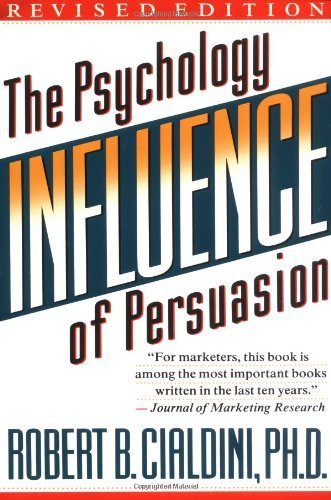
Influence: The Psychology Of Persuasion Book Summary
This Influence: The Psychology Of Persuasion Book Summary covers the key ideas, lessons, and takeaways in about 20 minutes.
Short Description:
Six psychological principles explain how persuasion shapes our decisions.
Helps with these goals
Preview the Influence: The Psychology Of Persuasion book summary
Below is a preview of Sumizeit’s comprehensive human-written summary of Influence: The Psychology Of Persuasion by Robert B. Cialdini. The full summary is 15-20 minutes long and covers the book’s key ideas in text, audio, visual, and video formats. Unlock the full 20 Minute Summary
Are you aware that you’ve actually been manipulated your whole life?
It may not seem like it, but people are always using the power of persuasion to get what they want and make the scales tip in their favor.
So, how can you learn this superpower and start persuading people for your benefit?
With Robert B. Cialdini’s book, “Influence: The Psychology of Persuasion” you will learn the psychology of persuasion and understand how it has been present in your work relationships, customer relationships, and every other relationship you’ve engaged in throughout your entire life.
“Often we don’t realize that our attitude toward something has been influenced by the number of times we have been exposed to it in the past.”- Robert B. Cialdini
You will learn to understand why people simply comply with other people’s requests, such as to make a purchase or to take on an extra shift at work.
Cialdini will teach you how to reap the rewards of persuasion and start living the good life!
Shortcuts Can Manipulate Us
Turkey mothers are very loving and nurturing. They are protective of their chicks. But, it all comes down to one thing. If a turkey makes a “cheep-cheep” sound, the mother will fawn over it. But, if it doesn’t a mother turkey will ignore or even kill her young. The “cheep-cheep” is a persuasive sound.
It is also a shortcut for the mother turkey to recognize her baby chicks. The “cheep-cheep” does its job by triggering the mother turkey’s maternal instincts.
Now, as humans, we aren’t going to ignore our children for not making a specific sound. But, we do have similar shortcuts in our world.
Shortcuts help us to make quick and easy decisions in a world that is full of too many! It becomes a defense mechanism to keep us balanced and focused on what’s important.
For example, as humans, we are usually willing to do someone a favor if they provide us with a reason. Say, your mom asks you to take out the trash before you leave the house for school because she didn’t have time to do it before she left for work. Would you deny her? Probably not. You would understand how that makes sense. And, who wants trash laying around the house?
By statistics, if your mother gave you no reason to take out the trash, there would be only a 60% chance that you would actually do it.
And, if she gave you a reason that didn’t make sense there’s a 93% chance that you would still do it for her. Our mental shortcut says any reason is a good enough reason!
An example of a shortcut we see in business all the time is that quality equals price. People assume that because an item is priced higher than others in its market, it’s a higher quality. But, that’s not always true. And, businesses will up the price on low-selling items to deceive you into thinking they’re high-quality.
That’s why we…
Want the complete 20-minute summary?
- Full structured summary
- Video Summary
- Podcast Summary
- Audio summary
- Key takeaways
- Exercises
- Quiz
- Highlights and notes
- Ask the book with AI
Who should read Influence: The Psychology Of Persuasion?
This book is essential for anyone who wants to understand why people make the decisions they do—whether you're a salesperson, marketer, manager, or simply someone navigating daily interactions. If you've ever wondered why you said yes to something you didn't expect to, or want to recognize when others are trying to influence you, this book provides the psychological framework you need.
Why does Influence: The Psychology Of Persuasion matter?
In today's world of constant messaging, advertising, and social pressure, understanding the psychology of persuasion is a form of self-defense. Cialdini reveals the invisible forces shaping our choices every day, from limited-time offers to social media endorsements, helping you make more conscious decisions. Beyond personal protection, professionals in sales, marketing, and leadership gain powerful insights into ethical influence that can transform their effectiveness.
What are the key themes in Influence: The Psychology Of Persuasion?
- Cognitive shortcuts and mental fast-tracks influence decision-making
- Reciprocity: the universal human obligation to repay favors
- Scarcity and fear of missing out drive desire and urgency
- Social proof: we look to others' behavior to guide our own
- Consistency and commitment shape self-image and choices
- Authority figures and credibility command automatic obedience
- Liking and attraction influence agreement and compliance
- The effort-justification effect: hard-won things feel more valuable
How can you apply ideas from Influence: The Psychology Of Persuasion?
- Audit your spending decisions: When you make a purchase, ask yourself whether scarcity, social proof, or liking influenced you rather than genuine need or preference
- Protect yourself in negotiations by anchoring with your target price rather than accepting the first extreme offer and emotional reciprocity dynamics
- Use consistency principles ethically in your own life by making public commitments to goals you want to achieve, leveraging social accountability
- Create effective ethical influence by building genuine liking through finding common ground, offering authentic compliments, and demonstrating competence as an authority
- Design customer experiences that build commitment gradually through small initial choices, so customers naturally increase their engagement over time
- Evaluate authority claims critically by asking for credentials and checking for potential conflicts of interest before accepting recommendations
- Recognize when you're vulnerable to social proof and seek out diverse opinions rather than assuming popular choices are always best for you personally
- Use the rejection-then-retreat tactic responsibly in negotiations by starting reasonably high but not so extreme as to destroy credibility
What common mistakes do readers make with Influence: The Psychology Of Persuasion?
- Assuming you're immune to persuasion tactics because you're aware they exist—even knowing about them doesn't eliminate their psychological pull
- Making snap decisions based on scarcity claims without asking yourself if you would want the item at full price with unlimited availability
- Returning favors automatically without pausing to evaluate whether the initial gesture was genuine or designed specifically to manipulate you
- Following authority figures without verifying their actual credentials, expertise, or potential conflicts of interest in the current situation
- Letting liking cloud your judgment—just because you like someone doesn't mean their product or advice is right for you
- Ignoring the effort-justification effect when comparing the actual value of something against what you've already invested in obtaining it
Sumizeit Exercises Apply what you've learned
Turn ideas from Influence: The Psychology Of Persuasion into action with a short guided reflection: identify the biggest takeaway, connect it to your life, and commit to one step you can take in the next 24 hours.
What is the expert analysis of Influence: The Psychology Of Persuasion?
Overview
Influence: The Psychology of Persuasion is a seminal work by Robert B. Cialdini, a distinguished psychologist and marketing scholar. Drawing from his extensive academic background and immersive field research, Cialdini elucidates the covert mechanisms underlying human compliance and persuasion. The book’s significance lies in its pioneering synthesis of psychological principles with practical applications, making it a foundational text for professionals in business, marketing, psychology, and beyond. Its status as a New York Times bestseller underscores its broad impact and enduring relevance.
Core Thesis
Cialdini’s central argument is that human behavior is frequently governed by automatic, subconscious shortcuts—heuristics—that simplify decision-making in complex social environments. These shortcuts, embodied in six key principles—reciprocation, scarcity, consistency, social proof, liking, and authority—can be systematically leveraged to influence others. By understanding these psychological triggers, individuals can both harness persuasion ethically and defend themselves against manipulation.
Strengths
- Empirical Foundation: The book’s insights are grounded in rigorous psychological research, including Cialdini’s own undercover fieldwork, lending credibility and real-world applicability.
- Clarity and Accessibility: Complex psychological concepts are distilled into clear, relatable examples that resonate with a wide audience, from academics to practitioners.
- Comprehensive Framework: The identification of six universal principles provides a cohesive structure for understanding diverse persuasion tactics across contexts.
- Practical Utility: The work equips readers with actionable strategies for negotiation, marketing, and interpersonal influence, while also fostering critical awareness of manipulative tactics.
- Interdisciplinary Reach: By bridging psychology, marketing, and behavioral economics, the book appeals to multiple fields concerned with human decision-making.
Critiques & Counterarguments
- Overgeneralization of Principles: While the six principles are powerful, they may not universally apply across cultures or individual differences, limiting the book’s cross-cultural validity.
- Potential Ethical Oversimplification: The book sometimes skirts nuanced ethical considerations, potentially encouraging manipulative use of persuasion rather than fostering responsible influence.
- Limited Engagement with Contradictory Evidence: Alternative models of persuasion, such as those emphasizing rational deliberation or emotional intelligence, receive less attention, which could provide a more balanced understanding.
- Evolution of Digital Persuasion: Since its original publication, the rise of digital media and algorithmic influence challenges some traditional mechanisms of persuasion, suggesting a need for updated frameworks.
- Competing Theories: Research in behavioral economics and social neuroscience sometimes contradicts or complicates Cialdini’s heuristics, emphasizing context-dependent variability rather than fixed principles.
Who Should Read This
This book is essential reading for professionals in marketing, sales, negotiation, and leadership who seek to ethically enhance their persuasive effectiveness. Psychologists and behavioral scientists will appreciate its empirical rigor and foundational role in social influence research. Additionally, individuals interested in self-improvement and critical thinking will find valuable tools to recognize and resist manipulation in everyday life. Its accessibility makes it suitable for both academic and general audiences aiming to deepen their understanding of human behavior in social contexts.
Frequently asked questions about the Influence: The Psychology Of Persuasion book summary
What is Influence: The Psychology Of Persuasion about?
Influence: The Psychology of Persuasion by Robert B. Cialdini explores six universal psychological principles that guide human behavior and decision-making: reciprocity, commitment and consistency, social proof, authority, liking, and scarcity. Through real-world examples and research, Cialdini reveals how these principles are used—often invisibly—to persuade us in everyday situations, from sales tactics to social obligations, and teaches readers how to recognize and protect themselves from manipulation.
Who should read Influence: The Psychology Of Persuasion?
This book is essential for salespeople, marketers, managers, and entrepreneurs who want to understand and ethically apply persuasion principles. It's equally valuable for anyone who wants to make better personal decisions and recognize when they're being influenced—from consumers navigating marketing to employees interacting with colleagues. Essentially, anyone interested in psychology, decision-making, and human behavior will benefit from this foundational work.
What are the main takeaways from Influence: The Psychology Of Persuasion?
The main takeaway is that humans rely on mental shortcuts that can be exploited for persuasion, but awareness of these six psychological principles—reciprocity, commitment, social proof, authority, liking, and scarcity—gives you power to make more conscious choices. By understanding why you're naturally inclined to say yes to certain requests, you can evaluate your decisions more critically and either resist unwanted influence or apply these principles ethically in your own influence attempts.
How can I use persuasion principles ethically in sales and marketing?
Ethical application means using these principles truthfully without manipulation: offer genuine value before asking for reciprocity, build real authority through demonstrated expertise, highlight authentic scarcity when it exists, use social proof with real testimonials, and develop liking through honesty and shared values. The key is ensuring that the principles you use align with actual benefits for the customer, rather than exploiting shortcuts to sell something against their interest.
What is the rejection-then-retreat strategy and how does it work?
The rejection-then-retreat strategy, also called the door-in-the-face technique, involves making an initial extreme request that gets rejected, then following up with a smaller, more reasonable request. Because the requester appeared to concede, the target feels obligated by reciprocity to also concede and accept the smaller request. This works because it presents a false choice between accepting the revised offer or appearing ungracious, while the actual option of declining entirely fades from view.
Why do people value things more when they've worked hard to obtain them?
Humans experience what Cialdini calls the effort-justification effect: when we invest significant effort, pain, or cost to achieve something, we unconsciously assign it greater value to justify that investment. This is why fraternity pledges value their membership more after hazing, why expensive items feel premium, and why a low initial price followed by hidden costs still results in purchase—our minds rationalize the effort or cost we've already committed.
About Sumizeit
Sumizeit is a profitable Scomy LLC company based in Miami, Florida. Our founders, Clemens Raemy and Weina Scott, are successful entrepreneurs with several exits. Sumizeit is a popular book summary app / micro learning app used by busy professionals and entrepreneurs with over 2,500 non-fiction book summaries and 10,000 podcast summaries in text, audio, visual, podcast, and video format. We also have stellar retention tools to make ideas stick - such as flashcards with spaced repetition, quizzes, streaks, highlighting and notes, daily challenges, riddles, mini-courses, meditation, and more. You won't only learn the idea, but also remember it. Over 90% of our users change their habits with Sumizeit.
Upgrade Now
Here's why readers love Sumizeit
Join thousands of learners getting smarter every day
"Great experience. Detailed summaries. Loved the gamification feature. Makes learning fun. Good customer service. I recommend Sumizeit to anyone. You'll learn a lot."
"I always felt busy but still wanting to keep up with the book discussion in my friend group. This was a great supplement to help me keep reading the books I find fun while keeping up with important books."
"I love this website. Instead of scrolling social media, I find myself learning a lot. I use it everyday. I recommend this app for anyone who is too busy and wants to get up to speed with their favorite books."
Influence: The Psychology Of Persuasion Book Summary PDF
Looking for a Influence: The Psychology Of Persuasion Book Summary PDF you can save and revisit offline? Our Influence: The Psychology Of Persuasion Book Summary PDF captures the book’s core ideas in a clean, printable format — the key frameworks, takeaways, and structure without the fluff. Download the Influence: The Psychology Of Persuasion Book Summary PDF when you want a reference you can annotate, share with your team, or review on the go. Get your Influence: The Psychology Of Persuasion Book Summary PDF from the download page below.
Download Influence: The Psychology Of Persuasion Book Summary PDFPeople also liked these summaries
Readers who explored Influence: The Psychology Of Persuasion often enjoyed these titles next.





Ready to read the whole thing?
- Full structured summary
- Video Summary
- Podcast Summary
- Audio summary
- Key takeaways
- Exercises
- Quiz
- Highlights and notes
- Ask the book with AI
Featured Book Titles
Popular Book Summaries at sumizeit, leading book summary app