


Prefer the print book? Buy on Amazon
As an Amazon Associate, Sumizeit earns from qualifying purchases.
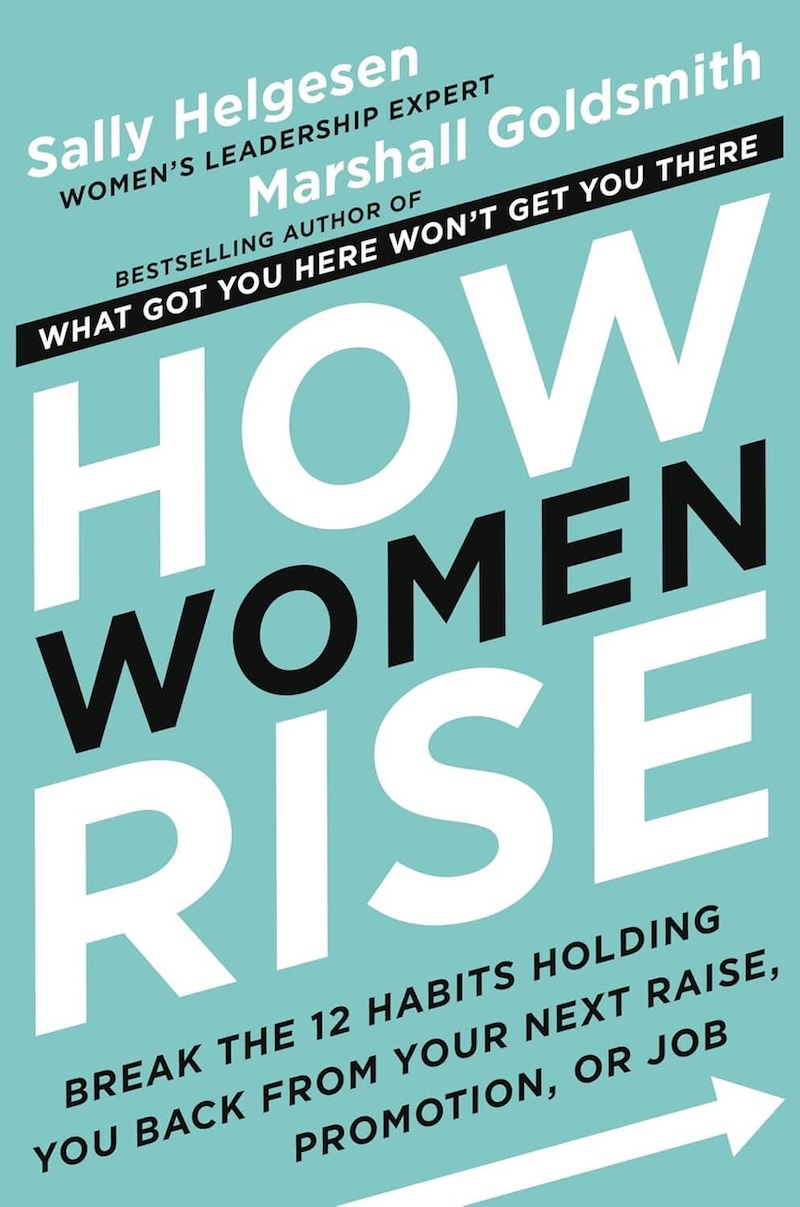
How Women Rise Book Summary
This How Women Rise Book Summary covers the key ideas, lessons, and takeaways in about 20 minutes.
Short Description:
How Women Rise shifts women from risk-avoidance to influence strategies.
Those strategies reduce risk—but they also reduce power.
To rise, women must shift toward influence strategies:
be visible (without apologizing)
state goals (so others can support them)
set boundaries (so priorities reflect purpose)
use networks (so opportunities expand)
let go of perfection (so bold action becomes possible)
stop over-processing (so presence and confidence return)
The authors’ message is not “become like men.” It’s: stop shrinking the parts of you that signal leadership. Keep your strengths—empathy, diligence, relationship skill—but stop letting them turn into self-erasure, overwork, and hesitation.
When women learn to advocate for themselves, tolerate being imperfect, and operate with strategic clarity, they become harder to overlook—not because they changed who they are, but because they stopped hiding their impact.
Helps with these goals
Want a Free Weekly Read?
Get a free summary every week straight to your mailbox.
Preview the How Women Rise book summary
Below is a preview of Sumizeit’s comprehensive human-written summary of How Women Rise by Sally Helgesen. The full summary is 15-20 minutes long and covers the book’s key ideas in text, audio, visual, and video formats. Unlock the full 20 Minute Summary
How Women Rise argues that many women who feel stalled in their careers aren’t being blocked by a single dramatic barrier like an openly sexist boss or a lack of ability. Instead, the obstacles often show up as patterns of behavior that feel normal, even virtuous. These patterns are hard to spot because they’re wrapped in “good employee” packaging: being helpful, humble, prepared, reliable, and self-critical enough to keep improving.
Sally Helgesen and Marshall Goldsmith’s main claim is not that external barriers don’t exist, but that women are disproportionately taught to manage external expectations by managing themselves. From childhood onward, girls often receive praise for being accommodating, not “too loud,” not “too much,” and not “too proud.” Later, in the workplace, those messages morph into professional instincts: don’t claim credit too strongly, don’t ask too directly, don’t rock the boat, don’t risk being disliked.
The result is what the authors describe as “invisible” barriers—because the person experiencing them is often the one maintaining them. Many women can’t name what’s holding them back because the habits live inside everyday moments: how they respond to praise, how they handle conflict, how they speak in meetings, how they prioritize, how they interpret feedback, and how they recover from mistakes.
The book identifies 12 common habits that get in women’s way and reorganizes them into four major thought patterns:
Selling yourself short
Pleasing others
Perfectionism
Overthinking
Each pattern produces behaviors that once helped women survive and succeed, but at higher levels become career-limiting. Senior roles reward different signals: visibility, decisiveness, strategic focus, comfort with power, and the ability to influence—not just deliver.
Why These Habits Are “Uniquely Female” in the Workplace
The authors explain that these habits are “uniquely female” not because women are naturally wired to behave this way, but because women are more likely to be punished for doing the opposite.
A key theme is the double bind: women who are humble are liked but overlooked; women who advocate for themselves risk being judged as abrasive. Many women respond by trying to be “perfectly acceptable,” which is exhausting and often ineffective.
The book’s deeper message is:
Advancement requires emotional and behavioral upgrades—not just competence upgrades.
You can be exceptional at your job and still be invisible, overworked, under-sponsored, or stuck.
Pattern One: Selling Yourself Short
This pattern is built on a fear that visibility equals arrogance. Women who internalize this fear often operate with a hidden equation:
“If I talk about my accomplishments, people will think I’m full of myself.”
Because of this, many women try to let their results speak for themselves. But leadership environments are noisy. Leaders have limited time and attention. People who rise tend to be the ones who make their contributions legible and make their ambitions known.
Habit: Downplaying Achievements and Goals
This shows up in several recognizable ways:
Deflecting praise. A manager says, “Great job leading the project.” The woman replies, “Oh, it was nothing,” or “The team did everything,” or…
Want the complete 20-minute summary?
- Full structured summary
- Video Summary
- Podcast Summary
- Audio summary
- Key takeaways
- Exercises
- Quiz
- Highlights and notes
- Ask the book with AI
Who should read How Women Rise?
How Women Rise is for ambitious women who feel stalled in their careers despite being competent and hardworking. If you've hit an invisible ceiling—overlooked for promotions, overloaded with tasks, or struggling to be heard in leadership spaces—this book identifies the behavioral patterns holding you back. It's also valuable for managers, coaches, and organizational leaders who want to understand how talented women inadvertently limit their own advancement.
Why does How Women Rise matter?
How Women Rise reframes career stalling not as a lack of ability but as self-limiting behavior patterns that feel normal and even virtuous. In today's workplace, where performance alone is no longer enough for advancement, understanding how visibility, boundary-setting, and strategic self-advocacy work is critical for women aiming for senior leadership. The book's practical approach helps women compete for power and influence without abandoning their authenticity or values.
What are the key themes in How Women Rise?
- Invisible self-imposed barriers disguised as good employee behavior
- The gap between competence and visibility in career advancement
- The double bind: women penalized for both modesty and self-promotion
- Four limiting thought patterns: selling yourself short, pleasing others, perfectionism, and overthinking
- The shift from approval-seeking strategies to influence-building strategies
- How socialization teaches women to manage external expectations by managing themselves
- Leadership requires emotional and behavioral upgrades, not just technical excellence
- The power of networks, sponsorship, and strategic relationships in career growth
How can you apply ideas from How Women Rise?
- Stop deflecting compliments: practice simply saying 'Thank you' and naming what you did well to rewire how others perceive your competence
- Create a monthly impact update for your boss or network highlighting accomplishments, outcomes, and next priorities to make your work visible without bragging
- Write down your career goal and why it matters, then practice explaining it in a 2-minute version that you can use in conversations with mentors and leaders
- Identify one recurring task you over-accommodate and practice saying 'I can't take this on without dropping something else' to set strategic boundaries
- Map your professional network by value exchange: who do you know who offers knowledge, access, visibility, and sponsorship, and how can you reciprocate with your own skills
- Choose one task this month where you deliberately aim for 'good enough' instead of perfect, then measure whether the outcome differs meaningfully from your usual standard
- Delegate a project fully to someone on your team without hovering, giving them complete ownership while you focus on higher-level strategy
- When you catch yourself overthinking a social interaction, write down your negative story and replace it with a neutral one before responding
What common mistakes do readers make with How Women Rise?
- Believing that exceptional performance alone will get you promoted without visibility, networking, or explicit goal-setting—performance is necessary but not sufficient
- Assuming that talking about your accomplishments is arrogant when in fact it's simply making your impact legible to decision-makers who can't read minds
- Over-investing in your current role to be indispensable, which actually signals you're not ready to move up and leaves no capacity for higher-level work
- Trying to fix all limiting patterns at once, leading to overwhelm and relapse instead of focusing on one small behavior change until it becomes automatic
- Waiting until you feel confident to take action, when in reality action—especially safe risks—is what builds confidence and visibility
- Avoiding the use of professional networks for fear of seeming transactional, missing the reality that relationships are how influence travels and opportunities materialize
Sumizeit Exercises Apply what you've learned
Turn ideas from How Women Rise into action with a short guided reflection: identify the biggest takeaway, connect it to your life, and commit to one step you can take in the next 24 hours.
What is the expert analysis of How Women Rise?
Overview
How Women Rise is a collaborative work by Sally Helgesen and Marshall Goldsmith, two highly respected figures in leadership coaching and organizational behavior. Helgesen brings a nuanced understanding of women’s leadership dynamics and inclusion, while Goldsmith contributes his expertise in behavioral change for executives. Together, they address a critical and timely issue: the subtle, often invisible behavioral patterns that impede women’s career advancement. The book’s significance lies in its reframing of career barriers—not as external obstacles alone, but as self-imposed patterns shaped by social conditioning and workplace expectations. This perspective offers a fresh lens for understanding gender disparities in leadership and provides actionable strategies for women seeking to navigate and transcend these challenges.
Core Thesis
The central argument of How Women Rise is that many women’s career stagnations are not primarily caused by overt discrimination or lack of competence, but by ingrained behavioral habits that were once adaptive but now limit advancement. These habits—such as selling oneself short, pleasing others excessively, perfectionism, and overthinking—are culturally reinforced and often invisible to the women themselves. The authors contend that women have been socialized to manage external expectations by managing their own behavior, which leads to “invisible” barriers. Overcoming these requires a shift from “approval strategies” that prioritize likability and self-effacement to “influence strategies” that emphasize visibility, clear goal-setting, boundary-setting, and strategic networking. Importantly, the book advocates for leveraging women’s strengths rather than adopting traditionally masculine leadership traits.
Strengths
- Behavioral Focus: The book excels at identifying specific, concrete habits that hold women back, moving beyond abstract discussions of gender bias to actionable insights.
- Nuanced Understanding of Gender Dynamics: It acknowledges the double bind women face—being penalized for both humility and assertiveness—and offers strategies to navigate this complex terrain.
- Practical Tools and Frameworks: The division into four major thought patterns and twelve habits provides a clear structure that readers can use to self-diagnose and target change.
- Balanced Tone: The authors avoid reductive “fix-the-woman” rhetoric, emphasizing systemic factors while empowering women to enact behavioral change without sacrificing authenticity.
- Integration of Psychological and Leadership Theory: The book synthesizes insights from psychology, organizational behavior, and gender studies, making it interdisciplinary and well-rounded.
Critiques & Counterarguments
- Potential Overemphasis on Individual Responsibility: While the book acknowledges external barriers, its primary focus on internal habits risks underplaying systemic and structural inequalities that require organizational and societal change.
- Risk of Reinforcing Gender Stereotypes: By framing certain behaviors as “uniquely female,” there is a subtle risk of essentializing gendered traits rather than recognizing the diversity of women’s experiences and leadership styles.
- Limited Engagement with Intersectionality: The analysis largely treats women as a monolithic group, with less attention to how race, class, sexuality, and other identities intersect to shape different career challenges.
- Competing Research on Visibility and Self-Promotion: Some studies suggest that self-promotion can backfire for women more than men, leading to social penalties that the book acknowledges but may underestimate in practical impact.
- Real-World Constraints on Behavioral Change: The recommended strategies require psychological safety and supportive environments that many women, especially in male-dominated or hostile workplaces, may not have.
Who Should Read This
How Women Rise is essential reading for professional women at mid-career stages who feel stalled or invisible despite strong performance. It is also valuable for leadership coaches, HR professionals, and organizational leaders committed to gender equity, as it provides a behavioral roadmap for supporting women’s advancement. Additionally, scholars and students interested in gender and leadership studies will find its integration of behavioral science and practical advice insightful. The book’s accessible style and actionable framework make it suitable for a broad audience seeking to understand and dismantle subtle career barriers.
Frequently asked questions about the How Women Rise book summary
What is How Women Rise about?
How Women Rise by Sally Helgesen and Marshall Goldsmith identifies 12 common behavioral habits that hold talented women back from senior leadership—not because of external discrimination alone, but because women often unconsciously limit themselves through patterns like selling themselves short, over-accommodating, perfectionism, and overthinking. The book reorganizes these habits into four major limiting thought patterns and provides practical strategies to shift from approval-seeking behaviors to influence-building strategies that enable advancement.
Who should read How Women Rise?
How Women Rise is for ambitious women who feel stalled despite competence and hard work, as well as anyone managing or developing female talent. If you've hit an invisible ceiling—overlooked for promotions, overloaded with tasks, or struggling to be heard—this book identifies behavioral patterns you can change. It's also valuable for coaches, mentors, and organizational leaders who want to understand how capable women inadvertently limit their own advancement.
What are the main takeaways from How Women Rise?
The core takeaway is that advancement requires shifting from approval strategies (staying modest, perfect, and agreeable) to influence strategies (being visible, stating goals, setting boundaries, using networks, taking smart risks, and letting go of perfectionism). The book also emphasizes that these self-limiting habits are learned responses, not personality traits, and can be changed through small, focused behavior shifts supported by external feedback. Most importantly, rising doesn't require abandoning authenticity—it requires stopping the shrinking of the parts of you that signal leadership.
How do the four thought patterns in How Women Rise affect career advancement?
The four patterns—selling yourself short, pleasing others, perfectionism, and overthinking—each limit advancement differently. Selling yourself short makes your achievements invisible to decision-makers. Pleasing others keeps you stuck in over-accommodation, unable to make the hard decisions leaders make. Perfectionism drains time and energy while discouraging the bold action leadership requires. Overthinking drains focus and confidence. Together, they create what Helgesen and Goldsmith call 'invisible barriers' because the person experiencing them is often the one maintaining them.
How can I stop deflecting praise without feeling arrogant?
Simply accept praise cleanly: say 'Thank you' without commentary, minimizing, or over-explaining. You can add 'I worked hard on that and I'm glad it landed' if you want to acknowledge effort, but stop there. This practice does two things: it allows others to register your competence, and it helps you internalize your own competence. It's not arrogance—it's clear communication about your contribution.
What's the difference between being a perfectionist and having high standards?
Perfectionism is often fear in disguise—fear of judgment, exposure, or confirming stereotypes—rather than a genuine pursuit of quality. High standards can be healthy; perfectionism becomes a tax on time and energy when it prevents delegation, discourages risk-taking, or makes you hyper-critical of others. The book suggests ranking tasks by impact and letting go of control over lower-stakes work, freeing energy for strategic priorities where your high standards actually matter.
How do I use my professional network for career advancement without feeling manipulative?
Professional relationships should be mutually beneficial. You don't need to feel deeply connected to everyone, just respectful and aligned on value exchange. Map your network by who can offer knowledge, access, visibility, or sponsorship—and identify how you can reciprocate with your skills, support, or information. This reframing removes the guilt many women feel; networking isn't transactional in a negative way, it's how influence and opportunity actually travel in organizations.
About Sumizeit
Sumizeit is a profitable Scomy LLC company based in Miami, Florida. Our founders, Clemens Raemy and Weina Scott, are successful entrepreneurs with several exits. Sumizeit is a popular book summary app / micro learning app used by busy professionals and entrepreneurs with over 2,500 non-fiction book summaries and 10,000 podcast summaries in text, audio, visual, podcast, and video format. We also have stellar retention tools to make ideas stick - such as flashcards with spaced repetition, quizzes, streaks, highlighting and notes, daily challenges, riddles, mini-courses, meditation, and more. You won't only learn the idea, but also remember it. Over 90% of our users change their habits with Sumizeit.
Upgrade Now
Here's why readers love Sumizeit
Join thousands of learners getting smarter every day
"Great experience. Detailed summaries. Loved the gamification feature. Makes learning fun. Good customer service. I recommend Sumizeit to anyone. You'll learn a lot."
"I always felt busy but still wanting to keep up with the book discussion in my friend group. This was a great supplement to help me keep reading the books I find fun while keeping up with important books."
"I love this website. Instead of scrolling social media, I find myself learning a lot. I use it everyday. I recommend this app for anyone who is too busy and wants to get up to speed with their favorite books."
How Women Rise Book Summary PDF
Looking for a How Women Rise Book Summary PDF you can save and revisit offline? Our How Women Rise Book Summary PDF captures the book’s core ideas in a clean, printable format — the key frameworks, takeaways, and structure without the fluff. Download the How Women Rise Book Summary PDF when you want a reference you can annotate, share with your team, or review on the go. Get your How Women Rise Book Summary PDF from the download page below.
Download How Women Rise Book Summary PDFPeople also liked these summaries
Readers who explored How Women Rise often enjoyed these titles next.




Ready to read the whole thing?
- Full structured summary
- Video Summary
- Podcast Summary
- Audio summary
- Key takeaways
- Exercises
- Quiz
- Highlights and notes
- Ask the book with AI
Featured Book Titles
Popular Book Summaries at sumizeit, leading book summary app