



As an Amazon Associate, Sumizeit earns from qualifying purchases.
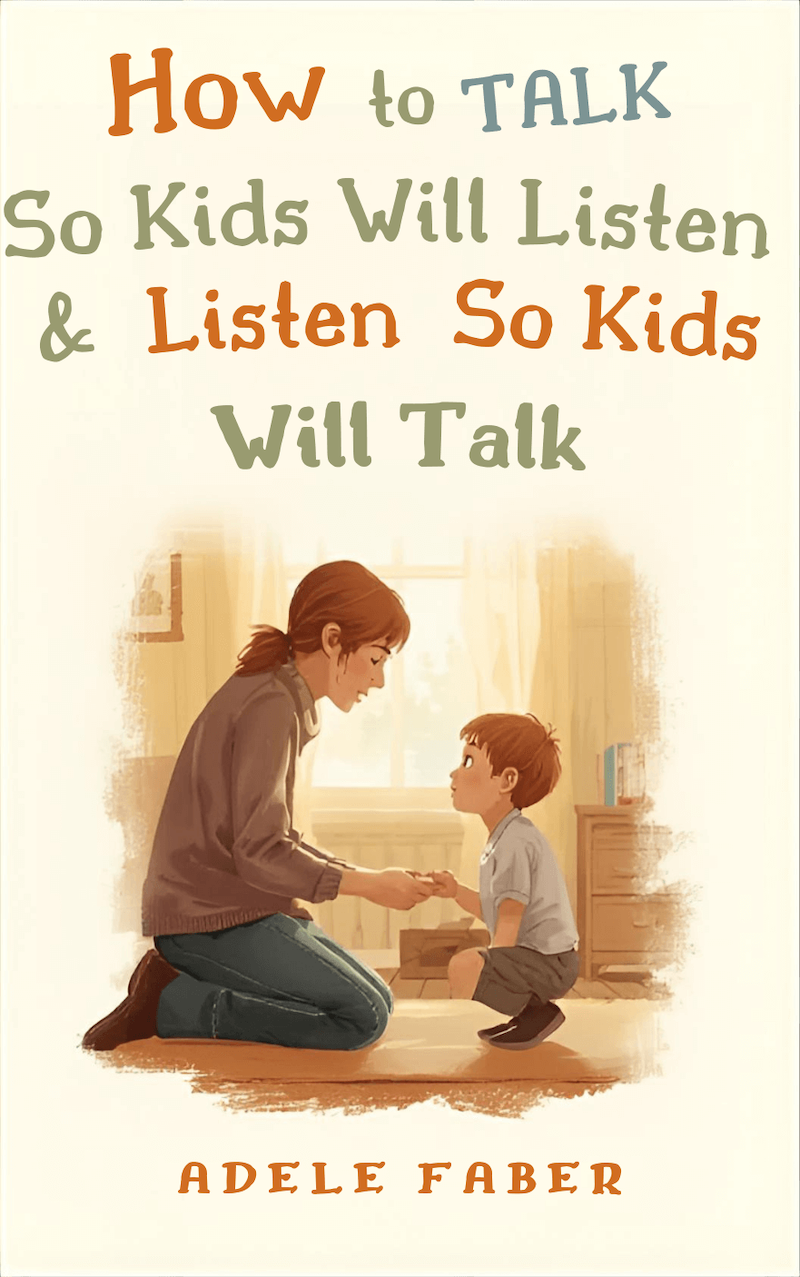
How to Talk So Kids Will Listen and How to Listen So Kids Will Talk Book Summary
This How to Talk So Kids Will Listen and How to Listen So Kids Will Talk Book Summary covers the key ideas, lessons, and takeaways in about 20 minutes.
Helps with these goals
Want the complete 20-minute summary?
- Full structured summary
- Video Summary
- Podcast Summary
- Key takeaways
- Exercises
- Quiz
- Highlights and notes
- Ask the book with AI
What is in the How to Talk So Kids Will Listen and How to Listen So Kids Will Talk book summary?
Below is a preview of Sumizeit’s expert-written summary of How to Talk So Kids Will Listen and How to Listen So Kids Will Talk by Adele Faber. The full summary covers the book’s key ideas in text, audio, and video.
Most people will tell you that at one point or another, they have had the aggravating experience of being in a public place--such as a supermarket, restaurant, or airplane--when a child is unceremoniously screaming at the top of his or her lungs. While are we quick to judge parents in these situations, often for their inability to control their child, we are less apt to do a deeper dive and consider the reasons why the progeny in question are reacting this way, or to assess the specific ways parents could be more mindful of their son or daughter’s behaviors. In many cases, we know one thing and one thing only--this child is LOUD.
After reading How to Talk So Kids Will Listen and How to Listen So Kids Will Talk, you will be able to effectively observe the behavior patterns among the children you see out and about, and you will be better equipped to intervene in the destructive routines that you see in your own children, too. You will come to recognize that showing your feelings to your child is even more important than the words you say.
Acknowledging Feelings
Like adults, children are quick to become stressed when their basic needs are not being met. Unlike adults, children often lack the vocabulary to effectively convey these unmet desires to the people around them. While your child would be completely pacified by the sudden appearance of a tasty popsicle, they might express this need through constant, glass-shattering wailing and expect you to understand what it is they want.
Obviously, you can’t.
But, with a bit of redirection, you can figure out what they want. Rather than chastising your child for being loud in a space where it is inappropriate to do so, consider cutting them some slack in this regard...and acknowledging their feelings instead.
This could look like the following:
“Jason, I think you might be hungry! It has been quite a while since lunch, huh?”
And then, if you are not in a position to procure the object of desire at this very moment, lighten the mood by explaining the situation in relatable, kid-friendly terms while being as honest as possible.
“Jason, if I could get you a popsicle by snapping my fingers and making it magically appear, I would! I can’t do that, though, so you will have to wait until we get home. That will be soon--we won’t be here much longer, so please try to hang in there!”
Your child will pick up on your acknowledgment and validation of their feelings which will make them more likely to cooperate with the call to action, which is to wait patiently and stop fixating on the immediate concern.
Communication
We often hear the expression, “You catch more flies with honey.” In essence, this is an indirect way of saying that you better be nice or you will not be successful in achieving your goals.
Want the complete 20-minute summary?
- Full structured summary
- Video Summary
- Podcast Summary
- Key takeaways
- Exercises
- Quiz
- Highlights and notes
- Ask the book with AI
Who should read How to Talk So Kids Will Listen and How to Listen So Kids Will Talk?
This book is essential for parents, educators, and caregivers who struggle with child communication and behavior management. Whether you're dealing with tantrums in public, resistance to rules, or simply want to build stronger relationships with the children in your life, Adele Faber's practical guidance offers tools that work across all ages and situations.
Why does How to Talk So Kids Will Listen and How to Listen So Kids Will Talk matter?
In a world where parenting can feel overwhelming and disconnected, How to Talk So Kids Will Listen and How to Listen So Kids Will Talk teaches parents that empathy and understanding are more powerful than anger and punishment. By learning to acknowledge children's feelings and communicate effectively, parents can transform conflict into cooperation and build emotionally healthy kids prepared for life's challenges.
What are the key themes in How to Talk So Kids Will Listen and How to Listen So Kids Will Talk?
- Emotional validation and acknowledging feelings
- Effective communication through description rather than criticism
- Building autonomy and independence in children
- Compromise and problem-solving together
- Praise that builds genuine self-esteem
- Avoiding labels that limit children's potential
What are the key lessons from the How to Talk So Kids Will Listen and How to Listen So Kids Will Talk book summary?
Children lack vocabulary for their emotions
Children often express unmet needs through behavior rather than words. By recognizing and naming their feelings, parents can help them understand themselves and cooperate more willingly.
Acknowledgment diffuses conflict
Validating a child's feelings, even when you can't fulfill their immediate desire, makes them more likely to accept the situation and comply with reasonable requests.
Anger and yelling damage long-term relationships
Children don't respond well to aggression, threats, or sarcasm. These approaches may seem to work temporarily but ultimately harm the parent-child relationship and teach unhealthy conflict patterns.
Describe the problem, don't attack the child
Frame conversations around the behavior or situation rather than labeling the child as bad or wrong. This approach separates the issue from the child's identity.
Include both consequences and positive outcomes
When discussing why a behavior needs to change, explain both the negative consequences of inaction and the positive benefits of compliance to motivate lasting change.
Forbidden things become more attractive
Children are biologically drawn to do things they're told not to do. Rather than relying solely on prohibition, address the underlying feelings and offer alternatives or compromises.
Share your own feelings in conflicts
When children resist important rules like wearing a helmet, parents should express their fears and concerns. Children respond better to emotional honesty than to authoritarian commands.
Compromise builds mutual respect
By working together to find solutions that address both parent and child concerns, you teach children that their input matters and that conflicts can be resolved cooperatively.
Age-appropriate autonomy builds confidence
Giving children choices within safe boundaries—whether about homework timing or daily decisions—empowers them and increases their willingness to comply with necessary rules.
Children are already making decisions
Reducing anxiety about decision-making involves helping children recognize they already make countless small choices daily, which builds confidence for larger ones.
Seek advice from multiple sources
Encouraging children to ask siblings, friends, or teachers for input teaches them the value of gathering information and reduces the pressure of making decisions alone.
Generic praise can create conditional self-worth
Saying 'You're smart' ties a child's identity to a single trait, making them anxious about losing that label. Specific, descriptive praise helps children develop intrinsic confidence.
Labels based on appearance carry hidden risks
When children are repeatedly told they're beautiful or talented in specific circumstances, they may develop unhealthy concerns about maintaining those conditions or comparing themselves to peers.
Children should feel valued unconditionally
A child's worth shouldn't depend on accomplishments or appearance. By avoiding conditional labels, parents teach children they're valued even when struggling or failing.
Empathy is more powerful than aggression
Children and adults alike respond better to being understood and heard than to punishment. Empathy creates the foundation for genuine behavioral change and deeper relationships.
Teaching emotional awareness prepares kids for life
By learning to acknowledge their own emotions and consider others' feelings, children develop the emotional intelligence needed to navigate complex adult relationships and challenges.
Actions speak louder than words
While the specific words parents use matter, children ultimately pay attention to what parents do and how they behave during conflicts and daily interactions.
The world is rarely black and white
Preparing children for real life requires teaching them nuance, compromise, and the ability to see situations from multiple perspectives rather than in absolute terms.
Self-expression develops unique identity
When parents encourage autonomy and validate feelings, children develop a stronger sense of self that will serve them well into adulthood.
Want the complete 20-minute summary?
- Full structured summary
- Video Summary
- Podcast Summary
- Key takeaways
- Exercises
- Quiz
- Highlights and notes
- Ask the book with AI
How can you apply ideas from How to Talk So Kids Will Listen and How to Listen So Kids Will Talk?
- Use feeling-acknowledgment phrases like 'I see you're frustrated' before addressing misbehavior in public settings
- Create a two-step communication process: describe the problem specifically, then explain both negative consequences and positive outcomes
- Offer limited choices within boundaries instead of demanding compliance to reduce resistance to important rules
- Replace trait-based praise ('You're so smart') with specific, descriptive feedback ('You worked through that problem step by step')
- Practice collaborative problem-solving by asking children for their input and working together to find compromises
- Give children age-appropriate decision-making authority over low-stakes choices like homework timing
- Share your own feelings during conflicts using 'I' statements to help children understand your perspective
What common mistakes do readers make with How to Talk So Kids Will Listen and How to Listen So Kids Will Talk?
- Assuming that yelling, threats, or sarcasm will create lasting behavior change when they actually damage relationships and teach harmful patterns
- Offering generic praise that ties self-worth to traits rather than acknowledging specific accomplishments and efforts
- Labeling children as 'smart,' 'lazy,' or 'difficult' based on single instances, which limits their sense of possibility
- Relying only on punishment or prohibition without addressing the underlying feelings driving the behavior
Sumizeit Exercises Apply what you've learned
Turn ideas from How to Talk So Kids Will Listen and How to Listen So Kids Will Talk into action with a short guided reflection: identify the biggest takeaway, connect it to your life, and commit to one step you can take in the next 24 hours.
What is the expert analysis of How to Talk So Kids Will Listen and How to Listen So Kids Will Talk?
Overview
How to Talk So Kids Will Listen and How to Listen So Kids Will Talk is a seminal work in the domain of parenting and child psychology, authored by Adele Faber, a respected expert with a rich background in communication and family dynamics. Co-created with Elaine Mazlish, this book distills decades of clinical insight and practical experience into accessible strategies that transform parent-child interactions. Its significance lies in pioneering empathetic communication techniques that have influenced both professional practitioners and everyday caregivers, making it a cornerstone text for those seeking to nurture emotional intelligence and cooperation in children.
Core Thesis
The central argument of the book is that effective communication between parents and children hinges on empathy, validation of feelings, and respectful dialogue rather than authoritarian commands or punitive measures. Faber posits that children’s challenging behaviors often stem from unmet emotional needs and a lack of expressive vocabulary, and that parents can foster cooperation and autonomy by acknowledging these feelings, engaging in constructive conversations, and offering choices that empower rather than control. The thesis underscores the transformative power of listening actively and speaking thoughtfully to build trust and mutual understanding.
Strengths
- Practical Framework: The book excels in providing clear, actionable communication techniques that parents can immediately apply, such as acknowledging feelings, descriptive problem statements, and collaborative compromise.
- Empathy-Centered Approach: It foregrounds emotional validation as a cornerstone of effective parenting, aligning with contemporary psychological insights into attachment and emotional development.
- Balanced Autonomy Promotion: Faber adeptly addresses the delicate balance between fostering independence and providing necessary guidance, offering nuanced advice tailored to developmental stages.
- Accessible Language: The prose is straightforward and relatable, making complex psychological concepts digestible for a broad audience without sacrificing depth.
- Enduring Relevance: Despite being first published decades ago, the principles remain foundational in modern parenting discourse and have influenced a wide array of subsequent literature and workshops.
Critiques & Counterarguments
- Potential Oversimplification: While the book’s techniques are practical, some critics argue that it underestimates the complexity of certain behavioral issues, such as those stemming from neurodevelopmental disorders or trauma, which may require more specialized interventions beyond communication strategies.
- Limited Cultural Context: The communication style advocated is rooted in Western, individualistic values emphasizing verbal expression and emotional openness, which may not translate seamlessly across diverse cultural frameworks that prioritize different familial hierarchies or communication norms.
- Evidence Base: The book relies heavily on anecdotal evidence and clinical experience rather than rigorous empirical studies, which invites scrutiny from evidence-based practitioners seeking data-driven validation.
- Competing Schools of Thought: Behaviorist approaches, such as those advocated by B.F. Skinner, emphasize reinforcement and consequences over empathetic dialogue, suggesting that some behavioral compliance may be better achieved through structured reward systems rather than negotiation and emotional validation.
- Real-World Challenges: The idealized communication scenarios may be difficult to implement consistently in high-stress or resource-limited family environments, where parents may lack the time, emotional bandwidth, or support to engage in such reflective dialogue.
Who Should Read This
This book is indispensable for parents, caregivers, educators, and child development professionals who seek to deepen their understanding of empathetic communication and foster healthier, more cooperative relationships with children. It is particularly valuable for those interested in nurturing emotional intelligence and autonomy in young people through respectful dialogue rather than authoritarian discipline. Additionally, individuals new to parenting or those encountering behavioral challenges will find its accessible strategies empowering and transformative. However, readers should complement this work with additional resources when addressing complex psychological or developmental conditions.
Frequently asked questions about the How to Talk So Kids Will Listen and How to Listen So Kids Will Talk book summary
What is How to Talk So Kids Will Listen and How to Listen So Kids Will Talk about?
How to Talk So Kids Will Listen and How to Listen So Kids Will Talk by Adele Faber is a practical parenting guide that teaches communication techniques based on emotional validation and empathy. The book provides parents with specific strategies for acknowledging children's feelings, communicating problems effectively, building autonomy, and offering meaningful praise—all designed to reduce conflict and strengthen parent-child relationships.
Who should read How to Talk So Kids Will Listen and How to Listen So Kids Will Talk?
This book is essential for parents, educators, and caregivers who want to improve how they communicate with children of all ages. It's particularly valuable for those frustrated with power struggles, public tantrums, or resistance to rules, as well as anyone seeking to build stronger emotional connections with the children in their care.
What are the main takeaways from How to Talk So Kids Will Listen and How to Listen So Kids Will Talk?
The main takeaways include: acknowledge children's feelings rather than dismissing them, use descriptive problem-solving instead of criticism or anger, offer choices to build autonomy and cooperation, use specific praise instead of trait-based labels, and approach conflicts with empathy rather than punishment. The overarching message is that children respond better to being understood and heard than to aggression or control.
How does acknowledging feelings help with child behavior?
Children often lack the vocabulary to express their needs and resort to crying, tantrums, or resistance. When parents acknowledge and name these feelings—rather than dismissing or punishing the behavior—children feel validated and are more likely to cooperate. This approach also teaches children emotional awareness that serves them throughout life.
What's the difference between good praise and bad praise?
Bad praise ties a child's worth to traits like intelligence or beauty, which creates conditional self-esteem and anxiety. Good praise is specific and descriptive—acknowledging what the child actually accomplished—allowing them to develop intrinsic confidence independent of external validation or comparison to others.
How can parents encourage independence without losing control?
Parents can start small by giving children age-appropriate choices within safe boundaries, such as deciding when to do homework or what to eat first at dinner. When children feel empowered to make decisions and see their choices respected, they develop confidence and are paradoxically more willing to comply with non-negotiable rules like wearing a helmet.
Why is compromise important in parenting?
Compromise teaches children that their input matters and that conflicts can be resolved cooperatively rather than through power struggles. By working together to find solutions that address both parent and child concerns, parents model healthy problem-solving skills and build mutual respect rather than resentment.
About Sumizeit
Sumizeit is a profitable Scomy LLC company based in Miami, Florida. It has been helping readers learn from nonfiction books for 7 years with expert-written summaries in text, audio, podcast, and video.
Want the complete 20-minute summary?
- Full structured summary
- Video Summary
- Podcast Summary
- Key takeaways
- Exercises
- Quiz
- Highlights and notes
- Ask the book with AI
Here's why readers love Sumizeit
Join thousands of learners getting smarter every day
"Great experience. Detailed summaries. Loved the gamification feature. Makes learning fun. Good customer service. I recommend Sumizeit to anyone. You'll learn a lot."
"I always felt busy but still wanting to keep up with the book discussion in my friend group. This was a great supplement to help me keep reading the books I find fun while keeping up with important books."
"I love this website. Instead of scrolling social media, I find myself learning a lot. I use it everyday. I recommend this app for anyone who is too busy and wants to get up to speed with their favorite books."
How to Talk So Kids Will Listen and How to Listen So Kids Will Talk Book Summary PDF
Looking for a How to Talk So Kids Will Listen and How to Listen So Kids Will Talk Book Summary PDF you can save and revisit offline? Our How to Talk So Kids Will Listen and How to Listen So Kids Will Talk Book Summary PDF captures the book’s core ideas in a clean, printable format — the key frameworks, takeaways, and structure without the fluff. Download the How to Talk So Kids Will Listen and How to Listen So Kids Will Talk Book Summary PDF when you want a reference you can annotate, share with your team, or review on the go. Get your How to Talk So Kids Will Listen and How to Listen So Kids Will Talk Book Summary PDF from the download page below.
Download How to Talk So Kids Will Listen and How to Listen So Kids Will Talk Book Summary PDFPeople also liked these summaries
Readers who explored How to Talk So Kids Will Listen and How to Listen So Kids Will Talk often enjoyed these titles next.




Want the complete 20-minute summary?
- Full structured summary
- Video Summary
- Podcast Summary
- Key takeaways
- Exercises
- Quiz
- Highlights and notes
- Ask the book with AI
Featured Book Titles
Popular Book Summaries at sumizeit, leading book summary app
