


As an Amazon Associate, Sumizeit earns from qualifying purchases.
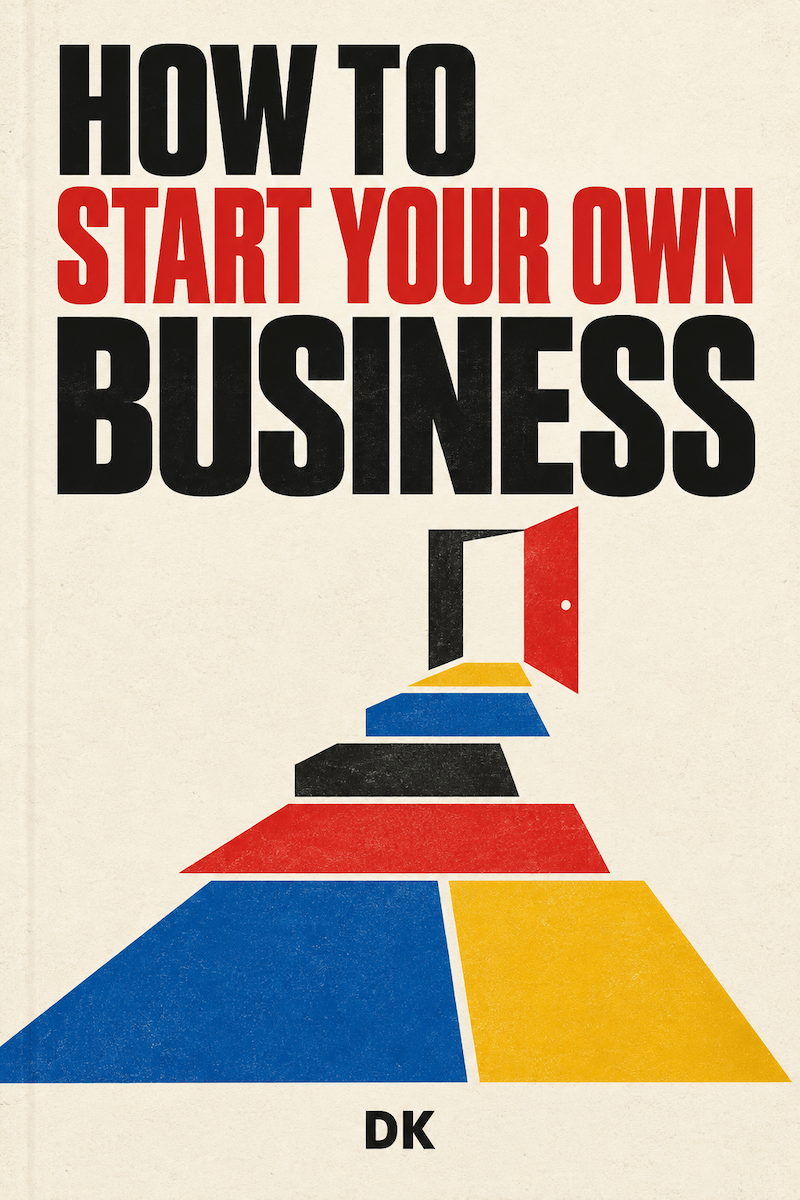
How to Start Your Own Business Book Summary
This How to Start Your Own Business Book Summary covers the key ideas, lessons, and takeaways in about 20 minutes.
Helps with these goals
Want the complete 20-minute summary?
- Full structured summary
- Video Summary
- Podcast Summary
- Audio summary
- Key takeaways
- Exercises
- Quiz
- Highlights and notes
- Ask the book with AI
What is in the How to Start Your Own Business book summary?
Below is a preview of Sumizeit’s expert-written summary of How to Start Your Own Business by DK. The full summary covers the book’s key ideas in text, audio, and video.
DK's "How to Start Your Own Business: And Make It Work" is the kind of book you hand to someone who has an idea scribbled on a napkin and no clue what to do next. It's part of DK's visual "How It Works" series, so it leans on diagrams and short, plain language sections instead of dense business school theory. The pitch is simple. Running a company well isn't about talent or luck, it's about following a sequence of decisions in the right order, and the book walks you through that sequence, starting with the first gut check about whether you should even do this and ending years down the road when you eventually sell the business.
You'll find the same friend to friend tone throughout. It doesn't assume you have an MBA or investors lined up. It assumes you have a spare room, a good idea, and a lot of questions, and it tries to answer them one at a time.
Start By Checking Yourself, Not Your Idea
Before you write a single word of a business plan, the book wants you to sit with a harder question. Why do you actually want to do this? Money, independence, the chance to be your own boss, a cause you care about, or simply wanting to work from your kitchen table are all valid reasons, but you need to know which one is driving you, because that reason is what will keep you going when the work gets hard. A business idea without a strong "why" behind it tends to fall apart the first time things get uncomfortable.
Next comes an honest look at your own toolkit. Running a company means you're suddenly the accountant, the marketer, the manager, and the person who has to keep your personal life and work life from colliding, often all in the same afternoon. The book pushes you to name your strongest skill, name the part of running a business that scares you most, and think through what kind of stress you can actually handle. It also asks you to think past yourself. Your partner, kids, roommates, or anyone who depends on you will feel the effects of longer hours and shakier income too, so it's worth talking that through before you commit rather than after.
Figure Out the Money Before You Need It
Once you've checked your own readiness, the book turns to the less exciting but more urgent question of cash. It lays out three basic ways to fund a new business, and each comes with its own tradeoffs.
The first is funding it yourself out of savings. You avoid debt and you avoid answering to anyone, but this only works if your costs are low, you can run things out of your house, and you can go a while without paying yourself. The second is borrowing, whether from a bank or through some form of credit backed by assets.
Want the complete 20-minute summary?
- Full structured summary
- Video Summary
- Podcast Summary
- Audio summary
- Key takeaways
- Exercises
- Quiz
- Highlights and notes
- Ask the book with AI
Who should read How to Start Your Own Business?
How to Start Your Own Business is ideal for aspiring entrepreneurs with a business idea but no clear roadmap, from first-time founders bootstrapping from their home to anyone considering leaving their job to start something new. It's equally valuable for people with some business experience who want to systematically work through each stage of launch and growth. If you have questions about funding, naming, hiring, or scaling but lack an MBA or business mentors to guide you, this book fills that gap.
Why does How to Start Your Own Business matter?
Starting a business today means navigating more funding options, marketing channels, and operational tools than ever before—but the fundamentals haven't changed. How to Start Your Own Business cuts through the noise by walking you through the critical decisions in the right sequence, from self-assessment and financing to finding real market gaps and building customer loyalty. In an era where entrepreneurship feels more accessible but also more overwhelming, having a clear, step-by-step framework reduces both the financial and emotional risk of launch.
What are the key themes in How to Start Your Own Business?
- Self-assessment comes before business planning
- Financial readiness and cash flow management are non-negotiable
- Finding an unmet market need beats having a purely novel idea
- Brand and positioning shape customer perception as much as product quality
- Team culture and hiring directly impact long-term success
- Customer loyalty is built through consistent experience, not marketing tricks
- Growth should be deliberate and managed, not accidental
- Legal structure and operational setup matter from day one
What are the key lessons from the How to Start Your Own Business book summary?
Understand your own 'why' before you validate the business idea
Your personal motivation—whether it's independence, income, a cause, or lifestyle—is what sustains you through hard times. A business idea without genuine conviction behind it often fails the first time things get uncomfortable.
Assess your personal toolkit honestly, not just your confidence
Running a business means wearing multiple hats while managing stress and protecting your personal life. Knowing your strongest skills, your biggest fears, and your stress tolerance—and discussing the impact on people who depend on you—prevents costly surprises later.
Pick a funding method that matches your priorities
Self-funding offers independence but requires low costs and patience; debt lets you keep ownership but creates legal obligations; equity brings capital and expertise but costs you control and profits. Each tradeoff is real and worth thinking through before you commit.
Map every expense before you need the money
Separate upfront costs (equipment, permits, inventory) from recurring ones (rent, salaries, utilities) and know which are truly essential on day one. Real numbers beat educated guesses when pitching to lenders or investors.
A good business solves a problem competitors are leaving unsolved
Success comes from deeply understanding what existing businesses aren't doing well, not from being first with a completely new idea. Talk to customers, study competitors, and test rough versions of your product early.
Protect quality and brand perception over chasing cheap pricing
Low prices often signal low quality to customers, making loyalty harder to build. Focus on delivering genuine value first, then optimize costs and efficiency once operations are stable.
Your business name should tell a story and be legally clear
A name should be memorable, easy to say, descriptive of what you do, and internationally workable if you might expand. Check for existing use, secure the domain, and register it properly before building the brand around it.
Brand is a personality, not just a logo
Your values and the real story behind why you started should show up consistently in how you hire, treat suppliers, and serve customers. Authentic branding creates trust and loyalty in ways marketing alone cannot.
Choose between broad reach and narrow depth based on your actual market
A wide target market brings more sales but thinner margins and higher marketing costs; a niche market brings fewer customers but healthier profits per sale. The choice depends on your product, competitive landscape, and budget.
Pick the right legal structure to protect yourself and raise money
A sole proprietorship gives simplicity but makes you personally liable for business debts; incorporating limits liability to company assets but adds complexity and tax obligations. Talk to a lawyer or accountant to pick the right fit for your situation.
Decide early whether to buy, lease, or outsource key operations
Working from home offers flexibility but requires a professional space for focus and client meetings; leasing equipment is often smarter than buying when items lose value fast; outsourcing fulfillment makes sense once volume outpaces what you can handle solo.
Audit what needs doing before you hire
Map out actual roles and workload first, then decide whether freelancers, part-time staff, or full-time hires make sense. Starting with contractors or friends gives you flexibility before committing to payroll.
Keep hiring professional and boundaries clear with people you know
Working with friends or family requires explicit role definitions, clear communication, and agreed-upon conflict resolution. Blurred lines create real conflict that damages both the business and the relationship.
Use SMART goals to give your team clear expectations
Goals should be Specific, Measurable, Achievable, Realistic, and Time-bound. This framework removes guessing about what 'doing well' means and gives employees a concrete way to track their own progress.
Track cash flow, not just profit, to stay solvent
A running cash flow statement shows whether you'll have enough money on hand to cover upcoming bills, even if profits look good on paper. It's the real-time pulse of whether your business can survive the next month.
Customer loyalty comes from consistent experience, not discounts alone
People stay loyal when they feel safe, supported, and respected throughout their entire interaction with you. Loyalty programs work, but only when built on genuine service and the willingness to handle complaints before they become public.
Your marketing message must actually resonate with your specific audience
Whether you use the traditional marketing mix (product, price, promotion, place) or the 4 Cs framework, the key is delivering your message through channels your audience actually uses and prompting them to take action.
Simplify the purchase journey to reduce cart abandonment
Customers need to know what you're offering, why they should trust you, and how easy it is to buy. A confusing checkout, unclear pricing, or slow website can kill a sale that everything else got right.
Expand only once you deeply understand your market and have financial cushion
Growing demand can force you into scaling before you're ready. True expansion—into new products, markets, or territories—should be deliberate, not reactive, and requires the cash reserves to manage the transition.
Growth requires rethinking your systems and team structure
As the business scales, the software, staffing, and processes that got you here often hit their limits. Plan for upgrades and new layers of management as normal costs of growth, not signs something went wrong.
Want the complete 20-minute summary?
- Full structured summary
- Video Summary
- Podcast Summary
- Audio summary
- Key takeaways
- Exercises
- Quiz
- Highlights and notes
- Ask the book with AI
How can you apply ideas from How to Start Your Own Business?
- Create a personal readiness checklist before writing your business plan, covering your top three reasons for starting, your strongest skill, your biggest fear, and how the business will affect your household.
- Build a detailed expense spreadsheet separating day-one costs from recurring monthly costs, then identify which items can wait or be started with lower-cost alternatives.
- Research 5-10 competitors in your space and document specifically what problems their customers complain about or what they're not offering, then design your offering to address those gaps.
- Write a one-minute elevator pitch covering what your business does, why it matters, and why you're the person to run it, then practice it until it feels natural and confident.
- Map out your entire customer journey from first touchpoint to post-purchase, marking every place where they might hesitate, get confused, or abandon the process, then prioritize fixes.
- Set up a simple system for collecting customer feedback regularly—surveys, polls, direct conversations—and review it monthly for patterns in what's working and what's not.
- Define your first three key hires or contractors by listing what actually needs doing each week, then matching those tasks to the type of person or service that makes the most sense (freelancer, part-time, full-time).
- Create a weekly cash flow forecast for the next three months showing money coming in and bills going out, then identify any weeks where you might run short and plan accordingly.
What common mistakes do readers make with How to Start Your Own Business?
- Starting with a business idea you're excited about without first checking whether you personally have the motivation, skills, and household support to actually run it.
- Underestimating how much capital you'll need to survive until the business generates revenue, which leads to running out of money before you gain traction.
- Chasing a market that's already crowded with established competitors instead of finding a genuine gap that competitors aren't addressing.
- Pricing too low in hopes of gaining market share quickly, which signals low quality to customers and makes it nearly impossible to raise prices later or build loyalty.
Sumizeit Exercises Apply what you've learned
Turn ideas from How to Start Your Own Business into action with a short guided reflection: identify the biggest takeaway, connect it to your life, and commit to one step you can take in the next 24 hours.
What is the expert analysis of How to Start Your Own Business?
Overview
How to Start Your Own Business is a practical guide published by DK, a publisher renowned for its visually rich and accessible nonfiction works. Unlike traditional business books authored by a single expert, this volume emerges from a collaborative editorial and design process, emphasizing clear, diagram-driven instruction over narrative or theoretical exposition. Its significance lies in its democratizing approach to entrepreneurship, targeting readers with a business idea but limited formal training or resources. By breaking down the complex process of launching and growing a business into manageable, sequential steps, the book serves as a field guide for aspiring entrepreneurs navigating the uncertainties of starting a company.
Core Thesis
The central argument of the book is that successful entrepreneurship is less about innate talent or serendipity and more about deliberate, ordered decision-making across all stages of business development. From self-assessment and financial planning to market analysis, legal structuring, team building, and growth management, the author(s) advocate a methodical progression. This sequence, coupled with flexibility to adapt to market realities, transforms a raw idea into a viable, sustainable enterprise. The emphasis on treating each phase as a conscious choice underscores the book’s pragmatic ethos: entrepreneurship is a craft to be learned and executed thoughtfully rather than a gamble or purely creative endeavor.
Strengths
- Accessibility and Clarity: The book excels at making complex business concepts approachable through simple language, visual aids, and segmented content, ideal for readers without formal business education.
- Comprehensive Scope: It covers the entire entrepreneurial journey—from introspection about motivation to scaling and customer retention—providing a holistic framework rather than piecemeal advice.
- Practical Orientation: The guidance is actionable, grounded in real-world considerations such as legal structures, funding options, and operational choices, with a strong focus on financial literacy and risk management.
- Emphasis on Self-Reflection: Starting with a deep self-assessment of motivation, skills, and personal circumstances is a thoughtful inclusion that many business books overlook, helping readers align their goals with their capacities.
- Balanced View on Growth and Scaling: The book wisely differentiates between growth and scaling, cautioning readers to expand only when ready, thus promoting sustainable business development.
Critiques & Counterarguments
- Conventional Financing Focus: While the book outlines traditional funding routes well, it underrepresents emerging financial innovations such as fintech lending platforms and the nuanced dynamics of crowdfunding beyond a brief mention, potentially limiting readers’ awareness of alternative capital sources.
- Potential Oversimplification of Market Gaps: The insistence on finding an entirely unmet market need may undervalue businesses that thrive by incremental improvements or superior service in established markets, which is a common and often successful strategy.
- Assumption of Traditional Business Models: The operational and hiring advice leans heavily on conventional setups with fixed workspaces and full-time employees, which may not translate well to gig economy enterprises, remote teams, or purely digital businesses prevalent today.
- Risk of Overreliance on Customer Feedback: The book advocates for extensive customer input, but excessive accommodation of feedback can dilute original vision and innovation, a tension well-documented in innovation management literature.
- Limited Discussion of Cultural and Contextual Variability: Given its broad audience, the book’s advice sometimes glosses over how local regulations, cultural norms, and economic conditions shape business realities, which can be critical for entrepreneurs operating outside Western or developed markets.
Who Should Read This
This book is ideally suited for aspiring entrepreneurs at the earliest stages of their journey—those who have a business idea but lack formal training or a clear roadmap. It is particularly valuable for self-starters who appreciate visual learning and want a structured, step-by-step guide that addresses both the emotional and practical challenges of launching a business. Additionally, small business owners looking to formalize their operations or scale deliberately will find the book’s emphasis on foundational decision-making and financial health instructive. However, seasoned entrepreneurs or those seeking deep theoretical insights may find the book’s approach too basic or prescriptive.
Frequently asked questions about the How to Start Your Own Business book summary
What is How to Start Your Own Business about?
How to Start Your Own Business by DK is a visual, step-by-step guide to launching and running a business, from self-assessment and financing through marketing, hiring, and scaling. It breaks down the critical decisions you'll face in order, with practical advice on each one, and is designed for people with an idea but no clear roadmap.
Who should read How to Start Your Own Business?
This book is ideal for first-time entrepreneurs with a business idea, career changers ready to start something new, and anyone without an MBA or business mentors to guide them. It works equally well for solo founders bootstrapping from home and for people considering outside investment.
What are the main takeaways from How to Start Your Own Business?
The main takeaways are: know your personal motivation and readiness before validating the idea; understand your finances and cash flow from day one; find a real gap in the market rather than chasing novelty; build a brand people trust through consistent experience; set up your legal and operational structure properly; hire deliberately and manage culture; and grow only as fast as you can actually manage. Followed in that order with flexibility to adjust, this sequence turns a good idea into a functioning business.
How does How to Start Your Own Business help with funding?
The book walks through three core funding paths—self-funding from savings, debt from banks or credit, and equity investment from partners or investors—and explains the tradeoffs of each. It emphasizes mapping every expense upfront, understanding cash flow, and building a credible pitch that covers your track record, goals, realistic projections, and how you'll use the funds.
What does How to Start Your Own Business say about hiring and building a team?
The book recommends auditing what actually needs doing before you hire, starting with freelancers or part-time staff before committing to payroll, and keeping professional boundaries clear if you hire friends or family. It emphasizes setting SMART goals, building a culture of trust and communication, and treating team members as people rather than line items.
Does How to Start Your Own Business cover marketing and customer loyalty?
Yes. The book emphasizes understanding your specific customer deeply through data and feedback, mapping the entire customer journey to reduce friction, and building loyalty through consistent experience and genuine service rather than discounts alone. It covers the marketing mix, the sales process, and the importance of tracking metrics like customer retention rate.
What does How to Start Your Own Business say about growth and expansion?
The book treats growth as a deliberate decision, not something that just happens. It recommends expanding only once you deeply understand your market, have financial cushion, and are ready to rethink your systems and team structure. Expansion typically means moving into new products or markets, and should be managed carefully to avoid losing focus on what made the business work in the first place.
Is How to Start Your Own Business suitable for online or remote businesses?
The book's operational and hiring advice assumes a fairly traditional setup with full-time staff and fixed workspaces, so it gives less attention to businesses built around freelancers, the gig economy, pure online sales, or remote and distributed teams. The core principles still apply, but you may need to adapt the specifics to fit a different business model.
About Sumizeit
Sumizeit is a profitable Scomy LLC company based in Miami, Florida. It has been helping readers learn from nonfiction books for 7 years with expert-written summaries in text, audio, podcast, and video.
Want the complete 20-minute summary?
- Full structured summary
- Video Summary
- Podcast Summary
- Audio summary
- Key takeaways
- Exercises
- Quiz
- Highlights and notes
- Ask the book with AI
Here's why readers love Sumizeit
Join thousands of learners getting smarter every day
"Great experience. Detailed summaries. Loved the gamification feature. Makes learning fun. Good customer service. I recommend Sumizeit to anyone. You'll learn a lot."
"I always felt busy but still wanting to keep up with the book discussion in my friend group. This was a great supplement to help me keep reading the books I find fun while keeping up with important books."
"I love this website. Instead of scrolling social media, I find myself learning a lot. I use it everyday. I recommend this app for anyone who is too busy and wants to get up to speed with their favorite books."
How to Start Your Own Business Book Summary PDF
Looking for a How to Start Your Own Business Book Summary PDF you can save and revisit offline? Our How to Start Your Own Business Book Summary PDF captures the book’s core ideas in a clean, printable format — the key frameworks, takeaways, and structure without the fluff. Download the How to Start Your Own Business Book Summary PDF when you want a reference you can annotate, share with your team, or review on the go. Get your How to Start Your Own Business Book Summary PDF from the download page below.
Download How to Start Your Own Business Book Summary PDFPeople also liked these summaries
Readers who explored How to Start Your Own Business often enjoyed these titles next.


Want the complete 20-minute summary?
- Full structured summary
- Video Summary
- Podcast Summary
- Audio summary
- Key takeaways
- Exercises
- Quiz
- Highlights and notes
- Ask the book with AI
Featured Book Titles
Popular Book Summaries at sumizeit, leading book summary app