


Prefer the print book? Buy on Amazon
As an Amazon Associate, Sumizeit earns from qualifying purchases.
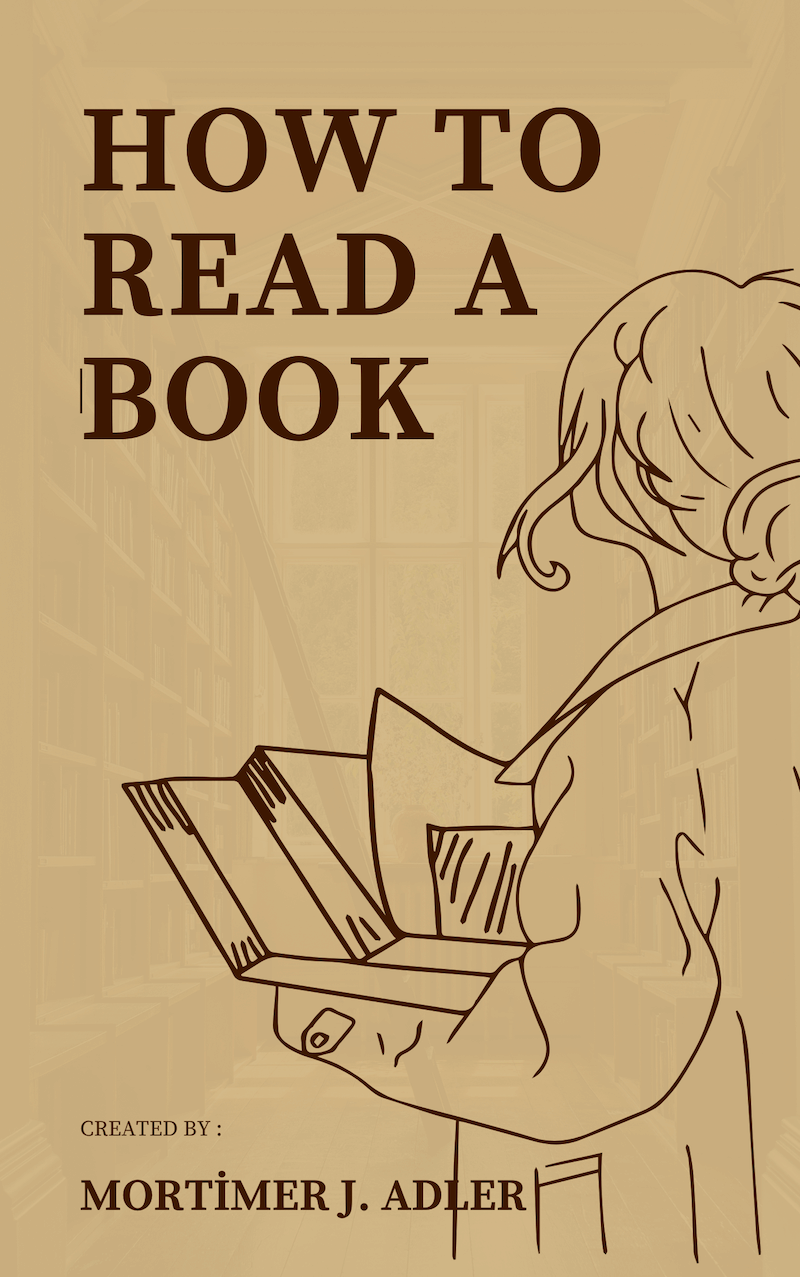
How to Read a Book Book Summary
This How to Read a Book Book Summary covers the key ideas, lessons, and takeaways in about 20 minutes.
Short Description:
How to Read a Book teaches reading as an active, intellectual craft.
Helps with these goals
Want a Free Weekly Read?
Get a free summary every week straight to your mailbox.
Preview the How to Read a Book book summary
Below is a preview of Sumizeit’s comprehensive human-written summary of How to Read a Book by Mortimer J. Adler. The full summary is 15-20 minutes long and covers the book’s key ideas in text, audio, visual, and video formats. Unlock the full 20 Minute Summary
“How to Read a Book” presents the argument that reading is not a passive act but a discipline requiring conscious effort and method. Mortimer J. Adler and Charles Van Doren insist that most adults never move beyond basic reading skills learned in childhood. While society assumes reading proficiency ends with decoding and understanding words on a page, the authors argue that true reading involves a deliberate mental process that increases intelligence, sharpens reasoning, and deepens understanding. The book establishes that reading is a tool for self-education—something that enables an individual to grow intellectually without formal instruction. Because many people read often but rarely improve their ability to interpret and judge texts, Adler and Van Doren offer a structured approach for transforming reading into an active skill that yields deeper comprehension and insight.
The authors differentiate between reading for information and reading for understanding. Reading simply to gather facts or reinforce existing beliefs may feel productive, but it doesn’t expand the mind. Reading for understanding demands wrestling with ideas, asking questions, interpreting arguments, and questioning assumptions. By mastering the methods of higher-level reading, a reader develops the ability to converse with authors across generations, topics, and disciplines, ultimately cultivating independent thought.
Why Active Reading Matters
The book’s foundational principle is that effective reading requires action. The authors emphasize that unlike activities such as watching television or browsing images, reading calls for constant participation from the mind. The reader must analyze what the writer is saying, reflect on the arguments, and connect them to what they already know. Passive reading produces only surface-level familiarity—names, dates, anecdotes. Active reading, on the other hand, constructs meaning, forms new conceptual frameworks, and challenges preconceived beliefs.
Active reading involves tracking the structure of the author’s reasoning, identifying the meaning of important words, taking notes in the margins, marking significant points, and summarizing the author’s claims in one’s own language. The goal is not to agree or disagree immediately, but rather to understand completely before forming any judgment. The authors stress that insight cannot emerge without grappling mentally with a text.
The Purpose of Reading for Understanding
Reading for understanding is distinguished from reading merely to acquire data. When the reader grasps everything immediately and effortlessly, the book has not expanded their knowledge; it has only confirmed what they already comprehend. Genuine learning occurs when reading challenges mental models, introduces unfamiliar ideas, and requires effort to interpret meaning.
The book argues that historically, reading was synonymous with intellectual engagement. In early American society, public discourse relied heavily on written debate and reflection. But with technological developments—first the telegraph and later photography—the culture shifted from careful reasoning to rapid consumption of fragmented information. This cultural transformation resulted in a narrowing of reading ability, making deep comprehension optional rather than required for functioning in daily life. Today, our environment prioritizes speed, entertainment, and visual stimulation, which encourages superficial engagement with content. Deep reading, therefore, must be deliberately reclaimed.
The Four Fundamental Questions Every Reader Should Ask
The authors propose…
Want the complete 20-minute summary?
- Full structured summary
- Video Summary
- Podcast Summary
- Audio summary
- Key takeaways
- Exercises
- Quiz
- Highlights and notes
- Ask the book with AI
Who should read How to Read a Book?
How to Read a Book is for anyone who reads frequently but feels they aren't getting as much from it as they should. Whether you're a student, professional, lifelong learner, or someone seeking deeper intellectual engagement, this book reveals that reading comprehension is a skill that can be systematically developed and mastered regardless of your current level.
Why does How to Read a Book matter?
In an age of information overload and surface-level content consumption, How to Read a Book by Mortimer J. Adler offers a counterculture argument: reading is not passive, and most adults never move beyond basic decoding to truly engage with ideas. Learning to read actively transforms books from mere entertainment into tools for intellectual growth, independent thinking, and lifelong self-education—skills that have only become more valuable as technology accelerates and critical thinking becomes scarce.
What are the key themes in How to Read a Book?
- Reading as an active discipline requiring conscious mental effort
- The distinction between reading for information and reading for understanding
- Progressive levels of reading sophistication
- The role of questioning and critique in deep comprehension
- Reading as a path to intellectual independence and personal transformation
How can you apply ideas from How to Read a Book?
- Create a pre-reading inspection routine: read the title, preface, table of contents, and chapter summaries before diving into analytical reading to establish a mental framework
- Develop a system for marking key terms and difficult sentences during reading, then create a separate list of these terms with their author-specific definitions
- Practice formulating the four fundamental questions in writing for each book you read, treating them as cognitive scaffolding for deeper comprehension
- Build a comparative reading practice by selecting a topic of interest and reading 3-5 different authors' perspectives, then synthesizing their viewpoints into your own analysis
- Annotate texts extensively with marginal notes, summaries of paragraphs, and connections to other ideas you've encountered, creating a dialogue between you and the author
- Establish a habit of discussing your interpretations with other readers or writing reviews that grapple with the author's central argument and your reasoned response
- Revisit challenging books annually or after significant life experiences to discover new meaning and deeper insights with matured perspective
What common mistakes do readers make with How to Read a Book?
- Assuming you understand an author's terms without explicitly checking how they define and use key words throughout the work
- Highlighting interesting passages instead of seeking out difficult sentences that signal intellectual importance and warrant deeper analysis
- Forming judgments about a book before fully comprehending the author's complete argument and supporting evidence
- Skipping inspectional reading and jumping directly into analytical reading, thereby missing the structural overview that prepares your mind for complexity
- Reading passively without annotation or note-taking, which reduces retention and prevents the physical engagement that deepens understanding
Sumizeit Exercises Apply what you've learned
Turn ideas from How to Read a Book into action with a short guided reflection: identify the biggest takeaway, connect it to your life, and commit to one step you can take in the next 24 hours.
What is the expert analysis of How to Read a Book?
Overview
How to Read a Book is a seminal work co-authored by Mortimer J. Adler, a distinguished American philosopher and educator, alongside Charles Van Doren, an academic and editor. This book stands out as a foundational text in the philosophy of education and intellectual self-improvement, advocating for reading as an active, disciplined art rather than a passive skill. Its significance lies in its systematic approach to transforming reading from mere word recognition into a rigorous cognitive exercise that fosters critical thinking, deep comprehension, and lifelong intellectual growth. Adler’s background in classical learning and Van Doren’s editorial expertise combine to produce a methodical framework that has profoundly influenced educational theory and self-directed learning practices.
Core Thesis
The central argument of How to Read a Book is that reading is not an automatic or purely recreational activity but a complex, layered discipline requiring conscious effort and methodical practice. Adler and Van Doren contend that most adults remain at a rudimentary level of reading, limiting themselves to decoding and superficial understanding. The authors propose that true reading involves four ascending levels—elementary, inspectional, analytical, and syntopical—each demanding deeper engagement and critical analysis. Through mastering these levels, readers can interrogate texts, challenge assumptions, synthesize diverse viewpoints, and ultimately cultivate intellectual independence. The book asserts that reading is a vital tool for self-education, enabling individuals to expand their reasoning abilities and engage in meaningful dialogue with ideas across time and disciplines.
Strengths
- Comprehensive Framework: The delineation of four distinct reading levels provides a clear, actionable roadmap for readers seeking to deepen their engagement with texts, from basic comprehension to comparative analysis.
- Emphasis on Active Engagement: The insistence that reading requires active mental participation—questioning, annotating, and reflecting—challenges passive consumption habits prevalent in modern culture.
- Intellectual Rigor: The book equips readers with tools to dissect arguments, identify authorial intent, and evaluate logical coherence, fostering critical thinking skills essential across disciplines.
- Adaptability Across Genres: By recognizing the need for tailored reading strategies depending on literary form—fiction, philosophy, science, practical manuals—the book respects the diversity of textual demands.
- Lifelong Learning Orientation: The work situates reading as a continuous, transformative process, encouraging repeated engagement with challenging texts to reveal deeper meanings over time.
Critiques & Counterarguments
- Potential Overemphasis on Structure: While the four-level model is elegant, some critics argue it risks imposing a rigid hierarchy on reading experiences that are often fluid and context-dependent, potentially alienating readers who prefer more intuitive or affective approaches.
- Limited Engagement with Digital Reading: The book’s framework, rooted in print culture, predates the digital age and thus does not fully address how hypertext, multimedia, and online reading environments alter cognitive processes and reading strategies.
- Assumption of Universal Applicability: Adler and Van Doren’s methods presume a certain level of cultural and educational background, which may not translate seamlessly across diverse linguistic, cultural, or socio-economic contexts where reading practices and purposes differ.
- Competing Educational Theories: Constructivist and reader-response theories emphasize the subjective and interpretive nature of reading, suggesting that meaning is co-created by reader and text, contrasting with Adler’s more author-centric approach focused on uncovering authorial intent.
- Empirical Evidence on Reading Comprehension: Contemporary cognitive psychology highlights that comprehension and retention are influenced by factors such as working memory capacity and prior knowledge, which the book addresses less explicitly, potentially oversimplifying the cognitive demands of deep reading.
Who Should Read This
This book is ideally suited for intellectually curious readers committed to elevating their reading practice beyond surface-level engagement. Scholars, students, educators, and lifelong learners who seek a disciplined method to rigorously analyze texts will find invaluable guidance here. It is particularly beneficial for those involved in interdisciplinary studies, philosophy, literature, and critical thinking development. Additionally, readers interested in self-education and personal intellectual growth will appreciate the book’s emphasis on reading as a transformative, lifelong endeavor. However, casual readers or those unfamiliar with complex texts may find the approach demanding, though ultimately rewarding with sustained effort.
Frequently asked questions about the How to Read a Book book summary
What is How to Read a Book about?
How to Read a Book by Mortimer J. Adler argues that reading is not an automatic skill but a learned discipline requiring conscious method and active mental participation. The book provides a systematic framework—including four levels of reading, techniques for analyzing arguments, and methods for interpreting meaning—to help readers move beyond basic comprehension to genuine understanding and intellectual growth.
Who should read How to Read a Book?
How to Read a Book is for anyone who reads frequently but feels they're not extracting full value from their reading. This includes students seeking better comprehension, professionals pursuing continuous learning, lifelong learners, and anyone interested in developing independent thinking. The book reveals that reading comprehension is a skill that can be systematically developed regardless of current level.
What are the main takeaways from How to Read a Book?
The main takeaways are: reading is an active discipline, not passive consumption; most people never progress beyond basic comprehension; there are four levels of reading proficiency—elementary, inspectional, analytical, and syntopical—each enabling deeper understanding; asking four fundamental questions about every text transforms reading into investigation; and mastering reading creates a path to intellectual independence and lifelong self-education. The ultimate goal is not accumulating information but expanding understanding and becoming a more thoughtful individual.
What are the four levels of reading described by Adler?
The four levels are: (1) Elementary reading—basic decoding and literal comprehension; (2) Inspectional reading—systematic skimming to grasp structure and primary claims within limited time; (3) Analytical reading—comprehensive interpretation seeking complete understanding of the author's argument; and (4) Syntopical reading—studying multiple books on a topic and comparing perspectives to generate independent insights. Each level builds upon the previous, creating progressively sophisticated engagement with texts.
How can I improve my reading comprehension using Adler's methods?
Start by practicing inspectional reading to map the book's structure before analytical work. Identify and decode the author's key terms and difficult sentences. Ask the four fundamental questions throughout: What is the author's purpose? How is it constructed? Is it sound? What significance does it hold? Annotate extensively, mark important passages, and write summaries in your own words. For complex subjects, practice syntopical reading by studying multiple authors and comparing their viewpoints. Revisit challenging books multiple times to discover deeper meaning.
What is the difference between reading for information and reading for understanding?
Reading for information means gathering facts or reinforcing existing beliefs, which feels productive but doesn't expand the mind. Reading for understanding requires wrestling with ideas, asking questions, interpreting arguments, and questioning assumptions—it demands effort and challenges your mental models. Real learning occurs when the book stretches you intellectually; if you grasp everything immediately, the book has only confirmed what you already knew. Understanding represents genuine intellectual growth.
Why does Adler emphasize the importance of understanding an author's terms?
Authors often redefine common words to fit specific conceptual frameworks, and readers frequently assume words carry universal definitions. Misunderstanding an author's terminology is a primary source of confusion and distorts meaning throughout the entire work. By identifying crucial terms, determining how the author intends them to function, and interpreting their significance, readers can trace these terms to central propositions—the statements forming the backbone of the argument—leading to genuine comprehension.
About Sumizeit
Sumizeit is a profitable Scomy LLC company based in Miami, Florida. Our founders, Clemens Raemy and Weina Scott, are successful entrepreneurs with several exits. Sumizeit is a popular book summary app / micro learning app used by busy professionals and entrepreneurs with over 2,500 non-fiction book summaries and 10,000 podcast summaries in text, audio, visual, podcast, and video format. We also have stellar retention tools to make ideas stick - such as flashcards with spaced repetition, quizzes, streaks, highlighting and notes, daily challenges, riddles, mini-courses, meditation, and more. You won't only learn the idea, but also remember it. Over 90% of our users change their habits with Sumizeit.
Upgrade Now
Here's why readers love Sumizeit
Join thousands of learners getting smarter every day
"Great experience. Detailed summaries. Loved the gamification feature. Makes learning fun. Good customer service. I recommend Sumizeit to anyone. You'll learn a lot."
"I always felt busy but still wanting to keep up with the book discussion in my friend group. This was a great supplement to help me keep reading the books I find fun while keeping up with important books."
"I love this website. Instead of scrolling social media, I find myself learning a lot. I use it everyday. I recommend this app for anyone who is too busy and wants to get up to speed with their favorite books."
How to Read a Book Book Summary PDF
Looking for a How to Read a Book Book Summary PDF you can save and revisit offline? Our How to Read a Book Book Summary PDF captures the book’s core ideas in a clean, printable format — the key frameworks, takeaways, and structure without the fluff. Download the How to Read a Book Book Summary PDF when you want a reference you can annotate, share with your team, or review on the go. Get your How to Read a Book Book Summary PDF from the download page below.
Download How to Read a Book Book Summary PDFPeople also liked these summaries
Readers who explored How to Read a Book often enjoyed these titles next.


Ready to read the whole thing?
- Full structured summary
- Video Summary
- Podcast Summary
- Audio summary
- Key takeaways
- Exercises
- Quiz
- Highlights and notes
- Ask the book with AI
Featured Book Titles
Popular Book Summaries at sumizeit, leading book summary app