


As an Amazon Associate, Sumizeit earns from qualifying purchases.
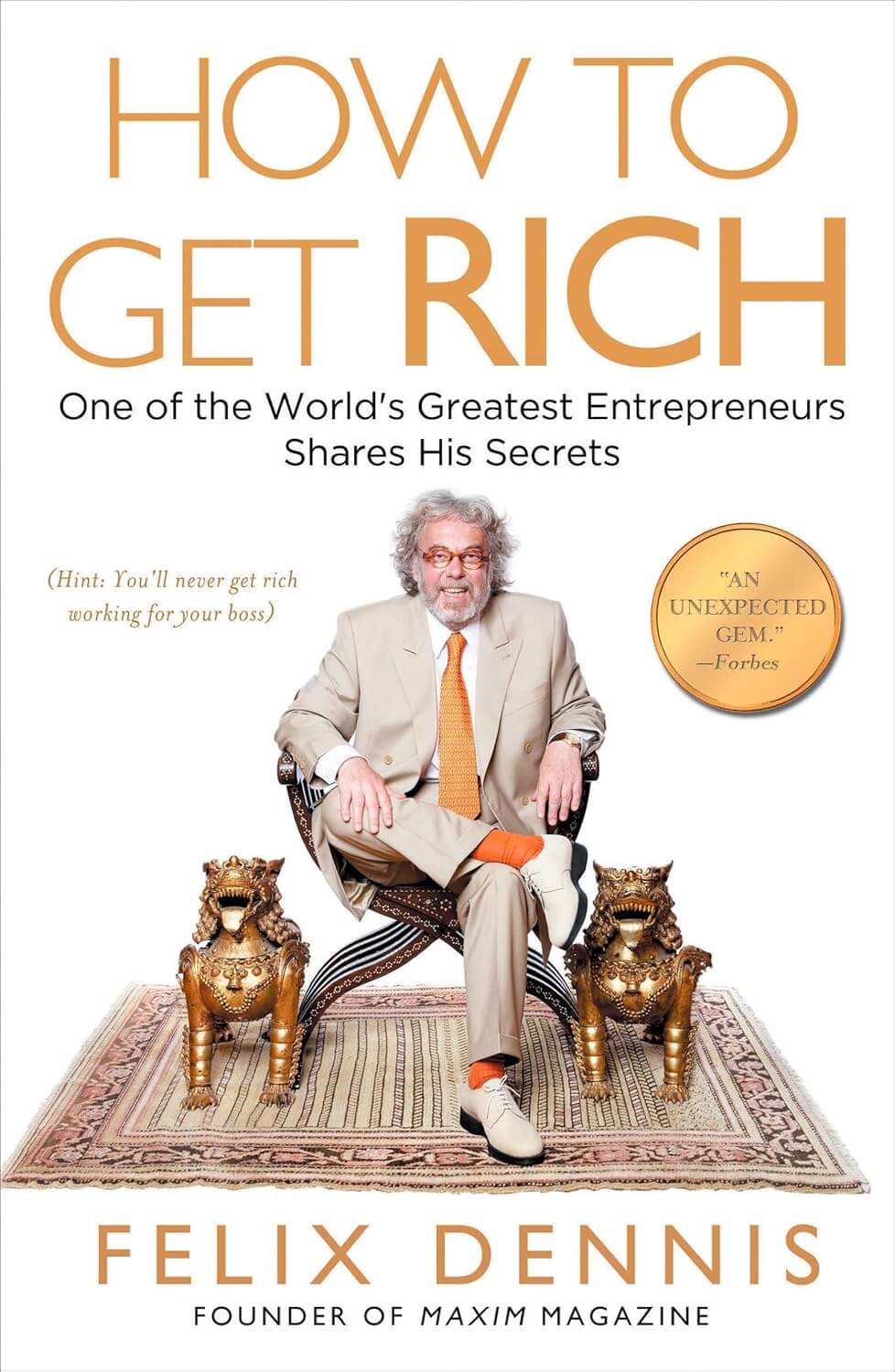
How to Get Rich Book Summary
This How to Get Rich Book Summary covers the key ideas, lessons, and takeaways in about 20 minutes.
Dennis’s central message is that the biggest obstacle isn’t knowledge—it’s fear, self-sabotage, and the desire to be safe while also wanting extraordinary outcomes.
If you decide to pursue wealth anyway, Dennis’s practical principles become your survival kit:
Own what scales, don’t rent out your time.
Protect cash flow like oxygen.
Cut failing bets quickly, no matter how attached you feel.
Negotiate with clear limits and sharp preparation.
Delegate to scale beyond your personal capacity.
After wealth arrives, manage relationships intentionally, give generously, and find meaning beyond consumption.
In short: getting rich is not just building a business—it’s becoming the kind of person who can tolerate the process without breaking.
Helps with these goals
Want the complete 20-minute summary?
- Full structured summary
- Video Summary
- Podcast Summary
- Audio summary
- Key takeaways
- Exercises
- Quiz
- Highlights and notes
- Ask the book with AI
What is in the How to Get Rich book summary?
Below is a preview of Sumizeit’s expert-written summary of How to Get Rich by Felix Dennis. The full summary covers the book’s key ideas in text, audio, and video.
Felix Dennis doesn’t write like a polite mentor. He writes like someone grabbing you by the collar and saying, “Before you chase this, understand what it actually costs.”
The book’s first move is psychological, not practical: Dennis tries to strip away the fantasy version of wealth—the version where you work hard, win big, and then float into a life of freedom and gratitude. He argues that most people want the image of being rich (respect, options, safety) without wanting the process (risk, boredom, humiliation, obsession, and years of instability).
To make the point real, imagine two people:
Person A says they want to be rich, but they also want evenings free, weekends sacred, predictable income, and everyone to approve of their choices.
Person B says they want to be rich and is willing to look foolish for years, take uncomfortable bets, lose friends, and build a life that doesn’t look “balanced” from the outside.
Dennis’s claim is that only Person B has any shot at the kind of wealth he’s talking about—and even then, luck has to cooperate.
What Dennis Means by “Rich” and Why That Definition Changes Everything
Dennis isn’t talking about being “comfortable.” He’s talking about the level of wealth where you can make large decisions without financial consequences meaningfully touching you—where you can take risks that would terrify most people, and you can survive losses that would destroy most families.
That definition matters because it exposes a trap:
If your goal is financial security, you can get there with a high-income career + disciplined investing.
If your goal is extreme wealth, Dennis argues you need ownership, and you need the willingness to play a much more volatile game.
Example:
A surgeon earning $400k/year can build a strong net worth over time. But their income is still tied to their labor, licensing, health, and time. A business owner who builds a brand and sells it has the possibility of a single liquidity event—one deal—that leaps past decades of salary.
Dennis is saying: if you want the leap, you need to accept the leap’s risks.
The “War” Mentality: The Cost Is Not Abstract—It’s Personal
Dennis warns that the pursuit of wealth can require a mindset similar to marching into battle—not because business is literally war, but because the emotional demands can be brutal.
When you’re building something from scratch, time disappears. Stress rises. Your attention narrows.
Example:
You start a small media brand. The early wins feel exciting—your first clients, your first ad revenue, your first real momentum. But then growth demands more:
You’re answering customer messages at midnight.
You’re rewriting sales pages at 2 a.m.
You miss birthdays because “this quarter matters.”
Your partner stops complaining… and starts emotionally detaching.
Dennis’s point is uncomfortable: even if your intention is “I’m doing this for my family,” the experience for your family may be “you weren’t here.”
Dennis insists that wealth-seekers must become comfortable being mocked.
Example: You quit your stable job to build an online education…
Want the complete 20-minute summary?
- Full structured summary
- Video Summary
- Podcast Summary
- Audio summary
- Key takeaways
- Exercises
- Quiz
- Highlights and notes
- Ask the book with AI
Who should read How to Get Rich?
How to Get Rich is for entrepreneurs, ambitious professionals, and anyone serious about building significant wealth—not just financial security. It's essential reading for people willing to examine whether they truly want the lifestyle that extreme wealth requires, complete with its personal costs and emotional demands.
Why does How to Get Rich matter?
Felix Dennis strips away the fantasy version of wealth and exposes the real trade-offs: relationships, comfort, reputation, and time. In a world saturated with get-rich-quick schemes and motivational platitudes, this book matters because it forces honest self-assessment before you commit years to a wealth-building journey that may not suit your actual values.
What are the key themes in How to Get Rich?
- The gap between wanting wealth and wanting the process of building it
- Ownership as the non-negotiable path to extreme wealth
- The personal and relational costs of entrepreneurial ambition
- Self-sabotage and the excuses that prevent risk-taking at every life stage
- Cash flow and profitability as survival mechanisms for early businesses
- Negotiation and delegation as exponential levers for wealth creation
- How relationships and identity shift once you become rich
- The pursuit of meaning beyond money once wealth arrives
What are the key lessons from the How to Get Rich book summary?
Wealth requires owning something, not just earning from labor
Extreme wealth comes from owning a business, brand, product, or audience—not from being excellent at a job. High salaries create comfort; ownership creates leaps.
Most people want the image of wealth, not the reality of building it
The fantasy of being rich (respect, freedom, safety) attracts millions, but the reality (obsession, humiliation, lost relationships, years of instability) repels most who actually try it.
Youth is an advantage in wealth-building, not a handicap
Young people can afford to fail and learn quickly; they haven't yet accumulated the comfort and obligations that paralyze mid-career professionals.
Comfort is addictive and silently kills ambition
Mid-career professionals often postpone risk indefinitely, telling themselves they'll start after the next promotion or mortgage payment—but that moment rarely comes.
Responsibilities can be either real constraints or shields against fear
Family obligations are real, but they're often used as excuses to avoid risk; the wealthy find ways to pursue ambition while managing responsibilities, not instead of managing them.
Cash flow is the oxygen of a business; everything else is optional
A brilliant business dies if cash runs out; Dennis prioritizes early profitability and brutal cuts over grand visions that bleed money.
Be loyal to wealth accumulation, not to your original business idea
Successful wealth-builders pivot, abandon, or radically reshape their ventures when the data shows a better path—they follow the money, not their ego.
Negotiation is the difference between doing fine and getting rich
Small wins in deal-making compound into massive wealth differences; setting your limits before entering any negotiation protects both your margins and your psychology.
Delegation is required to scale beyond your personal capacity
You cannot get extremely rich by doing everything yourself; wealthy founders become builders of teams and incentives, not heroic solo performers.
Public failure and mockery are part of the cost of trying
Anyone pursuing significant wealth must develop emotional stamina to endure years of being questioned, mocked, and doubted by people who've never built anything.
Relationships become more complex and fragile once you're rich
Old friends who knew you before success become invaluable for honest feedback; new 'friends' often come with hidden agendas and require careful boundaries.
Predatory debt is a death spiral for fragile startups
High-interest borrowing destroys early-stage businesses by forcing founders to service debt rather than build capacity and growth.
Gifting money is wiser than lending to family and friends
Loans create power imbalances and resentment; strategic gifts preserve relationships and prevent the guilt and awkwardness of debt between loved ones.
Wealth can trigger binge behavior that ruins both health and judgment
New money often leads to self-indulgent excess—excessive consumption, partying, and poor sleep—that degrades health and decision-making capacity.
Finding meaning after 'winning' is harder than becoming rich
Once you've accumulated significant wealth, making more money becomes easier but less interesting; without creative projects, hobbies, or deeper purpose, boredom becomes destructive.
Ambition strains relationships because it requires all your attention
Even with good intentions, the demands of building something significant mean less time, more stress, and emotional distance from family—a cost that often surprises entrepreneurs.
Wealth doesn't require beating the market or unusual intelligence
Getting rich is more about psychology, patience, and willingness to tolerate discomfort than about being smarter or having special knowledge.
The early years are for aggressive learning and repeated attempts, not comfort
Young people who fail multiple times early gain irreplaceable skills in sales, pricing, and customer management that put them years ahead of their cautious peers.
Emerging niches beat crowded, sexy industries for new entrepreneurs
Building in an under-served niche with clear demand requires less capital and less competition than entering saturated, popular industries.
Generosity protects you from becoming paranoid and miserable
Strategic giving to friends and family prevents the fortress mentality; staying human requires accepting that some of your wealth will benefit others.
Want the complete 20-minute summary?
- Full structured summary
- Video Summary
- Podcast Summary
- Audio summary
- Key takeaways
- Exercises
- Quiz
- Highlights and notes
- Ask the book with AI
How can you apply ideas from How to Get Rich?
- Start a business or product early in your career when you can recover quickly from failure, rather than waiting for perfect conditions
- Map your strengths against under-served market niches rather than pursuing saturated, crowded industries that require more capital and face more competition
- Set your negotiation limits (minimum acceptable, ideal, and walk-away price) before entering any deal to avoid emotional, last-minute concessions
- Adopt a 'semi-hands-off' management style by delegating day-to-day operations to managers while retaining decision rights on major spending, hiring, and strategy
- Preserve cash flow by cutting failing projects quickly rather than feeding them with additional investment out of emotional attachment
- Maintain relationships with old friends who knew you before success, as they're more likely to give honest feedback than new acquaintances seeking access
- Give money to family as gifts rather than loans to avoid resentment, power imbalances, and awkward repayment dynamics
What common mistakes do readers make with How to Get Rich?
- Delaying ambition indefinitely by waiting for the perfect conditions—more savings, a promotion, or fewer responsibilities—that never actually arrive
- Hiring staff and building overhead too early, before consistent revenue proves the business model works, leading to cash flow death
- Becoming emotionally attached to the original business idea and refusing to pivot toward higher-margin or faster-growing alternatives
- Entering negotiations without preset limits, allowing emotional pressure and desire to close the deal to drive down your margins and terms
Sumizeit Exercises Apply what you've learned
Turn ideas from How to Get Rich into action with a short guided reflection: identify the biggest takeaway, connect it to your life, and commit to one step you can take in the next 24 hours.
What is the expert analysis of How to Get Rich?
Overview
How to Get Rich is a candid and unvarnished exploration of wealth accumulation authored by Felix Dennis, a British entrepreneur and publisher known for his sharp wit and contrarian views. Unlike typical self-help or business manuals, Dennis’s work confronts the psychological and emotional toll of pursuing extreme wealth, stripping away romanticized fantasies to reveal the grit, sacrifice, and relentless obsession required. His background as a self-made multi-millionaire imbues the book with authenticity, making it a significant contribution to literature on entrepreneurship and personal finance that challenges readers to reconsider what it truly means to be rich.
Core Thesis
Dennis’s central argument pivots on a stark distinction between the image of wealth and the brutal reality of its pursuit. He posits that extreme wealth—defined not as comfort but as financial freedom to make large, risk-laden decisions without existential threat—demands ownership and a willingness to embrace volatility, public failure, and personal sacrifice. The pursuit of such wealth is less about knowledge or strategy alone and more a rigorous personality test, requiring emotional endurance, obsession, and a readiness to forgo conventional notions of balance and security.
Strengths
Psychological Realism: Dennis excels at dismantling illusions around wealth, exposing the emotional and relational costs with unflinching honesty.
Practical Ownership Focus: The emphasis on ownership—of businesses, products, brands—as the true lever for extreme wealth provides a clear, actionable framework beyond mere hard work or salary accumulation.
Nuanced Risk Analysis: By categorizing common self-sabotaging excuses and illustrating the necessity of risk tolerance, Dennis offers a psychologically astute roadmap for overcoming internal barriers.
Behavioral Insights: The book’s attention to negotiation, delegation, cash flow management, and emotional stamina highlights often overlooked but critical entrepreneurial skills.
Authentic Voice: Dennis’s blunt, no-nonsense tone cuts through platitudes, lending credibility and urgency to his message.
Critiques & Counterarguments
Overemphasis on Extremes: Dennis’s dichotomy between Person A and Person B risks oversimplifying the spectrum of entrepreneurial experiences and may alienate readers seeking more balanced or incremental approaches to wealth.
Emotional Toll Understated in Solutions: While the book vividly describes the emotional costs, it offers limited guidance on mitigating burnout or fostering sustainable well-being alongside ambition.
Potentially Dated Examples: Some business contexts and market examples may feel less relevant in today’s rapidly evolving digital economy, where new models of wealth creation (e.g., platform economies, crypto) challenge traditional ownership paradigms.
Competing Research on Work-Life Balance: Contemporary studies in organizational psychology suggest that sustainable success often requires integrating personal well-being rather than sacrificing it entirely, contrasting with Dennis’s “war mentality.”
Alternative Wealth Models: Philosophies emphasizing social entrepreneurship, cooperative ownership, or purposeful minimalism provide counterpoints to Dennis’s aggressive accumulation focus, arguing for wealth as a means to broader societal impact rather than personal conquest.
Who Should Read This
This book is ideal for ambitious entrepreneurs, investors, and professionals who are seriously contemplating the pursuit of extreme wealth and are prepared to confront its unvarnished realities. It is particularly valuable for readers who appreciate a brutally honest, psychologically grounded perspective that challenges conventional motivational rhetoric. Those who seek a comprehensive understanding of the emotional and strategic demands of scaling wealth beyond comfort—and who are willing to embrace discomfort as part of the journey—will find Dennis’s insights both sobering and empowering. Conversely, readers looking for gentle encouragement or step-by-step formulas for moderate financial success may find the tone and approach too harsh or uncompromising.
Frequently asked questions about the How to Get Rich book summary
What is How to Get Rich about?
How to Get Rich by Felix Dennis is a brutally honest examination of what extreme wealth actually requires—not just financially, but psychologically and personally. Dennis argues that most people want the image of being rich without accepting the costs: obsessive work, strained relationships, public failure, and years of instability. The book combines psychology with practical principles on ownership, cash flow, negotiation, and delegation.
Who should read How to Get Rich?
This book is for entrepreneurs, ambitious professionals, and anyone considering a serious wealth-building pursuit who wants to understand the real trade-offs involved. It's essential for people who wonder if they actually want the lifestyle that getting rich demands, not just the fantasy version of it.
What are the main takeaways from How to Get Rich?
Key takeaways include: extreme wealth requires owning something, not renting your labor; cash flow is survival; negotiate with preset limits; delegate to scale beyond yourself; relationships become complex once you're rich; and finding meaning beyond money is essential for long-term satisfaction. Dennis also emphasizes that the biggest obstacle is not knowledge but willingness to tolerate discomfort and risk.
Does Felix Dennis think anyone can get rich?
Dennis believes getting rich is more about psychology and willingness to tolerate discomfort than about intelligence or special knowledge. However, he's clear that extreme wealth requires a rare mix of obsession, emotional endurance, and willingness to risk comfort and reputation—qualities not everyone possesses or wants.
What does Dennis say about the relationship costs of building wealth?
Dennis argues that ambition is greedy and demands all your attention and time. Even with good intentions, entrepreneurs often miss important family moments, and partners can feel emotionally abandoned. He's unflinching about this trade-off: the family's experience of 'you weren't here' often contrasts sharply with the entrepreneur's intention of 'I'm doing this for my family.'
How does How to Get Rich address self-sabotage?
Dennis identifies patterns of self-sabotage at every life stage: young people claim they're too inexperienced, mid-career professionals wait for the next promotion, and older professionals cite responsibilities. He argues these are often shields against fear rather than genuine obstacles, and wealthy people find ways to proceed despite them.
What is Dennis's view on retirement?
Dennis distrusts traditional retirement because entrepreneurs often lose structure, purpose, and identity. He advocates serial entrepreneurship—building, selling, building again—not necessarily for money but for meaning and engagement. Many wealthy people become miserable when they stop working without a sense of purpose.
About Sumizeit
Sumizeit is a profitable Scomy LLC company based in Miami, Florida. It has been helping readers learn from nonfiction books for 7 years with expert-written summaries in text, audio, podcast, and video.
Want the complete 20-minute summary?
- Full structured summary
- Video Summary
- Podcast Summary
- Audio summary
- Key takeaways
- Exercises
- Quiz
- Highlights and notes
- Ask the book with AI
Here's why readers love Sumizeit
Join thousands of learners getting smarter every day
"Great experience. Detailed summaries. Loved the gamification feature. Makes learning fun. Good customer service. I recommend Sumizeit to anyone. You'll learn a lot."
"I always felt busy but still wanting to keep up with the book discussion in my friend group. This was a great supplement to help me keep reading the books I find fun while keeping up with important books."
"I love this website. Instead of scrolling social media, I find myself learning a lot. I use it everyday. I recommend this app for anyone who is too busy and wants to get up to speed with their favorite books."
How to Get Rich Book Summary PDF
Looking for a How to Get Rich Book Summary PDF you can save and revisit offline? Our How to Get Rich Book Summary PDF captures the book’s core ideas in a clean, printable format — the key frameworks, takeaways, and structure without the fluff. Download the How to Get Rich Book Summary PDF when you want a reference you can annotate, share with your team, or review on the go. Get your How to Get Rich Book Summary PDF from the download page below.
Download How to Get Rich Book Summary PDFPeople also liked these summaries
Readers who explored How to Get Rich often enjoyed these titles next.



Want the complete 20-minute summary?
- Full structured summary
- Video Summary
- Podcast Summary
- Audio summary
- Key takeaways
- Exercises
- Quiz
- Highlights and notes
- Ask the book with AI
Featured Book Titles
Popular Book Summaries at sumizeit, leading book summary app
