


As an Amazon Associate, Sumizeit earns from qualifying purchases.
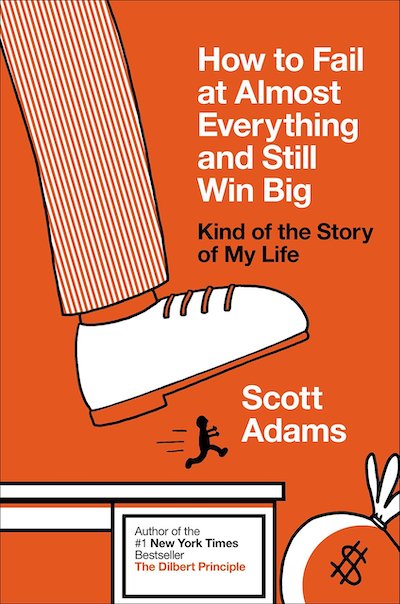
How to Fail at Almost Everything and Still Win Big Book Summary
This How to Fail at Almost Everything and Still Win Big Book Summary covers the key ideas, lessons, and takeaways in about 20 minutes.
Helps with these goals
Want the complete 20-minute summary?
- Full structured summary
- Video Summary
- Podcast Summary
- Audio summary
- Key takeaways
- Exercises
- Quiz
- Highlights and notes
- Ask the book with AI
What is in the How to Fail at Almost Everything and Still Win Big book summary?
Below is a preview of Sumizeit’s expert-written summary of How to Fail at Almost Everything and Still Win Big by Scott Adams. The full summary covers the book’s key ideas in text, audio, and video.
Failure is a scary concept, and many people will do just about anything to avoid it. This is a bummer because many people don’t realize is that failure is an important part of success. Failing can teach us where we need to focus our efforts, what doesn’t work, and can show us where we need to change. If you’ve failed big, you’re in good company. Many, many people have also failed on their path to become insanely successful. In fact, the writer of How to Fail at Almost Anything and Still Win Big failed in multiple ways: he started a business that went under, got fired from a job, and failed to create a patent. Though he failed repeatedly, he refused to give up, and eventually experienced incredible success with his creation of the comic Dilbert. You can also move past failures and find meaningful success. Read on to learn how to avoid the pitfalls of failure, why humans are really just “soft robots”, and how to decide on a career path that really suits you.
Don’t set goals
Often when we want to achieve something, or the first step is to set a goal. What if you approached achievement differently? On a flight, the author began talking to a man he was seated next to. The man told him he had created a system where he just kept moving up in jobs: getting whatever new job became available and forgetting the old one. He didn’t have a goal. He had a system. And pretty soon, he was a CEO.
Setting goals is simple enough. The process of achieving them can be dismal. Especially if you don’t reach your goal. Let's say you want to run a mile in 6 minutes by the end of January, you go for a run at the end of January and you get just a little past 6 minutes. You’ll feel like a failure, and (worst of all) you won’t get to celebrate all of your hard work. Instead, you can create a system where you run every day. The reward will be constant, and there’s no goal to make you feel as though you failed. The best part? Your system can lead to the same results, with none of the bad feelings.
Goals can also be problematic because you don’t get to hit your target immediately, which means that there will be a lot of days of work with no results - making motivation difficult to maintain. Having a system means you’ll get to reap the reward every day that you do the behavior that’s required. The system will also create a habit: and once a habit is formed, it can be hard to break. Good habits can lead to great changes. Setting your sights on only one particular goal can also be limiting.
Want the complete 20-minute summary?
- Full structured summary
- Video Summary
- Podcast Summary
- Audio summary
- Key takeaways
- Exercises
- Quiz
- Highlights and notes
- Ask the book with AI
Who should read How to Fail at Almost Everything and Still Win Big?
This book is for anyone stuck between repeated failures and ambitious dreams, especially those feeling paralyzed by perfectionism or traditional goal-setting pressure. It's ideal for career-changers, entrepreneurs, and creative professionals who want to reframe their relationship with failure and build a more resilient approach to success.
Why does How to Fail at Almost Everything and Still Win Big matter?
In today's rapidly changing economy, rigid career plans and single-skill mastery are increasingly obsolete. Scott Adams's framework shows how to build adaptability, embrace experimentation, and recognize that failure is data, not destiny—making it essential reading for those navigating uncertainty in work and life.
What are the key themes in How to Fail at Almost Everything and Still Win Big?
- Failure as a tool for learning and growth
- Systems over goals for sustainable progress
- Skill diversification for career resilience
- Self-awareness and personal programming
- Health as a foundation for mental clarity
- Environment and association as success factors
What are the key lessons from the How to Fail at Almost Everything and Still Win Big book summary?
Systems Beat Goals
Instead of aiming for a single outcome, build a daily system that rewards consistent behavior. Systems eliminate the emotional crash of missing targets while creating compounding results over time.
Failure Teaches More Than Success
Each failure provides concrete feedback about what doesn't work and where to adjust. Treating setbacks as experiments rather than defeats unlocks rapid learning.
Develop a Skill Portfolio, Not a Single Skill
Being above-average at multiple skills creates adaptability and competitive advantage. A well-rounded skillset makes you valuable across changing industries and workplace demands.
Your Career Should Center on You, Not Others' Expectations
Align your work with your genuine interests, natural rhythms, and strengths rather than external pressure. Personal fulfillment and success align when you design your path authentically.
Understand Your 'Soft Programming'
Recognize your natural productivity cycles, energy patterns, and optimal work conditions. Working with your inherent programming rather than against it maximizes output and reduces friction.
Food and Mood Are Directly Connected
Nutrition profoundly affects mental clarity, mood, and motivation. Simple dietary adjustments can dramatically improve your ability to focus and maintain energy.
Make Exercise a Weekly Habit, Not a Chore
Commit to a regular group activity or scheduled workout to remove decision-making friction. Consistency builds habits that persist without willpower.
Strategic Delusion Can Support Success
Daily affirmations and positive mantras, though unscientific, can align your subconscious with your goals without causing harm. Harmless belief systems can be powerful tools.
You Become Like Your Closest Circle
Your associates shape your values, ambitions, and outcomes through proximity and influence. Deliberately choose your social circle based on where you want to go.
Location and Environment Matter More Than You Think
Physical surroundings and the people in them influence your trajectory and mindset. Moving to where your desired community lives can accelerate your progress.
Look for the 'X-Factor' in Your Work
Identify what generates buzz, excitement, or genuine value in your chosen field. Building around elements with natural appeal increases your odds of success.
Passion Often Develops Through Action, Not Discovery
You may not find your perfect career immediately; you might need to create it through experimentation. Patience and iteration reveal your true calling.
Reframe Failure as Information, Not Judgment
When something doesn't work, view it as data collection rather than personal failure. This mindset shift removes shame and accelerates problem-solving.
Success Takes Time and Accumulated Experience
Meaningful achievement rarely happens quickly; it emerges from years of learning, trying, and refining. Patience combined with consistent effort creates the conditions for breakthrough.
Energy Management Beats Time Management
Schedule important work when your energy is highest and your mind is sharpest. Matching tasks to your natural rhythms produces better quality output with less struggle.
Want the complete 20-minute summary?
- Full structured summary
- Video Summary
- Podcast Summary
- Audio summary
- Key takeaways
- Exercises
- Quiz
- Highlights and notes
- Ask the book with AI
How can you apply ideas from How to Fail at Almost Everything and Still Win Big?
- Replace your five-year plan with a daily system that moves you toward a direction without fixed targets
- Audit your friend group and deliberately spend more time with people who embody the qualities and success you want
- Identify your peak productivity hours and energy sources, then design your schedule around them
- Join a weekly group activity (exercise class, writing group, sports team) to make consistency automatic
- Start a daily affirmation practice aligned with your ambitions, even if you're skeptical of its mechanics
- Build a diverse skill portfolio by learning one adjacent skill every year outside your primary role
- Map out three interests from your past and brainstorm job roles or businesses that combine them
What common mistakes do readers make with How to Fail at Almost Everything and Still Win Big?
- Viewing every setback as permanent failure rather than learning opportunity and course correction
- Pursuing a single career path based on others' expectations rather than personal strengths and interests
- Ignoring health and nutrition while pursuing success, inadvertently sabotaging mental clarity and motivation
- Surrounding yourself with people whose values and habits don't align with where you want to go
Sumizeit Exercises Apply what you've learned
Turn ideas from How to Fail at Almost Everything and Still Win Big into action with a short guided reflection: identify the biggest takeaway, connect it to your life, and commit to one step you can take in the next 24 hours.
What is the expert analysis of How to Fail at Almost Everything and Still Win Big?
Overview
How to Fail at Almost Everything and Still Win Big is a distinctive work by Scott Adams, the creator of the widely acclaimed comic strip Dilbert. Known primarily for his satirical take on corporate culture, Adams here offers a candid, unconventional self-help guide that blends personal anecdotes with practical advice on success. The book stands out by reframing failure not as a setback but as a vital stepping stone toward achievement. Adams’ unique background—as a former corporate employee turned successful entrepreneur and cartoonist—lends authenticity and humor to his insights, making this work significant within the crowded self-improvement genre.
Core Thesis
At its core, Adams challenges conventional wisdom about success, particularly the obsession with rigid goal-setting. Instead, he advocates for adopting systems—ongoing processes and habits—that foster continuous improvement and resilience. He posits that failure is not only inevitable but also essential for learning and growth. Complementing this, Adams urges cultivating a diverse skill set, aligning one’s work with intrinsic interests and natural rhythms (“soft robot” concept), and maintaining physical health to optimize mental performance. Ultimately, he argues that success is less about a linear path and more about adaptability, persistence, and strategic self-awareness.
Strengths
- Pragmatic Approach to Failure: Adams demystifies failure, transforming it from a source of fear into a constructive tool. His personal narrative of multiple failures before Dilbert’s success adds credibility and relatability.
- Systems over Goals: The distinction between systems and goals is a powerful reframing that addresses common motivational pitfalls and promotes sustainable habits.
- Holistic View of Success: By integrating psychological insights (e.g., delusions and affirmations), physiological health, and social environment, Adams presents a multifaceted model of achievement.
- Accessible and Engaging Style: The conversational tone, peppered with humor and real-life examples, makes complex ideas approachable without sacrificing depth.
- Encouragement of Self-Knowledge: The “soft robot” metaphor and emphasis on personal rhythms underscore the importance of tailoring strategies to individual differences rather than one-size-fits-all solutions.
Critiques & Counterarguments
- Overreliance on Anecdotal Evidence: While Adams’ personal story is compelling, the book often lacks rigorous empirical support. His claims about systems outperforming goals or the efficacy of daily affirmations are not consistently backed by scientific studies.
- Potential Oversimplification of Complex Concepts: The binary opposition between goals and systems may overlook the nuanced ways in which goals can motivate and provide direction when combined with adaptive systems.
- Limited Engagement with Alternative Perspectives: The book does not sufficiently address competing psychological theories that emphasize goal-setting’s motivational benefits, such as Locke and Latham’s Goal-Setting Theory, which has substantial empirical backing.
- Generalization of “Soft Robot” Concept: While useful as a metaphor, the idea of being a “soft robot” risks minimizing the complexity of human cognition, emotion, and free will, potentially leading to deterministic interpretations.
- Health and Nutrition Advice Simplistic: The recommendations on diet and exercise, though practical, are somewhat superficial and do not engage with the broader scientific discourse on lifestyle medicine.
Who Should Read This
This book is ideal for readers who are:
- Frustrated with traditional self-help advice centered on rigid goal-setting and seeking a fresh perspective on success.
- Entrepreneurs, creatives, and professionals navigating uncertain career paths who value adaptability and resilience.
- Fans of Scott Adams’ humor and candid storytelling, appreciating a blend of satire and sincere guidance.
- Individuals interested in practical, actionable strategies that integrate psychological insights with lifestyle habits.
- Readers open to unconventional ideas about motivation, failure, and personal development who prefer an informal, engaging narrative over academic rigor.
Frequently asked questions about the How to Fail at Almost Everything and Still Win Big book summary
What is How to Fail at Almost Everything and Still Win Big about?
How to Fail at Almost Everything and Still Win Big by Scott Adams is a memoir-cum-self-help book that reframes failure as essential to success. Adams shares his own path of multiple setbacks—from failed businesses to job termination—before creating the hugely successful Dilbert comic, arguing that embracing failure, building diverse skills, and using systems instead of goals are keys to meaningful achievement.
Who should read How to Fail at Almost Everything and Still Win Big?
This book suits anyone struggling with repeated setbacks, perfectionism, or career uncertainty, particularly entrepreneurs, creative professionals, and career-changers. It's especially valuable for people trapped between ambition and fear of failure, or those feeling pressure to follow conventional paths rather than designing careers around their authentic strengths.
What are the main takeaways from How to Fail at Almost Everything and Still Win Big?
The main takeaways include: replace goal-setting with daily systems for sustainable progress, develop a portfolio of diverse skills rather than relying on a single strength, center your career on your own interests and natural rhythms instead of others' expectations, treat failure as data for learning, and deliberately shape your environment and associations to support your ambitions. Adams also emphasizes that health, energy management, and even harmless positive delusions play crucial roles in long-term success.
What does Scott Adams mean by 'soft robot' thinking?
By 'soft robot,' Adams means recognizing that you operate according to predictable internal programming—your natural energy cycles, productivity peaks, and inherent preferences. Rather than fighting against this programming through willpower, you should understand it and design your schedule and environment to work with it, maximizing results with less resistance.
Why does Scott Adams say goals are a bad idea?
Adams argues that goals create long stretches of demotivating work with no daily reward, set you up for feelings of failure if you miss targets slightly, and limit your possibilities by anchoring you to a single outcome. Systems, by contrast, provide daily rewards and create sustainable habits while remaining flexible to unexpected opportunities.
How long did it take Scott Adams to achieve success with Dilbert?
It took Scott Adams approximately 39 years of accumulated life experience, multiple failed ventures, job termination, and years of waking at 4 a.m. to develop his craft before Dilbert became the globally recognized comic that defined his career. This timeline illustrates his point that meaningful success rarely happens quickly.
What role does health play in How to Fail at Almost Everything and Still Win Big?
Adams emphasizes that physical health directly impacts mental clarity, mood, and motivation through the food-mood connection and exercise habits. He argues that neglecting health while pursuing success is self-sabotaging, and recommends simple steps like weekly group exercise and eliminating processed foods to maintain the energy required for sustained achievement.
About Sumizeit
Sumizeit is a profitable Scomy LLC company based in Miami, Florida. It has been helping readers learn from nonfiction books for 7 years with expert-written summaries in text, audio, podcast, and video.
Want the complete 20-minute summary?
- Full structured summary
- Video Summary
- Podcast Summary
- Audio summary
- Key takeaways
- Exercises
- Quiz
- Highlights and notes
- Ask the book with AI
Here's why readers love Sumizeit
Join thousands of learners getting smarter every day
"Great experience. Detailed summaries. Loved the gamification feature. Makes learning fun. Good customer service. I recommend Sumizeit to anyone. You'll learn a lot."
"I always felt busy but still wanting to keep up with the book discussion in my friend group. This was a great supplement to help me keep reading the books I find fun while keeping up with important books."
"I love this website. Instead of scrolling social media, I find myself learning a lot. I use it everyday. I recommend this app for anyone who is too busy and wants to get up to speed with their favorite books."
How to Fail at Almost Everything and Still Win Big Book Summary PDF
Looking for a How to Fail at Almost Everything and Still Win Big Book Summary PDF you can save and revisit offline? Our How to Fail at Almost Everything and Still Win Big Book Summary PDF captures the book’s core ideas in a clean, printable format — the key frameworks, takeaways, and structure without the fluff. Download the How to Fail at Almost Everything and Still Win Big Book Summary PDF when you want a reference you can annotate, share with your team, or review on the go. Get your How to Fail at Almost Everything and Still Win Big Book Summary PDF from the download page below.
Download How to Fail at Almost Everything and Still Win Big Book Summary PDFPeople also liked these summaries
Readers who explored How to Fail at Almost Everything and Still Win Big often enjoyed these titles next.


Want the complete 20-minute summary?
- Full structured summary
- Video Summary
- Podcast Summary
- Audio summary
- Key takeaways
- Exercises
- Quiz
- Highlights and notes
- Ask the book with AI
Featured Book Titles
Popular Book Summaries at sumizeit, leading book summary app