


As an Amazon Associate, Sumizeit earns from qualifying purchases.
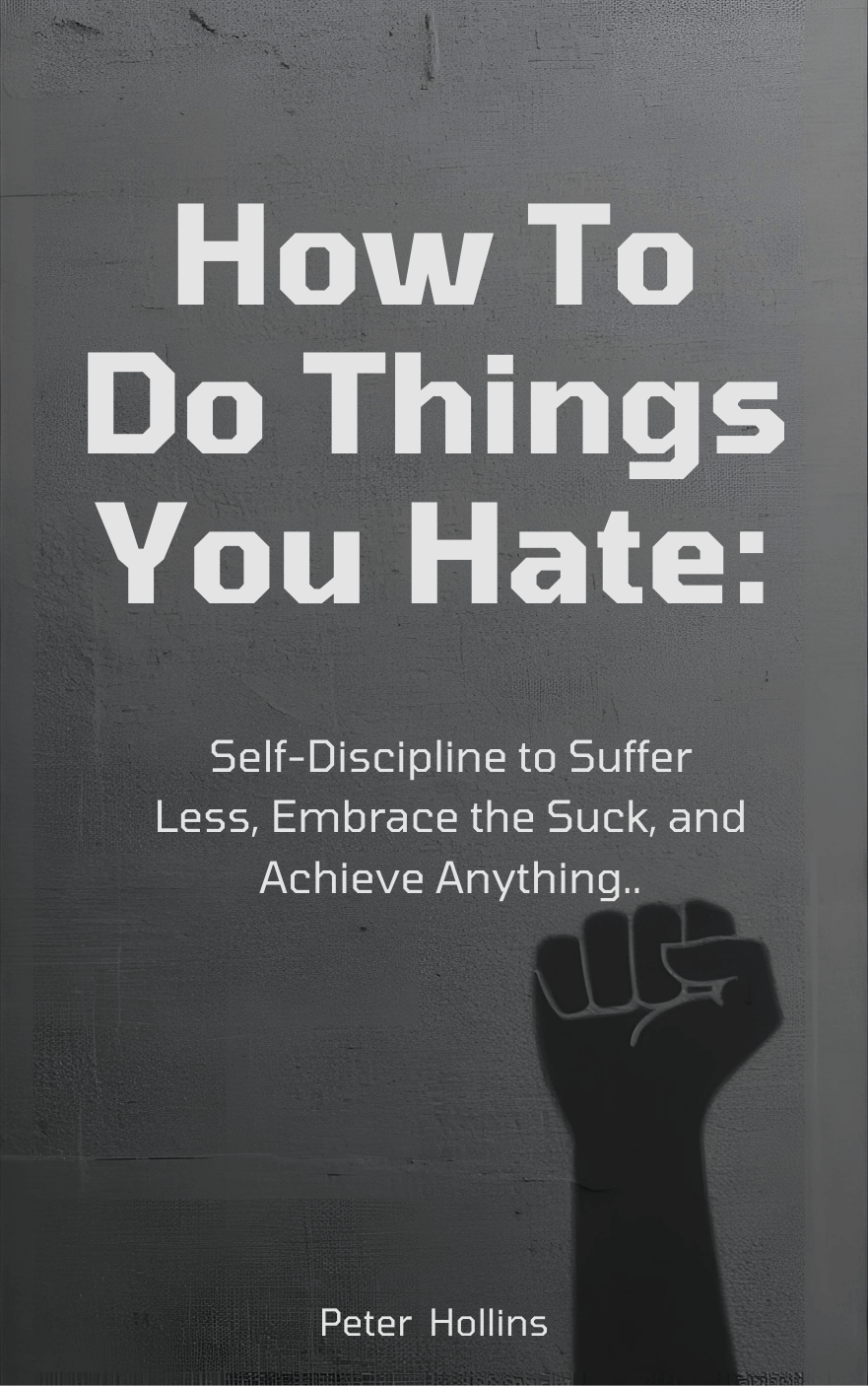
How To Do Things You Hate Book Summary
This How To Do Things You Hate Book Summary covers the key ideas, lessons, and takeaways in about 20 minutes.
Discipline is not about forcing yourself through pain. It is about changing your relationship with discomfort so it no longer controls you. When you learn to face discomfort calmly, start anyway, and align action with values, consistency becomes possible.
You don’t need more motivation. You need more tolerance for discomfort. Build that tolerance, and everything else follows.
Helps with these goals
Want the complete 20-minute summary?
- Full structured summary
- Video Summary
- Podcast Summary
- Audio summary
- Key takeaways
- Exercises
- Quiz
- Highlights and notes
- Ask the book with AI
What is in the How To Do Things You Hate book summary?
Below is a preview of Sumizeit’s expert-written summary of How To Do Things You Hate by Peter Hollins. The full summary covers the book’s key ideas in text, audio, and video.
How To Do Things You Hate by Peter Hollins is a deep exploration of why people consistently avoid the very actions that would most improve their lives—and how to reverse that pattern permanently. The book argues that success, growth, and self-respect are not built through motivation, inspiration, or waiting for the right mood. They are built by repeatedly choosing to move toward discomfort instead of away from it.
Hollins challenges the common belief that productivity problems are caused by laziness, lack of talent, or insufficient time. Instead, he claims the real enemy is the human tendency to escape unpleasant internal experiences: anxiety, boredom, fear, confusion, fatigue, and self-doubt. These feelings aren’t dangerous, but we treat them as if they are—and that avoidance quietly controls our behavior.
At its core, the book reframes self-discipline as a psychological skill rather than a moral trait. Discipline is not about becoming tougher or forcing yourself to suffer. It is about learning to tolerate discomfort without letting it dictate your choices. When discomfort stops being something you run from, you unlock consistent action, personal integrity, and long-term progress.
The Central Problem: Avoidance Creates More Pain, Not Less
Hollins begins by dismantling the assumption that avoiding unpleasant tasks reduces suffering. In reality, avoidance compounds distress. When you put off a task because it feels uncomfortable, the discomfort doesn’t disappear—it mutates. It grows into guilt, anxiety, shame, and self-criticism. The task becomes heavier, scarier, and emotionally charged over time.
This creates a destructive loop. You feel discomfort at the thought of doing something difficult. You avoid it to feel better temporarily. That avoidance creates new negative emotions. Those emotions make starting even harder later. The cycle repeats, and your confidence erodes.
The tragedy is that avoidance offers immediate relief but long-term harm. Action, by contrast, often feels worse at first but produces relief, clarity, and momentum quickly. Hollins emphasizes that most people are trapped not because tasks are too hard, but because they misinterpret discomfort as a signal to stop instead of a signal to begin.
Experiential Avoidance: Escaping Feelings Instead of Tasks
A key concept underlying Hollins’s argument is the idea that people are not avoiding tasks—they are avoiding internal experiences. When faced with a difficult obligation, the mind anticipates emotions like frustration, fear of failure, or mental effort. The task itself becomes associated with emotional pain, and the brain seeks escape.
This escape can take many forms: checking messages, reorganizing your workspace, doing “productive” but irrelevant tasks, or mentally rationalizing delay. You tell yourself you’ll feel more prepared later, that timing isn’t right, or that rest is necessary first. These explanations feel logical, but they serve a single function: protecting you from discomfort in the present moment.
Hollins stresses that this behavior is often automatic rather than intentional. People don’t consciously decide to sabotage themselves. They fall into familiar patterns that momentarily soothe discomfort. Over time, these habits harden, and avoidance becomes the default response to challenge.
Why Waiting for the Right Mood Never Works
Want the complete 20-minute summary?
- Full structured summary
- Video Summary
- Podcast Summary
- Audio summary
- Key takeaways
- Exercises
- Quiz
- Highlights and notes
- Ask the book with AI
Who should read How To Do Things You Hate?
This book is for anyone struggling with procrastination, avoidance, or lack of follow-through on goals that matter to them. If you find yourself waiting for motivation, making excuses to delay difficult tasks, or feeling stuck despite knowing what you should do, How To Do Things You Hate offers practical tools to break these patterns. It's especially valuable for people who recognize that their biggest obstacle isn't external—it's their relationship with discomfort.
Why does How To Do Things You Hate matter?
In a world saturated with motivational advice, How To Do Things You Hate cuts through the noise by reframing the problem: success isn't about feeling inspired or waiting for the right mood. Instead, it's about learning to act despite discomfort, which is the foundation of real discipline and long-term growth. As avoidance spirals become increasingly costly in personal, professional, and health domains, understanding how to move toward rather than away from discomfort is a critical life skill that directly determines the quality of outcomes you achieve.
What are the key themes in How To Do Things You Hate?
- Avoidance creates more suffering, not less
- Discomfort is a signal of growth, not danger
- Discipline is a learnable skill, not an innate trait
- Action precedes motivation, not the other way around
- Values alignment makes discomfort tolerable
- Awareness and acceptance reduce emotional reactivity
- Consistency matters more than intensity
What are the key lessons from the How To Do Things You Hate book summary?
Avoidance Multiplies Negative Emotions
When you avoid a task because it feels uncomfortable, the discomfort doesn't disappear—it grows into guilt, shame, and anxiety. The temporary relief from avoidance comes at the cost of long-term emotional burden that makes starting even harder.
You're Avoiding Internal Experiences, Not Tasks
People don't truly avoid tasks; they avoid the feelings associated with them—fear, frustration, confusion, or self-doubt. Once you recognize this distinction, you can address the real obstacle: learning to tolerate emotions without letting them dictate your choices.
Motivation Follows Action, Not the Other Way Around
Waiting for the right mood or motivation is a psychological trap that keeps you stuck indefinitely. Emotions are fleeting and unreliable; discipline means acting independently of how you feel and discovering that motivation naturally follows once you've begun.
Discomfort Is the Price of Growth
Every meaningful improvement—in skill, health, career, or character—requires repeated exposure to discomfort. Reframing discomfort as evidence you're operating at the edge of your potential removes the urge to escape and opens the door to progress.
Starting Small Is Often Enough to Break Resistance
Opening the document, sending the first email, or taking the first step is often sufficient to dissolve resistance and trigger momentum. The breakthrough isn't heroic effort; it's simply beginning while uncomfortable.
There's a Difference Between Reacting and Responding
Emotions arise automatically, but actions are choices. Discipline means inserting a pause between feeling and doing so you can respond intentionally to your emotions rather than react impulsively to them.
Awareness Without Judgment Reduces Emotional Power
When you observe discomfort clearly and nonjudgmentally rather than resisting or amplifying it, the feeling loses its grip over you. Harsh self-criticism intensifies avoidance, while compassionate awareness enables disciplined action.
Your Personal Avoidance Triggers Are Unique
Whether triggered by overwhelm, fear, fatigue, or preference for ease, everyone has distinct patterns that pull them toward avoidance. Identifying your specific triggers allows you to intervene deliberately instead of falling into automatic patterns.
Values Alignment Transforms Suffering Into Purpose
Discomfort becomes easier to tolerate when you're enduring it in service of something meaningful. Clarifying your deepest values reframes effort as an expression of identity rather than a chore to be avoided.
The Four-Step Process: Notice, Allow, Investigate, Release
By noticing discomfort honestly, allowing it to exist without resistance, investigating what it signals, and releasing identification with it, you create psychological distance from your emotions that enables calm action.
Discipline Is Built on Thousands of Small Starts
The disciplined life isn't conquered through one heroic effort; it's built through consistent practice of starting again and again, even when motivation is absent or progress feels invisible.
Perfection Is Not the Goal—Persistence Is
Progress is uneven and plateaus are inevitable. Accepting this reality prevents premature quitting. The disciplined person learns to tolerate monotony, delayed gratification, and long periods of invisible effort that eventually compound into visible results.
Focus Must Be Trained Like a Muscle
Sustained discipline requires mental fitness. By repeatedly returning your attention to a single object when it wanders, you strengthen your ability to concentrate on demand, making difficult tasks progressively easier to sustain.
Physical Health Directly Supports Mental Discipline
Sleep, nutrition, and movement profoundly influence emotional resilience and self-control. By caring for your body, you reduce unnecessary friction and make discomfort easier to tolerate without forcing constant willpower.
Radical Prioritization Prevents Energy Scattering
Energy is finite, and spreading it across too many goals ensures mediocrity. By choosing a small number of deeply important pursuits and letting go of the rest, you concentrate effort where it truly matters and simplify decision-making.
Work With Energy Cycles, Don't Fight Them
Human performance fluctuates in predictable patterns throughout the day. Scheduling demanding tasks during high-energy periods and resting during low-energy phases optimizes productivity without forcing constant effort and prevents burnout.
Startup Routines Create Readiness Without Motivation
Simple routines that begin with easy actions and progress toward movement can reliably shift your internal state and signal readiness to act, eliminating the need to wait for motivation to appear.
Never Do Zero Effort—Always Do Something Small
Even on the worst days, doing something small preserves your identity as someone who shows up. Zero effort breaks continuity and erodes self-trust, while minimal consistency maintains momentum and keeps the habit of effort alive.
Tolerance for Discomfort Determines Your Life Quality
Your life is ultimately shaped not by what you enjoy doing but by what you're willing to do when it feels uncomfortable. Building tolerance for discomfort is the foundational skill that enables all other forms of growth and achievement.
Avoidance Is Universal, But Breaking It Is Possible
Everyone struggles with avoidance, but understanding how it operates in your specific case—and practicing deliberate movement toward discomfort—allows you to gradually rewire your default response and build genuine self-respect.
Want the complete 20-minute summary?
- Full structured summary
- Video Summary
- Podcast Summary
- Audio summary
- Key takeaways
- Exercises
- Quiz
- Highlights and notes
- Ask the book with AI
How can you apply ideas from How To Do Things You Hate?
- Identify your top three personal avoidance triggers (fear, overwhelm, fatigue, preference for ease) and create specific intervention strategies for each one
- Use the four-step process (notice, allow, investigate, release) whenever you feel the urge to avoid a task you know matters to you
- Schedule your most important and difficult tasks during your peak energy hours, and reserve low-energy periods for routine maintenance work
- Develop a simple startup routine that takes 2-5 minutes and signals to your brain that you're ready to engage with difficult work, regardless of your mood
- Clarify your core values in writing and explicitly connect them to your key goals so you can reference this alignment when discomfort tempts you to avoid
- Practice the 'never zero effort' principle by committing to one small action every single day related to your most important goal, even if you skip everything else
- Train your focus like a muscle by spending 5-10 minutes daily returning your attention to a single object (breath, object, thought) each time it wanders
What common mistakes do readers make with How To Do Things You Hate?
- Treating motivation as a prerequisite for action rather than recognizing that action typically generates motivation after you begin
- Interpreting avoidance as a personal character flaw or sign of laziness rather than a learnable pattern you can observe and interrupt
- Attempting to eliminate or suppress discomfort rather than accepting it as a necessary companion to growth and learning to move through it
- Scattering effort across too many competing goals and priorities instead of ruthlessly focusing on a few deeply important pursuits
- Relying entirely on willpower and self-discipline without attending to foundational physical needs like sleep, nutrition, and movement that support mental resilience
Sumizeit Exercises Apply what you've learned
Turn ideas from How To Do Things You Hate into action with a short guided reflection: identify the biggest takeaway, connect it to your life, and commit to one step you can take in the next 24 hours.
What is the expert analysis of How To Do Things You Hate?
Overview
How To Do Things You Hate by Peter Hollins is a significant contribution to contemporary self-improvement literature, particularly in the realms of productivity, psychology, and behavioral change. Hollins, a writer deeply versed in psychology and human behavior, offers a pragmatic and scientifically grounded approach to overcoming avoidance and building discipline. Unlike many motivational texts that rely on inspiration or willpower, this book reframes discipline as a skill centered on tolerance of discomfort, making it a valuable resource for readers seeking sustainable personal growth.
Core Thesis
The central argument of the book is that avoidance of discomfort—not laziness or lack of time—is the primary barrier to productivity and self-improvement. Hollins posits that discomfort is an inevitable and necessary component of growth, and that discipline arises from learning to tolerate and move toward discomfort rather than away from it. He challenges the conventional wisdom that motivation precedes action, arguing instead that action generates motivation. By shifting the relationship between emotions and behavior, individuals can break the cycle of avoidance and build consistent, value-driven habits.
Strengths
- Psychological Insight: Hollins adeptly integrates concepts from behavioral science and psychology, particularly the idea of experiential avoidance, to explain why people procrastinate and how to counteract it.
- Practical Framework: The book offers a clear, actionable four-step process for engaging with discomfort, making abstract psychological concepts accessible and applicable.
- Balanced Perspective: Hollins avoids moralizing or shaming readers for avoidance behaviors, instead promoting self-awareness and self-compassion as tools for change.
- Holistic Approach: The emphasis on physical health, natural energy cycles, and strategic routines broadens the scope of discipline beyond mere mental effort.
- Focus on Values: By linking discipline to deeply held values rather than transient motivation, the book fosters a sustainable mindset for long-term growth.
Critiques & Counterarguments
- Evidence Base: While the book draws on psychological principles, it sometimes lacks rigorous empirical citations or engagement with the latest research, which may limit its appeal to academic audiences.
- Oversimplification of Motivation: The claim that motivation always follows action may not hold universally; some research suggests that intrinsic motivation can precede and sustain action, especially in creative or complex tasks.
- Individual Differences: The approach may underemphasize how neurodiversity, mental health conditions, or socioeconomic factors affect one’s capacity to tolerate discomfort or initiate action.
- Competing Schools of Thought: Alternative frameworks, such as self-determination theory, emphasize autonomy and intrinsic motivation as central to sustained behavior change, potentially challenging Hollins’s focus on discomfort tolerance.
- Contextual Limitations: The book’s strategies may be less effective in environments with systemic barriers or chronic stressors where discomfort is not a transient state but a persistent condition.
Who Should Read This
This book is ideally suited for readers who struggle with procrastination, avoidance, or inconsistent discipline and who seek a psychologically informed, practical guide to overcoming these challenges. It will resonate with professionals, students, and creatives who recognize that motivation is unreliable and want to cultivate resilience and focus. Additionally, those interested in behavioral science and self-mastery will appreciate Hollins’s clear synthesis of theory and practice. However, readers facing significant mental health challenges or systemic obstacles may need to supplement this book with additional support tailored to their circumstances.
Frequently asked questions about the How To Do Things You Hate book summary
What is How To Do Things You Hate about?
How To Do Things You Hate by Peter Hollins is about changing your relationship with discomfort so you can take consistent action toward your goals. The book argues that success isn't built through motivation or waiting for the right mood, but through learning to act despite anxiety, fear, boredom, and self-doubt. It provides practical strategies for breaking avoidance patterns and building genuine discipline as a learnable skill.
Who should read How To Do Things You Hate?
This book is ideal for anyone who struggles with procrastination, avoidance, or difficulty following through on important goals. It's particularly valuable for people who understand what they should do but find themselves making excuses, waiting for motivation, or sabotaging their own progress. Anyone seeking to understand and break patterns of self-avoidance will find actionable, psychologically-grounded strategies.
What are the main takeaways from How To Do Things You Hate?
The core takeaways include: avoidance multiplies emotional suffering rather than relieving it; motivation follows action, not the other way around; discomfort is evidence of growth, not danger; discipline is a learnable skill built through thousands of small starts; and your life quality is determined by what you're willing to do when it feels uncomfortable. The book emphasizes that lasting change comes from moving toward discomfort strategically rather than escaping it.
How does Peter Hollins define discipline?
Hollins reframes discipline as a psychological skill rather than a moral trait or innate talent. It's the ability to act in alignment with your values even when your emotions are pulling you toward avoidance. True discipline doesn't mean forcing yourself through pain or relying on willpower; it means learning to tolerate discomfort without letting it dictate your choices.
What is experiential avoidance and why does it matter?
Experiential avoidance is the tendency to avoid internal experiences—emotions like fear, frustration, or self-doubt—rather than the actual tasks themselves. It matters because recognizing this distinction shifts your approach from forcing yourself to do something to learning to tolerate the feelings that arise when doing it. This psychological insight is central to breaking avoidance patterns.
Can you really do things you hate according to this book?
Yes, but Hollins redefines what this means: you don't eliminate the discomfort or force yourself through suffering, but rather change your relationship with discomfort so it no longer controls you. By practicing awareness, acceptance, and small deliberate starts, you gradually build the ability to act on difficult tasks without being derailed by negative emotions.
What is the four-step process described in the book?
The four-step process is: (1) Notice what you're feeling without denial, (2) Allow the feeling to exist without trying to eliminate it, (3) Investigate what the discomfort is about and whether following its urge aligns with your values, and (4) Release identification with the discomfort by recognizing it's temporary and not who you are. From this calmer state, action becomes possible.
Does How To Do Things You Hate offer quick fixes or sustainable strategies?
The book focuses on sustainable, long-term strategies rather than quick fixes. Hollins emphasizes that discipline is a lifelong practice marked by inconsistency and plateaus, not a one-time conquest. The strategies are designed to be implemented repeatedly and built into your identity over time, creating lasting behavioral change rather than temporary motivation spikes.
About Sumizeit
Sumizeit is a profitable Scomy LLC company based in Miami, Florida. It has been helping readers learn from nonfiction books for 7 years with expert-written summaries in text, audio, podcast, and video.
Want the complete 20-minute summary?
- Full structured summary
- Video Summary
- Podcast Summary
- Audio summary
- Key takeaways
- Exercises
- Quiz
- Highlights and notes
- Ask the book with AI
Here's why readers love Sumizeit
Join thousands of learners getting smarter every day
"Great experience. Detailed summaries. Loved the gamification feature. Makes learning fun. Good customer service. I recommend Sumizeit to anyone. You'll learn a lot."
"I always felt busy but still wanting to keep up with the book discussion in my friend group. This was a great supplement to help me keep reading the books I find fun while keeping up with important books."
"I love this website. Instead of scrolling social media, I find myself learning a lot. I use it everyday. I recommend this app for anyone who is too busy and wants to get up to speed with their favorite books."
How To Do Things You Hate Book Summary PDF
Looking for a How To Do Things You Hate Book Summary PDF you can save and revisit offline? Our How To Do Things You Hate Book Summary PDF captures the book’s core ideas in a clean, printable format — the key frameworks, takeaways, and structure without the fluff. Download the How To Do Things You Hate Book Summary PDF when you want a reference you can annotate, share with your team, or review on the go. Get your How To Do Things You Hate Book Summary PDF from the download page below.
Download How To Do Things You Hate Book Summary PDFPeople also liked these summaries
Readers who explored How To Do Things You Hate often enjoyed these titles next.




Want the complete 20-minute summary?
- Full structured summary
- Video Summary
- Podcast Summary
- Audio summary
- Key takeaways
- Exercises
- Quiz
- Highlights and notes
- Ask the book with AI
Featured Book Titles
Popular Book Summaries at sumizeit, leading book summary app