


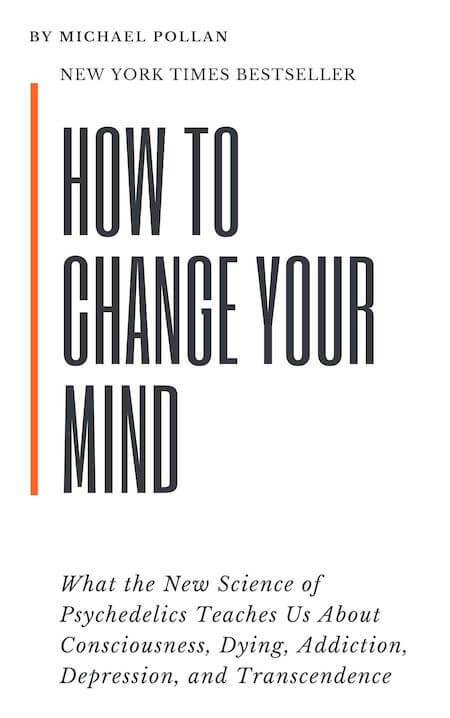
Prefer the print book? Buy on Amazon
As an Amazon Associate, Sumizeit earns from qualifying purchases.
How to Change Your Mind Book Summary
This How to Change Your Mind Book Summary covers the key ideas, lessons, and takeaways in about 20 minutes.
Short Description:
Psychedelics may treat mental illness by altering perception.
Preview the How to Change Your Mind book summary
Below is a preview of Sumizeit’s comprehensive human-written summary of How to Change Your Mind by Michael Pollan. The full summary is 15-20 minutes long and covers the book’s key ideas in text, audio, visual, and video formats. Unlock the full 20 Minute Summary
The use of psychedelic drugs can have a positive effect on mental health. Many studies have shown that the use of LSD and magic mushrooms can help patients undergo a mystical experience that can break negative thought cycles, reduce depression and anxiety, and increase the quality of life.
Casual use of psychedelics did not become common in the United States until the 1960s. However, many therapists in North America employed the use of psychedelic therapy in the 1950s, and they believed these drugs had the potential to treat or cure many mental illnesses, including depression, anxiety, and even alcoholism. However, in the 1960s, psychedelic drugs became associated with the counterculture movement in the public consciousness, which led to a drug crackdown on a federal level in the 1970s. LSD and magic mushrooms were made illegal, and all research on their potential health and therapeutic benefits were forced to stop.
In recent years, the scientific community has seen an increased interest in the therapeutic potential of these drugs. Starting around the mid-2000s, a small number of scientific studies using these drugs have been approved. These initial studies have yielded promising results regarding patients’ improved ability to cope with depression, addiction, and even a terminal cancer diagnosis. This has led to a slight shift in public perception regarding psychedelic drugs. However, while these initial results seem promising, there is still much that needs to be understood about how psychedelics affect the brain.
Set and Setting
Psychedelic drugs are influenced by two important factors: set and setting. Hallucinogens amplify both the atmosphere of the environment where one is taking them, and the current mental state of the drug user. Therefore, bad trips are more likely to happen when the user is in a bad environment or in a negative state of mind. The probability of experiencing a good trip is increased with the aid of a guide or psychedelic therapists. They have experience with the drugs, and can help guide users to a positive experience in a controlled setting. Psychedelic therapists encourage users to have a good trip by setting an intention and ensuring they are in a safe, positive environment before consuming the drug.
Another drug that relies on set and setting is marajuana. Pollen believes that the marajuana’s reputation as a paranoia-inducing drug comes largely from its illegality. Marajuana users will be more paranoid when using it in a place where it is illegal, because of the potential legal risk. Paranoia is not necessarily a side-effect of the drug itself, but rather of the setting in which it is used.
Drug Classifications
LSD, along with psilocin and psilocybin, the active ingredients found in psychedelic mushrooms, are not addictive. To the contrary, users will become immune to the drugs’ effects if they are used too frequently. In fact, psilocybin mushrooms are organic and can naturally be found in the wild.
Want the complete 20-minute summary?
- Full structured summary
- Video Summary
- Podcast Summary
- Audio summary
- Key takeaways
- Exercises
- Quiz
- Highlights and notes
- Ask the book with AI
Who should read How to Change Your Mind?
This book is essential for anyone curious about the science behind psychedelic experiences and their therapeutic potential. It appeals to those interested in mental health, neuroscience, and the intersection of consciousness studies with modern medicine, as well as readers seeking to understand how cultural stigma has shaped drug policy.
Why does How to Change Your Mind matter?
As psychedelic research reemerges after decades of prohibition, How to Change Your Mind offers a timely exploration of how these substances may revolutionize treatment for depression, anxiety, and addiction. The book challenges outdated drug classifications and misconceptions while examining the neuroscience of consciousness itself, making it crucial reading in an era of shifting perspectives on mental health and pharmaceutical innovation.
What are the key themes in How to Change Your Mind?
- The therapeutic potential of psychedelics for mental health treatment
- How set and setting shape the psychedelic experience
- The brain's default mode network and negative thought cycles
- The history and politics of drug prohibition
- Consciousness, ego dissolution, and interconnectedness
- The relationship between psychedelics and mindfulness practices
How can you apply ideas from How to Change Your Mind?
- Create intentional set and setting before exploring any consciousness-altering practice by ensuring a safe environment and clarifying your mental intentions beforehand
- Develop a mindfulness practice through meditation or breathing exercises to achieve some of the same ego-dissolution and thought-pattern-breaking benefits as psychedelics
- Seek professional guidance when working with any transformative experience, whether through trained therapists, guides, or experienced practitioners who understand the importance of proper support
- Recognize how environmental and contextual factors influence your mental state and reactions, applying the set-and-setting principle to everyday decisions about where and when you make important choices
- Question the validity of outdated drug classifications and advocate for evidence-based drug policy that reflects actual scientific findings rather than historical politics
What common mistakes do readers make with How to Change Your Mind?
- Assuming that simply taking a psychedelic will produce therapeutic results without adequate preparation, intention-setting, or professional support
- Overlooking the importance of integration—psychedelics reveal insights that must be worked with consciously afterward to create lasting change
- Dismissing insights gained during psychedelic experiences as unimportant once the trip ends, rather than treating them as valuable wisdom to be understood and integrated
- Underestimating how much your surroundings, emotional state, and the people around you influence the quality of any consciousness-altering experience
Sumizeit Exercises Apply what you've learned
Turn ideas from How to Change Your Mind into action with a short guided reflection: identify the biggest takeaway, connect it to your life, and commit to one step you can take in the next 24 hours.
What is the expert analysis of How to Change Your Mind?
Overview
How to Change Your Mind by Michael Pollan is a seminal work that explores the renaissance of psychedelic research and its profound implications for mental health treatment. Pollan, a distinguished journalist and academic with a background in science writing, brings a nuanced and accessible voice to a subject long marginalized by stigma and legal restrictions. His synthesis of historical context, scientific inquiry, and personal narrative renders the book significant not only as a cultural document but as a catalyst for rethinking entrenched paradigms about consciousness, therapy, and the mind.
Core Thesis
Pollan’s central argument posits that psychedelics—once vilified and relegated to the fringes of medicine and culture—possess transformative therapeutic potential. By modulating brain activity, particularly through disrupting the default mode network, these substances can break entrenched negative thought patterns, dissolve rigid ego boundaries, and foster a sense of interconnectedness. This neuropsychological mechanism underlies their efficacy in treating depression, anxiety, addiction, and existential distress, especially when administered in controlled settings that optimize “set and setting.” Pollan further contends that psychedelics facilitate access to mystical or spiritual experiences that can catalyze lasting psychological change, challenging conventional biomedical frameworks.
Strengths
- Interdisciplinary Approach: Pollan seamlessly integrates neuroscience, psychology, history, and cultural analysis, offering a comprehensive overview that appeals to both scientific and general audiences.
- Historical Contextualization: The book’s detailed recounting of the mid-20th century psychedelic research and its subsequent suppression provides critical insight into how sociopolitical forces shape scientific inquiry and public perception.
- Balanced Narrative: By including his own experiences alongside rigorous reportage, Pollan humanizes the subject matter without sacrificing intellectual rigor.
- Clarification of “Set and Setting”: The emphasis on environmental and psychological conditions in shaping psychedelic experiences is a vital contribution, underscoring the complexity and nuance required in therapeutic applications.
- Challenge to Drug Policy: The critique of Schedule I drug classifications and their incongruence with scientific evidence invites a reevaluation of drug laws and their impact on research and treatment accessibility.
Critiques & Counterarguments
- Limited Long-Term Data: While Pollan highlights promising short-term results, the durability of psychedelic therapy’s benefits remains uncertain. Follow-up studies indicating diminished effects after six months suggest the need for ongoing treatment or adjunctive therapies.
- Overreliance on Mystical Experience: The valorization of mystical states as inherently therapeutic may overlook individual variability and cultural specificity in interpreting such experiences. Critics argue that not all users derive positive meaning, and some may experience adverse psychological effects.
- Challenges in Scientific Methodology: The difficulty of conducting double-blind, placebo-controlled studies with psychedelics raises questions about the robustness and replicability of findings. This methodological hurdle complicates the integration of psychedelic research into evidence-based medicine.
- Competing Therapeutic Models: Established treatments for depression and addiction, such as cognitive-behavioral therapy and pharmacotherapy, have extensive empirical support. Some scholars caution against prematurely elevating psychedelics without comparative effectiveness studies.
- Socioeconomic and Ethical Concerns: The underground use of psychedelics and the potential commercialization of psychedelic therapy raise ethical issues regarding access, cultural appropriation, and the medicalization of spiritual practices.
Who Should Read This
This book is essential reading for mental health professionals, neuroscientists, philosophers of mind, and policymakers interested in the intersection of science, culture, and drug policy. It also appeals to intellectually curious readers seeking a sophisticated understanding of consciousness and therapeutic innovation. Those engaged in self-improvement and spirituality may find Pollan’s insights particularly resonant, as the book bridges empirical research with existential inquiry. Ultimately, How to Change Your Mind invites a reevaluation of entrenched biases and opens a dialogue about the future of mental health treatment.
Frequently asked questions about the How to Change Your Mind book summary
What is How to Change Your Mind about?
How to Change Your Mind by Michael Pollan explores the scientific evidence behind psychedelics like LSD and psilocybin, examining their potential to treat mental health conditions and alter consciousness. The book traces the history of psychedelic therapy from the 1950s through its prohibition in the 1970s to modern research revival, while also explaining how the brain responds to these substances and why set and setting are crucial to the experience.
Who should read How to Change Your Mind?
This book appeals to anyone interested in neuroscience, mental health innovation, consciousness studies, or the history of drug policy and medicine. It's ideal for readers curious about how stigma shapes science, those exploring alternatives to conventional mental health treatment, and anyone seeking to understand the emerging research on psychedelics as therapeutic tools.
What are the main takeaways from How to Change Your Mind?
Key insights include the recognition that psychedelics can interrupt negative thought patterns by quieting the brain's default mode network, that set and setting dramatically influence the quality of the experience, and that decades of prohibition were based on politics rather than scientific evidence. The book also emphasizes that similar benefits to psychedelics can be achieved through mindfulness and meditation, and that recent clinical trials show promising results for treating depression, anxiety, and addiction.
How do psychedelics help treat depression and anxiety?
Psychedelics work by decreasing activity in the brain's default mode network, which is typically overactive in people with depression and anxiety. By quieting this self-focused rumination, psychedelics increase mindfulness and help users feel a sense of connection to something larger than themselves, breaking negative thought cycles. They also increase communication between different brain regions, producing feelings of interconnectedness that can be deeply healing.
What is set and setting in the context of psychedelics?
Set refers to the user's mental state and intentions before taking a psychedelic, while setting refers to the physical environment and social context. Psychedelics amplify both your internal mental state and your external environment, so a negative mindset or unsafe surroundings can lead to a difficult trip, while a clear intention and supportive, safe setting increase the likelihood of therapeutic benefit.
Why are psychedelics still illegal if they're not addictive?
Psychedelics were criminalized in the 1970s during the War on Drugs, largely because of their association with counterculture and rebellion rather than scientific evidence of harm. Despite having no addictive properties and lower danger profiles than drugs like methamphetamine or fentanyl, they remain Schedule I drugs—a classification that reflects political decisions from decades past rather than current scientific understanding.
Can you achieve psychedelic-like experiences without drugs?
Yes, meditation, breathing exercises, and religious practices can produce similar brain states and mystical experiences as psychedelics. While these non-drug methods may take longer to access altered states of consciousness, they offer pathways to the same ego dissolution and sense of interconnectedness that psychedelics produce.
About Sumizeit
Sumizeit is a profitable Scomy LLC company based in Miami, Florida. Our founders, Clemens Raemy and Weina Scott, are successful entrepreneurs with several exits. Sumizeit is a popular book summary app / micro learning app used by busy professionals and entrepreneurs with over 2,500 non-fiction book summaries and 10,000 podcast summaries in text, audio, visual, podcast, and video format. We also have stellar retention tools to make ideas stick - such as flashcards with spaced repetition, quizzes, streaks, highlighting and notes, daily challenges, riddles, mini-courses, meditation, and more. You won't only learn the idea, but also remember it. Over 90% of our users change their habits with Sumizeit.
Upgrade Now
Here's why readers love Sumizeit
Join thousands of learners getting smarter every day
"Great experience. Detailed summaries. Loved the gamification feature. Makes learning fun. Good customer service. I recommend Sumizeit to anyone. You'll learn a lot."
"I always felt busy but still wanting to keep up with the book discussion in my friend group. This was a great supplement to help me keep reading the books I find fun while keeping up with important books."
"I love this website. Instead of scrolling social media, I find myself learning a lot. I use it everyday. I recommend this app for anyone who is too busy and wants to get up to speed with their favorite books."
How to Change Your Mind Book Summary PDF
Looking for a How to Change Your Mind Book Summary PDF you can save and revisit offline? Our How to Change Your Mind Book Summary PDF captures the book’s core ideas in a clean, printable format — the key frameworks, takeaways, and structure without the fluff. Download the How to Change Your Mind Book Summary PDF when you want a reference you can annotate, share with your team, or review on the go. Get your How to Change Your Mind Book Summary PDF from the download page below.
Download How to Change Your Mind Book Summary PDFPeople also liked these summaries
Readers who explored How to Change Your Mind often enjoyed these titles next.



Ready to read the whole thing?
- Full structured summary
- Video Summary
- Podcast Summary
- Audio summary
- Key takeaways
- Exercises
- Quiz
- Highlights and notes
- Ask the book with AI
Featured Book Titles
Popular Book Summaries at sumizeit, leading book summary app