


Prefer the print book? Buy on Amazon
As an Amazon Associate, Sumizeit earns from qualifying purchases.
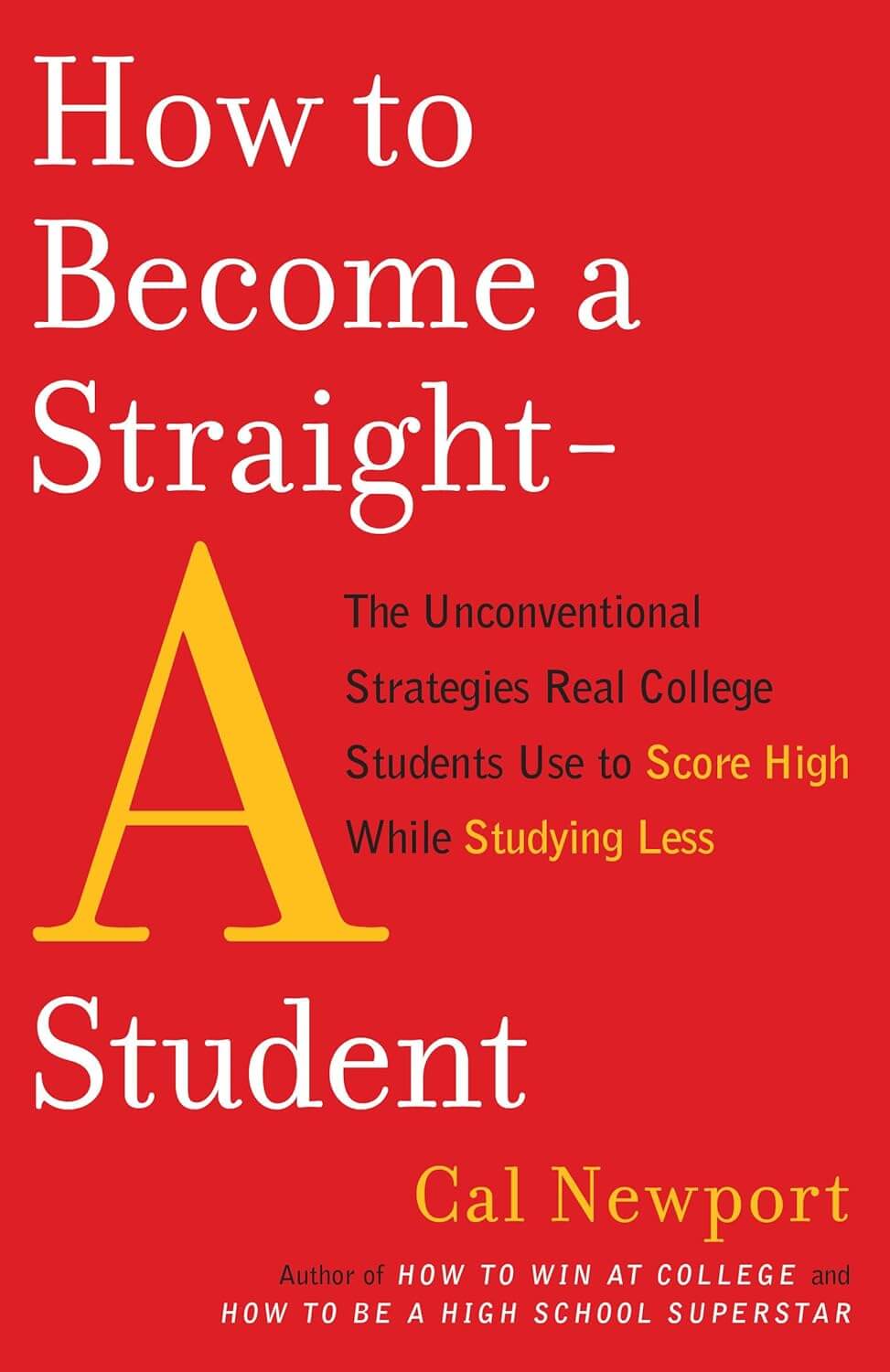
How to Become a Straight-A Student Book Summary
This How to Become a Straight-A Student Book Summary covers the key ideas, lessons, and takeaways in about 20 minutes.
By mastering time management, eliminating distraction, studying strategically, and approaching exams and papers with repeatable methods, students can achieve top results while still enjoying their lives. The book rejects the myth that suffering equals success and replaces it with a more humane, effective model of learning.
Students who adopt these principles do not just earn better grades—they gain control over their time, confidence in their abilities, and habits that extend far beyond the classroom.
Helps with these goals
Want the complete 20-minute summary?
- Full structured summary
- Video Summary
- Podcast Summary
- Audio summary
- Key takeaways
- Exercises
- Quiz
- Highlights and notes
- Ask the book with AI
Not ready to upgrade?
Get this summary + 2 more picks sent to your inbox, free.
What is in the How to Become a Straight-A Student book summary?
Below is a preview of Sumizeit’s expert-written summary of How to Become a Straight-A Student by Cal Newport. The full summary covers the book’s key ideas in text, audio, and video.
How to Become a Straight-A Student challenges one of the most deeply ingrained assumptions in education: that top grades require endless hours of studying, constant stress, and sacrificing your personal life. Instead, the book argues that academic excellence is the result of strategy, not suffering. The difference between average students and top performers is not intelligence or effort alone, but how deliberately and efficiently they work.
Rather than promoting grind culture, the book presents a systematic approach to learning that emphasizes focus, structure, and intentional habits. Students who earn top grades do not spend more time studying—they spend their time differently. They plan carefully, work with intensity, and follow repeatable systems for exams, papers, and daily academic life.
At its core, the book reframes studying as a professional skill set. Just as athletes train with techniques instead of random effort, students should rely on proven methods that maximize learning while minimizing wasted time. The result is not only better grades, but a healthier, more balanced college experience.
The Power of Intense Focus Over Endless Hours
A central premise of the book is that most students dramatically underestimate the cost of distraction. Many believe they are studying when they are technically “working,” but their attention is fractured—split between phones, conversations, background media, and wandering thoughts. This scattered attention produces shallow learning that requires repetition and cramming to compensate.
The book argues that true academic productivity comes from short periods of uninterrupted concentration. When attention is fully engaged, comprehension deepens, memory strengthens, and tasks that normally take hours can be completed in a fraction of the time. Focus is not about willpower alone—it is the outcome of an environment and schedule designed to protect attention.
Students who master focused work find that studying becomes less exhausting. Instead of dragging work across long evenings, they complete it decisively, leaving more time for rest, social life, and creative pursuits. Focus, not stamina, becomes the primary academic advantage.
Why Planning Is the Foundation of Academic Success
Strong grades begin before studying ever starts—with planning. The book emphasizes that an unstructured day creates mental noise. When tasks float vaguely in the back of your mind, your brain continuously revisits them, draining cognitive energy. Planning removes this burden by assigning every obligation a clear place and time.
A well-planned schedule allows students to be fully present in whatever they are doing. When it is time to study, they study without anxiety about forgotten tasks. When it is time to relax, they enjoy it without guilt. This separation of work and rest is essential for sustained performance.
The book presents planning not as rigid micromanagement, but as a flexible system that adapts daily. The goal is not perfection but clarity. Each morning begins with reviewing obligations, prioritizing tasks, and assigning realistic time blocks. As the day unfolds, adjustments are made without abandoning the plan entirely.
This habit transforms productivity from a reactive struggle into a proactive process.
Designing a Flexible Daily Scheduling System
The scheduling system described in…
Want the complete 20-minute summary?
- Full structured summary
- Video Summary
- Podcast Summary
- Audio summary
- Key takeaways
- Exercises
- Quiz
- Highlights and notes
- Ask the book with AI
Who should read How to Become a Straight-A Student?
This book is designed for students who want to achieve top grades without sacrificing their personal lives or spending endless hours studying. It's ideal for high school and college students who feel overwhelmed by academic demands, struggle with procrastination, or want to work more efficiently. Anyone seeking a strategic, system-based approach to learning—rather than relying on motivation or brute-force effort—will find practical, actionable guidance here.
Why does How to Become a Straight-A Student matter?
How to Become a Straight-A Student by Cal Newport challenges the toxic myth that academic success requires constant stress and grinding. In an era where student burnout and mental health crises are widespread, this book offers a healthier alternative: a proven methodology that delivers better results through smarter work, not harder work. The strategies Newport presents are grounded in how focus, planning, and deliberate practice actually work, making excellence sustainable rather than a temporary sprint.
What are the key themes in How to Become a Straight-A Student?
- Focus beats hours: Intense concentration produces better results than prolonged, distracted studying
- Systems over willpower: Strategic structures make success achievable without relying on motivation
- Planning eliminates friction: Clear schedules reduce mental noise and enable better decision-making
- Subject-specific strategies: Different disciplines require different study approaches for maximum effectiveness
- Consistency compounds: Incremental daily progress dramatically outperforms last-minute cramming
- Work-life balance is essential: Rest and recovery are prerequisites for sustained academic performance, not obstacles to it
- Procrastination is predictable: Avoiding tasks is a response to vague goals and poor systems, not a character flaw
Want the complete 20-minute summary?
- Full structured summary
- Video Summary
- Podcast Summary
- Audio summary
- Key takeaways
- Exercises
- Quiz
- Highlights and notes
- Ask the book with AI
How can you apply ideas from How to Become a Straight-A Student?
- Create a dual scheduling system with a calendar for non-negotiable commitments and a capture system for new tasks; transfer uncompleted work to specific future dates each morning
- Block study time into focused 60-90 minute sessions separated by short breaks, and schedule most academic work before dinner to protect evenings for rest
- Organize lecture notes around central questions and conclusions (humanities) or worked examples and problem-solving steps (STEM) rather than trying to transcribe everything
- Use gaps between classes for strategic academic work instead of scrolling; track how much progress accumulates from these small sessions over a week
- Design recurring weekly study sessions for specific subject types to build habit and reduce decision-making friction; make these times public commitments to increase accountability
- When major deadlines cluster, identify high-intensity workdays months in advance, distribute them across the calendar, and publicly commit to them to prevent consecutive days of extreme effort
- For writing projects, start with broad exploration and conversation with professors to refine topics; draft outlines only after ideas are fully formed, then write as an execution task rather than a thinking task
What common mistakes do readers make with How to Become a Straight-A Student?
- Confusing 'studying' with 'being near study materials': Most students underestimate how much time is actually wasted on distraction; true productivity requires uninterrupted focus, not hours of scattered attention
- Studying with fragmented attention (phones, background media, conversations): This shallow learning requires more repetition and cramming to compensate, creating an exhausting cycle
- Cramming the night before exams instead of building understanding incrementally: This approach misses the spacing effect that strengthens memory and dramatically increases prep time needed
- Starting writing projects with a rigid argument rather than exploring broadly: This leads to confirmation bias and weaker, less original insights than allowing patterns to emerge naturally
- Waiting until the day of the exam to implement test-taking strategy instead of practicing during regular studying: Familiarity with techniques and time allocation should be built through preparation, not improvised under pressure
Sumizeit Exercises Apply what you've learned
Turn ideas from How to Become a Straight-A Student into action with a short guided reflection: identify the biggest takeaway, connect it to your life, and commit to one step you can take in the next 24 hours.
What is the expert analysis of How to Become a Straight-A Student?
Overview
How to Become a Straight-A Student by Cal Newport stands out as a transformative guide that challenges conventional wisdom about academic achievement. Newport, a computer science professor and acclaimed author specializing in productivity and focus, offers a refreshing departure from the grind culture pervasive in education. His expertise in deep work and cognitive performance lends credibility to a book that is both practical and rooted in research, making it significant for students seeking not just better grades but a balanced and sustainable approach to learning.
Core Thesis
Newport’s central argument is that academic excellence is less about sheer effort or innate intelligence and more about the strategic application of focused, deliberate work habits. He posits that top students succeed by designing systems that maximize concentration, planning, and efficient study techniques rather than by enduring long, unfocused hours. This thesis reframes studying as a professional skill set—akin to athletic training—where intentionality and structure trump willpower and endurance.
Strengths
- Systematic and Practical Approach: The book excels at breaking down complex academic challenges into manageable, repeatable strategies that students can implement immediately.
- Focus on Mental Health and Balance: Newport’s emphasis on scheduling rest and avoiding burnout highlights a humane and sustainable model of success, which is often absent in academic advice literature.
- Flexibility and Adaptability: The proposed planning system is not rigid but encourages daily adjustments, reflecting real-world unpredictability and promoting resilience.
- Subject-Specific Strategies: Tailoring advice for humanities versus STEM courses demonstrates nuanced understanding rather than a one-size-fits-all method.
- Integration of Cognitive Science Principles: Concepts such as spaced repetition, active recall, and minimizing distraction are well-aligned with contemporary research on effective learning.
Critiques & Counterarguments
- Potential Oversimplification of Motivation: While Newport downplays motivation as a driver of procrastination, some psychological research suggests that intrinsic motivation and emotional factors play a more complex role in academic engagement than the book acknowledges.
- Limited Address of Socioeconomic and Institutional Barriers: The book assumes a level of autonomy and resource availability that may not be realistic for all students, especially those facing systemic challenges or heavy external responsibilities.
- Evidence Base and Anecdotal Leaning: The strategies are compelling but rely heavily on anecdotal examples and personal observation rather than large-scale empirical validation, which might limit generalizability.
- Opposing Views on Multitasking and Breaks: Some cognitive psychologists argue that certain types of multitasking or varied cognitive activities can enhance creativity and learning, which contrasts with Newport’s strict focus on uninterrupted work blocks.
- Real-World Variability in Academic Demands: The book’s structured approach may not suit disciplines or educational systems that prioritize open-ended inquiry, collaborative projects, or non-traditional assessments, where flexibility and spontaneity are crucial.
Who Should Read This
This book is ideally suited for college and high school students seeking to optimize their academic performance without sacrificing well-being. It also benefits educators and academic advisors looking for evidence-informed strategies to support student success. Beyond students, anyone interested in productivity, time management, and learning efficiency—such as lifelong learners and professionals returning to study—will find Newport’s insights valuable. However, readers should approach the book as a toolkit rather than a prescriptive formula, adapting its principles to their unique contexts and challenges.
Frequently asked questions about the How to Become a Straight-A Student book summary
What is How to Become a Straight-A Student about?
How to Become a Straight-A Student by Cal Newport presents a system-based approach to academic excellence that rejects the myth that top grades require endless suffering and grinding. The book argues that high-performing students succeed through deliberate strategies focused on intense focus, careful planning, and subject-specific study methods rather than spending more hours studying. Newport shows students how to work smarter, achieve better grades, and maintain a balanced life by mastering time management, eliminating distraction, and applying repeatable methods to exams and papers.
Who should read How to Become a Straight-A Student?
This book is ideal for high school and college students who want to improve their grades without sacrificing personal time, feel overwhelmed by academic demands, or struggle with procrastination. It's also valuable for anyone seeking a strategic, system-based approach to learning rather than relying on motivation or brute-force effort. Parents and educators looking to help students work more efficiently will also find the methodology practical and grounded in how learning actually works.
What are the main takeaways from How to Become a Straight-A Student?
The core takeaways are: (1) Focus beats hours—intense concentration produces better results than prolonged distracted studying; (2) Planning eliminates mental clutter and enables better decision-making; (3) Different subjects require different study strategies; (4) Consistent daily engagement with coursework makes exam preparation easier; and (5) Work-life balance and scheduled rest actually improve academic performance. Newport's central message is that academic success is a learnable skill set achieved through systems, not willpower.
How does Cal Newport recommend organizing study schedules?
Newport advocates a dual-system approach: combine a calendar for non-negotiable commitments (classes, meetings) with a task-capture system for new obligations. Each day begins by transferring unresolved tasks to specific future dates. Academic work is scheduled in focused 60-90 minute blocks separated by short breaks, with most work completed before dinner to leverage peak cognitive performance. The schedule is treated as flexible and living—adjustments are made as needs change, but the planning framework remains intact.
What's the difference between studying for humanities versus STEM courses?
In humanities courses, organize notes around central questions and supporting conclusions rather than raw facts, since exams test understanding of arguments and themes. Focus reading on core texts and skim supplementary materials for relevance. For STEM courses, prioritize lectures where problem-solving techniques are demonstrated, capture every step of worked examples, and solve problems gradually over multiple days to build fluency. STEM success depends on understanding how to solve problems, while humanities success depends on analyzing arguments and themes.
How does Newport recommend approaching large writing projects?
Start with genuine curiosity and broad exploration rather than a rigid pre-formed argument; conversation with professors helps refine topics and identify sources early. Evaluate sources continuously and organize research by topic relevance. Create outlines only after ideas are fully formed, operating at the level of principles and arguments rather than sentences. Then write as an execution task. Edit in stages: address logic first, then clarity, then mechanics. This approach prevents confirmation bias and leads to stronger, more original insights.
How does procrastination fit into Newport's framework?
Newport treats procrastination not as a moral failing but as a predictable response to vague goals, low energy, and unclear expectations. The solution is designing systems that make action easier than avoidance, such as establishing recurring work sessions at the same time each week (reducing decision friction), maintaining physical well-being through hydration and nutrition, and tracking procrastination patterns to build self-awareness. By addressing the underlying system failures rather than trying to develop willpower, students naturally work with more consistency.
About Sumizeit
Sumizeit is a profitable Scomy LLC company based in Miami, Florida. It has been helping readers learn from nonfiction books for 7 years with expert-written summaries in text, audio, podcast, and video.
Want the complete 20-minute summary?
- Full structured summary
- Video Summary
- Podcast Summary
- Audio summary
- Key takeaways
- Exercises
- Quiz
- Highlights and notes
- Ask the book with AI
Here's why readers love Sumizeit
Join thousands of learners getting smarter every day
"Great experience. Detailed summaries. Loved the gamification feature. Makes learning fun. Good customer service. I recommend Sumizeit to anyone. You'll learn a lot."
"I always felt busy but still wanting to keep up with the book discussion in my friend group. This was a great supplement to help me keep reading the books I find fun while keeping up with important books."
"I love this website. Instead of scrolling social media, I find myself learning a lot. I use it everyday. I recommend this app for anyone who is too busy and wants to get up to speed with their favorite books."
How to Become a Straight-A Student Book Summary PDF
Looking for a How to Become a Straight-A Student Book Summary PDF you can save and revisit offline? Our How to Become a Straight-A Student Book Summary PDF captures the book’s core ideas in a clean, printable format — the key frameworks, takeaways, and structure without the fluff. Download the How to Become a Straight-A Student Book Summary PDF when you want a reference you can annotate, share with your team, or review on the go. Get your How to Become a Straight-A Student Book Summary PDF from the download page below.
Download How to Become a Straight-A Student Book Summary PDFPeople also liked these summaries
Readers who explored How to Become a Straight-A Student often enjoyed these titles next.

Want the complete 20-minute summary?
- Full structured summary
- Video Summary
- Podcast Summary
- Audio summary
- Key takeaways
- Exercises
- Quiz
- Highlights and notes
- Ask the book with AI
Featured Book Titles
Popular Book Summaries at sumizeit, leading book summary app