


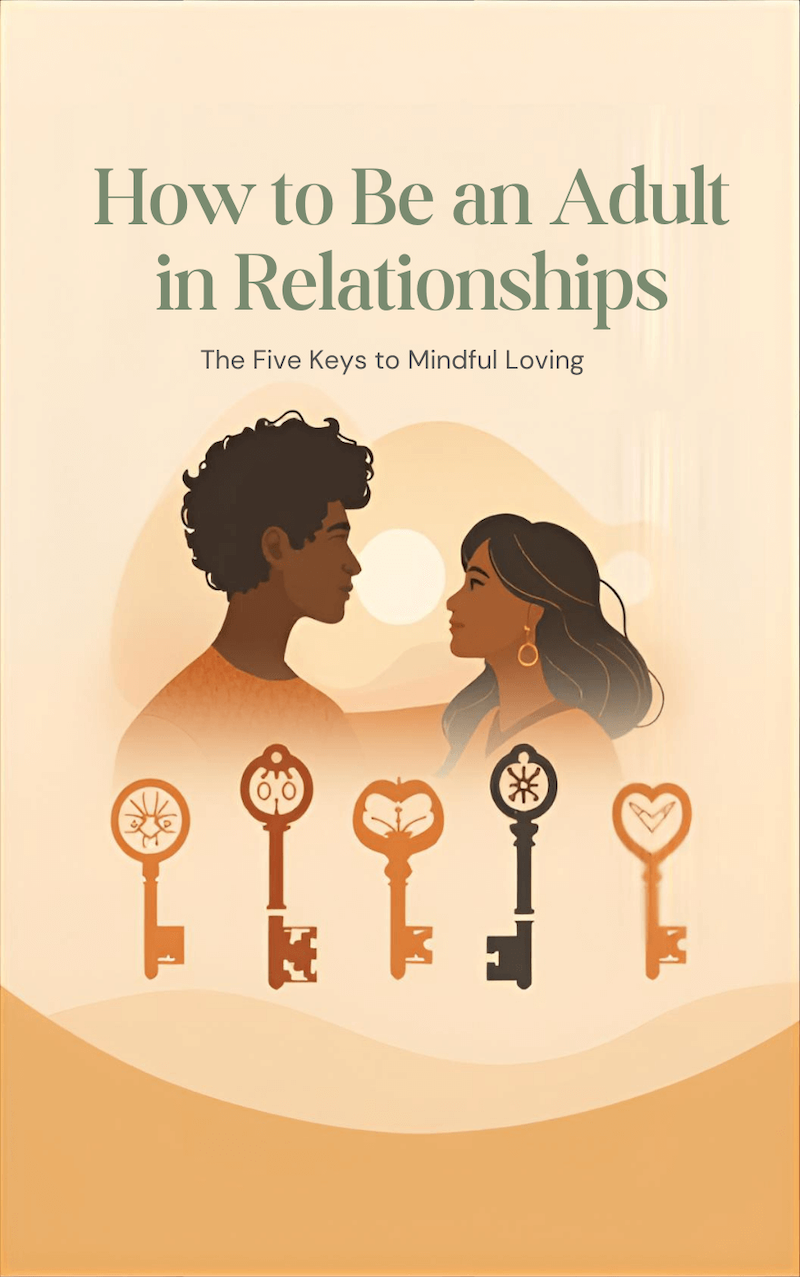
Prefer the print book? Buy on Amazon
As an Amazon Associate, Sumizeit earns from qualifying purchases.
How to Be an Adult in Relationships: The Five Keys to Mindful Loving Book Summary
This How to Be an Adult in Relationships: The Five Keys to Mindful Loving Book Summary covers the key ideas, lessons, and takeaways in about 20 minutes.
Short Description:
How to Be an Adult in Relationships builds love through mindfulness and effort.
Love is not possession, perfection, or dependency. Love is conscious effort, continuous learning, and shared expansion. When partners commit to truth, compassion, and growth, relationships evolve into profound vehicles for healing, meaning, and transformation.
Helps with these goals
Want a Free Weekly Read?
Get a free summary every week straight to your mailbox.
Preview the How to Be an Adult in Relationships: The Five Keys to Mindful Loving book summary
Below is a preview of Sumizeit’s comprehensive human-written summary of How to Be an Adult in Relationships: The Five Keys to Mindful Loving by David Richo. The full summary is 15-20 minutes long and covers the book’s key ideas in text, audio, visual, and video formats. Unlock the full 20 Minute Summary
How to Be an Adult in Relationships: The Five Keys to Mindful Loving by psychotherapist David Richo is a comprehensive guide to building emotionally mature, deeply connected, and mindful relationships. Instead of framing love as a mysterious event that simply happens to us, Richo presents it as a set of learnable and intentional practices. Loving well requires awareness, emotional responsibility, and willingness to grow—not fantasy, dependency, or unconscious repetition of childhood wounds.
Richo argues that most of us enter adulthood still carrying unhealed patterns from early life. Because of unmet needs, trauma, or inconsistent caregiving, we often seek partners who will unconsciously fill parental roles or resolve unfinished emotional business. Without understanding these dynamics, relationships become cycles of disappointment, conflict, fear, avoidance, and misunderstanding. Love becomes either a battlefield or a refuge of illusion rather than a space for truth, growth, and connection.
The book introduces a clear framework for relational maturity rooted in both psychological theory and spiritual wisdom. The centerpiece is the Five A’s—Attention, Acceptance, Appreciation, Affection, and Allowing—which represent fundamental human needs necessary for emotional security and intimacy. Richo explains that when partners consciously give and receive these experiences, relationships become safe, stable, and nourishing. When they are missing, the relationship becomes a stage for reenacting old wounds instead of healing them.
The book blends Buddhism, attachment theory, and practical tools for real-life application. Richo emphasizes mindfulness as the path to transforming reactive patterns into conscious choice and teaches that the purpose of relationships is not comfort, perfection, or dependency, but mutual transformation and spiritual growth.
The Five A’s: A Blueprint for Healthy and Mature Love
Richo structures his model around the Five A’s—five essential relational behaviors that sustain intimacy and emotional safety. They are the building blocks of secure attachment and the proof of love not through words but through consistent action.
Attention is the practice of offering another person full presence—truly listening, observing, and being emotionally available. It means hearing what is said and unsaid, noticing tone, body language, mood, and needs. When we offer attention, we communicate: You matter, your reality is important, and I am here.
Examples:
Putting away devices and distractions to engage fully
Asking meaningful questions and listening without interrupting or fixing
Recognizing emotional needs before conflict escalates
Being attuned enough to notice shifts in behavior or tone
Attention helps regulate emotional states and prevents partners from feeling invisible or misunderstood. Without attention, relationships become emotionally barren.
Acceptance is the freedom for both individuals to be themselves. It means welcoming another person’s authentic identity—including flaws, history, quirks, and vulnerabilities—without trying to reshape them to meet personal expectations. Acceptance acknowledges that every human being deserves dignity and that love cannot flourish where there is criticism, control, or shame.
Real acceptance involves:
Releasing the fantasy partner we wish existed
Respecting differences in personality, values, or habits
Allowing emotional expression without belittlement
Understanding rather than judging
Acceptance does not mean tolerating abuse or harmful behavior; it means relating to others as equals…
Want the complete 20-minute summary?
- Full structured summary
- Video Summary
- Podcast Summary
- Audio summary
- Key takeaways
- Exercises
- Quiz
- Highlights and notes
- Ask the book with AI
Who should read How to Be an Adult in Relationships: The Five Keys to Mindful Loving?
How to Be an Adult in Relationships is for anyone seeking to build emotionally mature, fulfilling partnerships. Whether you're navigating current relationship challenges, recovering from past patterns, or wanting to deepen existing connections, this book offers practical guidance grounded in psychology and mindfulness.
Why does How to Be an Adult in Relationships: The Five Keys to Mindful Loving matter?
In a culture that romanticizes love as something that happens to us, David Richo's framework redefines relationships as learnable practices requiring awareness and intentional effort. As many people unconsciously repeat childhood wounds in adult partnerships, this book provides tools to break those cycles and create genuinely healthy, transformative connections.
What are the key themes in How to Be an Adult in Relationships: The Five Keys to Mindful Loving?
- The Five A's as foundations for healthy love
- Mindfulness as the path to conscious relationships
- Childhood patterns and their impact on adult love
- Fear of intimacy and how to overcome it
- Conflict as opportunity for growth and deepening connection
- Ego dissolution and vulnerability in partnership
- Personal growth as a shared relationship journey
How can you apply ideas from How to Be an Adult in Relationships: The Five Keys to Mindful Loving?
- Put away devices during conversations to offer your partner full, undivided attention
- Practice asking meaningful questions and listening without interrupting or immediately offering solutions
- Replace 'you always' accusations with 'I feel' statements during disagreements
- Schedule weekly check-ins to appreciate specific contributions and qualities you notice in your partner
- Support your partner's personal interests, friendships, and autonomy to practice 'Allowing'
- Implement a pause-and-reflect practice when conflict escalates to prevent reactive harm
- Identify and name your specific intimacy triggers (abandonment vs. engulfment) to respond consciously rather than automatically
What common mistakes do readers make with How to Be an Adult in Relationships: The Five Keys to Mindful Loving?
- Believing love should feel effortless rather than recognizing it as a continuous practice requiring intentional effort
- Expecting a partner to heal childhood wounds instead of taking personal responsibility for reparenting yourself
- Avoiding conflict to maintain surface peace, which creates buried resentment and emotional distance over time
- Confusing intensity, drama, or neediness with genuine intimacy and deep connection
- Trying to change or control a partner rather than accepting their authentic self and working with reality
Sumizeit Exercises Apply what you've learned
Turn ideas from How to Be an Adult in Relationships: The Five Keys to Mindful Loving into action with a short guided reflection: identify the biggest takeaway, connect it to your life, and commit to one step you can take in the next 24 hours.
What is the expert analysis of How to Be an Adult in Relationships: The Five Keys to Mindful Loving?
Overview
How to Be an Adult in Relationships: The Five Keys to Mindful Loving is authored by David Richo, a seasoned psychotherapist and teacher known for integrating Western psychology with Buddhist philosophy and mindfulness. This book stands out as a significant contribution to contemporary relationship literature by offering a structured, mindful approach to emotional maturity in romantic partnerships. Richo’s synthesis of psychological theory, spiritual wisdom, and practical guidance positions the work as a valuable resource for those seeking depth and intentionality in love beyond conventional self-help platitudes.
Core Thesis
Richo’s central argument is that mature, fulfilling relationships are not the product of chance or romantic idealization but the outcome of conscious, mindful practice centered on what he terms the Five A’s: Attention, Acceptance, Appreciation, Affection, and Allowing. These five relational behaviors address fundamental human needs and serve as antidotes to the unresolved childhood wounds and ego-driven patterns that often sabotage intimacy. By cultivating mindfulness and emotional responsibility, partners can transform reactive, fear-based interactions into opportunities for mutual growth, spiritual development, and authentic connection.
Strengths
- Integrative Framework: Richo skillfully blends attachment theory, mindfulness, and spiritual insights, creating a holistic model that resonates across psychological and philosophical domains.
- Practical and Accessible: The Five A’s offer clear, actionable behaviors that readers can implement immediately, making abstract concepts tangible.
- Emphasis on Mindfulness: The focus on present-moment awareness as a tool to interrupt automatic, ego-driven reactions is both contemporary and deeply rooted in contemplative traditions.
- Depth of Emotional Insight: Richo’s exploration of childhood imprints, intimacy fears, and ego dynamics demonstrates a nuanced understanding of relational complexity.
- Balanced View of Conflict: Reframing conflict as a pathway to growth rather than failure encourages healthier communication and resilience.
Critiques & Counterarguments
- Limited Empirical Evidence: While Richo’s framework is psychologically informed, the book relies heavily on clinical experience and philosophical reasoning rather than rigorous empirical studies, which may limit its acceptance in strictly scientific circles.
- Potential Oversimplification: The Five A’s, though elegant, may understate the complexity of relational dysfunctions such as personality disorders, severe trauma, or sociocultural factors that require more specialized interventions.
- Spiritual Emphasis May Not Resonate Universally: The integration of Buddhist concepts and spiritual growth might alienate readers seeking secular or culturally diverse perspectives on relationships.
- Competing Theories: Attachment theory, while foundational, is complemented or challenged by other models like Sternberg’s Triangular Theory of Love or evolutionary psychology perspectives that emphasize biological drives and mate selection strategies, which Richo’s approach does not fully address.
- Real-World Constraints: The ideal of mutual growth and mindfulness assumes a level of emotional readiness and stability that may not be present in all relationships, especially those marked by power imbalances, abuse, or significant mental health challenges.
Who Should Read This
This book is ideally suited for mature readers committed to deepening their relational awareness and emotional intelligence. Therapists, counselors, and coaches will find Richo’s framework a useful complement to clinical practice. Individuals seeking to move beyond superficial or reactive patterns in love—those interested in mindfulness, personal growth, and spiritual dimensions of connection—will benefit most. It is less appropriate for readers looking for quick fixes or those in highly dysfunctional or abusive relationships requiring urgent intervention.
Frequently asked questions about the How to Be an Adult in Relationships: The Five Keys to Mindful Loving book summary
What is How to Be an Adult in Relationships: The Five Keys to Mindful Loving about?
David Richo's How to Be an Adult in Relationships presents a practical framework for building emotionally mature, deeply connected partnerships. The book centers on the Five A's—Attention, Acceptance, Appreciation, Affection, and Allowing—as essential practices that create safety and intimacy. Richo combines psychological insight with mindfulness and spiritual wisdom to show how conscious effort, emotional responsibility, and awareness transform relationships from unconscious patterns into spaces for genuine growth and transformation.
Who should read How to Be an Adult in Relationships: The Five Keys to Mindful Loving?
This book serves anyone interested in building healthier, more conscious relationships. It's especially valuable for those struggling with repeating relationship patterns, navigating intimacy fears, or seeking to deepen existing partnerships. Whether you're single, coupled, recovering from past relationships, or committed to personal growth, Richo's framework offers practical tools grounded in both psychology and mindfulness practice.
What are the main takeaways from How to Be an Adult in Relationships: The Five Keys to Mindful Loving?
The core message is that mature love operates through learnable practices rather than fantasy or fate. The Five A's—Attention, Acceptance, Appreciation, Affection, and Allowing—form the foundation of healthy partnership. Additionally, mindfulness breaks reactive patterns rooted in childhood, conflict becomes a path to deepening connection rather than failure, ego surrender enables genuine intimacy, and relationships serve as vehicles for mutual transformation and spiritual growth.
How does David Richo explain childhood wounds affecting adult relationships?
Richo argues that how caregivers offered or withheld the Five A's creates an internal map for how we give and receive love as adults. Unmet childhood needs drive unconscious relationship patterns like fear of abandonment, fear of engulfment, attraction to unavailable partners, or confusing intensity with intimacy. Healing requires recognizing these patterns, grieving unmet needs, and consciously practicing the Five A's to reparent yourself through healthy behaviors.
What does David Richo mean by 'mindfulness' in relationships?
In How to Be an Adult in Relationships, mindfulness is the practice of observing thoughts, feelings, and behaviors without judgment, then responding from awareness rather than fear or impulse. Mindfulness interrupts automatic patterns rooted in past trauma and replaces reactive engagement with thoughtful, compassionate choices. It helps you recognize ego patterns like fear, judgment, control, and illusion as they arise so you can choose connection over protection.
How should couples handle conflict according to How to Be an Adult in Relationships?
Richo reframes conflict as a natural doorway to truth and deeper connection, not a sign of relationship failure. Healthy conflict involves addressing problems vulnerably through 'I feel' statements, exploring underlying emotions rather than debating surface issues, listening without defending, and seeking mutual solutions. Key tools include pausing when overwhelmed, practicing forgiveness, and repairing ruptures quickly to prevent resentment from hardening.
Can relationships end successfully according to David Richo?
Yes. Richo teaches that every relationship serves our development, and endings can represent transformation rather than failure. Ending gracefully means accepting reality rather than clinging to fantasy, allowing grief to unfold, taking responsibility without blame, learning lessons to avoid repetition, and respecting boundaries. A relationship succeeds not because it lasts forever, but because it teaches both people how to love better.
About Sumizeit
Sumizeit is a profitable Scomy LLC company based in Miami, Florida. Our founders, Clemens Raemy and Weina Scott, are successful entrepreneurs with several exits. Sumizeit is a popular book summary app / micro learning app used by busy professionals and entrepreneurs with over 2,500 non-fiction book summaries and 10,000 podcast summaries in text, audio, visual, podcast, and video format. We also have stellar retention tools to make ideas stick - such as flashcards with spaced repetition, quizzes, streaks, highlighting and notes, daily challenges, riddles, mini-courses, meditation, and more. You won't only learn the idea, but also remember it. Over 90% of our users change their habits with Sumizeit.
Upgrade Now
Here's why readers love Sumizeit
Join thousands of learners getting smarter every day
"Great experience. Detailed summaries. Loved the gamification feature. Makes learning fun. Good customer service. I recommend Sumizeit to anyone. You'll learn a lot."
"I always felt busy but still wanting to keep up with the book discussion in my friend group. This was a great supplement to help me keep reading the books I find fun while keeping up with important books."
"I love this website. Instead of scrolling social media, I find myself learning a lot. I use it everyday. I recommend this app for anyone who is too busy and wants to get up to speed with their favorite books."
How to Be an Adult in Relationships: The Five Keys to Mindful Loving Book Summary PDF
Looking for a How to Be an Adult in Relationships: The Five Keys to Mindful Loving Book Summary PDF you can save and revisit offline? Our How to Be an Adult in Relationships: The Five Keys to Mindful Loving Book Summary PDF captures the book’s core ideas in a clean, printable format — the key frameworks, takeaways, and structure without the fluff. Download the How to Be an Adult in Relationships: The Five Keys to Mindful Loving Book Summary PDF when you want a reference you can annotate, share with your team, or review on the go. Get your How to Be an Adult in Relationships: The Five Keys to Mindful Loving Book Summary PDF from the download page below.
Download How to Be an Adult in Relationships: The Five Keys to Mindful Loving Book Summary PDFPeople also liked these summaries
Readers who explored How to Be an Adult in Relationships: The Five Keys to Mindful Loving often enjoyed these titles next.




Ready to read the whole thing?
- Full structured summary
- Video Summary
- Podcast Summary
- Audio summary
- Key takeaways
- Exercises
- Quiz
- Highlights and notes
- Ask the book with AI
Featured Book Titles
Popular Book Summaries at sumizeit, leading book summary app