


Prefer the print book? Buy on Amazon
As an Amazon Associate, Sumizeit earns from qualifying purchases.
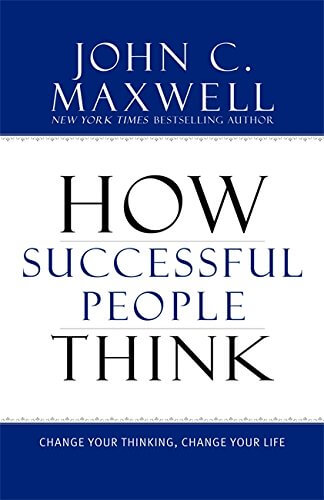
How Successful People Think Book Summary
This How Successful People Think Book Summary covers the key ideas, lessons, and takeaways in about 20 minutes.
Short Description:
Train your mind to think creatively and solve problems like successful people do.
Helps with these goals
Want a Free Weekly Read?
Get a free summary every week straight to your mailbox.
Preview the How Successful People Think book summary
Below is a preview of Sumizeit’s comprehensive human-written summary of How Successful People Think by John C. Maxwell. The full summary is 15-20 minutes long and covers the book’s key ideas in text, audio, visual, and video formats. Unlock the full 20 Minute Summary
Going against commonly held traditions and speaking your mind against commonly held ideas can lead to a lonely road. It is a road most successful people know well. In fact, it's their ability to think for themselves that often leads people to find great success lead by innovation. Their willingness to think creatively, push their ideas (even when they’re unpopular), and to solve problems is an essential driving force behind their ability to achieve. Fitting in might be easier - but it's not going to make you successful or empowered. How Successful People Think discusses how you can train your mind to problem solve, think creatively, and stand out like the best of them.
What did you learn today?
To be a creative problem solver, you need to be a big picture thinker. You never know where a great idea, solution, or breakthrough might come from. Just ask the author, who starts every day by looking at his schedule and considering where he might find opportunities to learn. He then prepares himself for whatever opportunities might arise: when he had dinner with NFL coach Dave Wannstedt and learned some important things about teamwork he could apply to his own work. Another component of big picture thinking? Empathy.
Empathy is key
Empathy is essential for building successful client relationships, and successful client relationships are the cornerstone of any business. Just ask General Electric CEO, Jack Welch. He regularly tells his employees that maintaining existing relationships with their customers is more important than how many sales they make. One key element of maintaining relationships with others is the ability to empathize with them. In order to meet the needs of both clients and those who are closest to you, you must have an understanding of how they work and what they want. In order to develop this, carefully consider (in all of your relationships) what the other person wants and needs.
Research and realism
What was the most important aspect of passing most classes in school? Doing your homework. And thinking clearly. These two things come into play in business as well. The author talks about how most of his best thinking was done by other people: meaning that research has allowed him to access those who’ve solved some of his biggest dilemmas already. But in order to apply what you learn correctly, you’ll need to think realistically. And being realistic is very different from being optimistic. Reality is the difference between your ideas of how things should be, and how they actually are. Being realistic means you’ll have a strategy and be ready to face whatever comes up for your company, good or bad. It means getting rid of preconceived ideas about how you would like things to go, and instead of preparing and researching solutions for worst-case scenarios.
How to think more creatively
Einstein once said, “Imagination is more important than knowledge”. Einstein had a tremendous amount of both.
Want the complete 20-minute summary?
- Full structured summary
- Video Summary
- Podcast Summary
- Audio summary
- Key takeaways
- Exercises
- Quiz
- Highlights and notes
- Ask the book with AI
Who should read How Successful People Think?
How Successful People Think is ideal for entrepreneurs, business leaders, and professionals who feel stuck in conventional thinking and want to break through to greater achievement. This book speaks to anyone ready to challenge the status quo, develop creative problem-solving skills, and learn how the most successful minds actually work.
Why does How Successful People Think matter?
In a world that often rewards conformity, John C. Maxwell reveals that true success comes from independent thinking, creativity, and the willingness to challenge conventional wisdom. This book is essential today because innovation and competitive advantage increasingly depend on how—not just how hard—you think, making mental agility as valuable as technical skills.
What are the key themes in How Successful People Think?
- Independent thinking and intellectual courage
- Creative problem-solving and innovation
- Empathy and relationship-building
- Collaborative intelligence over individual genius
- Big-picture perspective and systems thinking
- Research-based decision-making paired with realism
- Legacy and purpose-driven achievement
- Humility and openness to learning from others
How can you apply ideas from How Successful People Think?
- Start each day by reviewing your calendar for one learning opportunity or person who might teach you something valuable
- Before accepting a common practice at work, actively question whether the assumptions behind it still hold true
- When facing a problem, generate at least 10 potential solutions before evaluating which to pursue
- In team meetings, explicitly ask quieter members for ideas and challenge assumptions others present without testing
- Build time for research into your decision-making process—look up how others in your field have solved similar problems
- Create a legacy statement describing the impact you want to have, then measure decisions against it
- Practice asking colleagues and team members what they need or want, then act on their feedback to strengthen relationships
What common mistakes do readers make with How Successful People Think?
- Assuming that fitting in and following tradition leads to success, when independent thinking is actually the differentiator
- Confusing optimism with realistic planning—hoping for the best without preparing for challenges
- Limiting your learning sources to formal experts instead of staying alert to insights from diverse people around you
- Prioritizing ego and individual recognition over collaborative problem-solving that produces better results
Sumizeit Exercises Apply what you've learned
Turn ideas from How Successful People Think into action with a short guided reflection: identify the biggest takeaway, connect it to your life, and commit to one step you can take in the next 24 hours.
What is the expert analysis of How Successful People Think?
Overview
How Successful People Think is authored by John C. Maxwell, a renowned leadership expert, pastor, and prolific writer whose influence spans business, personal development, and organizational leadership. Maxwell’s extensive background in ministry and leadership, combined with his experience advising Fortune 500 companies and global institutions, lends this work a distinctive blend of practical wisdom and motivational insight. The book is significant for its accessible yet profound exploration of the cognitive habits that differentiate highly successful individuals, making it a staple in the self-improvement and business literature canon.
Core Thesis
The central argument of the book is that success is largely determined by the quality and style of one’s thinking. Maxwell posits that successful people cultivate specific mental habits—such as creative problem-solving, empathy, realistic assessment, independent thought, and collaborative openness—that empower them to innovate, overcome challenges, and leave a lasting legacy. The book emphasizes the deliberate training of the mind to think expansively and critically, rather than passively accepting conventional wisdom or following the crowd.
Strengths
- Practical Framework: Maxwell offers a clear, actionable framework for readers to develop their thinking skills, making abstract cognitive concepts tangible and applicable.
- Integration of Empathy and Realism: The emphasis on empathy as a business and relational cornerstone, alongside a call for realistic thinking, provides a balanced approach that transcends mere optimism or idealism.
- Use of Illustrative Anecdotes: The book’s rich use of historical and contemporary examples—from Alfred Nobel to Jack Welch—grounds its principles in real-world contexts, enhancing credibility and engagement.
- Encouragement of Independent Thought: Maxwell’s advocacy for questioning assumptions and thinking independently challenges readers to cultivate intellectual courage, a vital trait for innovation.
- Focus on Collaboration: Highlighting humility and openness to others’ ideas counters the myth of the solitary genius and aligns with modern understandings of collective intelligence.
Critiques & Counterarguments
- Overgeneralization and Simplification: The book’s broad strokes sometimes oversimplify complex cognitive and psychological processes, potentially underestimating the nuanced interplay of factors behind success.
- Lack of Empirical Rigor: While rich in anecdotes, the book offers limited empirical evidence or engagement with contemporary cognitive science research, which could deepen or challenge some claims.
- Potential Bias from Author’s Background: Maxwell’s evangelical Christian and leadership-oriented perspective may color the framing of success and thinking, privileging certain values that might not resonate universally.
- Competing Research on Creativity: Contemporary psychology suggests creativity is not solely about open-mindedness or generating many ideas but also involves domain-specific expertise and iterative refinement, aspects less emphasized here.
- Alternative Views on Empathy in Business: Some scholars argue that excessive empathy can cloud judgment or lead to burnout, advocating for balanced emotional engagement rather than unqualified empathy.
Who Should Read This
This book is ideal for professionals, entrepreneurs, and leaders seeking to enhance their cognitive habits to drive innovation and success. It will also appeal to readers interested in personal development who appreciate a motivational yet practical guide to thinking differently. However, those with a preference for rigorous academic analysis or evidence-based cognitive psychology might find the treatment somewhat introductory. Ultimately, it serves well as an accessible primer on cultivating a mindset conducive to achievement and meaningful impact.
Frequently asked questions about the How Successful People Think book summary
What is How Successful People Think about?
How Successful People Think by John C. Maxwell explores how successful people's thinking patterns differ from the majority, and teaches readers to develop creative problem-solving skills, independent judgment, and the ability to see opportunities others miss. The book combines real-world examples with practical strategies for training your mind to think like high achievers.
Who should read How Successful People Think?
This book is ideal for entrepreneurs, business leaders, professionals, and anyone seeking greater success who feels limited by conventional approaches. It's particularly valuable for those ready to challenge the status quo and develop the mental agility required for innovation and breakthrough achievement.
What are the main takeaways from How Successful People Think?
Key takeaways include: successful people think independently rather than following the crowd, they approach problems creatively by exploring multiple solutions, they build success through empathy and relationships rather than transactional thinking, and they leverage collaboration and others' ideas instead of relying solely on individual genius. The book emphasizes that how you think directly determines your success.
How can I develop independent thinking like successful people?
Maxwell suggests actively questioning assumptions you hear from others, avoiding the comfort of simply following tradition, and making a daily practice of learning from diverse sources. When presented with conventional wisdom, test it critically rather than accepting it passively—this is how innovators like Copernicus and Lister changed history.
What role does empathy play in success according to Maxwell?
Empathy is presented as essential for building lasting client and team relationships, which form the foundation of sustainable success. Understanding what others truly need and want—rather than just what you want to sell them—creates loyalty and reputation that outlasts individual transactions.
How does research improve thinking and decision-making?
Maxwell emphasizes that doing your homework through research allows you to access solutions others have already discovered, accelerating your problem-solving. Combined with realistic thinking about how things actually are, research-based decisions are more sound than decisions based on hope or assumption alone.
Why does Maxwell emphasize thinking about your legacy?
Considering how you want to be remembered—like Alfred Nobel did when he saw his own obituary—realigns your priorities toward meaningful impact rather than short-term gains. This legacy perspective often leads to decisions that build stronger businesses and deeper purpose than profit-focused thinking alone.
Can anyone become a creative problem-solver according to the book?
Yes, Maxwell argues that creativity isn't reserved for geniuses but is developed through openness to multiple solutions, willingness to build on initial ideas, and practice. Creativity is intelligence having fun, and it's more about mindset than inherent talent.
About Sumizeit
Sumizeit is a profitable Scomy LLC company based in Miami, Florida. Our founders, Clemens Raemy and Weina Scott, are successful entrepreneurs with several exits. Sumizeit is a popular book summary app / micro learning app used by busy professionals and entrepreneurs with over 2,500 non-fiction book summaries and 10,000 podcast summaries in text, audio, visual, podcast, and video format. We also have stellar retention tools to make ideas stick - such as flashcards with spaced repetition, quizzes, streaks, highlighting and notes, daily challenges, riddles, mini-courses, meditation, and more. You won't only learn the idea, but also remember it. Over 90% of our users change their habits with Sumizeit.
Upgrade Now
Here's why readers love Sumizeit
Join thousands of learners getting smarter every day
"Great experience. Detailed summaries. Loved the gamification feature. Makes learning fun. Good customer service. I recommend Sumizeit to anyone. You'll learn a lot."
"I always felt busy but still wanting to keep up with the book discussion in my friend group. This was a great supplement to help me keep reading the books I find fun while keeping up with important books."
"I love this website. Instead of scrolling social media, I find myself learning a lot. I use it everyday. I recommend this app for anyone who is too busy and wants to get up to speed with their favorite books."
How Successful People Think Book Summary PDF
Looking for a How Successful People Think Book Summary PDF you can save and revisit offline? Our How Successful People Think Book Summary PDF captures the book’s core ideas in a clean, printable format — the key frameworks, takeaways, and structure without the fluff. Download the How Successful People Think Book Summary PDF when you want a reference you can annotate, share with your team, or review on the go. Get your How Successful People Think Book Summary PDF from the download page below.
Download How Successful People Think Book Summary PDFPeople also liked these summaries
Readers who explored How Successful People Think often enjoyed these titles next.

Ready to read the whole thing?
- Full structured summary
- Video Summary
- Podcast Summary
- Audio summary
- Key takeaways
- Exercises
- Quiz
- Highlights and notes
- Ask the book with AI
Featured Book Titles
Popular Book Summaries at sumizeit, leading book summary app