


As an Amazon Associate, Sumizeit earns from qualifying purchases.
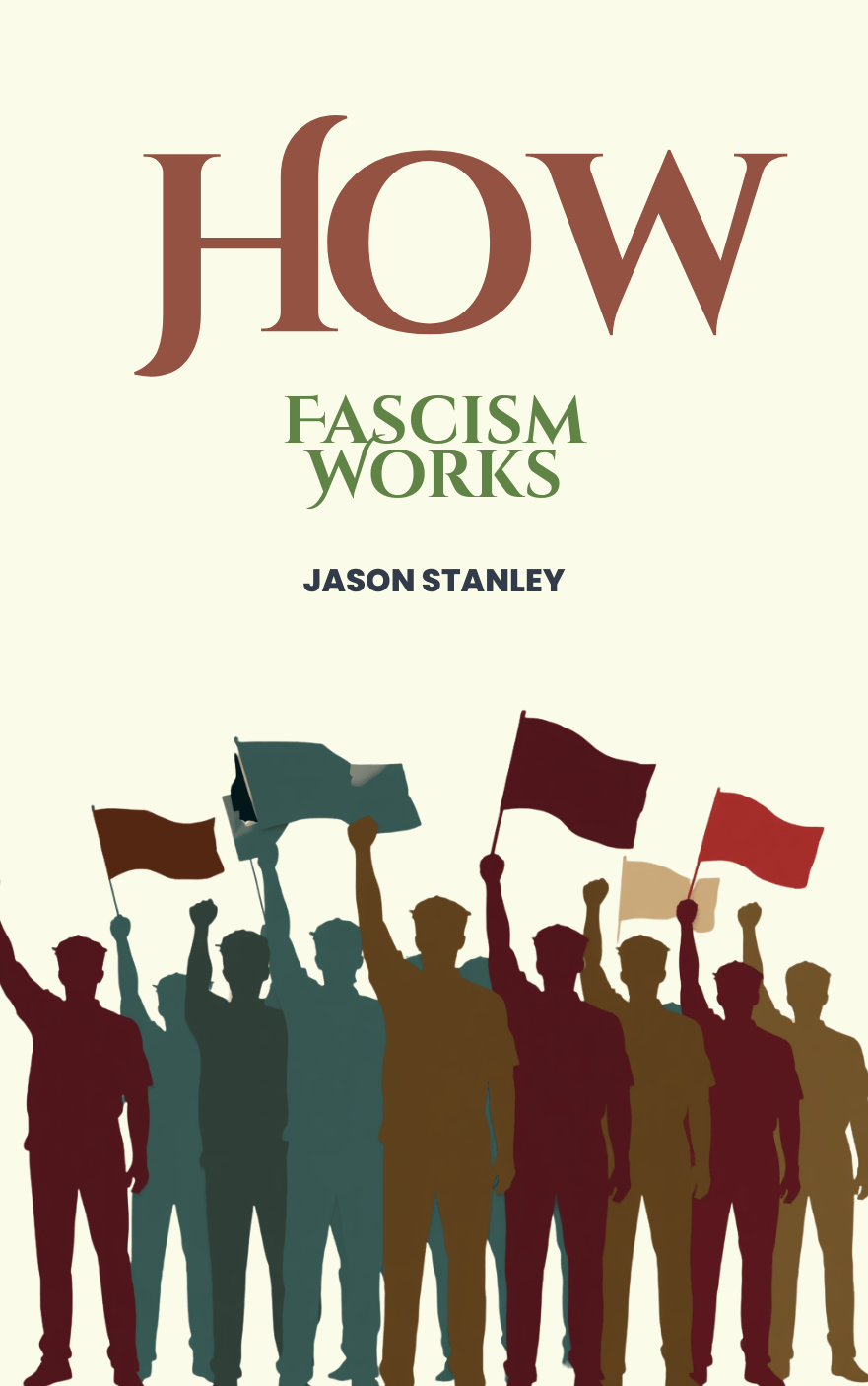
How Fascism Works Book Summary
This How Fascism Works Book Summary covers the key ideas, lessons, and takeaways in about 20 minutes.
The most important insight from Jason Stanley’s work is that fascism is not confined to a specific time or place. It is a set of political tactics that can appear whenever societies become vulnerable—especially when fear, inequality, and distrust are already present. Recognizing these patterns is essential. By understanding how fascism works, individuals can better protect democratic values and resist the gradual erosion of truth, freedom, and equality.
Helps with these goals
Want the complete 20-minute summary?
- Full structured summary
- Video Summary
- Podcast Summary
- Audio summary
- Key takeaways
- Exercises
- Quiz
- Highlights and notes
- Ask the book with AI
What is in the How Fascism Works book summary?
Below is a preview of Sumizeit’s expert-written summary of How Fascism Works by Jason Stanley. The full summary covers the book’s key ideas in text, audio, and video.
Jason Stanley’s How Fascism Works is not a historical account of fascist regimes alone—it is a detailed examination of the patterns, tactics, and psychological strategies that allow authoritarian movements to emerge within democracies. The book argues that fascism is not just a fixed ideology tied to specific regimes like Nazi Germany or Fascist Italy, but a recurring political strategy that can take root anywhere when conditions allow.
At its heart, the argument is simple but unsettling: democracies depend on shared truth, mutual respect, and equal citizenship—but fascist politics systematically weaken each of these pillars. Through manipulation of language, exploitation of fear, and distortion of reality, leaders can shift public perception until authoritarian control feels justified or even necessary.
This summary explores the mechanisms Stanley identifies, showing how fascism works step by step—how it reshapes truth, divides populations, glorifies hierarchy, and ultimately undermines democratic systems.
The Collapse of Shared Reality
A functioning democracy requires a basic agreement on facts. People may disagree about policy, but they must still operate within a shared understanding of reality. Fascist politics deliberately destroys this foundation.
Instead of presenting coherent arguments, fascist movements flood the public sphere with misleading claims, half-truths, and outright fabrications. The goal is not necessarily to convince people of a single lie, but to create confusion. When individuals can no longer distinguish truth from falsehood, they become more likely to rely on authority figures for interpretation.
This strategy leads to what can be described as “epistemic chaos”—a condition where facts lose their power and emotional allegiance replaces rational judgment. Once this happens, political debate stops being about evidence and becomes about loyalty.
Stanley emphasizes that this erosion of truth is not accidental. It is a deliberate tactic to weaken institutions such as journalism, academia, and science—institutions that typically serve as safeguards of factual accuracy .
Language as a Tool of Manipulation
One of the most powerful insights in the book is how language itself becomes weaponized.
Fascist rhetoric simplifies complex social issues into emotionally charged binaries: good versus evil, insiders versus outsiders, patriots versus enemies. This oversimplification strips away nuance, making it easier to mobilize people around fear and anger rather than careful reasoning.
Words traditionally associated with democratic values—such as “freedom,” “security,” and “patriotism”—are repurposed. Policies that restrict rights or target specific groups are framed as necessary to protect these ideals.
For example, initiatives that disproportionately harm minorities may be presented as efforts to ensure public safety. In this way, harmful policies are disguised as morally justified actions.
This manipulation creates a powerful illusion: people believe they are defending democracy, when in reality they are supporting measures that weaken it.
The Rise of Conspiracy Thinking
Another defining feature of fascist politics is the widespread use of conspiracy theories.
These narratives rarely aim to prove anything definitively. Instead, they function to erode trust. By suggesting that institutions—such as governments, media organizations, or universities—are controlled by hidden enemies, they make people suspicious of any source of information that contradicts the leader’s narrative.
Conspiracy…
Want the complete 20-minute summary?
- Full structured summary
- Video Summary
- Podcast Summary
- Audio summary
- Key takeaways
- Exercises
- Quiz
- Highlights and notes
- Ask the book with AI
Who should read How Fascism Works?
How Fascism Works is essential for anyone concerned about protecting democracy, including educators, journalists, policymakers, and engaged citizens. If you want to understand how authoritarian movements exploit psychological tactics and language to gain power—even within functioning democracies—this book provides crucial insight. It's particularly valuable for those who feel something is wrong with contemporary politics but struggle to articulate the underlying patterns.
Why does How Fascism Works matter?
Jason Stanley's analysis reveals that fascism isn't a historical relic confined to specific regimes—it's a recurring set of political strategies that can emerge anywhere democratic institutions weaken. In an era of misinformation, institutional distrust, and political polarization, understanding how fascist tactics manipulate truth, language, and identity is critical to defending democratic values. The book shows that recognizing these patterns early is our best defense against authoritarianism.
What are the key themes in How Fascism Works?
- Erosion of shared truth and factual reality
- Language weaponization and rhetorical manipulation
- Division through conspiracy theories and scapegoating
- Elevation of the leader as sole authority
- Attacks on education and critical thinking
- Construction of rigid social hierarchies
- Creation of artificial victimhood narratives
What are the key lessons from the How Fascism Works book summary?
Fascism operates through gradual institutional weakening, not sudden takeover
Authoritarian movements don't emerge overnight—they develop through interconnected strategies that slowly reshape how people think and relate to one another, making dramatic change feel inevitable rather than alarming.
Shared truth is democracy's foundation
Democracies depend on citizens agreeing on basic facts; when fascist actors deliberately flood the public sphere with confusion rather than coherent lies, people lose the ability to distinguish truth from falsehood and turn to authority figures for interpretation.
Emotional resonance replaces factual accuracy in fascist rhetoric
Fascist leaders gain power not by being consistent or truthful, but by making statements that align with followers' feelings and identity—creating a feedback loop where supporters value loyalty over evidence.
Conspiracy theories function to erode institutional trust
Rather than proving specific claims, conspiracy narratives work by making people suspicious of any information source that contradicts the leader, fracturing society into competing realities where rational debate becomes impossible.
Language simplification strips away democratic nuance
Fascist rhetoric reduces complex issues into emotionally charged binaries—good versus evil, insiders versus outsiders—making it easier to mobilize people around fear and anger than careful reasoning.
Democratic values are repurposed to justify authoritarian policies
Words like freedom, security, and patriotism are coopted to frame restrictions as protective measures, creating the illusion that people are defending democracy when they're actually weakening it.
Hierarchy replaces equality as the organizing principle
Fascist ideology rejects the democratic notion that all individuals are fundamentally equal, instead promoting a rigid social structure where certain groups are deemed naturally superior or inferior—justifying discriminatory policies.
Dominant groups are reframed as victims under threat
Fascist movements paradoxically portray powerful groups as persecuted, transforming discomfort with social change into a sense of injustice that motivates support for exclusionary policies.
Economic narratives mask structural inequality through individualization
By portraying success as a measure of personal merit and failure as individual weakness, fascist politics distracts from systemic issues while justifying policies that benefit elites.
An idealized past justifies exclusionary present policies
Fascist movements invoke a selective, historically inaccurate vision of national greatness, creating nostalgia that justifies removing or marginalizing those deemed responsible for decline.
The us-versus-them division enables dehumanization
Splitting society into virtuous insiders and dangerous outsiders simplifies complex dynamics, reduces empathy toward targeted groups, and makes discrimination or violence easier to justify.
Gender hierarchy reinforces broader authoritarian control
Rigid gender roles aren't merely cultural values but deeply political mechanisms that maintain broader hierarchies and limit personal freedom through law and policy.
Fear becomes a tool for normalizing authoritarian measures
By emphasizing real or imagined threats, fascist leaders present restrictions on freedom as necessary security measures—gradually normalizing control that would once have been unacceptable.
Attacks on education weaken both current and future resistance
Discrediting universities and critical thinking doesn't just control present discourse—it shapes future generations lacking the intellectual tools to challenge power structures.
Fascism thrives when inequality, fear, and distrust already exist
Authoritarian movements don't create societal vulnerability from scratch; they exploit existing conditions of economic hardship, institutional failure, and fractured communities.
The leader's contradictions strengthen rather than weaken support
By rejecting traditional communication norms and dismissing evidence-based arguments, fascist leaders present themselves as authentically unfiltered, paradoxically increasing follower loyalty despite inconsistency.
Reality itself becomes redefined by authority
Once fascist movements complete their erosion of truth and elevate a single leader, what is considered real is determined by that leader's claims regardless of evidence.
Institutional attacks are deliberate, not incidental
The erosion of journalism, academia, and science isn't accidental but a calculated strategy to eliminate competing sources of factual accuracy and interpretation.
Fascism is a pattern, not a fixed ideology tied to specific regimes
Rather than a historical artifact, fascism is a recurring set of political tactics that can take root in any democracy when conditions allow—making it a contemporary threat requiring constant vigilance.
Want the complete 20-minute summary?
- Full structured summary
- Video Summary
- Podcast Summary
- Audio summary
- Key takeaways
- Exercises
- Quiz
- Highlights and notes
- Ask the book with AI
How can you apply ideas from How Fascism Works?
- Develop media literacy skills to distinguish propaganda techniques from legitimate reporting, and help others do the same
- Support and strengthen democratic institutions like schools, universities, and independent journalism that serve as bulwarks against authoritarianism
- Recognize and resist oversimplification of complex issues into emotional binaries in political discourse
- Question narratives that create scapegoats for systemic problems or pit groups against each other
- Maintain connection across political and ideological divides to prevent the us-versus-them fracturing that fascism requires
- Engage in critical evaluation of claims by checking multiple credible sources rather than relying on a single authority
- Advocate for policies that address real economic inequality and institutional failures that create vulnerability to authoritarian movements
What common mistakes do readers make with How Fascism Works?
- Assuming fascism only emerges in dramatic form; overlooking how authoritarian tactics operate gradually and incrementally within existing systems
- Focusing on individual lies rather than recognizing how the deliberate creation of epistemic chaos and confusion is the actual strategy
- Underestimating how emotional identification and belonging override factual accuracy in shaping political allegiance
- Treating attacks on education and intellectual institutions as mere cultural disagreements rather than strategic efforts to disable critical thinking
Sumizeit Exercises Apply what you've learned
Turn ideas from How Fascism Works into action with a short guided reflection: identify the biggest takeaway, connect it to your life, and commit to one step you can take in the next 24 hours.
What is the expert analysis of How Fascism Works?
Overview
How Fascism Works by Jason Stanley stands as a crucial contemporary contribution to political philosophy and social critique. Stanley, a respected philosopher specializing in political philosophy and the philosophy of language, leverages his academic rigor to dissect the recurring patterns and tactics of fascist movements beyond their historical manifestations. Rather than limiting his analysis to the well-known regimes of the 20th century, Stanley presents fascism as a dynamic political strategy that can infiltrate any democracy under conducive conditions. This broad, analytical lens makes the book especially significant in an era marked by rising authoritarian tendencies worldwide.
Core Thesis
Stanley’s central argument is both compelling and alarming: fascism is not merely a relic of the past but a persistent political methodology that systematically erodes the foundational pillars of democracy—shared truth, mutual respect, and equal citizenship. Through deliberate manipulation of language, dissemination of conspiracy theories, and fostering of social division, fascist politics dismantle the epistemic and moral consensus necessary for democratic governance. The author contends that these tactics create “epistemic chaos,” where objective facts lose their authority, and loyalty to authoritarian leaders supplants rational discourse and institutional trust.
Strengths
- Interdisciplinary Approach: Stanley’s background in philosophy and language studies enriches his analysis, allowing him to elucidate how language functions as a tool of political manipulation with remarkable clarity.
- Contemporary Relevance: The book’s focus on fascism as a set of tactics rather than a fixed ideology equips readers to recognize authoritarian tendencies in diverse political contexts today, making it a timely resource.
- Comprehensive Mechanistic Breakdown: By detailing specific strategies—such as the weaponization of language, the construction of social hierarchies, and the politics of victimhood—Stanley provides a nuanced framework for understanding how fascism operates incrementally.
- Accessibility: Despite its philosophical underpinnings, the book is written in an accessible style that bridges academic insight and public discourse, broadening its impact.
- Emphasis on Education and Critical Thinking: Highlighting attacks on education as a fascist tactic underscores the long-term stakes of authoritarianism and the importance of intellectual vigilance.
Critiques & Counterarguments
- Potential Overgeneralization: By framing fascism as a universal tactic, Stanley risks diluting the specific historical and cultural conditions that gave rise to classical fascist regimes, possibly conflating authoritarian populism with fascism proper.
- Evidence Scope: While the book is rich in conceptual analysis, some critics might argue that it relies heavily on theoretical constructs and less on empirical case studies or quantitative data, which could strengthen its claims.
- Competing Interpretations of Populism: Other scholars emphasize economic or structural factors—such as globalization’s discontents or neoliberal policies—as primary drivers of authoritarianism, suggesting that Stanley’s focus on language and epistemology may underplay these dimensions.
- Opposing Views on Conspiracy Theories: Some research indicates that conspiracy beliefs can arise from complex psychological and social factors not always orchestrated by political actors, challenging the notion that their propagation is always a deliberate fascist tactic.
- Real-World Variability: The application of Stanley’s framework across different political systems may encounter limitations, as authoritarian movements in non-Western contexts sometimes deploy distinct strategies that do not neatly align with his taxonomy.
Who Should Read This
This book is indispensable for political scientists, philosophers, sociologists, and historians seeking a deeper understanding of authoritarian dynamics in modern democracies. It is equally valuable for journalists, educators, policymakers, and engaged citizens who wish to recognize and counteract the subtle erosion of democratic norms. Readers interested in the intersections of language, psychology, and politics will find Stanley’s insights particularly illuminating, as will those concerned with safeguarding democratic institutions against contemporary threats.
Frequently asked questions about the How Fascism Works book summary
What is How Fascism Works about?
How Fascism Works by Jason Stanley examines the patterns, tactics, and psychological strategies that allow authoritarian movements to gain power within democracies. Rather than a historical account of past regimes, it analyzes fascism as a recurring political strategy that systematically weakens shared truth, exploits language, divides populations, and concentrates authority—processes that can happen in any vulnerable society today.
Who should read How Fascism Works?
How Fascism Works is essential for anyone concerned about protecting democracy, including educators, journalists, policymakers, and engaged citizens. If you want to understand how authoritarian movements manipulate psychology and language to gain power, or if you sense something is wrong with contemporary politics but struggle to articulate the patterns, this book provides crucial analytical frameworks.
What are the main takeaways from How Fascism Works?
The main takeaways are: fascism develops gradually through interconnected strategies rather than sudden seizure of power; it erodes shared truth and replaces reason with emotion and loyalty; it weaponizes language to justify authoritarian measures as protective of democratic values; and it thrives on division, hierarchy, and conspiracy thinking. Most importantly, fascism is not historical—it's a recurring threat whenever societies become vulnerable to fear, inequality, and institutional distrust.
How does fascism weaponize language?
Fascist movements simplify complex issues into emotionally charged binaries (good versus evil, insiders versus outsiders) and repurpose words like freedom, security, and patriotism to frame authoritarian policies as protective measures. This creates the illusion that people are defending democracy when they're actually weakening it, while stripping away the nuance necessary for democratic debate.
Why do conspiracy theories matter in fascist politics?
Conspiracy theories function less to prove specific claims than to erode trust in all institutions—governments, media, universities. By portraying these institutions as controlled by hidden enemies, conspiracy narratives make people suspicious of any information contradicting the leader, fracturing society into competing realities where rational debate becomes impossible and the authoritarian leader emerges as the only reliable source of truth.
How does fascism attack education and critical thinking?
Fascist movements discredit universities and academic disciplines as elitist or biased, particularly fields examining inequality. By limiting intellectual complexity and discouraging questioning, they reduce people's capacity to challenge power structures. This attack isn't just about controlling present discourse—it shapes future generations lacking the tools to resist authoritarianism.
Can fascism happen in established democracies?
Yes—fascism is not confined to specific times or places but a recurring set of political tactics that can take root in any democracy when conditions allow. Stanley emphasizes that fascism develops gradually through institutional weakening and can emerge whenever fear, inequality, and institutional distrust are already present in a society.
About Sumizeit
Sumizeit is a profitable Scomy LLC company based in Miami, Florida. It has been helping readers learn from nonfiction books for 7 years with expert-written summaries in text, audio, podcast, and video.
Want the complete 20-minute summary?
- Full structured summary
- Video Summary
- Podcast Summary
- Audio summary
- Key takeaways
- Exercises
- Quiz
- Highlights and notes
- Ask the book with AI
Here's why readers love Sumizeit
Join thousands of learners getting smarter every day
"Great experience. Detailed summaries. Loved the gamification feature. Makes learning fun. Good customer service. I recommend Sumizeit to anyone. You'll learn a lot."
"I always felt busy but still wanting to keep up with the book discussion in my friend group. This was a great supplement to help me keep reading the books I find fun while keeping up with important books."
"I love this website. Instead of scrolling social media, I find myself learning a lot. I use it everyday. I recommend this app for anyone who is too busy and wants to get up to speed with their favorite books."
How Fascism Works Book Summary PDF
Looking for a How Fascism Works Book Summary PDF you can save and revisit offline? Our How Fascism Works Book Summary PDF captures the book’s core ideas in a clean, printable format — the key frameworks, takeaways, and structure without the fluff. Download the How Fascism Works Book Summary PDF when you want a reference you can annotate, share with your team, or review on the go. Get your How Fascism Works Book Summary PDF from the download page below.
Download How Fascism Works Book Summary PDFPeople also liked these summaries
Readers who explored How Fascism Works often enjoyed these titles next.




Want the complete 20-minute summary?
- Full structured summary
- Video Summary
- Podcast Summary
- Audio summary
- Key takeaways
- Exercises
- Quiz
- Highlights and notes
- Ask the book with AI
Featured Book Titles
Popular Book Summaries at sumizeit, leading book summary app
