


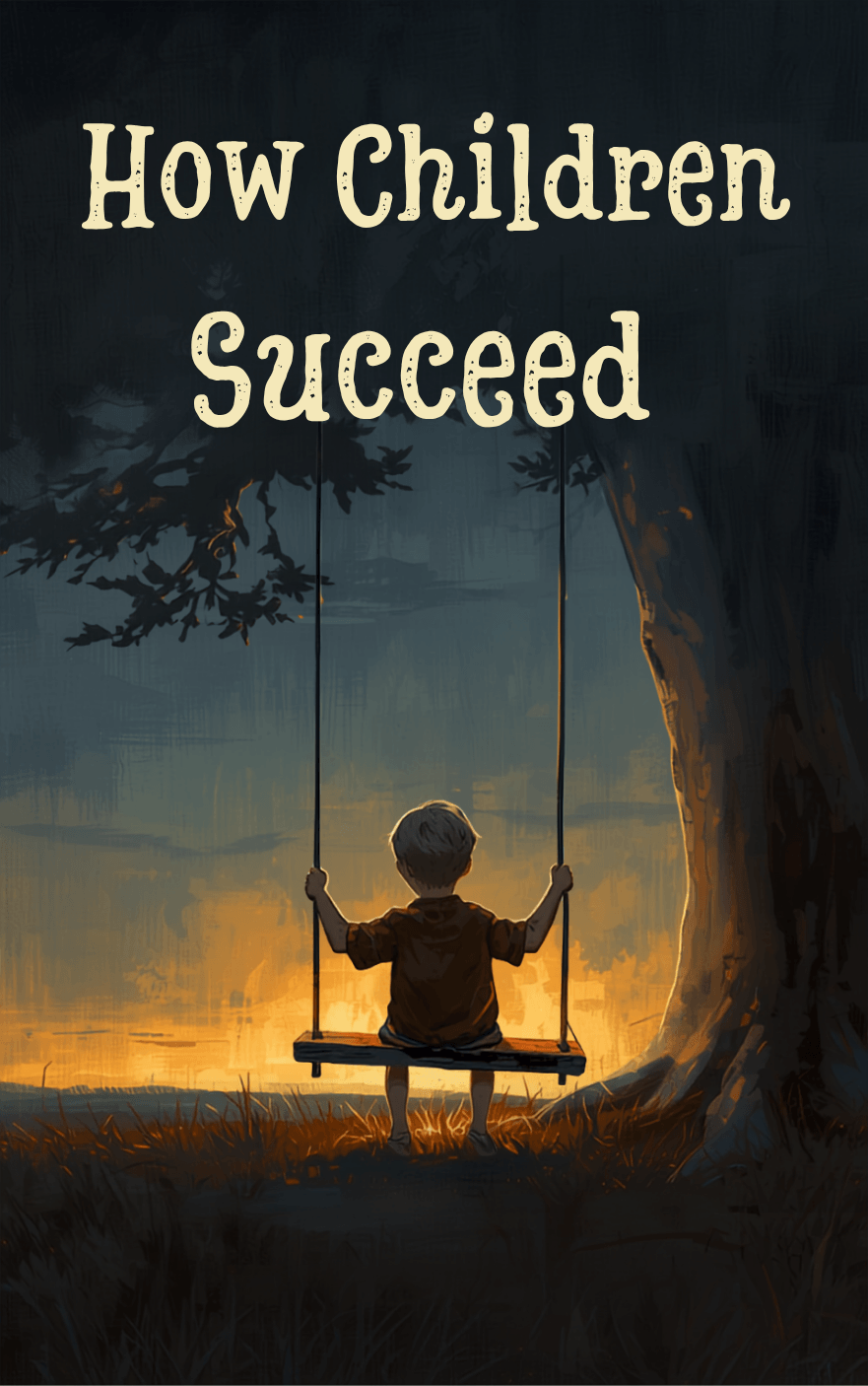
Prefer the print book? Buy on Amazon
As an Amazon Associate, Sumizeit earns from qualifying purchases.
How Children Succeed Book Summary
This How Children Succeed Book Summary covers the key ideas, lessons, and takeaways in about 20 minutes.
Helps with these goals
Want the complete 20-minute summary?
- Full structured summary
- Video Summary
- Podcast Summary
- Audio summary
- Key takeaways
- Exercises
- Quiz
- Highlights and notes
- Ask the book with AI
Want a Free Weekly Read?
Get a free summary every week straight to your mailbox.
Preview the How Children Succeed book summary
Below is a preview of Sumizeit’s comprehensive human-written summary of How Children Succeed by Paul Tough. The full summary is 15-20 minutes long and covers the book’s key ideas in text, audio, visual, and video formats. Unlock the full 20 Minute Summary
Most people assume that success comes from being smart. We build school systems around test scores, IQ measurements, and academic performance. We tell children that if they study hard and get good grades, the world will open up for them. But what if this entire framework is wrong — or at least incomplete?
Paul Tough's How Children Succeed challenges the conventional wisdom about what prepares children for a fulfilling, productive life. Drawing on groundbreaking research from economists, psychologists, pediatricians, and educators, Tough makes a compelling case that the traits most closely linked to long-term achievement are not cognitive at all. They are qualities like perseverance, self-control, curiosity, conscientiousness, and resilience — what researchers call noncognitive or character skills.
This isn't a feel-good argument about the importance of kindness. It's a rigorously researched rethinking of human development, backed by decades of longitudinal studies and real-world experiments in schools and neighborhoods across America.
What the Data Actually Shows
For much of the 20th century, economists and policymakers largely accepted the idea that intelligence, as measured by standardized tests, was the primary driver of success. If you wanted to predict whether a child would graduate from college, land a good job, or stay out of prison, you looked at their test scores.
Then James Heckman entered the picture. A Nobel Prize-winning economist at the University of Chicago, Heckman spent years analyzing data from longitudinal studies and came to a startling conclusion: noncognitive skills — the kind that don't show up on IQ tests — are at least as important as cognitive skills in predicting life outcomes, and in many cases more so.
Heckman's work, done in collaboration with specialists across behavioral science, healthcare, and genetics, revealed that traits like grit, self-regulation, and the ability to delay gratification were stronger predictors of whether someone would complete college, maintain steady employment, avoid criminal behavior, and even stay healthy. A student's high school grades, which reflect not just academic knowledge but also character traits like responsibility and perseverance, turned out to be a better predictor of college completion than SAT scores.
These findings have profound implications. They suggest that the educational reform conversation — which has focused so heavily on standardized testing, teacher evaluation, and academic rigor — may be missing the most important variables entirely.
The Stress Connection
To understand why some children develop these character strengths and others don't, Tough explores the science of early childhood stress. The research here is striking and, in places, deeply unsettling.
Adverse Childhood Experiences, or ACEs, are potentially traumatic events that occur during childhood, including abuse, neglect, witnessing domestic violence, or living with a caregiver who has a substance use disorder or mental illness. Researchers have documented a clear, dose-response relationship between ACEs and negative outcomes later in life. Children who experience multiple ACEs are dramatically more likely to struggle with substance abuse, chronic health conditions, and mental health disorders as adults.
Want the complete 20-minute summary?
- Full structured summary
- Video Summary
- Podcast Summary
- Audio summary
- Key takeaways
- Exercises
- Quiz
- Highlights and notes
- Ask the book with AI
Who should read How Children Succeed?
This book is essential for parents, educators, and policymakers who want to understand what actually drives long-term success in children. Whether you're raising kids, teaching in a classroom, or shaping education policy, How Children Succeed challenges you to rethink what skills matter most. It's particularly valuable for anyone frustrated with the singular focus on test scores and academic metrics.
Why does How Children Succeed matter?
Our education system is built on the assumption that intelligence and test scores are the primary predictors of success, but cutting-edge research shows this is fundamentally incomplete. Paul Tough's How Children Succeed reveals that character traits like grit, self-control, and resilience are at least as important—and often more important—than cognitive ability in determining whether children thrive. Understanding this shift is critical for redesigning how we educate, parent, and support the next generation.
What are the key themes in How Children Succeed?
- Character skills are learnable, not innate
- Stress and adverse childhood experiences reshape brain development
- Failure and struggle are essential for building resilience
- Early nurturing and secure attachments wire children for success
- Grit and perseverance predict achievement better than IQ
- Overprotection undermines character development
- Noncognitive skills outperform test scores in predicting life outcomes
Want the complete 20-minute summary?
- Full structured summary
- Video Summary
- Podcast Summary
- Audio summary
- Key takeaways
- Exercises
- Quiz
- Highlights and notes
- Ask the book with AI
How can you apply ideas from How Children Succeed?
- Design school environments that include manageable challenges and allow students to experience failure with support, building resilience rather than avoiding setback
- Implement character assessments alongside academic grades to ensure schools take noncognitive skill development as seriously as test scores
- Train teachers and parents to view character traits like grit and self-control as teachable skills that can be deliberately cultivated through practice and feedback
- Prioritize early childhood interventions and parent coaching programs that build secure attachments, since responsive caregiving creates lasting changes in stress-response systems
- Create mentorship and comprehensive support structures for students based on potential rather than current performance, providing sustained guidance beyond academics
- Establish public recognition systems that celebrate character strengths demonstrated in everyday moments, reinforcing their importance alongside academic achievement
- Advocate for policy investments in family support, mental health services, and early childhood development as core educational reforms, not supplementary to classroom instruction
What common mistakes do readers make with How Children Succeed?
- Assuming intelligence and test scores are the primary determinants of success, when research shows character skills are equally or more predictive of life outcomes
- Protecting children from all failure and struggle, inadvertently preventing them from developing the resilience that adversity builds
- Measuring character as a performance metric rather than creating genuine conditions for its development, turning qualities like optimism into performative traits
- Focusing education reform exclusively on classroom and testing improvements while ignoring the foundational role of early childhood stress, family stability, and mental health support
Sumizeit Exercises Apply what you've learned
Turn ideas from How Children Succeed into action with a short guided reflection: identify the biggest takeaway, connect it to your life, and commit to one step you can take in the next 24 hours.
What is the expert analysis of How Children Succeed?
Overview
How Children Succeed by Paul Tough is a seminal work that challenges entrenched assumptions about the roots of success in life and education. Tough, a respected journalist with a deep focus on education and child development, synthesizes cutting-edge research from economics, psychology, and neuroscience to argue that character traits—rather than cognitive intelligence alone—are the true predictors of long-term achievement. His narrative is both accessible and rigorously grounded, making complex scientific findings relevant to educators, policymakers, and parents alike. This book stands out for its interdisciplinary approach and its potential to reshape educational priorities and social policy.
Core Thesis
Tough's central argument is that traditional metrics of intelligence and academic achievement, such as IQ and standardized test scores, provide an incomplete picture of what enables children to succeed. Instead, noncognitive skills—qualities like grit, self-control, curiosity, optimism, and resilience—play a crucial, often underappreciated role in shaping life outcomes. These character traits can be cultivated and developed, especially through early nurturing and supportive environments that mitigate the damaging effects of childhood stress. The book contends that educational systems and social policies must pivot to prioritize character development alongside cognitive skills to truly prepare children for success.
Strengths
- Interdisciplinary Synthesis: Tough expertly weaves together research from diverse fields—economics, psychology, neuroscience, and education—offering a comprehensive and nuanced understanding of child development.
- Empirical Rigor: The book is grounded in robust longitudinal studies and real-world experiments, lending credibility and weight to its claims.
- Practical Implications: By highlighting programs like KIPP and OneGoal, Tough moves beyond theory to showcase actionable educational interventions that nurture character skills.
- Nuanced View of Failure and Stress: The exploration of how adversity and manageable failure contribute to character development provides a sophisticated counterpoint to overly protective educational and parenting approaches.
- Policy Relevance: The book’s insights extend to public policy, advocating for early childhood investment and holistic support systems that address more than just academic content.
- Accessible Narrative: Tough’s journalistic style makes complex research accessible without oversimplifying, engaging a broad readership without sacrificing intellectual depth.
Critiques
- Measurement Challenges: While the emphasis on character is compelling, the book acknowledges but does not fully resolve the difficulties inherent in quantifying traits like optimism or gratitude without reducing them to performative metrics.
- Potential Overemphasis on Individual Traits: The focus on character skills, while important, may risk underplaying structural and systemic barriers such as poverty, racism, and inequality that also critically shape children’s life chances.
- Intervention Scalability: Programs like Attachment and Biobehavioral Catch-up and OneGoal are promising but resource-intensive; the book could further explore challenges in scaling such interventions across diverse and underfunded educational contexts.
- Limited Discussion of Cultural Variation: The book’s framework is largely grounded in American educational and social contexts, which may limit its applicability or require adaptation in different cultural settings.
Who Should Read This
- Educators and School Leaders: Those seeking to understand how to foster holistic student development beyond academics will find valuable insights and practical examples.
- Parents and Caregivers: The book offers a compelling case for the importance of early nurturing and manageable challenges in raising resilient, motivated children.
- Policymakers and Social Advocates: Individuals engaged in shaping education and social welfare policies will benefit from the evidence-based arguments for investing in early childhood and character development.
- Researchers and Students: Those interested in the intersection of psychology, education, and economics will appreciate the interdisciplinary research synthesis and the nuanced treatment of noncognitive skills.
- General Readers Interested in Human Potential: Anyone curious about what truly drives success and how environments shape human development will find this book both enlightening and inspiring.
Frequently asked questions about the How Children Succeed book summary
What is How Children Succeed about?
How Children Succeed by Paul Tough is about why character traits like grit, self-control, resilience, and curiosity are more important for long-term success than intelligence or test scores. Drawing on research from economists, psychologists, and educators, Tough argues that these noncognitive skills can be deliberately taught and developed, and that our education system should prioritize cultivating them alongside—or even before—academic achievement.
Who should read How Children Succeed?
Parents, teachers, school administrators, and policymakers should read this book if they want to understand what actually drives success in children. It's valuable for anyone involved in education, parenting, or child development who feels that the current focus on test scores and grades is incomplete or misguided.
What are the main takeaways from How Children Succeed?
The main takeaways are: character skills like grit and self-control predict life success better than IQ, these traits are learnable rather than fixed, early childhood stress and secure attachments physically reshape brain development, failure and struggle are essential for building resilience, and schools should intentionally teach and measure character as rigorously as academics. Society would benefit more from investing in early childhood support and family stability than from standardized testing reforms alone.
How do adverse childhood experiences affect child development?
Adverse Childhood Experiences (ACEs) like abuse, neglect, or living with a caregiver with substance abuse issues flood the developing brain with stress hormones, particularly cortisol. This damages the prefrontal cortex responsible for impulse control and decision-making, leaving children wired for survival rather than learning. Children with high ACE scores are at dramatically increased risk for substance abuse, chronic health conditions, and mental health disorders as adults.
What is grit and why does it matter?
Grit, as defined by psychologist Angela Duckworth, is the combination of passion and perseverance for long-term goals. It's not just working hard—it's sustaining effort and interest over years through failure and setbacks. Research shows grit predicts success better than academic achievement at institutions like West Point and in high-level competitions like the National Spelling Bee, making it one of the most important predictors of long-term achievement.
Can character skills really be taught?
Yes, according to How Children Succeed, character skills are learnable and malleable, particularly in childhood when the brain is highly plastic. Programs like KIPP Academy and OneGoal demonstrate that schools can deliberately cultivate traits like self-control, grit, and resilience through intentional environments, mentorship, and supportive relationships. Unlike fixed notions of intelligence, character can be developed through practice and the right conditions.
Why do wealthy, protected children sometimes struggle more than disadvantaged peers?
Wealthy children in highly supportive environments often lack experience with meaningful failure and struggle. Without manageable challenges to overcome, they don't develop the resilience and internal resources needed to handle real adversity later in life. Tough contrasts affluent private schools with KIPP Academy, showing that the experience of struggling and recovering is essential for character development, and overprotection paradoxically undermines it.
What does the research say about early childhood interventions?
Research cited by economist James Heckman shows that investments in early childhood produce extraordinary returns in educational outcomes, reduced crime, better health, and economic productivity. Programs that combine early childhood development support with caregiver coaching and mental health services are more effective at closing achievement gaps than classroom-focused reforms alone. The earlier the intervention, the greater the benefit, because the brain is most malleable in the first years of life.
About Sumizeit
Sumizeit is a profitable Scomy LLC company based in Miami, Florida. It has been helping readers learn from nonfiction books for 7 years with expert-written summaries in text, audio, podcast, and video.
Want the complete 20-minute summary?
- Full structured summary
- Video Summary
- Podcast Summary
- Audio summary
- Key takeaways
- Exercises
- Quiz
- Highlights and notes
- Ask the book with AI
Here's why readers love Sumizeit
Join thousands of learners getting smarter every day
"Great experience. Detailed summaries. Loved the gamification feature. Makes learning fun. Good customer service. I recommend Sumizeit to anyone. You'll learn a lot."
"I always felt busy but still wanting to keep up with the book discussion in my friend group. This was a great supplement to help me keep reading the books I find fun while keeping up with important books."
"I love this website. Instead of scrolling social media, I find myself learning a lot. I use it everyday. I recommend this app for anyone who is too busy and wants to get up to speed with their favorite books."
How Children Succeed Book Summary PDF
Looking for a How Children Succeed Book Summary PDF you can save and revisit offline? Our How Children Succeed Book Summary PDF captures the book’s core ideas in a clean, printable format — the key frameworks, takeaways, and structure without the fluff. Download the How Children Succeed Book Summary PDF when you want a reference you can annotate, share with your team, or review on the go. Get your How Children Succeed Book Summary PDF from the download page below.
Download How Children Succeed Book Summary PDFPeople also liked these summaries
Readers who explored How Children Succeed often enjoyed these titles next.




Want the complete 20-minute summary?
- Full structured summary
- Video Summary
- Podcast Summary
- Audio summary
- Key takeaways
- Exercises
- Quiz
- Highlights and notes
- Ask the book with AI
Featured Book Titles
Popular Book Summaries at sumizeit, leading book summary app