


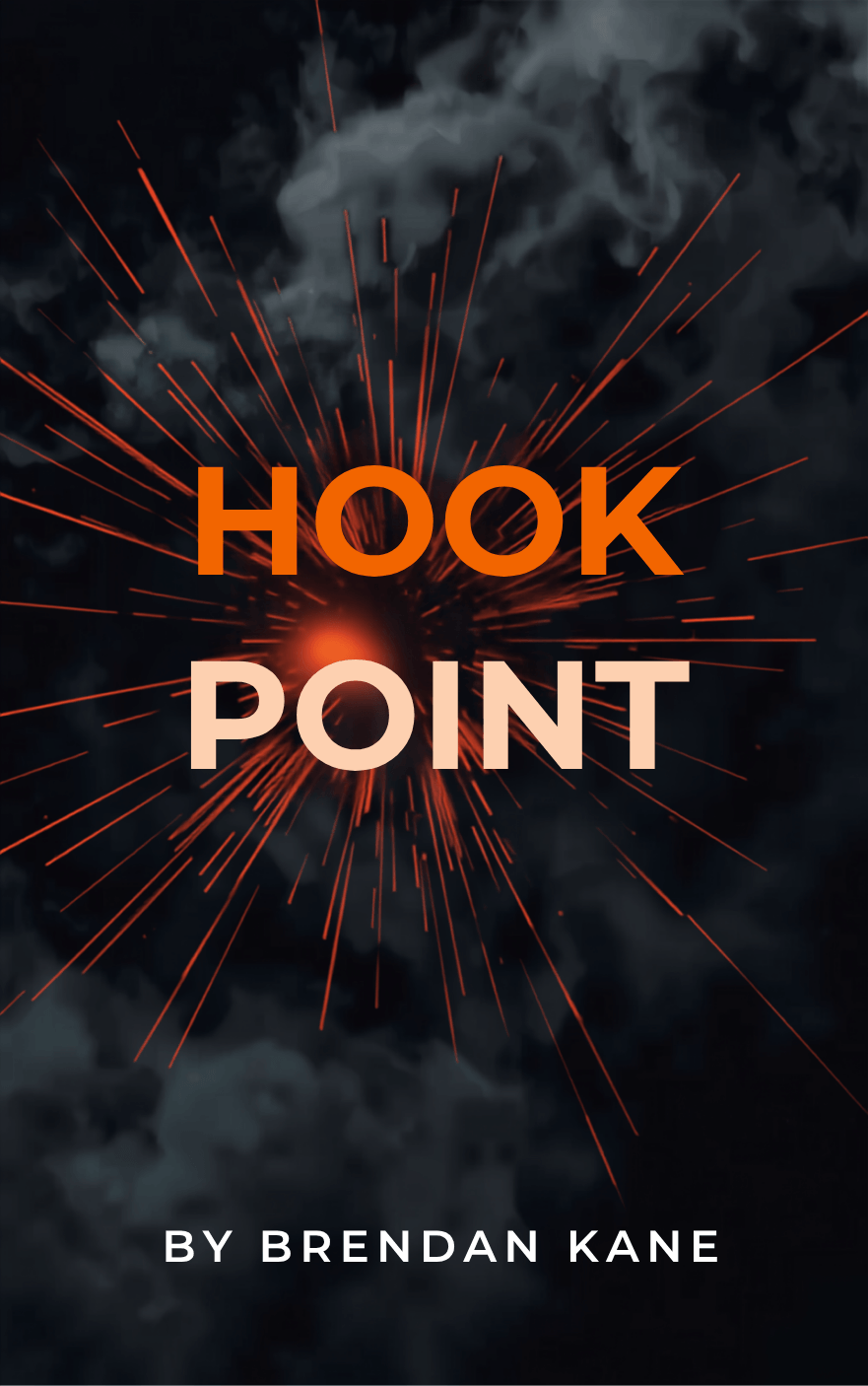
Prefer the print book? Buy on Amazon
As an Amazon Associate, Sumizeit earns from qualifying purchases.
Hook Point Book Summary
This Hook Point Book Summary covers the key ideas, lessons, and takeaways in about 20 minutes.
Short Description:
How to build a Hook Point that grabs attention fast and keeps it with real substance.
Helps with these goals
Want a Free Weekly Read?
Get a free summary every week straight to your mailbox.
Preview the Hook Point book summary
Below is a preview of Sumizeit’s comprehensive human-written summary of Hook Point by Brendan Kane. The full summary is 15-20 minutes long and covers the book’s key ideas in text, audio, visual, and video formats. Unlock the full 20 Minute Summary
Brendan Kane wrote Hook Point around one simple observation. People decide whether to keep watching, reading, or listening to you within about three seconds. Scroll speed on phones keeps climbing, and the average person now sees dozens of ads, posts, and headlines before they've finished their morning coffee. Kane's answer to that problem is what he calls a Hook Point, a short burst of content built to grab someone's attention immediately and make them want more. A Hook Point isn't one specific format. It can be a sentence, a number, a visual, a character, or some mix of those things. What matters is the effect it has on the person seeing it. Kane argues that a business or a creator who masters this skill gains a real edge. They can launch products faster, pull in new customers more easily, and grow revenue without spending more on ads than their competitors do. The skill itself, he insists, is learnable. You don't need to be naturally clever or famous already. You need a process. That's a big promise for a marketing book to make, and Kane knows it. Most people assume a great hook comes from a flash of inspiration, the kind of thing you either have or don't. He pushes back hard on that idea. In his telling, the people who consistently produce attention grabbing content aren't relying on luck. They're running a repeatable system, generating far more raw material than they'll ever use and testing it against real audiences instead of trusting their own gut. Whether every reader buys that framing is a fair question, but it does explain why the book spends so much time on process instead of just showing off examples of hooks that worked.
Why you only get three seconds
Kane leans hard on a specific number throughout the book. He estimates that more than sixty billion messages move across digital channels every single day. That's not a typo, and it's meant to feel overwhelming, because it is. Every brand, influencer, and stranger with a phone is fighting for the same sliver of someone's attention span. Against that backdrop, a boring opening line or a generic thumbnail doesn't just underperform. It disappears entirely. He points to examples of people who understood this early. Gary Vaynerchuk built a habit of doing the unexpected in his interviews and videos, which trained his audience to keep watching because they never knew what was coming next. One of his interviews, built around Wim Hof's cold exposure training, hooked viewers by promising something that sounded almost unbelievable. The horror movie Paranormal Activity used a similar trick in its marketing. Its trailer leaned on the question "What happens when you sleep?" That's a strange, slightly unsettling question, and it worked far better than showing generic scary footage would have. None of these came from expensive production value. They came from a well chosen angle. Nike gets a mention too, and for a different reason.
Want the complete 20-minute summary?
- Full structured summary
- Video Summary
- Podcast Summary
- Audio summary
- Key takeaways
- Exercises
- Quiz
- Highlights and notes
- Ask the book with AI
Who should read Hook Point?
Hook Point is essential for content creators, entrepreneurs, marketers, and business leaders who need to capture attention in an oversaturated digital landscape. Whether you're launching a product, growing a personal brand, or trying to stand out on social media, this book is for anyone who wants to understand why people stop scrolling and start paying attention.
Why does Hook Point matter?
In a world where over 60 billion messages compete for attention daily, the ability to hook someone in three seconds has become a critical business skill. Brendan Kane's Hook Point teaches a learnable, repeatable system for cutting through noise rather than relying on luck or creative inspiration alone. Mastering this skill directly impacts customer acquisition, revenue growth, and long-term brand trust.
What are the key themes in Hook Point?
- Attention is the scarcest marketing resource
- Hook Points are a learnable process, not innate talent
- Authenticity must back up attention-grabbing tactics
- Testing and iteration beat gut instinct
- Strategic placement matters as much as the message itself
- No hook stays fresh forever—ongoing adaptation is essential
How can you apply ideas from Hook Point?
- Generate 50-100 raw ideas for your content opening without filtering, then narrow ruthlessly to your three strongest candidates
- Test Hook Point variations through paid ads or organic posts to real audiences before finalizing major content, titles, or campaigns
- Pair compelling visuals with short text bursts instead of dense paragraphs to increase engagement with busy, scrolling audiences
- Research specific decision-makers or prospects thoroughly before pitching, tailoring your message to their individual priorities rather than using a generic template
- Identify gaps in your audience's knowledge or curiosity, then craft hooks that answer questions they didn't know they wanted answered
- Establish a clear, specific promise in the first three seconds of video content that tells viewers exactly what they'll get if they keep watching
- Post where your target audience already congregates rather than trying to build attention from zero in new channels
What common mistakes do readers make with Hook Point?
- Relying on your own judgment about whether a hook works instead of testing it with actual strangers who represent your audience
- Making hooks too wordy, too vague, too generic, or too obviously copied from competitors, which causes them to disappear in crowded feeds
- Creating hooks that promise something the actual content doesn't deliver, which damages trust and prevents repeat engagement
- Assuming a successful hook formula will remain effective indefinitely without ongoing experimentation and evolution as audiences adapt
- Building hooks disconnected from actual brand values or mission, which creates short-term attention but long-term credibility damage
Sumizeit Exercises Apply what you've learned
Turn ideas from Hook Point into action with a short guided reflection: identify the biggest takeaway, connect it to your life, and commit to one step you can take in the next 24 hours.
What is the expert analysis of Hook Point?
Overview
Hook Point is authored by Brendan Kane, a digital strategist with a rich background in entertainment marketing and influencer campaigns. Kane’s experience spans working with major studios like Paramount Pictures and collaborating with high-profile celebrities such as Taylor Swift and Rihanna. This book stands out in the crowded marketing literature by focusing sharply on the critical first moments of audience engagement in an era saturated with digital content. Kane distills his extensive practical knowledge into a systematic approach to capturing attention quickly and effectively, making the book significant for marketers, creators, and business leaders navigating today’s fragmented attention economy.
Core Thesis
Kane’s central argument is that in the contemporary digital landscape, where billions of messages compete daily for consumer attention, success hinges on mastering what he terms the “Hook Point.” This is a concise, compelling burst of content designed to seize attention within approximately three seconds. Contrary to popular belief that hooks are spontaneous flashes of creativity, Kane insists they are the product of a repeatable, testable process involving volume generation, ruthless narrowing, audience testing, and continual refinement. Importantly, he emphasizes that a hook’s power is contingent on authenticity and substantive follow-through, warning against superficial or disingenuous attempts that ultimately erode trust.
Strengths
- Pragmatic Framework: Kane provides a clear, actionable five-stage process for developing hooks, moving beyond vague platitudes to practical steps that marketers can implement and measure.
- Integration of Real-World Examples: The book draws on diverse case studies—from Gary Vaynerchuk’s unpredictable interviews to Nike’s athlete-centered campaigns—that illustrate how effective hooks operate across different contexts and media.
- Attention to Authenticity: Kane’s insistence that hooks must be backed by genuine content and aligned with brand values adds depth, addressing a common pitfall in marketing where style overtakes substance.
- Focus on Testing and Iteration: The emphasis on empirical validation through audience feedback and adaptation reflects a modern, data-driven approach to marketing that acknowledges the variability of consumer response.
- Broad Applicability: By highlighting both digital and offline strategies, Kane’s insights are relevant not only to online influencers but also to traditional businesses and entrepreneurs seeking to grow their brands.
Critiques & Counterarguments
- Overgeneralization of Attention Span: The book’s fixation on the “three-second” rule risks oversimplifying complex audience behaviors. Research in cognitive psychology suggests that attention varies significantly by context, task complexity, and individual differences, challenging the universality of this threshold.
- Limited Nuance on Audience Diversity: While Kane acknowledges different audiences, the methodology leans heavily on a one-size-fits-most approach. For example, professionals engaged in deep research or high-stakes decisions may resist or distrust rapid hooks, preferring depth and credibility over speed.
- Potential Underestimation of Luck and External Factors: Despite advocating for systematic testing, the book somewhat downplays the role of timing, market conditions, and serendipity in viral success, which are well-documented in marketing scholarship as critical but unpredictable elements.
- Challenges for Small Players: Kane’s examples often involve established brands or individuals with significant reach and resources. Small businesses or newcomers may find the recommended testing and iteration process resource-intensive, and the assumption that placing messages “where the audience already exists” is feasible may not hold universally.
- Competing Perspectives: Alternative marketing philosophies, such as relationship marketing or content marketing that prioritizes long-term engagement over immediate attention capture, offer a counterpoint to Kane’s emphasis on rapid hooks. These schools argue that sustained value creation, rather than momentary grabs, builds enduring brand equity.
Who Should Read This
Hook Point is ideal for digital marketers, content creators, entrepreneurs, and business leaders who seek a structured, practical approach to breaking through the noise of today’s media environment. Those launching new products, building personal brands, or managing social media campaigns will find Kane’s process and examples particularly instructive. However, readers invested in deep, relationship-driven marketing or operating in highly specialized or technical fields may need to adapt the advice thoughtfully. Ultimately, the book serves as a valuable primer on the art and science of immediate audience engagement, especially for those willing to embrace testing and iteration as core business practices.
Frequently asked questions about the Hook Point book summary
What is Hook Point about?
Hook Point by Brendan Kane teaches a five-stage system for creating attention-grabbing content that makes audiences want to keep watching, reading, or listening beyond the critical first three seconds. The book argues that capturing attention is a learnable skill based on process and testing, not luck or innate creativity, and that hooks work best when backed by authentic substance.
Who should read Hook Point?
Hook Point is essential for content creators, entrepreneurs, marketers, business leaders, and anyone trying to cut through digital noise to reach their audience. It's particularly valuable for people launching products, building personal brands, growing on social media, or pitching to high-profile clients who need to understand how to capture attention in an oversaturated market.
What are the main takeaways from Hook Point?
The main takeaways are: attention is the scarcest marketing resource, capturing it requires deliberate process rather than luck, a five-stage method (generate broadly, narrow ruthlessly, test honestly, refine constantly, never assume success stays permanent) provides a repeatable system, and long-term success requires backing hooks with authentic substance. Kane emphasizes that honesty and attention aren't opposites but rather essential partners.
What is the five-stage Hook Point development process?
The five stages are: generate 50-100+ raw ideas without filtering, narrow those ideas down to your three strongest candidates, test those finalists against real audiences through ads or organic posts, refine based on actual performance data, and finally, continuously reassess because what works today may not work tomorrow. This process replaces gut instinct with data-driven decision making.
Why does Brendan Kane focus on the first three seconds?
Kane argues that over 60 billion messages compete for attention daily across digital channels, and audiences make split-second decisions about whether to continue engaging. With scroll speed increasing and attention fragmented, mastering the opening three seconds is what separates content that gets seen from content that disappears entirely.
Can you give examples of successful Hook Points from the book?
Hook Point includes examples like Gary Vaynerchuk's unpredictable interview style that trained audiences to keep watching, Paranormal Activity's marketing question 'What happens when you sleep?', Nike's Vaporfly controversy that generated organic curiosity, and Tim Ferriss testing book titles through digital ads before launch. Each example demonstrates that effective hooks identify gaps in audience knowledge or curiosity.
How does authenticity factor into Hook Point strategy?
Kane emphasizes that hooks without real substance behind them eventually backfire and damage credibility. The most successful long-term hooks align with a brand's actual values and mission, like Nike's athlete-focused campaigns, rather than manufactured or opportunistic attempts at attention. Authenticity allows a first impression to turn into lasting trust.
What does Brendan Kane mean by meeting your audience where they already are?
Instead of building new audiences from zero, Kane recommends placing your message where target audiences already congregate—whether that's on established social platforms, through influencer networks, or via in-person events at specific venues. This leverages existing traffic and attention rather than trying to create it from scratch, as demonstrated by examples like YouTube's growth through MySpace.
About Sumizeit
Sumizeit is a profitable Scomy LLC company based in Miami, Florida. Our founders, Clemens Raemy and Weina Scott, are successful entrepreneurs with several exits. Sumizeit is a popular book summary app / micro learning app used by busy professionals and entrepreneurs with over 2,500 non-fiction book summaries and 10,000 podcast summaries in text, audio, visual, podcast, and video format. We also have stellar retention tools to make ideas stick - such as flashcards with spaced repetition, quizzes, streaks, highlighting and notes, daily challenges, riddles, mini-courses, meditation, and more. You won't only learn the idea, but also remember it. Over 90% of our users change their habits with Sumizeit.
Upgrade Now
Here's why readers love Sumizeit
Join thousands of learners getting smarter every day
"Great experience. Detailed summaries. Loved the gamification feature. Makes learning fun. Good customer service. I recommend Sumizeit to anyone. You'll learn a lot."
"I always felt busy but still wanting to keep up with the book discussion in my friend group. This was a great supplement to help me keep reading the books I find fun while keeping up with important books."
"I love this website. Instead of scrolling social media, I find myself learning a lot. I use it everyday. I recommend this app for anyone who is too busy and wants to get up to speed with their favorite books."
Hook Point Book Summary PDF
Looking for a Hook Point Book Summary PDF you can save and revisit offline? Our Hook Point Book Summary PDF captures the book’s core ideas in a clean, printable format — the key frameworks, takeaways, and structure without the fluff. Download the Hook Point Book Summary PDF when you want a reference you can annotate, share with your team, or review on the go. Get your Hook Point Book Summary PDF from the download page below.
Download Hook Point Book Summary PDFPeople also liked these summaries
Readers who explored Hook Point often enjoyed these titles next.
Ready to read the whole thing?
- Full structured summary
- Video Summary
- Podcast Summary
- Audio summary
- Key takeaways
- Exercises
- Quiz
- Highlights and notes
- Ask the book with AI
Featured Book Titles
Popular Book Summaries at sumizeit, leading book summary app