
Question 1 of 10


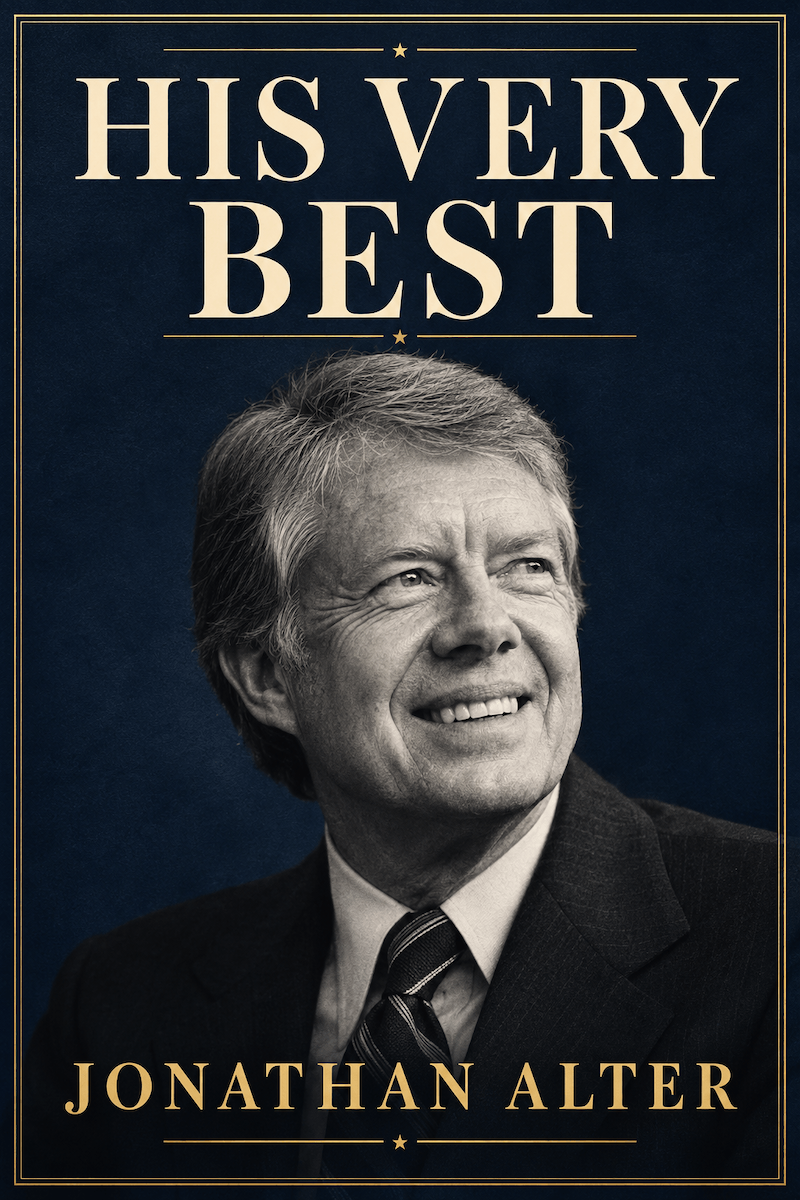
Prefer the print book? Buy on Amazon
As an Amazon Associate, Sumizeit earns from qualifying purchases.
Book Summary
His Very Best Book Summary
This His Very Best Book Summary covers the key ideas, lessons, and takeaways in about 20 minutes.
Short Description:
An easy read on Jimmy Carter’s rise, his bold presidency, and his later humanitarian work.
Jimmy Carter was a deeply principled man whose stubborn commitment to doing the right thing made him a better leader than a politician. He gave away the Panama Canal, brokered lasting peace between Egypt and Israel, reshaped the courts, and faced an energy crisis with honesty, and each choice cost him support. Alter argues that the history books and the headlines focus too much on his defeat and not enough on the long reach of his decisions, and that the same values of integrity, discipline, and compassion that hurt him in Washington gave his later life its greatness.
Helps with these goals
Preview the His Very Best book summary
Below is a preview of Sumizeit’s comprehensive human-written summary of His Very Best by Jonathan Alter. The full summary is 15-20 minutes long and covers the book’s key ideas in text, audio, visual, and video formats. Unlock the full 20 Minute Summary
Most people picture Jimmy Carter as a kind old man who built houses and fought disease after he left office. They picture the presidency as a rough four years of long gas lines, high prices, and hostages in Iran. Jonathan Alter says that picture is lopsided. It sells short the real work Carter did in Washington, and it hides how much of that work still shapes the country.
Alter paints Carter as a man full of contradictions. He could be warm and cold. He could be generous and judgmental. He was humble and very ambitious. He held firm to his principles, and that same stubbornness often wrecked his politics. He did the right thing again and again, and he paid for it each time.
Alter built the book from interviews with Carter, his family, and people who knew him, plus a deep dive into the archives at the Carter Presidential Library. It isn't an authorized biography, but it is the first full account of Carter's life that doesn't come from Carter himself. The story moves through his roles as a farm boy and sailor, a young politician, a man of faith, a president who put reform ahead of popularity, a peacemaker, and finally a tireless humanitarian.
Growing Up in Plains
James Earl Carter was born in 1924 in Plains, Georgia. His family's home had no electricity and no running water. The farm outside town was surrounded by Black families, many of whom worked for his father, and young Jimmy worked right beside them. His earliest friends were Black, and when he started school, white classmates teased him for sounding like the people he grew up with.
His parents pulled him in two directions. His father, James Sr., was a hard man who demanded perfection and almost never gave praise. From him Carter learned discipline, hard work, and honesty. His mother, Lillian, was a nurse who treated her Black neighbors, often for free, at a time when that was unusual for a white Southern woman. From her he learned compassion, and her concern for the poor and the sick would follow him into politics and beyond.
Carter set his sights on the Navy. He entered the Naval Academy at Annapolis in 1943. The brutal hazing there taught him to swallow his anger and keep going. He didn't graduate until after the war ended, but he finished near the top of his class. Soon he joined the nuclear submarine program under Admiral Hyman Rickover.
Rickover turned out to be a second father. He was prickly, demanding, and stingy with compliments. Alter argues Rickover shaped Carter as much as his parents did. In one famous exchange, Rickover asked if Carter had done his best at the Academy. Carter admitted he hadn't. He promised himself to give his very best from then on, which is where the book gets its title. Rickover taught him to master the details of any problem before trying to solve it.
Want the complete 20-minute summary?
- Full structured summary
- Video Summary
- Podcast Summary
- Audio summary
- Key takeaways
- Exercises
- Quiz
- Highlights and notes
- Ask the book with AI
Who should read His Very Best?
His Very Best is for anyone interested in presidential history, American politics, and the long-term impact of principled leadership. It appeals to those curious about Jimmy Carter beyond the popular narrative of gas lines and hostages, as well as readers who want to understand how a president's values and reforms shape the country long after leaving office.
Why does His Very Best matter?
Jonathan Alter's His Very Best reframes Carter's presidency at a moment when political integrity and principled decision-making feel increasingly rare. The book reveals how many of Carter's reforms—from reshaping the vice presidency to diversifying the federal courts—continue to shape American governance today, making his often-overlooked tenure essential to understanding modern politics and foreign policy.
What are the key themes in His Very Best?
- The cost of principled leadership in politics
- How childhood and mentorship shape a leader's character
- The tension between doing what's right and what's politically expedient
- Integrity and honesty as presidential values
- The lasting power of institutional reform over short-term popularity
- Faith, compassion, and their role in public service
- The importance of personal relationships in diplomacy
How can you apply ideas from His Very Best?
- Set high standards for yourself and others, but balance them with recognition and praise to avoid alienating your team
- Use institutional design and structural reform rather than personality-driven solutions to create lasting change
- Invest time in face-to-face negotiation when solving conflicts, especially when previous attempts have failed
- Communicate honestly about difficult problems rather than offering false reassurance, even if it costs short-term popularity
- Include diverse perspectives in decision-making, from your partner to your cabinet, to broaden your understanding of complex issues
- Recognize when doing the right thing will be politically costly, and weigh those costs thoughtfully before acting
- Build integrity into your commitments early, so your word carries weight when it matters most
What common mistakes do readers make with His Very Best?
- Assuming that being an outsider means you don't need to build political alliances; Carter's narrow victory left him without leverage even with his own party
- Expecting excellence without expressing appreciation; Carter's failure to praise good work alienated staff and made him difficult to work for
- Overestimating how quickly institutions or foreign powers will respond to pressure; Carter's expectations for the Iran crisis evolved as reality proved more complex
- Focusing so intently on principle that you neglect the political communications needed to maintain public support for your policies
Sumizeit Exercises Apply what you've learned
Turn ideas from His Very Best into action with a short guided reflection: identify the biggest takeaway, connect it to your life, and commit to one step you can take in the next 24 hours.
What is the expert analysis of His Very Best?
Overview
His Very Best by Jonathan Alter offers a nuanced reevaluation of Jimmy Carter’s life and presidency, challenging the reductive public memory that often limits Carter to his post-presidential humanitarian work or the crises of his administration. Alter, an accomplished historian and political analyst known for his incisive presidential biographies, draws on extensive interviews and archival research to present a richly detailed portrait that situates Carter as a complex figure whose integrity and reformist zeal left a lasting imprint on American governance and diplomacy.
Core Thesis
Alter’s central argument is that Jimmy Carter’s presidency and public service have been unfairly overshadowed by political setbacks and media narratives that emphasize his failures rather than his substantive achievements. Carter’s steadfast commitment to principle—manifested in his energy policies, judicial appointments, and peace initiatives—often came at great political cost, but these decisions have had enduring positive effects. Alter contends that Carter’s legacy is one of moral courage and pragmatic reform, qualities that defined both his presidency and his post-presidential humanitarian efforts.
Strengths
- Comprehensive Research: Alter’s use of interviews with Carter and his circle, alongside deep archival work, lends the biography a rare depth and authenticity, avoiding hagiography while highlighting Carter’s contradictions and complexities.
- Balanced Character Study: The book excels in portraying Carter as a man of contrasts—warm yet distant, humble yet ambitious—providing a textured understanding that transcends simplistic hero or failure narratives.
- Contextual Political Analysis: Alter situates Carter within the turbulent political realignments of the 1970s, including the Southern Strategy and the evolving evangelical movement, illuminating the structural challenges Carter faced.
- Highlighting Underappreciated Achievements: The detailed accounts of Carter’s reforms—such as empowering the vice presidency, reshaping the federal judiciary, and brokering the Camp David Accords—underscore his lasting impact on American political institutions and foreign policy.
- Integration of Personal and Political: The biography effectively intertwines Carter’s upbringing, faith, and personal relationships with his political decisions, illustrating how his character shaped his leadership style and priorities.
Critiques & Counterarguments
- Potential Overemphasis on Integrity: While Alter rightly foregrounds Carter’s principles, some critics might argue that this focus downplays the pragmatic failures and political miscalculations that contributed to his defeat, such as his inability to effectively communicate or build coalitions within Washington.
- Selective Political Framing: The portrayal of Carter’s “middle road” approach as a strategic necessity may underappreciate the growing polarization of the era and the limits of centrism in a rapidly realigning political landscape, where ideological clarity increasingly mattered.
- Competing Interpretations of the Iran Hostage Crisis: Alter’s sympathetic reading of Carter’s cautious diplomacy contrasts with other analyses that view his handling as indecisive, exacerbating perceptions of weakness and emboldening adversaries.
- Historical Revisionism Risks: The effort to rehabilitate Carter’s reputation might risk minimizing the tangible economic and foreign policy challenges of his administration, such as stagflation and the Soviet invasion of Afghanistan, which shaped public disillusionment.
- Opposing Schools of Thought: Realist foreign policy scholars might critique Carter’s idealistic emphasis on human rights and peacebuilding as naïve or insufficiently attentive to Cold War power dynamics, while some progressive historians could argue that his compromises on race and political strategy were ethically problematic.
Who Should Read This
His Very Best is essential reading for scholars and readers interested in American political history, presidential leadership, and the interplay of personal conviction and public service. It appeals to those seeking a sophisticated reassessment of a misunderstood presidency and offers valuable insights for students of political science, history, and ethics. Additionally, readers drawn to biographies that explore the moral complexities of leadership and the costs of principled governance will find Alter’s work both enlightening and thought-provoking.
Discussion questions for His Very Best Short questions you can actually use in a conversation
Frequently asked questions about the His Very Best book summary
What is His Very Best about?
His Very Best by Jonathan Alter is a comprehensive biography of Jimmy Carter that challenges the popular narrative of his presidency as a failure. Rather than focusing on gas lines and hostages, Alter explores Carter's principled leadership, his major reforms, and his lasting humanitarian legacy. The book argues that many of Carter's decisions—from reshaping the vice presidency to diversifying federal courts to brokering Middle East peace—had far greater impact than the headlines of his era suggested.
Who should read His Very Best?
His Very Best appeals to readers interested in presidential history, political biography, and the long-term consequences of leadership decisions. It's valuable for anyone curious about how a president's character and values shape outcomes, for students of American foreign policy, and for those seeking to understand how integrity in office differs from political expediency. The book also resonates with readers who want a deeper perspective on Jimmy Carter beyond the simplified version in textbooks.
What are the main takeaways from His Very Best?
The central takeaway is that Jimmy Carter's greatest strength—his unwavering commitment to doing what he believed was right—made him a better leader than a politician but cost him dearly in the short term. His reforms of federal institutions, his diplomatic breakthroughs, and his humanitarian work all demonstrate that principled decisions often yield long-term benefits that aren't visible in election-day results. Alter shows that how we remember leaders depends on how far out we look.
How did Jimmy Carter's childhood shape his presidency?
Carter grew up in rural Georgia without electricity or running water, surrounded by Black families. His father taught him discipline and honesty, while his mother modeled compassion and service to those in need. Admiral Rickover, under whom Carter served in the Navy, became a second father figure who instilled the importance of mastering details and pursuing excellence. These influences—discipline, compassion, and attention to detail—defined Carter's approach to the presidency and his later humanitarian work.
Why did Carter's decision to return the Panama Canal matter?
Returning the Panama Canal to Panama was strategically necessary because American control bred deep resentment across Latin America and risked violence that could have escalated into war. However, it was extremely unpopular at home, where many Americans saw it as a sign of national decline. Carter pursued the treaty because he believed permanent control was unjust, and the agreement has remained stable for decades, demonstrating that his principled decision served long-term American interests even though it damaged his political standing.
What did Carter accomplish during the Iran hostage crisis?
During the 444-day hostage crisis, Carter pursued diplomacy rather than military escalation, which he feared would endanger the hostages and drag the nation into another war. While the standoff severely damaged his political standing and contributed to his electoral loss to Ronald Reagan, Alter notes that Carter kept the country out of armed conflict—an achievement no later president has matched. The hostages were finally released on the day Reagan took office, after Iraq's invasion of Iran forced Khomeini to negotiate.
How did Carter reshape the federal judiciary?
A 1978 law gave Carter the chance to appoint 152 new federal judges, more than any president before him. He created an independent commission to ensure the search for nominees included qualified minorities and women. This deliberate effort resulted in Carter appointing many Black, Hispanic, and female judges, including Ruth Bader Ginsburg, who later became a Supreme Court Justice. His judicial appointments had ripple effects for decades and changed the face of the federal bench.
About Sumizeit
Sumizeit is a profitable Scomy LLC company based in Miami, Florida. Our founders, Clemens Raemy and Weina Scott, are successful entrepreneurs with several exits. Sumizeit is a popular book summary app / micro learning app used by busy professionals and entrepreneurs with over 2,500 non-fiction book summaries and 10,000 podcast summaries in text, audio, visual, podcast, and video format. We also have stellar retention tools to make ideas stick - such as flashcards with spaced repetition, quizzes, streaks, highlighting and notes, daily challenges, riddles, mini-courses, meditation, and more. You won't only learn the idea, but also remember it. Over 90% of our users change their habits with Sumizeit.
Upgrade Now
Here's why readers love Sumizeit
Join thousands of learners getting smarter every day
"Great experience. Detailed summaries. Loved the gamification feature. Makes learning fun. Good customer service. I recommend Sumizeit to anyone. You'll learn a lot."
"I always felt busy but still wanting to keep up with the book discussion in my friend group. This was a great supplement to help me keep reading the books I find fun while keeping up with important books."
"I love this website. Instead of scrolling social media, I find myself learning a lot. I use it everyday. I recommend this app for anyone who is too busy and wants to get up to speed with their favorite books."
His Very Best Book Summary PDF
Looking for a His Very Best Book Summary PDF you can save and revisit offline? Our His Very Best Book Summary PDF captures the book’s core ideas in a clean, printable format — the key frameworks, takeaways, and structure without the fluff. Download the His Very Best Book Summary PDF when you want a reference you can annotate, share with your team, or review on the go. Get your His Very Best Book Summary PDF from the download page below.
Download His Very Best Book Summary PDFPeople also liked these summaries
Readers who explored His Very Best often enjoyed these titles next.



Ready to read the whole thing?
- Full structured summary
- Video Summary
- Podcast Summary
- Audio summary
- Key takeaways
- Exercises
- Quiz
- Highlights and notes
- Ask the book with AI
Featured Book Titles
Popular Book Summaries at sumizeit, leading book summary app
Atomic Habits Book Summary Rich Dad Poor Dad Book Summary The Four Agreements Book Summary The 48 Laws of Power Book Summary When Breath Becomes Air Book Summary Think and Grow Rich Book Summary