
Question 1 of 10


Prefer the print book? Buy on Amazon
As an Amazon Associate, Sumizeit earns from qualifying purchases.
Book Summary
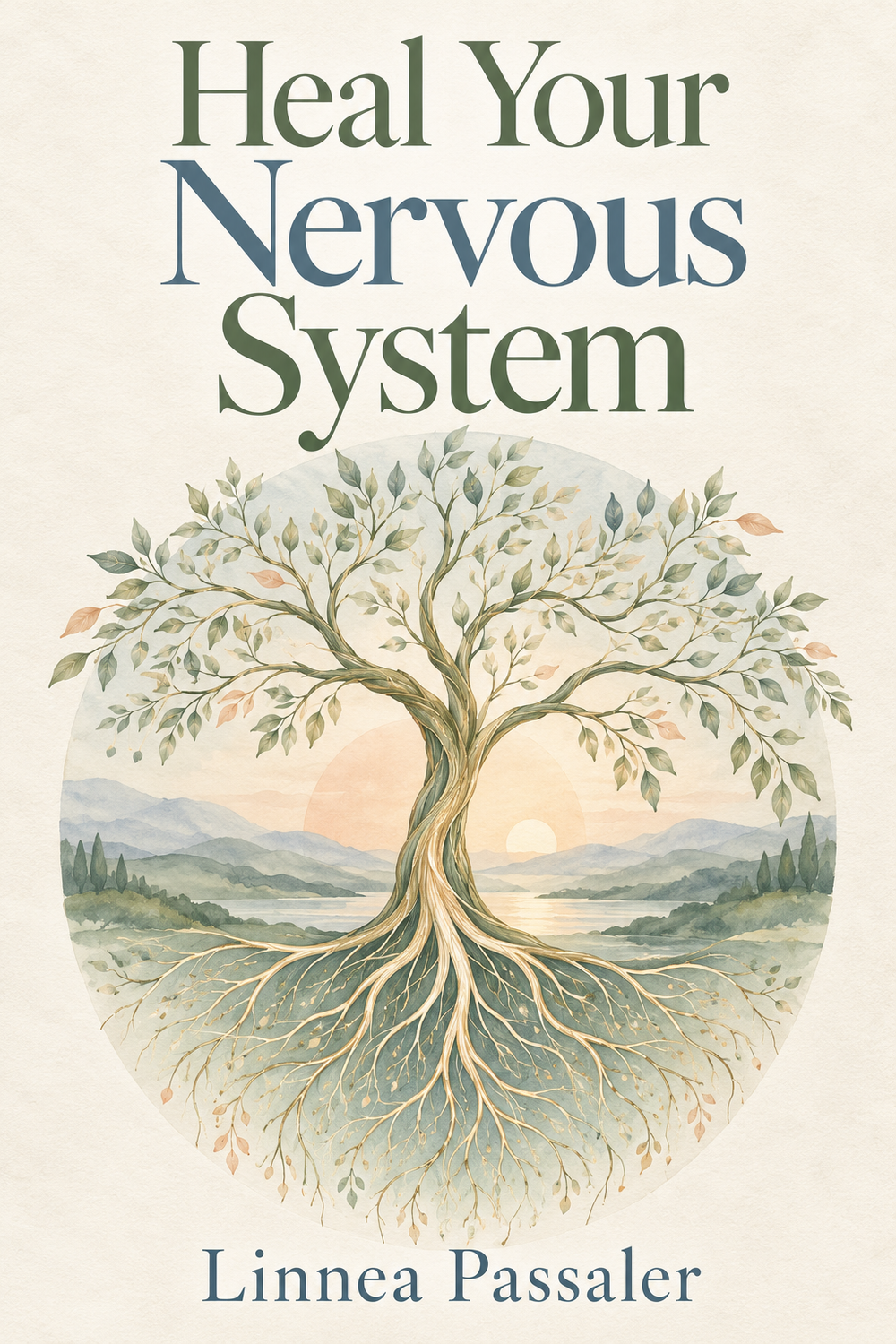
Heal Your Nervous System Book Summary
This Heal Your Nervous System Book Summary covers the key ideas, lessons, and takeaways in about 20 minutes.
Short Description:
How an overloaded nervous system drives stress, and the plan to rebalance it
Your nervous system sits underneath your mental and physical health, and when it stays stuck in alert mode it can show up as anxiety, exhaustion, pain, gut trouble and poor sleep that no single specialist can fix on their own. Passaler's answer is to treat the whole person. You steady your system through the four pillars of body, mind, relationships and purpose, you build calm routines around sleep, food, senses and space, you use breath and body awareness to settle your reactions, you add small doses of healthy stress, and you face the old coping habits, attachment patterns and fears that keep the cycle running. Healing happens in stages, and your body already knows how to regulate itself once you give it the right conditions.
Helps with these goals
Want a Free Weekly Read?
Get a free summary every week straight to your mailbox.
Preview the Heal Your Nervous System book summary
Below is a preview of Sumizeit’s comprehensive human-written summary of Heal Your Nervous System by Linnea Passaler. The full summary is 15-20 minutes long and covers the book’s key ideas in text, audio, visual, and video formats. Unlock the full 20 Minute Summary
Passaler starts with a simple claim. Your nervous system runs a huge part of your life. It carries messages between your brain and the rest of your body, and it controls your heartbeat, your breathing, your digestion, your immune response and your emotional reactions. When it works well, you barely notice it. When it gets knocked off balance, you notice everything.
She calls that imbalance dysregulation. A dysregulated nervous system has trouble switching from high alert to calm. It gets stuck in alert mode, so you feel anxious, restless or tired all the time. Over months and years that constant tension wears your body down. Passaler ties it to a wide range of problems, from anxiety and deep exhaustion to fibromyalgia, irritable bowel syndrome and autoimmune flare ups. Poor sleep, trouble focusing and wild emotional swings show up too.
The pinball machine
To explain why the trouble feeds itself, Passaler uses a pinball machine. Your mitochondria, which make your cellular energy, the connections between your neurons and the way your system reacts to the outside world all work like the flippers, bumpers and targets. Everything bounces off everything else. When one flipper fails or one target jams, the whole game goes sideways.
Here is how the cycle runs. Any trigger, physical or emotional, sets off stress hormones and inflammation. If that keeps happening, your system gets more sensitive and less stable. Constant pressure, unresolved emotional wounds or old trauma can weaken your mitochondria. Less energy leaves you more open to stress, so you feel more anxious, more tired and more physically unwell, including gut trouble. Changes in your gut bacteria, stress and diet can also feed inflammation, and inflammation hurts the mitochondria even more. You end up in a loop where each problem makes the next one worse.
Why regular medicine misses it
Passaler says conventional healthcare often misses all this because it treats symptoms one at a time. You see one specialist for your gut, another for your sleep, another for your skin, and nobody asks what connects them. Many people walk away feeling unseen and worn out from the runaround. She compares it to cutting off the visible part of garden weeds. They grow right back because nobody dealt with the roots. Symptoms that return or get worse are those weeds.
Her answer is an approach that treats the whole person, mind and body together. She believes your body has its own wisdom and a built in ability to regulate itself. Healing means respecting that ability and building it up.
The four pillars
Passaler builds her approach on four pillars. They are physical, mental, social and spiritual, and they depend on each other. If you neglect one, the others suffer.
The physical pillar covers sleep, nutrition, exercise, the health of your gut and immune system, and the sensory input you take in. Rest repairs your cells and balances your hormones. Good food gives your cells the raw material for energy.
Want the complete 20-minute summary?
- Full structured summary
- Video Summary
- Podcast Summary
- Audio summary
- Key takeaways
- Exercises
- Quiz
- Highlights and notes
- Ask the book with AI
Who should read Heal Your Nervous System?
Heal Your Nervous System is for anyone struggling with chronic anxiety, exhaustion, sleep problems, digestive issues, or autoimmune symptoms that don't seem to have a clear cause. It's especially valuable for highly sensitive people, those dealing with unresolved stress or trauma, and people frustrated by conventional medicine's compartmentalized approach to health.
Why does Heal Your Nervous System matter?
Most health advice treats symptoms in isolation, but your nervous system connects everything—from sleep and digestion to mood and immunity. When your nervous system gets stuck in overdrive, it creates a cascade of problems that no single specialist can fix. Linnea Passaler's Heal Your Nervous System offers a unified framework for understanding and reversing this hidden root cause of modern health struggles.
What are the key themes in Heal Your Nervous System?
- Nervous system dysregulation as the hidden root of many health problems
- The interconnected four pillars: physical, mental, social, and spiritual health
- Building resilience through predictable daily routines and sensory regulation
- Using body-based practices to retrain your nervous system
- The role of attachment patterns and unprocessed trauma in ongoing stress
- Purpose, nature, and community as powerful healing tools
How can you apply ideas from Heal Your Nervous System?
- Establish a consistent daily rhythm around sleep, meals, and sensory input to create the predictability your nervous system needs to heal
- Practice deliberate slow breathing several times daily to directly signal your nervous system to shift from alert to calm mode
- Add small healthy stressors like cold showers, high-intensity exercise bursts, or sauna sessions to build stress resilience over time
- Map your attachment patterns and coping habits to identify which old strategies are now obstacles to healing and replace them with supportive practices
- Spend regular time in nature or engaging in creative activities to activate awe and reset your nervous system
- Build or strengthen relationships and community connections to create the social safety your nervous system needs
- Identify and work with triggering situations that reflect past trauma or fear responses, then consciously practice new reactions
What common mistakes do readers make with Heal Your Nervous System?
- Trying to think or willpower your way to healing without addressing the physical, somatic roots of dysregulation
- Treating individual symptoms separately rather than recognizing they stem from the same underlying nervous system dysregulation
- Neglecting one or more of the four pillars (physical, mental, social, spiritual) and expecting healing from the others alone
- Continuing old coping strategies that once felt protective but now keep your nervous system stuck in overdrive
Sumizeit Exercises Apply what you've learned
Turn ideas from Heal Your Nervous System into action with a short guided reflection: identify the biggest takeaway, connect it to your life, and commit to one step you can take in the next 24 hours.
What is the expert analysis of Heal Your Nervous System?
Overview
Heal Your Nervous System by Linnea Passaler is a contemporary exploration of the intricate relationship between the nervous system and holistic health. Passaler, whose background details remain unspecified in the source material, offers a comprehensive framework that integrates physical, mental, social, and spiritual dimensions into a unified approach to healing. The book stands out in the crowded field of self-improvement and health literature by centering the nervous system as the linchpin of well-being, advocating for a systemic rather than symptomatic treatment model.
Core Thesis
Passaler’s central argument is that many chronic health issues—ranging from anxiety and exhaustion to autoimmune disorders and gut problems—stem from a dysregulated nervous system stuck in a state of chronic alertness. This dysregulation disrupts the body's ability to switch between states of stress and calm, creating a self-perpetuating cycle of physical and emotional dysfunction. Healing, she contends, requires a holistic, stage-based approach that nurtures the nervous system’s innate capacity for self-regulation by addressing four interdependent pillars: physical health, mental habits, social connections, and spiritual purpose.
Strengths
- Holistic Integration: Passaler’s model adeptly synthesizes insights from physiology, psychology, and social well-being, presenting a nuanced understanding of how diverse factors interact to influence nervous system health.
- Accessible Metaphors: The pinball machine analogy effectively conveys the complexity and interconnectedness of bodily systems, making intricate biological processes relatable without oversimplification.
- Practical Framework: The four pillars and five-stage plan provide readers with a clear, actionable roadmap that moves beyond abstract theory to concrete daily practices and progressive healing steps.
- Emphasis on Sensory and Embodied Awareness: The focus on breathwork, sensory regulation, and body-based interventions reflects cutting-edge trends in trauma-informed care and somatic psychology.
- Recognition of Sensitivity as Strength: By reframing high sensitivity as an asset rather than a liability, Passaler challenges cultural stigmas and encourages empowerment of neurodiverse individuals.
Critiques & Counterarguments
- Limited Authorial Credentials: The absence of detailed background or clinical credentials for Passaler may raise questions about the empirical rigor behind some claims, especially for readers seeking evidence-based validation.
- Potential Oversimplification of Complex Disorders: While the dysregulation model is compelling, some chronic illnesses like autoimmune diseases have multifactorial etiologies that may not be fully addressed by nervous system regulation alone.
- Hormesis Recommendations Require Caution: Suggestions such as cold exposure, intermittent fasting, and sauna use, though popular, carry risks and are not universally supported by large-scale clinical trials as universally beneficial for nervous system health.
- Competing Models of Stress and Trauma: Established psychological frameworks, such as cognitive-behavioral therapy (CBT) and pharmacological interventions, emphasize different mechanisms of stress regulation and may challenge the primacy of somatic and sensory approaches.
- Risk of Underestimating Sociocultural Factors: While social and spiritual pillars are included, the book may underplay broader systemic issues—such as socioeconomic stressors and access to healthcare—that critically impact nervous system health and recovery.
Who Should Read This
Heal Your Nervous System is ideally suited for readers interested in an integrative, whole-person approach to health—particularly those grappling with chronic stress, anxiety, or unexplained physical symptoms that have eluded conventional medical treatment. It appeals to practitioners and laypeople alike who value embodied practices and seek a structured yet compassionate guide to nervous system regulation. Additionally, individuals with high sensitivity or those drawn to the intersection of mind, body, and spirit will find Passaler’s insights both validating and empowering. However, readers looking for a strictly biomedical or pharmacological perspective may find the book’s holistic orientation less aligned with their expectations.
Discussion questions for Heal Your Nervous System Short questions you can actually use in a conversation
Frequently asked questions about the Heal Your Nervous System book summary
What is Heal Your Nervous System about?
Heal Your Nervous System by Linnea Passaler explains how a dysregulated nervous system—one stuck in constant alert mode—underlies many modern health problems from anxiety and exhaustion to digestive issues and autoimmune flare-ups. The book offers a whole-person healing framework built on four pillars (physical, mental, social, and spiritual health) and a five-stage progression from awareness through expansion, giving you practical tools to retrain your nervous system through daily routines, breath work, body awareness, and addressing old trauma patterns.
Who should read Heal Your Nervous System?
This book is for anyone struggling with chronic anxiety, persistent fatigue, sleep problems, digestive issues, or autoimmune symptoms that conventional medicine treats separately without relief. It's especially valuable for highly sensitive people, those dealing with unresolved trauma or stress, people frustrated by fragmented healthcare approaches, and anyone seeking to understand the hidden nervous system roots of their health struggles.
What are the main takeaways from Heal Your Nervous System?
The core insight is that your nervous system, when dysregulated, creates a self-reinforcing cycle of stress, inflammation, and exhaustion that shows up as multiple seemingly unrelated symptoms. Passaler's solution involves stabilizing your system through four interconnected pillars, building predictable daily routines, using body-based practices like breath work and interoception, adding small healthy stressors to build resilience, and addressing the old attachment patterns and trauma that keep dysregulation running. Healing happens in stages, and your body already has the capacity to regulate itself once you provide the right conditions.
How does nervous system dysregulation develop?
Dysregulation develops when your nervous system gets stuck in alert mode due to chronic stress, unresolved trauma, insecure early attachments, or accumulated physical and emotional demands. A single overwhelming event can reprogram your fear response for the long term, and ongoing stress keeps stress hormones flowing, weakening your energy production and immune function. This creates a vicious cycle where each stressor makes your system more sensitive and reactive, eventually leading to the cascade of physical and emotional symptoms most people experience as separate health problems.
What are the four pillars in Heal Your Nervous System?
The four pillars are physical, mental, social, and spiritual health, and they work together to support nervous system regulation. The physical pillar covers sleep, nutrition, exercise, gut and immune health, and sensory input. The mental pillar involves noticing your thoughts and emotions with kindness rather than judgment. The social pillar is about supportive relationships and community that create belonging. The spiritual pillar is having a sense of purpose and connection to something larger than yourself, whether through religion, meaning, nature, or art. Neglecting any one pillar weakens all the others.
What is hormesis and why does it matter for healing?
Hormesis is the principle that brief, manageable doses of stress actually strengthen your system, just as exercise strengthens muscles. Linnea Passaler recommends intentionally adding small healthy stressors—like cold showers, high-intensity exercise, sauna sessions, or intermittent fasting—to build your nervous system's capacity to handle future challenges. This approach recognizes that some stress is necessary for resilience, and modern life is often overprotected; strategically introducing manageable stress actually improves your metabolism, immunity, and stress tolerance over time.
How do you break the cycle of nervous system dysregulation?
Breaking the cycle requires a multi-pronged approach: establish predictable daily routines around sleep, food, and sensory input to create stability; use breath and body awareness to directly signal your nervous system to calm; heal attachment wounds and trauma patterns that keep your fear response overactive; address old coping habits that now keep you dysregulated; and build connection, purpose, and time in nature to activate awe and resilience. Passaler emphasizes that this must include body-based work, not just thinking differently, because the nervous system responds to physical signals more directly than thoughts.
Why does conventional medicine often miss nervous system dysregulation?
Conventional medicine typically treats symptoms in isolation—one specialist for sleep, another for digestion, another for anxiety—without asking what connects them. This fragmented approach misses the fact that all these symptoms often stem from the same underlying nervous system dysregulation. Passaler compares it to cutting off visible weeds without addressing the roots; symptoms return or worsen because the root cause was never treated. A whole-person approach that recognizes the nervous system as the foundation of both mental and physical health is needed to achieve lasting healing.
About Sumizeit
Sumizeit is a profitable Scomy LLC company based in Miami, Florida. Our founders, Clemens Raemy and Weina Scott, are successful entrepreneurs with several exits. Sumizeit is a popular book summary app / micro learning app used by busy professionals and entrepreneurs with over 2,500 non-fiction book summaries and 10,000 podcast summaries in text, audio, visual, podcast, and video format. We also have stellar retention tools to make ideas stick - such as flashcards with spaced repetition, quizzes, streaks, highlighting and notes, daily challenges, riddles, mini-courses, meditation, and more. You won't only learn the idea, but also remember it. Over 90% of our users change their habits with Sumizeit.
Upgrade Now
Here's why readers love Sumizeit
Join thousands of learners getting smarter every day
"Great experience. Detailed summaries. Loved the gamification feature. Makes learning fun. Good customer service. I recommend Sumizeit to anyone. You'll learn a lot."
"I always felt busy but still wanting to keep up with the book discussion in my friend group. This was a great supplement to help me keep reading the books I find fun while keeping up with important books."
"I love this website. Instead of scrolling social media, I find myself learning a lot. I use it everyday. I recommend this app for anyone who is too busy and wants to get up to speed with their favorite books."
Heal Your Nervous System Book Summary PDF
Looking for a Heal Your Nervous System Book Summary PDF you can save and revisit offline? Our Heal Your Nervous System Book Summary PDF captures the book’s core ideas in a clean, printable format — the key frameworks, takeaways, and structure without the fluff. Download the Heal Your Nervous System Book Summary PDF when you want a reference you can annotate, share with your team, or review on the go. Get your Heal Your Nervous System Book Summary PDF from the download page below.
Download Heal Your Nervous System Book Summary PDFPeople also liked these summaries
Readers who explored Heal Your Nervous System often enjoyed these titles next.



Ready to read the whole thing?
- Full structured summary
- Video Summary
- Podcast Summary
- Audio summary
- Key takeaways
- Exercises
- Quiz
- Highlights and notes
- Ask the book with AI
Featured Book Titles
Popular Book Summaries at sumizeit, leading book summary app
Atomic Habits Book Summary Rich Dad Poor Dad Book Summary The Four Agreements Book Summary The 48 Laws of Power Book Summary When Breath Becomes Air Book Summary Think and Grow Rich Book Summary