


Prefer the print book? Buy on Amazon
As an Amazon Associate, Sumizeit earns from qualifying purchases.
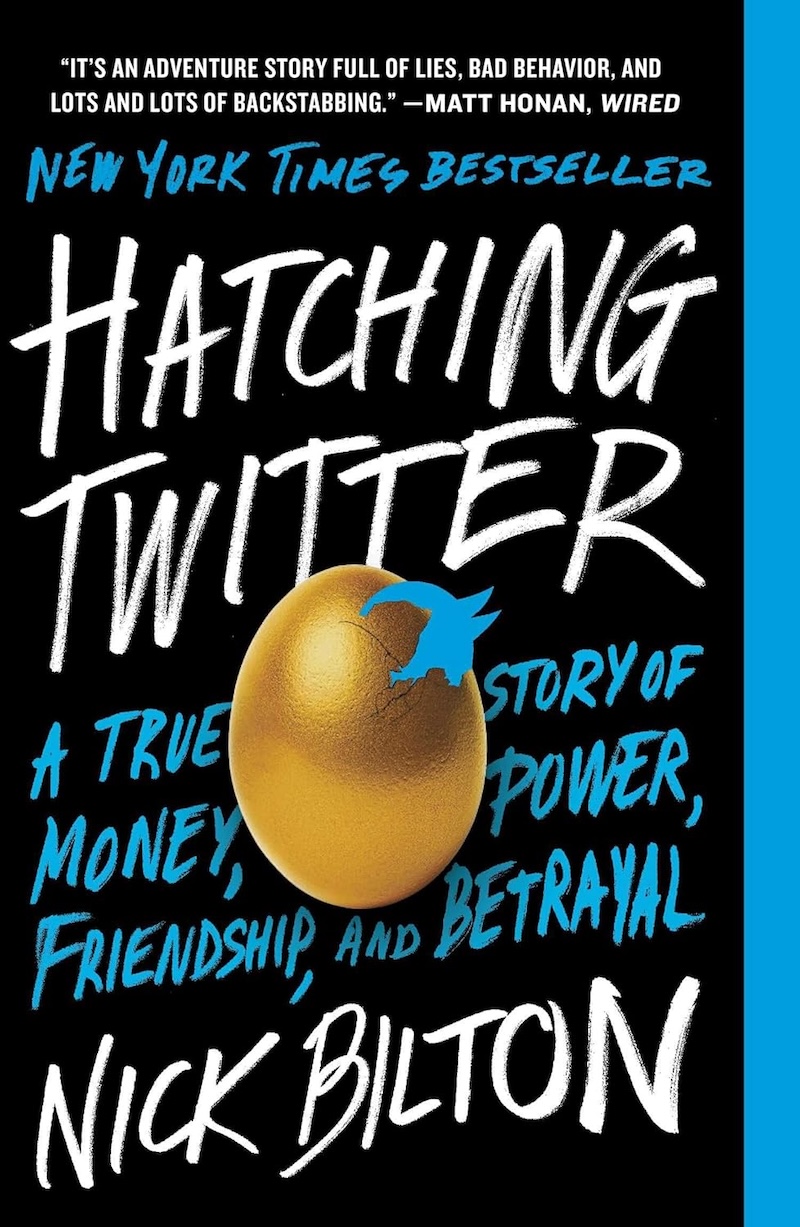
Hatching Twitter Book Summary
This Hatching Twitter Book Summary covers the key ideas, lessons, and takeaways in about 20 minutes.
Short Description:
Hatching Twitter shows Twitter’s rise amid conflict and chaos.
Helps with these goals
Want a Free Weekly Read?
Get a free summary every week straight to your mailbox.
Preview the Hatching Twitter book summary
Below is a preview of Sumizeit’s comprehensive human-written summary of Hatching Twitter by Nick Bilton. The full summary is 15-20 minutes long and covers the book’s key ideas in text, audio, visual, and video formats. Unlock the full 20 Minute Summary
Hatching Twitter recounts a story that is far more dramatic than the clean and polished narrative the company later presented to the world. Nick Bilton reveals a messy origin filled with rivalry, betrayal, ambition, loneliness, and the accidental creation of one of the most influential platforms in modern history. The idea that would become Twitter did not emerge from a carefully structured business plan but from a failing podcast startup called Odeo, where a group of young dreamers searched desperately for something that might save the company from collapse. Jack Dorsey, who at the time was working as a programmer obsessed with mapping the movement of people in real time, had been thinking for years about a way for individuals to broadcast short updates about what they were doing. Noah Glass, one of the most emotionally driven members of the team, became captivated by the idea of using technology to connect people who felt isolated. Their collaboration, combined with the open-ended support of Evan Williams, who had previously founded Blogger and brought financial resources to Odeo, eventually produced a service focused on short, public messages that spread instantly across a network. The early concept revolved around answering the question, “What are you doing?” But as people began using it for breaking news, organizing movements, and following major events, the service expanded beyond simple updates and became a global tool for real-time storytelling. When Jack famously typed the first official message in March 2006, no one involved imagined that this experiment—originally intended as a side project—would fundamentally reshape journalism, political activism, celebrity culture, and interpersonal communication.
The Struggling Startup That Became a Serendipitous Launchpad
Odeo’s collapse was essential to Twitter's birth. When Apple announced plans to enter podcasting directly through iTunes, Odeo’s core premise evaporated. Employees were demoralized, investors were frustrated, and the founders desperately sought a lifeline. Inside this chaotic environment, ideas circulated frantically, and Jack and Noah pitched the concept that would soon become Twitter. Evan Williams, who had invested heavily in Odeo using the money he earned from selling Blogger, eventually agreed to give the project a chance. The team built a crude prototype almost overnight, driven by urgency rather than strategy. The new system relied heavily on SMS functionality and short character limits, largely due to technical restrictions rather than design genius. Yet these constraints shaped its distinct personality. Messages were brief, fast, and disruptive, unlike anything available online at the time. In 2007, recognizing that Odeo would not survive, Williams returned investor funds, purchased the company himself, and spun Twitter out as its own independent entity. This bold decision, which some saw as reckless, became the turning point that allowed the platform to evolve beyond experimentation. Twitter slowly gained traction through word of mouth, tech conferences, and early adopters who used it to stay connected in real time. What started as a tool for friends quickly shifted toward public broadcasting, especially when early media figures and cultural influencers embraced it.
Want the complete 20-minute summary?
- Full structured summary
- Video Summary
- Podcast Summary
- Audio summary
- Key takeaways
- Exercises
- Quiz
- Highlights and notes
- Ask the book with AI
Who should read Hatching Twitter?
Hatching Twitter is essential reading for entrepreneurs, tech enthusiasts, and anyone curious about how the world's most influential social media platforms actually get built. If you're interested in startup culture, Silicon Valley dynamics, or want to understand the human stories behind major technological innovations, this book cuts through the polished mythology to reveal the messy reality.
Why does Hatching Twitter matter?
In an era where social media shapes politics, journalism, and global communication, understanding Twitter's true origin story matters more than ever. Nick Bilton's account exposes how revolutionary platforms often emerge from chaos rather than careful planning, and raises critical questions about the responsibility tech founders have when their creations reshape society in unexpected ways.
What are the key themes in Hatching Twitter?
- The messy reality of startup creation versus polished mythology
- Power struggles and ego clashes among co-founders
- How constraints and crisis drive innovation
- The identity crisis of platforms built on shifting visions
- The human cost of technological success
- Accidental world-changing inventions
How can you apply ideas from Hatching Twitter?
- Study how crisis and constraints force innovation—use limitations as creative catalysts rather than viewing them as pure obstacles
- Understand that co-founder conflicts are normal and can drive stronger product development if managed constructively rather than suppressed
- Recognize that your product's actual impact may diverge drastically from its original purpose, so build flexibility and adaptability into your platform design
- Invest in emotional intelligence and conflict management skills as a founder, especially when managing diverse personalities and competing visions
- Build ethical frameworks early for how your platform will be used in society, rather than waiting until growth forces you to confront these questions reactively
- Protect your relationships with co-founders through transparency and honest communication, recognizing that power struggles often stem from misalignment rather than true incompatibility
- Control your narrative and personal brand in tech leadership—investors and boards respond to perception and storytelling as much as actual operational results
What common mistakes do readers make with Hatching Twitter?
- Assuming a startup's success comes from a clear, unified vision when most successful platforms emerge from messy improvisation and conflicting perspectives
- Overlooking the human and relational costs of rapid scaling—assuming that success automatically justifies the personal sacrifices and friendship losses along the way
- Treating founders as interchangeable or evaluating them only by operational metrics, when personality, relationships, and symbolic leadership matter enormously
- Believing that early ethical or content moderation decisions don't matter because your platform is 'just a tool'—platforms inevitably shape society and require deliberate moral frameworks
- Underestimating how technical constraints shape cultural identity—viewing limitations as purely negative rather than as design opportunities that define user experience
Sumizeit Exercises Apply what you've learned
Turn ideas from Hatching Twitter into action with a short guided reflection: identify the biggest takeaway, connect it to your life, and commit to one step you can take in the next 24 hours.
What is the expert analysis of Hatching Twitter?
Overview
Hatching Twitter, authored by Nick Bilton, stands out as a seminal work chronicling the chaotic and often turbulent origins of one of the most influential social media platforms in history. Bilton, an investigative journalist with deep roots in Silicon Valley reportage, offers readers a meticulously researched yet vividly narrated account that dismantles the sanitized corporate mythology surrounding Twitter’s creation. His insider perspective and narrative flair elevate this book beyond a mere business biography, making it a crucial text for understanding the interplay of personality, power, and technology in the digital age.
Core Thesis
At its core, Hatching Twitter posits that Twitter’s success was less the product of deliberate design or harmonious collaboration than the outcome of conflict, serendipity, and relentless experimentation amid crisis. Bilton argues that the platform’s identity crisis—rooted in competing visions among its founders—mirrors broader tensions inherent in startup culture where innovation often comes at the cost of personal relationships and organizational stability. The book challenges the myth of the solitary visionary, revealing instead a fractured collective whose clashing ambitions and emotional struggles shaped Twitter’s evolution and societal impact.
Strengths
- Rich, nuanced character portrayals: Bilton humanizes the founders, revealing their vulnerabilities, rivalries, and motivations with cinematic detail, which adds depth to what could have been a dry corporate history.
- Insider access and rigorous research: The author’s investigative approach uncovers previously hidden conflicts and decisions, providing a rare window into Silicon Valley’s opaque power dynamics.
- Contextualization of technological innovation: The book situates Twitter’s emergence within the broader technological and cultural shifts of the mid-2000s, explaining how constraints like SMS limitations shaped the platform’s unique form.
- Exploration of ethical and societal implications: Bilton does not shy away from probing the consequences of Twitter’s rise, including its role in political activism, media transformation, and the spread of misinformation.
- Engaging narrative style: The blend of investigative journalism with storytelling techniques makes the complex corporate saga accessible and compelling for a broad readership.
Critiques & Counterarguments
- Potential overemphasis on personal drama: While the interpersonal conflicts are compelling, some readers may find that the focus on founder rivalries overshadows deeper technical or strategic analyses of Twitter’s product development and market positioning.
- Limited exploration of broader ecosystem: The book centers heavily on Twitter’s internal dynamics but offers less insight into how external forces—such as competitors, regulatory environments, or user communities—shaped its trajectory.
- Risk of narrative bias: Bilton’s reliance on insider accounts and dramatic storytelling might lead to selective emphasis, potentially amplifying certain perspectives (e.g., Jack Dorsey’s reinvention) at the expense of others.
- Competing research on startup success factors: Some scholarship in entrepreneurship emphasizes the role of market timing, customer feedback loops, and iterative design over founder personality conflicts, suggesting that Twitter’s growth might be better explained by external market dynamics than internal strife alone.
- Opposing views on platform responsibility: The book raises ethical questions about Twitter’s content moderation but does not deeply engage with arguments advocating for platform neutrality or the complexities of free speech in digital public squares, which remain hotly debated in academic and policy circles.
Who Should Read This
Hatching Twitter is essential reading for those interested in the intersection of technology, business, and human psychology. It will particularly resonate with:
- Entrepreneurs and startup founders seeking candid insights into the personal and organizational challenges of building disruptive companies.
- Technology historians and sociologists who want a richly detailed case study of how digital platforms emerge and evolve amid conflict and uncertainty.
- Business strategists and investors aiming to understand the complex dynamics behind tech company leadership and governance.
- Media and communication scholars interested in the societal implications of social media platforms on journalism, activism, and public discourse.
- General readers fascinated by Silicon Valley culture and the human stories behind technological innovation.
Frequently asked questions about the Hatching Twitter book summary
What is Hatching Twitter about?
Hatching Twitter by Nick Bilton is an investigative account of the messy, chaotic origin story of one of the world's most influential social media platforms. Rather than a polished narrative of visionary genius, the book reveals the internal power struggles, co-founder conflicts, and desperate circumstances that led to Twitter's creation—and exposes the emotional toll the company's rapid rise took on the people who built it.
Who should read Hatching Twitter?
Hatching Twitter appeals to entrepreneurs and startup founders who want a realistic look at how companies actually develop beyond mythologized origin stories. Technology enthusiasts, business students, and anyone interested in Silicon Valley culture will find it invaluable, as will readers curious about the human stories behind the platforms that shape modern communication.
What are the main takeaways from Hatching Twitter?
The main takeaways include: revolutionary platforms often emerge from crisis and desperation rather than careful planning; co-founder conflicts can drive innovation as much as harmony; technical constraints shape cultural impact; and success in tech comes with significant human costs that are rarely acknowledged. The book also emphasizes that founders have limited control over how society ultimately uses their creations.
Why did Jack Dorsey get removed as Twitter's CEO?
Jack Dorsey was removed as CEO in 2008 due to internal dissatisfaction with his leadership and inability to manage Twitter's rapid growth and technical failures. Board members and investors, frustrated by constant system crashes and what they perceived as his lack of organizational structure, voted to replace him with Evan Williams, who brought more analytical and strategic management to the company.
What role did Evan Williams play in Twitter's creation?
Evan Williams, who had previously founded Blogger, invested his personal wealth from that sale into Odeo and eventually became a key decision-maker in Twitter's early development. When Odeo was failing, he provided support for Jack and Noah's Twitter concept, and later took over as CEO to scale the platform with more organizational discipline and long-term strategic planning.
What happened to Noah Glass in Twitter's history?
Noah Glass, one of Twitter's earliest emotional champions and evangelists, was pushed out of the company early in its history and largely erased from the official narrative of its creation. He felt deeply betrayed by this exclusion and later publicly insisted that the Twitter idea was as much his as anyone's, though mainstream accounts rarely acknowledge his significant contributions.
How did Twitter become a global political tool?
Twitter's transformation into a platform for activism and political change happened accidentally and unexpectedly. When it gained mainstream adoption, people began using it for breaking news coverage, organizing protests, and bypassing government censorship—as exemplified during the 2009 Iranian election protests. The founders never anticipated these uses and lacked frameworks to handle the ethical questions they raised.
What does Hatching Twitter reveal about startup culture?
Hatching Twitter exposes startup culture as driven by ego, ambition, emotional instability, and personal power struggles rather than pure meritocracy. The book shows that success depends on personality, relationships, board dynamics, and strategic narrative control as much as operational excellence, and that the cost of building world-changing companies often includes destroyed friendships and unacknowledged contributors.
About Sumizeit
Sumizeit is a profitable Scomy LLC company based in Miami, Florida. Our founders, Clemens Raemy and Weina Scott, are successful entrepreneurs with several exits. Sumizeit is a popular book summary app / micro learning app used by busy professionals and entrepreneurs with over 2,500 non-fiction book summaries and 10,000 podcast summaries in text, audio, visual, podcast, and video format. We also have stellar retention tools to make ideas stick - such as flashcards with spaced repetition, quizzes, streaks, highlighting and notes, daily challenges, riddles, mini-courses, meditation, and more. You won't only learn the idea, but also remember it. Over 90% of our users change their habits with Sumizeit.
Upgrade Now
Here's why readers love Sumizeit
Join thousands of learners getting smarter every day
"Great experience. Detailed summaries. Loved the gamification feature. Makes learning fun. Good customer service. I recommend Sumizeit to anyone. You'll learn a lot."
"I always felt busy but still wanting to keep up with the book discussion in my friend group. This was a great supplement to help me keep reading the books I find fun while keeping up with important books."
"I love this website. Instead of scrolling social media, I find myself learning a lot. I use it everyday. I recommend this app for anyone who is too busy and wants to get up to speed with their favorite books."
Hatching Twitter Book Summary PDF
Looking for a Hatching Twitter Book Summary PDF you can save and revisit offline? Our Hatching Twitter Book Summary PDF captures the book’s core ideas in a clean, printable format — the key frameworks, takeaways, and structure without the fluff. Download the Hatching Twitter Book Summary PDF when you want a reference you can annotate, share with your team, or review on the go. Get your Hatching Twitter Book Summary PDF from the download page below.
Download Hatching Twitter Book Summary PDFPeople also liked these summaries
Readers who explored Hatching Twitter often enjoyed these titles next.





Ready to read the whole thing?
- Full structured summary
- Video Summary
- Podcast Summary
- Audio summary
- Key takeaways
- Exercises
- Quiz
- Highlights and notes
- Ask the book with AI
Featured Book Titles
Popular Book Summaries at sumizeit, leading book summary app