


Prefer the print book? Buy on Amazon
As an Amazon Associate, Sumizeit earns from qualifying purchases.
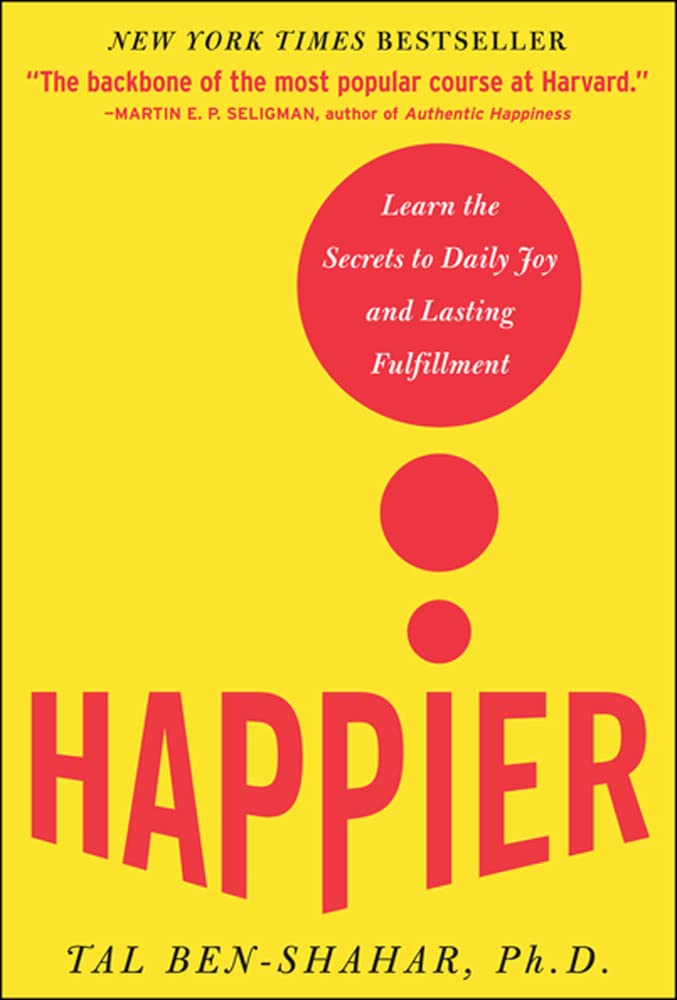
Happier Book Summary
This Happier Book Summary covers the key ideas, lessons, and takeaways in about 20 minutes.
Short Description:
Happier teaches balancing present joy with future purpose for happiness.
Ben-Shahar’s practical message is that happiness is influenced by what you repeatedly do: setting authentic goals, shaping work into something meaningful, nurturing relationships, building rituals that restore you, slowing down to reclaim time, and believing you deserve well-being. The happiest people aren’t those who avoid pain—they’re those who learn to carry pain without surrendering joy, meaning, and connection.
Helps with these goals
Preview the Happier book summary
Below is a preview of Sumizeit’s comprehensive human-written summary of Happier by Tal Ben-Shahar. The full summary is 15-20 minutes long and covers the book’s key ideas in text, audio, visual, and video formats. Unlock the full 20 Minute Summary
In Happier, Tal Ben-Shahar challenges a common mental trap: treating happiness like a finish line. Many people live as if joy will “arrive” once they hit the next milestone—graduate, land the job, buy the house, find the relationship, achieve the body, earn the title. Ben-Shahar argues that this mindset turns happiness into a moving target and keeps us stuck in perpetual anticipation rather than actual contentment.
Instead, he defines happiness as a continuing process: the ongoing effort to shape a life that contains both enjoyment in the present and purpose that extends into the future. Happiness isn’t a single emotion you either have or don’t have; it’s the result of choices and habits that repeatedly steer you toward what feels good and what feels meaningful.
He also insists happiness is not shallow, selfish, or optional. It’s the most practical pursuit we have because it improves our health, our relationships, our work, and our ability to contribute to others. When we treat happiness as legitimate, we stop living only for external approval and start living for a deeper kind of well-being.
What Happiness Really Means: Pleasure Plus Meaning
Ben-Shahar separates happiness into two essential ingredients:
Pleasure is immediate—comfort, fun, delight, relief, laughter, sensual enjoyment, small daily satisfactions. It’s what makes the present moment feel worth inhabiting.
Meaning is long-range—purpose, values, contribution, growth, belonging to something larger than your immediate desires. It’s what makes effort feel worthwhile even when it isn’t comfortable.
His central claim is that we tend to over-emphasize one at the expense of the other. When we do, we become unbalanced:
If we chase pleasure without meaning, life can feel empty once the thrill wears off.
If we chase meaning without pleasure, life can feel heavy, grim, and exhausting—even if we’re doing “important” things.
Happiness comes from integrating both: building a life where you experience real moments of enjoyment while also pursuing goals and relationships that matter.
The “Two Clocks” Problem: Present vs. Future
Ben-Shahar explains that much of human misery comes from mismanaging time perspective. We constantly juggle two clocks:
The present: “How does this feel right now?”
The future: “Where is this leading me?”
People often overcommit to one clock, and when that happens, happiness collapses. He introduces four “archetypes” to show how this imbalance plays out in everyday life.
The Pleasure-Seeker: Living for the Next Hit
The pleasure-seeker is driven by “now.” This person prioritizes entertainment, comfort, and quick gratification—and avoids discomfort whenever possible.
Ben-Shahar’s critique isn’t that pleasure is wrong. His point is that pleasure without purpose doesn’t satisfy for long. When enjoyment becomes the only goal, it tends to escalate: what used to feel fun becomes ordinary, and you need stronger stimulation to feel the same lift. Over time, a life centered only on immediate gratification can feel scattered, superficial, and strangely unsatisfying.
The pleasure-seeker may also struggle with depth—deep relationships, difficult growth, meaningful responsibility—because those require patience and effort, and those don’t always feel good in…
Want the complete 20-minute summary?
- Full structured summary
- Video Summary
- Podcast Summary
- Audio summary
- Key takeaways
- Exercises
- Quiz
- Highlights and notes
- Ask the book with AI
Who should read Happier?
Happier is for anyone feeling trapped by the pursuit of the next achievement or milestone. Whether you're an overachiever waiting for happiness to arrive after the promotion, someone chasing pleasure without direction, or simply someone questioning whether there's more to life, this book offers a practical framework for building genuine well-being.
Why does Happier matter?
In a culture obsessed with productivity and external success, Happier by Tal Ben-Shahar reframes happiness as both a legitimate and practical pursuit—not a luxury, but a foundation that improves health, relationships, and work. The book addresses a real crisis: millions of people achieve their goals only to feel empty, or burn out in pursuit of them, because they've never learned to balance present enjoyment with meaningful purpose.
What are the key themes in Happier?
- Happiness is a balance between present pleasure and future meaning
- Happiness is a practice, not a destination
- Pain and happiness can coexist
- Authenticity and alignment matter more than external markers of success
- Time poverty is as damaging as financial poverty
- Relationships are essential, not optional
- Small daily rituals sustain happiness more than peak moments
How can you apply ideas from Happier?
- Set goals that align with your authentic values, not external pressure—identify what truly matters to you and build from there
- Reshape your current work by identifying human impact, connecting tasks to larger purpose, and applying your strengths within your existing role
- Build daily happiness rituals: choose activities that actively engage you (music, hobbies, time with loved ones) rather than passive numbing
- Protect time affluence by ruthlessly reducing unnecessary commitments and scheduling open space for relationships, reflection, and rest
- Invest in relationships that offer unconditional regard while maintaining your own core identity and values
- Practice coexisting with discomfort: develop tools to move through difficulty without abandoning joy, rather than waiting for pain to disappear
- Use the pleasure-meaning framework to audit your life: identify areas where you're over-emphasizing one at the expense of the other and rebalance
What common mistakes do readers make with Happier?
- Treating happiness as something that arrives after the next achievement, creating endless postponement
- Chasing only pleasure or only meaning, not recognizing that both are needed for genuine well-being
- Waiting for life to feel perfect before allowing yourself to enjoy it or believe you deserve happiness
- Confusing deep engagement and meaningful struggle with unhappiness, leading people to abandon worthwhile pursuits
Sumizeit Exercises Apply what you've learned
Turn ideas from Happier into action with a short guided reflection: identify the biggest takeaway, connect it to your life, and commit to one step you can take in the next 24 hours.
What is the expert analysis of Happier?
Overview
Happier by Tal Ben-Shahar stands as a seminal work in the field of positive psychology and self-improvement literature. Ben-Shahar, a respected scholar with a background in philosophy, psychology, and organizational behavior, leverages his academic rigor and teaching experience—most notably at Harvard—to distill complex psychological insights into accessible, actionable guidance. The book’s significance lies in its reframing of happiness not as a static destination but as a dynamic, ongoing process that integrates pleasure with meaning. This nuanced perspective challenges prevailing cultural narratives that equate happiness with achievement or transient pleasure, offering a more sustainable and psychologically sound approach to well-being.
Core Thesis
At the heart of Happier is the argument that happiness is best understood as a balanced synthesis of immediate enjoyment (pleasure) and long-term purpose (meaning). Ben-Shahar contends that an exclusive focus on either pleasure or meaning leads to dissatisfaction—pleasure without meaning results in emptiness, while meaning without pleasure breeds exhaustion. He further introduces the concept of managing two “clocks”: the present moment and the future trajectory. The optimal state, embodied by the “happy camper” archetype, involves cultivating joy in the present while actively pursuing meaningful goals that extend beyond immediate gratification. Importantly, happiness is framed not as the absence of pain but as the capacity to navigate suffering without losing sight of joy and purpose.
Strengths
- Integrative Framework: The book’s dual emphasis on pleasure and meaning offers a comprehensive model that resonates with both psychological theory and lived experience, bridging the gap between hedonic and eudaimonic well-being.
- Practical Strategies: Ben-Shahar provides concrete, actionable advice—such as goal setting aligned with authentic values, reshaping work into a calling, nurturing nourishing relationships, and cultivating daily rituals—that empower readers to implement the theory in their own lives.
- Accessible yet Scholarly: The writing balances academic credibility with accessibility, making complex psychological concepts understandable without oversimplification.
- Psychological Realism: By acknowledging the inevitability of pain and negative emotions, the book avoids the pitfalls of toxic positivity and offers a mature, resilient model of happiness.
- Societal Implications: The extension of happiness from a personal to a social good enriches the discourse, highlighting how individual well-being can foster communal harmony and cooperation.
Critiques & Counterarguments
- Evidence Base and Generalizability: While grounded in positive psychology, some of the book’s claims rely heavily on anecdotal evidence and Ben-Shahar’s personal teaching experience rather than large-scale empirical studies, which may limit the generalizability across diverse populations and cultures.
- Potential Oversimplification of Complex Emotions: The dichotomy of pleasure versus meaning, though useful, risks oversimplifying the multifaceted nature of human emotions and motivations, which can be more fluid and intertwined than the archetypes suggest.
- Competing Psychological Models: Alternative frameworks, such as Self-Determination Theory (Deci & Ryan), emphasize autonomy, competence, and relatedness as core psychological needs that may not map neatly onto the pleasure-meaning binary, suggesting a more nuanced motivational structure.
- Critique from Existential and Philosophical Perspectives: Some existentialist thinkers might argue that the pursuit of happiness as a goal is itself problematic, advocating instead for embracing absurdity or finding authenticity beyond happiness, which challenges the book’s optimistic premise.
- Socioeconomic and Structural Factors: The book’s emphasis on individual agency in cultivating happiness may understate the impact of systemic inequalities, trauma, and social determinants that constrain one’s ability to practice the suggested strategies effectively.
Who Should Read This
Happier is ideally suited for readers seeking a thoughtful, balanced approach to well-being that transcends simplistic self-help platitudes. It appeals to individuals interested in positive psychology, personal development, and the philosophical underpinnings of happiness. Professionals in psychology, coaching, and organizational leadership will find its integrative model and practical strategies valuable for both personal growth and client work. Moreover, readers grappling with the tension between immediate gratification and long-term fulfillment will appreciate Ben-Shahar’s nuanced guidance. However, those looking for a deeply empirical or culturally diverse analysis of happiness might need to supplement this book with more specialized research.
Frequently asked questions about the Happier book summary
What is Happier about?
Happier by Tal Ben-Shahar argues that true happiness comes from balancing present enjoyment with future purpose. Rather than treating happiness as a finish line, Ben-Shahar shows how it's built through daily practices and authentic choices that integrate both pleasure and meaning.
Who should read Happier?
Happier is valuable for overachievers who sacrifice present life for future goals, pleasure-seekers looking for depth, or anyone questioning whether their current path is actually making them happy. It's also useful for people who feel guilty about prioritizing well-being or who have achieved success without feeling fulfilled.
What are the main takeaways from Happier?
The main takeaways are: happiness is a practice, not a destination; it requires balancing pleasure now with purpose over time; pain and happiness coexist; and happiness is substantially shaped by intentional habits and choices. Ben-Shahar emphasizes that setting authentic goals, reshaping work into something meaningful, nurturing relationships, building daily rituals, and slowing down are practical ways to increase well-being.
Does Happier say happiness requires avoiding pain?
No. Happier explicitly rejects the idea that happiness means avoiding suffering. Instead, Ben-Shahar argues that genuine happiness is the ability to experience negative emotions without being dominated by them—to hold grief and gratitude, anxiety and purpose, at the same time.
What does Happier say about work and happiness?
Happier presents work as either a job (tolerated for pay), a career (pursued for advancement), or a calling (viewed as meaningful). The book argues that happiness in work comes from moving toward calling, either by finding new work or by reshaping your current role using the MPS process: where your Meaning, Pleasure, and Strengths overlap.
Is pursuing happiness selfish according to Happier?
No. Happier argues that pursuing happiness is foundational and benefits everyone around you. Emotionally healthy people are more patient, generous, and capable of supporting others. Well-being is presented as a public good, not a private indulgence.
What are the four archetypes in Happier?
The four archetypes represent different imbalances: the Pleasure-Seeker (overemphasizes now, lacks meaning), the Overachiever (overemphasizes future, lacks present enjoyment), the Cynic (rejects both), and the Happy Camper (balances both). The Happy Camper model is the approach Ben-Shahar recommends.
About Sumizeit
Sumizeit is a profitable Scomy LLC company based in Miami, Florida. Our founders, Clemens Raemy and Weina Scott, are successful entrepreneurs with several exits. Sumizeit is a popular book summary app / micro learning app used by busy professionals and entrepreneurs with over 2,500 non-fiction book summaries and 10,000 podcast summaries in text, audio, visual, podcast, and video format. We also have stellar retention tools to make ideas stick - such as flashcards with spaced repetition, quizzes, streaks, highlighting and notes, daily challenges, riddles, mini-courses, meditation, and more. You won't only learn the idea, but also remember it. Over 90% of our users change their habits with Sumizeit.
Upgrade Now
Here's why readers love Sumizeit
Join thousands of learners getting smarter every day
"Great experience. Detailed summaries. Loved the gamification feature. Makes learning fun. Good customer service. I recommend Sumizeit to anyone. You'll learn a lot."
"I always felt busy but still wanting to keep up with the book discussion in my friend group. This was a great supplement to help me keep reading the books I find fun while keeping up with important books."
"I love this website. Instead of scrolling social media, I find myself learning a lot. I use it everyday. I recommend this app for anyone who is too busy and wants to get up to speed with their favorite books."
Happier Book Summary PDF
Looking for a Happier Book Summary PDF you can save and revisit offline? Our Happier Book Summary PDF captures the book’s core ideas in a clean, printable format — the key frameworks, takeaways, and structure without the fluff. Download the Happier Book Summary PDF when you want a reference you can annotate, share with your team, or review on the go. Get your Happier Book Summary PDF from the download page below.
Download Happier Book Summary PDFPeople also liked these summaries
Readers who explored Happier often enjoyed these titles next.



Ready to read the whole thing?
- Full structured summary
- Video Summary
- Podcast Summary
- Audio summary
- Key takeaways
- Exercises
- Quiz
- Highlights and notes
- Ask the book with AI
Featured Book Titles
Popular Book Summaries at sumizeit, leading book summary app