


As an Amazon Associate, Sumizeit earns from qualifying purchases.
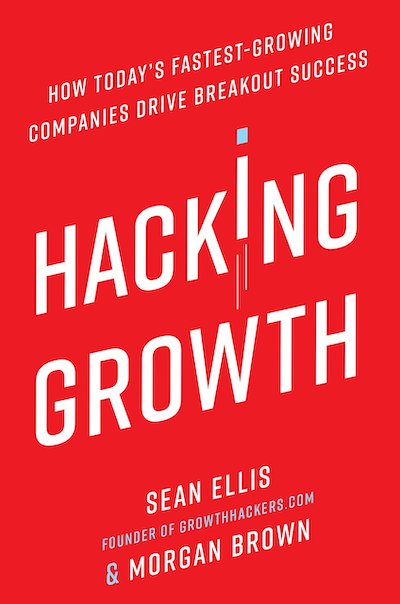
Hacking Growth Book Summary
This Hacking Growth Book Summary covers the key ideas, lessons, and takeaways in about 20 minutes.
Helps with these goals
Want the complete 20-minute summary?
- Full structured summary
- Video Summary
- Podcast Summary
- Audio summary
- Key takeaways
- Exercises
- Quiz
- Highlights and notes
- Ask the book with AI
What is in the Hacking Growth book summary?
Below is a preview of Sumizeit’s expert-written summary of Hacking Growth by Sean Ellis. The full summary covers the book’s key ideas in text, audio, and video.
Hacking Growth provides unique insights on how to move a company from a mediocre performance level to the next level. The approach taken by Sean Ellis and Morgan Brown is simple and practical--it motivates a company to move from sluggish growth to double-digit growth rates. The authors present an easy step-by-step guide that explains how a company such as Uber grew exponentially from a scrappy startup to its current height. This book appeals to budding entrepreneurs as well as seasoned CEOs wishing to understand the methodology that produces extraordinary growth. Hacking Growth is rich in marketing and startup information and is one of the most important books for anyone starting a business.
Chapter One: Building Growth Teams
Want to increase revenue and profit? The answer is growth teams! Growth teams are the tires that will move your car forward.
How do you create a growth team? Includes members from each department so that you have the collective energy of all your departments. This means your growth team is collaborative with a focus to push growth.
Choose a visionary growth team leader who can keep the team focused and inspired and set targets for your team. Why? Every team needs inspiration and leadership--think of a football team with a strong coach!
Chapter Two: Determining if Your Product is a Must Have
How do you figure out what product or service will sell in the marketplace?
A must-have survey is a simple way to engage your customers about how they feel about your products. This survey will provide critical feedback in creating that must-have-product or service.
What next? Test! A/B testing is a good way to test how well your product or service will perform in the market. Think of your respondents in the must-have survey as coffee tasters helping you to develop a new coffee brand-for free!
Chapter Three: Identifying Your Growth Levers
Stats are important to monitor what you are trying to sell.
Stats are also useful core metrics that measure how customers interact with your product or service. Metrics such as user acquisition and web traffic will help you to identify which metrics can be used to drive growth.
This sounds rather complicated and technical? Not really-- you don’t need to be Einstein to analyze these stats. You can always work with a professional to crunch the data.
Chapter Four: Testing at High Tempo
How do you gain customer insights to generate growth-hacking ideas? This starts in the analyze stage--where data is analyzed and customer insights are shared with a growth team. Why analyze? The analysis helps to identify patterns and trends and removes the haze so you can see clearly.
What comes next after the analyze stage? The ideate stage-(don’t be scared by the big word). It simply means the stage where ideas are further developed or refined. Think of it this way-after taking a photo, the film has to be developed in a dark room which is the ideate stage.
You now come to the idea pipeline…
Want the complete 20-minute summary?
- Full structured summary
- Video Summary
- Podcast Summary
- Audio summary
- Key takeaways
- Exercises
- Quiz
- Highlights and notes
- Ask the book with AI
Who should read Hacking Growth?
Hacking Growth is essential for startup founders, product managers, and business leaders who want to accelerate revenue growth beyond incremental gains. Whether you're bootstrapping a new venture or leading growth at an established company, this book provides the practical framework to shift from guesswork to data-driven decision-making. Entrepreneurs seeking to replicate the explosive growth of companies like Uber and Dropbox will find actionable strategies that apply regardless of industry or stage.
Why does Hacking Growth matter?
In today's competitive marketplace, intuition-driven growth strategies are no longer sufficient—data-driven approaches separate thriving businesses from those that plateau. Hacking Growth offers a proven methodology for identifying what actually drives customer acquisition, activation, and retention rather than wasting resources on ineffective tactics. This book teaches you how to build cross-functional growth teams and implement rapid experimentation cycles that reveal which levers truly move the needle. Understanding these principles is critical for any business trying to scale profitably in the digital age.
What are the key themes in Hacking Growth?
- Cross-functional growth teams drive results faster than siloed departments
- Data and customer feedback determine whether a product is truly must-have
- Rapid experimentation and iteration uncover growth opportunities
- Channel messaging and first impressions activate new customers
- Customer retention and engagement loops create sustainable revenue
- Prioritization frameworks prevent wasted effort on low-impact ideas
- Continuous growth cycles compound improvements over time
What are the key lessons from the Hacking Growth book summary?
Build collaborative growth teams with cross-departmental representation
Assemble a team with members from marketing, product, engineering, and analytics under a visionary leader to break down silos and align the entire organization around growth.
Use must-have surveys to validate product-market fit
Ask customers directly whether your product solves a critical need—this simple feedback loop prevents investing in features nobody wants.
Apply A/B testing to refine your core offering
Test variations of your product or messaging with real users to gather evidence before scaling any initiative.
Track core metrics that reveal how customers interact with your business
Focus on metrics like user acquisition, engagement, and retention rather than vanity metrics—these expose which levers actually drive growth.
Move from analysis to ideation to implementation systematically
Follow a structured process: analyze data for insights, develop ideas in an ideation stage, and create a clear pipeline for implementation.
Use the ICE scoring framework to prioritize ideas
Rate growth ideas on Impact, Confidence, and Ease to focus resources on high-potential experiments that your team can execute quickly.
Test ideas with customers before full-scale rollout
Validate that an idea produces real growth with a subset of users before committing significant resources to implementation.
Craft channel-specific messaging that resonates in eight seconds
Your activation message must be clear, benefit-focused, and tailored to where customers encounter you—first impressions determine if they engage or move on.
Identify conversion leaks by creating detailed funnel reports
Map where customers drop off in your sales process, then systematically remove friction at each stage to improve conversion rates.
Design engagement loops that build customer habits
Reward user actions through achievement badges and social recognition to create a cycle of repeated engagement that drives lifetime value.
Use customer segmentation data to inform the next growth cycle
Analyze demographic and behavioral segments to understand who buys, where they're located, and what drives their decisions—then repeat the process with deeper insights.
Recognize that retention is as critical as acquisition for revenue
A 2% conversion rate from traffic to sales means your real growth engine is keeping customers engaged and coming back.
Adapt your approach based on which growth levers work for your business
Different companies have different bottlenecks—the framework helps you identify whether your constraint is acquisition, activation, retention, or monetization.
Move at high tempo with frequent testing and iteration
Speed is an advantage—run multiple experiments in parallel and learn quickly rather than debating theories in endless meetings.
Treat growth hacking as a continuous cycle, not a one-time project
Each iteration teaches you more about your customers and business, enabling you to refine your approach and compound your growth over time.
Want the complete 20-minute summary?
- Full structured summary
- Video Summary
- Podcast Summary
- Audio summary
- Key takeaways
- Exercises
- Quiz
- Highlights and notes
- Ask the book with AI
How can you apply ideas from Hacking Growth?
- Form a dedicated growth team with representatives from product, marketing, engineering, and data to meet weekly and discuss experiments
- Send a must-have survey to 100-200 current customers asking how critical your product is to their workflow, then use results to prioritize fixes
- Create an ICE scoresheet for your top 10 growth ideas and rank them by Impact, Confidence, and Ease before allocating resources
- Map your customer journey funnel to identify the stage with the highest drop-off rate, then test messaging or UX changes to reduce friction
- Design a simple engagement loop using achievement milestones or points to encourage repeat interactions with your product
- Segment your customer base by acquisition channel, demographics, and behavior to identify which groups have the highest lifetime value
- Run three concurrent A/B tests on different aspects of your acquisition or activation process rather than testing one change at a time
What common mistakes do readers make with Hacking Growth?
- Assuming your product is must-have without validating with real customers—survey first, build second
- Focusing on vanity metrics like total signups instead of tracking engagement and retention, which actually predict revenue
- Running too few tests or abandoning an idea after a single failed experiment instead of iterating rapidly through multiple variants
- Keeping growth efforts siloed in marketing when the real leverage comes from cross-functional collaboration with product and engineering
Sumizeit Exercises Apply what you've learned
Turn ideas from Hacking Growth into action with a short guided reflection: identify the biggest takeaway, connect it to your life, and commit to one step you can take in the next 24 hours.
What is the expert analysis of Hacking Growth?
Overview
Hacking Growth is a seminal work co-authored by Sean Ellis and Morgan Brown, two influential figures in the startup and growth marketing ecosystem. Sean Ellis, credited with coining the term “growth hacker,” brings a wealth of experience from his pivotal roles in companies like Dropbox and Eventbrite, while Morgan Brown complements this with his extensive background in startup marketing and operational leadership. This book stands out as a practical manual that distills complex growth strategies into actionable steps, making it indispensable for entrepreneurs and business leaders aiming to scale their ventures rapidly in today’s data-driven economy.
Core Thesis
The central argument of Hacking Growth is that sustainable, exponential business growth is achievable through a disciplined, cross-functional approach centered on data analysis, rapid experimentation, and customer-centric iteration. Ellis and Brown advocate for the formation of dedicated growth teams that leverage metrics and customer feedback to identify “growth levers” and systematically test hypotheses using frameworks like ICE (Impact, Confidence, Ease). The authors posit that this methodical, scientific approach to marketing and product development can transform startups and established companies alike from stagnant performers into dynamic market leaders.
Strengths
- Practical Frameworks: The book excels at breaking down abstract growth concepts into digestible, step-by-step processes, such as building growth teams, conducting must-have surveys, and employing A/B testing, which readers can readily implement.
- Cross-Disciplinary Integration: By combining insights from marketing, product management, data analytics, and behavioral psychology, the authors provide a holistic growth hacking methodology that transcends traditional silos.
- Real-World Examples: The inclusion of case studies like Uber and Amazon Prime grounds the theoretical frameworks in tangible success stories, enhancing credibility and reader engagement.
- Emphasis on Data-Driven Decision Making: The book’s insistence on leveraging metrics and customer feedback aligns well with contemporary trends in business intelligence and agile development.
- Accessible Language: Despite dealing with technical topics, the authors maintain an approachable tone, demystifying jargon and encouraging readers from diverse backgrounds to embrace growth hacking principles.
Critiques & Counterarguments
- Overemphasis on Quantitative Metrics: While data is crucial, the book occasionally underplays qualitative factors such as brand identity, cultural nuances, and long-term customer relationships that are harder to quantify but equally vital for sustainable growth.
- Potential Oversimplification: The stepwise approach, though practical, may give an impression that growth hacking is a formulaic process, neglecting the creative intuition and contextual judgment often required in complex market environments.
- Dated Examples and Rapid Market Evolution: Some case studies and techniques may feel less relevant in light of recent shifts in consumer behavior, privacy regulations, and platform algorithms that have altered the digital marketing landscape since the book’s publication.
- Competing Schools of Thought: Traditional marketing theories emphasize brand equity and emotional resonance over rapid experimentation; critics argue that growth hacking’s focus on short-term metrics can sometimes undermine these foundational elements.
- Real-World Evidence of Limitations: Not all companies can replicate the explosive growth of startups like Uber due to differences in industry, market saturation, and resource availability, suggesting that growth hacking is not a one-size-fits-all solution.
Who Should Read This
Hacking Growth is ideally suited for entrepreneurs, startup founders, product managers, and marketing professionals who are eager to adopt a systematic, data-driven approach to scaling their businesses. It serves as a valuable guide for those at the early and growth stages of a company who seek actionable strategies to accelerate user acquisition, activation, retention, and monetization. Additionally, seasoned executives interested in fostering a culture of experimentation and cross-functional collaboration within their organizations will find this book insightful. However, readers seeking deep theoretical discourse or those in industries less amenable to rapid digital experimentation may need to supplement this book with broader strategic perspectives.
Frequently asked questions about the Hacking Growth book summary
What is Hacking Growth about?
Hacking Growth by Sean Ellis and Morgan Brown is a practical guide to building a data-driven growth strategy that moves companies from sluggish performance to double-digit growth rates. The book outlines a step-by-step framework for assembling cross-functional growth teams, validating product-market fit, prioritizing high-impact experiments, and scaling acquisition, activation, retention, and monetization through rapid testing.
Who should read Hacking Growth?
This book is essential for startup founders, product managers, marketing leaders, and business executives seeking to accelerate growth. Whether you're building a new company or driving growth at an established organization, Hacking Growth provides actionable methodologies to shift from guesswork to data-driven decision-making and unlock your business's growth potential.
What are the main takeaways from Hacking Growth?
The core takeaways are: build cross-functional growth teams rather than working in silos, validate that your product is truly must-have before scaling, use rapid experimentation and the ICE framework to prioritize ideas, focus on core metrics that reveal customer behavior, and view growth as a continuous cycle of analysis, testing, and refinement. The book emphasizes that data-driven approaches and high-tempo testing are the key to sustainable, scalable growth.
How do you identify growth bottlenecks in your business?
Create a detailed funnel report that maps every stage of your customer journey—from awareness to acquisition to activation to retention to monetization. Compare conversion rates at each stage and identify where the largest percentage of customers drop off. That stage is your primary bottleneck, and improvements there will have the biggest impact on overall growth.
What is the ICE framework and how do you use it?
ICE stands for Impact, Confidence, and Ease. For each growth idea, score it 1-10 on how much it will impact growth, how confident you are it will work based on available data, and how easy it is to implement with your current resources. Multiply or add the scores to prioritize which experiments to run first, focusing effort on high-impact ideas your team can execute quickly.
Why does Hacking Growth emphasize building a dedicated growth team?
Growth teams break down departmental silos and bring together diverse perspectives from marketing, product, engineering, and analytics. This collaboration accelerates decision-making, ensures ideas are tested rigorously, and aligns the entire organization around growth. A visionary leader keeps the team focused and accountable to clear targets.
How do you create an engagement loop that drives customer retention?
Design your product to reward user actions through achievement milestones, points, or badges that make customers feel good when engaging with you. Combine this with social recognition—highlighting active users or showing how they stack up against peers. When customers experience repeated small wins and social validation, they form habits and return more frequently, driving lifetime value and recurring revenue.
About Sumizeit
Sumizeit is a profitable Scomy LLC company based in Miami, Florida. It has been helping readers learn from nonfiction books for 7 years with expert-written summaries in text, audio, podcast, and video.
Want the complete 20-minute summary?
- Full structured summary
- Video Summary
- Podcast Summary
- Audio summary
- Key takeaways
- Exercises
- Quiz
- Highlights and notes
- Ask the book with AI
Here's why readers love Sumizeit
Join thousands of learners getting smarter every day
"Great experience. Detailed summaries. Loved the gamification feature. Makes learning fun. Good customer service. I recommend Sumizeit to anyone. You'll learn a lot."
"I always felt busy but still wanting to keep up with the book discussion in my friend group. This was a great supplement to help me keep reading the books I find fun while keeping up with important books."
"I love this website. Instead of scrolling social media, I find myself learning a lot. I use it everyday. I recommend this app for anyone who is too busy and wants to get up to speed with their favorite books."
Hacking Growth Book Summary PDF
Looking for a Hacking Growth Book Summary PDF you can save and revisit offline? Our Hacking Growth Book Summary PDF captures the book’s core ideas in a clean, printable format — the key frameworks, takeaways, and structure without the fluff. Download the Hacking Growth Book Summary PDF when you want a reference you can annotate, share with your team, or review on the go. Get your Hacking Growth Book Summary PDF from the download page below.
Download Hacking Growth Book Summary PDFPeople also liked these summaries
Readers who explored Hacking Growth often enjoyed these titles next.




Want the complete 20-minute summary?
- Full structured summary
- Video Summary
- Podcast Summary
- Audio summary
- Key takeaways
- Exercises
- Quiz
- Highlights and notes
- Ask the book with AI
Featured Book Titles
Popular Book Summaries at sumizeit, leading book summary app