


As an Amazon Associate, Sumizeit earns from qualifying purchases.
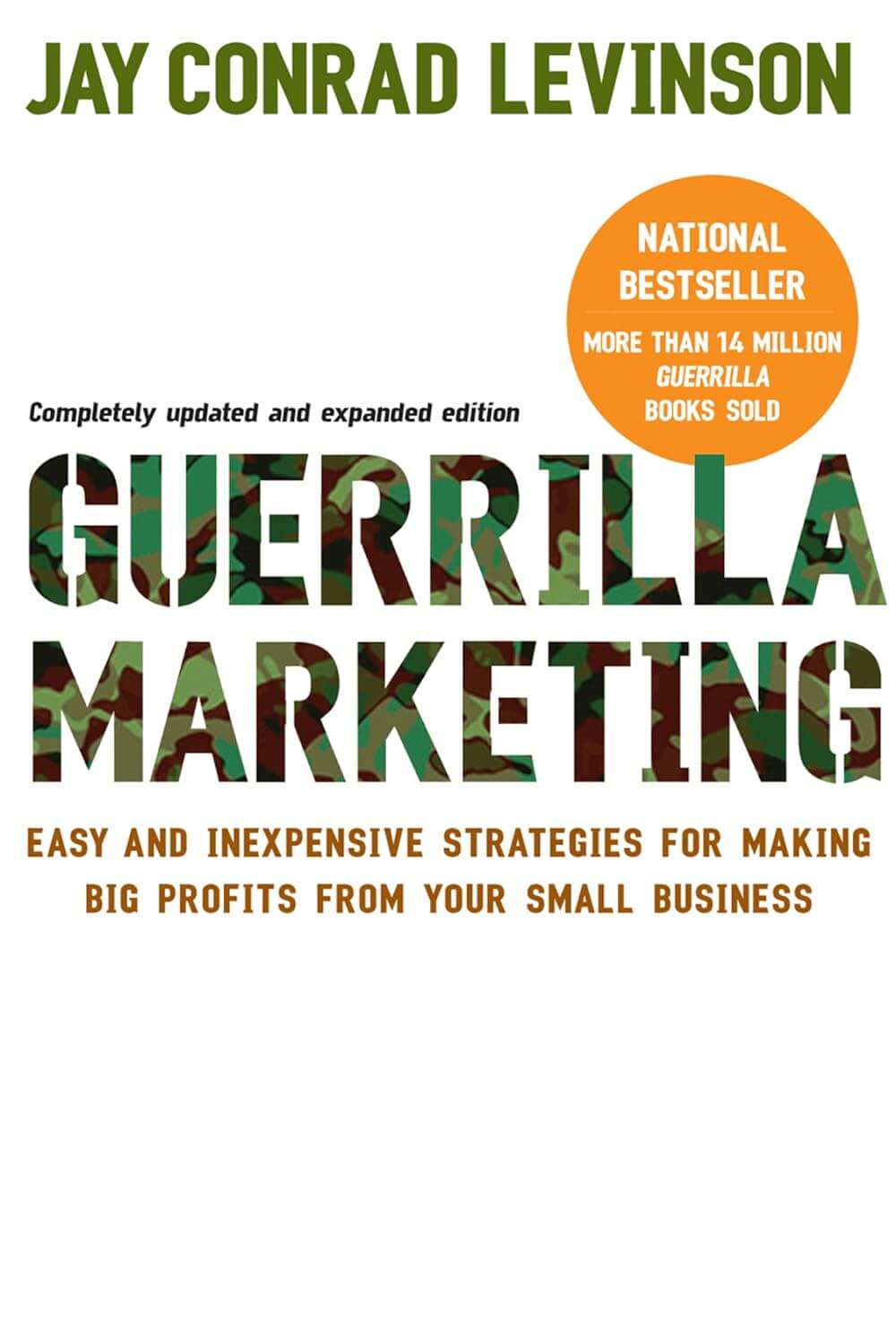
Guerrilla Marketing Book Summary
This Guerrilla Marketing Book Summary covers the key ideas, lessons, and takeaways in about 20 minutes.
The book teaches that small businesses do not need to imitate large corporations to succeed. They need to think differently. By focusing on precision, creativity, interaction, and profit-based measurement, guerrilla marketers transform limitations into leverage.
Ultimately, guerrilla marketing is not about tricks or gimmicks. It is about respect—for customers, for resources, and for the long game of building trust. Businesses that adopt this mindset gain more than sales; they build reputations, relationships, and resilience that compound over time.
Helps with these goals
Want the complete 20-minute summary?
- Full structured summary
- Video Summary
- Podcast Summary
- Audio summary
- Key takeaways
- Exercises
- Quiz
- Highlights and notes
- Ask the book with AI
What is in the Guerrilla Marketing book summary?
Below is a preview of Sumizeit’s expert-written summary of Guerrilla Marketing by Jay Conrad Levinson. The full summary covers the book’s key ideas in text, audio, and video.
For decades, marketing advice was written with large corporations in mind. It assumed access to vast advertising budgets, dedicated agencies, and mass-media exposure through television, radio, newspapers, and billboards. Jay Conrad Levinson’s Guerrilla Marketing challenges this worldview from the ground up. Instead of treating limited resources as a weakness, Levinson reframes them as a strategic advantage. Small businesses, he argues, can outmaneuver larger competitors by being focused, creative, personal, and relentlessly intentional about how they connect with customers.
At its core, the book dismantles the belief that visibility equals success. Levinson insists that profitability—not popularity—is the true measure of effective marketing. Guerrilla marketing is not about being everywhere; it is about being in the right places, reaching the right people, with messages that resonate deeply and encourage long-term loyalty.
This philosophy is especially powerful for entrepreneurs, freelancers, and small business owners who cannot afford waste. Every dollar, every hour, and every interaction must work toward building trust and driving sustainable revenue. Levinson’s approach replaces flashy campaigns with thoughtful systems, replaces guesswork with research, and replaces ego-driven branding with customer-centered strategy.
The Essence of Guerrilla Marketing
Guerrilla marketing is defined less by tactics and more by mindset. Levinson describes it as a disciplined, strategic approach that prioritizes imagination, energy, and persistence over money. Where traditional marketing casts a wide net and hopes for results, guerrilla marketing starts narrow and precise, intentionally targeting people who already have a reason to care.
Instead of shouting louder than competitors, guerrilla marketers listen more closely. They observe customer behavior, study motivations, and design interactions that feel personal rather than promotional. The goal is not to interrupt people’s lives but to integrate naturally into them in ways that feel helpful, surprising, or memorable.
Another defining feature of guerrilla marketing is patience. Unlike short-term advertising bursts designed to spike attention, guerrilla marketing compounds over time. Small, consistent actions—when aligned properly—build momentum, recognition, and trust. This makes guerrilla marketing particularly well-suited for businesses that aim to grow steadily rather than explosively.
How Guerrilla Marketing Has Evolved
When Levinson first introduced the concept in the 1980s, guerrilla marketing primarily referred to unconventional, low-cost tactics that caught people off guard. Over time, the definition expanded. Today, guerrilla marketing encompasses creative experiences, environmental placements, unexpected partnerships, and subtle forms of influence that blend seamlessly into everyday life.
Modern guerrilla strategies often rely on surprise and context. Street-level installations, ambient placements, experiential campaigns, and subtle brand integrations all serve the same purpose: breaking through mental noise by appearing where people least expect marketing to exist. The common thread is disruption—not through volume, but through originality.
At the same time, Levinson’s foundational principles remain unchanged. Regardless of the medium, guerrilla marketing still revolves around understanding customers deeply, creating meaningful interactions, and measuring success by profit rather than attention.
Step One: Identifying the Exact Audience You Serve
The first pillar of Levinson’s framework is precision. Many businesses fail because they attempt to appeal to everyone and end up resonating with no one.
Want the complete 20-minute summary?
- Full structured summary
- Video Summary
- Podcast Summary
- Audio summary
- Key takeaways
- Exercises
- Quiz
- Highlights and notes
- Ask the book with AI
Who should read Guerrilla Marketing?
Guerrilla Marketing is essential for entrepreneurs, small business owners, and freelancers who want to grow profitably without massive advertising budgets. If you're building a business with limited resources but unlimited creativity, this book provides a strategic framework to outmaneuver larger competitors. It's also valuable for marketing professionals who want to move beyond traditional tactics and focus on precision, authenticity, and measurable results.
Why does Guerrilla Marketing matter?
In today's crowded marketplace, visibility alone doesn't drive success—profitability does. Guerrilla Marketing teaches you how to reach the right people with the right message instead of wasting resources chasing everyone. As attention becomes more fragmented and advertising costs continue to rise, Levinson's emphasis on targeted, relationship-driven marketing has become increasingly relevant for businesses of all sizes.
What are the key themes in Guerrilla Marketing?
- Profitability over popularity: measure marketing by revenue, not attention
- Precision targeting: reach specific audiences where they already spend time
- Customer understanding: deep research and insight drive effective messaging
- Consistency and patience: compound results through aligned, repeated actions
- Resource efficiency: transform limited budgets into competitive advantages
- Authentic interaction: build trust through genuine value and personal connection
What are the key lessons from the Guerrilla Marketing book summary?
Define Your Exact Value Proposition
Clearly articulate what problem you solve and for whom, moving beyond generic descriptions to specific, compelling benefits that resonate with your ideal customer.
Narrow Your Target Audience Intentionally
Instead of appealing to everyone, ruthlessly specify who your best customers are—this allows every marketing effort to feel relevant rather than scattered.
Invest in Research Over Assumptions
Use affordable research methods to understand customer motivations, habits, and pain points rather than guessing—this knowledge multiplies your marketing effectiveness.
Build Consistent Brand Perception
Align every touchpoint—visual identity, communication tone, customer service, and internal behavior—to reinforce a clear, differentiated brand image.
Choose Channels Based on Customer Presence
Focus marketing efforts exclusively on platforms and places where your target audience already gathers, eliminating waste and increasing relevance.
Create Meaningful Interactions, Not Just Impressions
People support businesses they've personally engaged with; prioritize cost-effective ways to foster genuine connections like exceptional service, samples, and community involvement.
Use Strategic Partnerships to Multiply Reach
Collaborate with non-competing businesses to share resources and audiences, extending your impact without proportionally increasing costs.
Measure Success by Profit, Not Vanity Metrics
Track whether marketing efforts generate revenue beyond their cost using unique codes, dedicated phone numbers, and tailored offers—ignore views and clicks that don't convert.
Implement Structured Marketing Planning
Create marketing calendars that document goals, timelines, expenses, and outcomes to enable continuous improvement and informed investment decisions.
Treat Marketing as a Long-Term System
Success comes from consistency and accumulated momentum rather than isolated campaigns; each interaction builds on the last to create compounding returns.
Study Competitors to Differentiate, Not to Copy
Analyze competitor gaps and weaknesses to position yourself as a compelling alternative that addresses unmet needs.
Articulate Your Clear Competitive Advantage
Help customers quickly understand why choosing you benefits them more than alternatives—whether through better service, lower risk, convenience, or emotional alignment.
Deliver Value in Every Customer Interaction
Ensure customers feel genuinely helped, respected, or appreciated rather than manipulated, turning transactions into relationships that encourage repeat business.
Match Your Strategy to Your Market Structure
Understand whether you're serving a mass market, niche audience, or multi-sided platform, and align your channel and messaging strategy accordingly.
Leverage Flexibility as a Competitive Advantage
Rely on adaptable strategies rather than fixed budgets, allowing you to respond quickly to changes in customer behavior or market conditions.
Transform Resource Limitations into Strategic Focus
Limited budgets force the discipline needed for effective marketing—constraints drive precision, creativity, and careful measurement that larger competitors often lack.
Want the complete 20-minute summary?
- Full structured summary
- Video Summary
- Podcast Summary
- Audio summary
- Key takeaways
- Exercises
- Quiz
- Highlights and notes
- Ask the book with AI
How can you apply ideas from Guerrilla Marketing?
- Create detailed customer personas that specify demographics, motivations, frustrations, and media consumption habits to guide all marketing decisions
- Conduct low-cost audience research using public studies, customer surveys, online communities, and competitor analysis to inform strategy
- Develop a clear brand identity statement and audit all touchpoints to ensure consistent messaging and visual presentation
- Map the specific channels and platforms where your target customers already gather and concentrate efforts there exclusively
- Design a customer interaction plan including exceptional service standards, free trials or samples, and community involvement opportunities
- Establish partnerships with complementary non-competing businesses to co-market and extend reach affordably
- Implement tracking systems using unique codes, dedicated phone numbers, and custom URLs to attribute revenue back to specific campaigns
What common mistakes do readers make with Guerrilla Marketing?
- Attempting to appeal to everyone instead of narrowing to a specific, profitable audience segment
- Measuring marketing success by attention metrics like views and clicks rather than actual revenue generated
- Spreading resources across too many channels instead of focusing deeply on where your audience already spends time
- Launching disconnected campaigns instead of building a consistent system of aligned, repeated interactions over time
- Relying on assumptions about customers instead of investing time in affordable research methods
Sumizeit Exercises Apply what you've learned
Turn ideas from Guerrilla Marketing into action with a short guided reflection: identify the biggest takeaway, connect it to your life, and commit to one step you can take in the next 24 hours.
What is the expert analysis of Guerrilla Marketing?
Overview
Guerrilla Marketing is a seminal work by Jay Conrad Levinson, a pioneering figure in marketing whose influence reshaped how small businesses approach growth and customer engagement. Published initially in the 1980s, the book challenged the prevailing marketing orthodoxy that prioritized large budgets and mass media exposure, instead offering a strategic blueprint for resource-constrained entrepreneurs. Levinson’s work remains significant for its democratization of marketing principles, emphasizing creativity, precision, and profitability over scale and visibility. His philosophy has become a cornerstone for small business owners, freelancers, and startups seeking sustainable competitive advantage in crowded markets.
Core Thesis
Levinson’s central argument reframes limited marketing resources not as a handicap but as a strategic asset. He posits that small businesses can outperform larger competitors by focusing narrowly on well-defined audiences, leveraging creativity and persistence, and prioritizing profit over mere attention. Guerrilla marketing is less about volume and more about targeted, meaningful interactions that build trust and long-term loyalty. This approach rejects the mass-market mindset, advocating instead for disciplined, research-driven tactics that integrate seamlessly into customers’ lives and evolve through continuous measurement and refinement.
Strengths
- Practical Framework: Levinson provides a clear, actionable system that guides readers through identifying precise audiences, conducting affordable research, shaping perception, selecting effective channels, and measuring profitability. This stepwise methodology is accessible and adaptable to various industries and scales.
- Mindset Shift: The book successfully challenges entrenched marketing assumptions, particularly the conflation of visibility with success, and introduces a customer-centric, profit-focused perspective that remains relevant in today’s data-driven environment.
- Longevity and Evolution: Levinson’s principles have endured and evolved, anticipating modern guerrilla tactics such as experiential marketing and subtle brand integrations, which continue to disrupt traditional advertising norms.
- Emphasis on Relationship Building: By prioritizing meaningful interactions over mere exposure, the book foregrounds the importance of trust, emotional connection, and community involvement, which are critical for sustainable business growth.
- Resource Efficiency: The focus on low-cost, high-impact strategies is particularly empowering for small businesses and entrepreneurs, offering a viable alternative to expensive, broad-spectrum campaigns.
Critiques & Counterarguments
- Potential Oversimplification: While the book advocates precision and research, some critics argue that the framework may underestimate the complexity of consumer behavior dynamics and the challenges of truly differentiating in saturated markets.
- Limited Attention to Digital Transformation: Although the book’s principles are adaptable, its original context predates the digital revolution. Contemporary marketing environments—with social media algorithms, influencer dynamics, and big data analytics—require additional layers of strategy that Levinson’s framework only partially anticipates.
- Evidence Base and Case Studies: The book relies heavily on anecdotal examples and practitioner wisdom rather than rigorous empirical research, which may limit its persuasive power among academic or highly analytical audiences.
- Competing Schools of Thought: Contrasting approaches such as mass personalization, programmatic advertising, and brand storytelling emphasize scale and emotional resonance differently, sometimes achieving rapid growth that guerrilla marketing’s patient, incremental approach might not match.
- Risk of Narrow Targeting: While specificity is a strength, overly narrow audience definitions can lead to missed opportunities or market myopia, especially in rapidly evolving industries where customer segments shift quickly.
Who Should Read This
Guerrilla Marketing is essential reading for entrepreneurs, small business owners, freelancers, and marketing professionals operating with constrained budgets who seek a strategic, customer-centered approach to growth. It is particularly valuable for those who value creativity, patience, and ethical engagement over flashy campaigns and who aim to build sustainable, trust-based relationships with their audiences. Additionally, marketing students and practitioners interested in foundational principles that predate and inform modern experiential and content marketing will find Levinson’s insights both instructive and inspiring.
Frequently asked questions about the Guerrilla Marketing book summary
What is Guerrilla Marketing about?
Guerrilla Marketing by Jay Conrad Levinson is about competing effectively without massive advertising budgets by focusing on precision, customer understanding, and authentic interaction. The book teaches that profitability—not popularity—is the true measure of marketing success, and that small businesses can outmaneuver larger competitors through strategic, resource-efficient approaches.
Who should read Guerrilla Marketing?
Guerrilla Marketing is essential for entrepreneurs, small business owners, and freelancers working with limited budgets but unlimited creativity. Marketing professionals, startup founders, and anyone seeking to move beyond traditional advertising tactics will find actionable strategies for building profitable, sustainable growth.
What are the main takeaways from Guerrilla Marketing?
The main takeaways are: (1) define your exact target audience and understand them deeply through research, (2) build consistent brand perception across all touchpoints, (3) focus exclusively on channels where your customers already gather, (4) create meaningful interactions rather than just chasing impressions, and (5) measure success by revenue generated, not attention metrics. Guerrilla Marketing teaches that effectiveness comes from alignment and consistency, not scale.
How does guerrilla marketing differ from traditional marketing?
Traditional marketing casts a wide net hoping for results and equates reach with effectiveness, while guerrilla marketing starts narrow and precise, intentionally targeting people who already have reason to care. Guerrilla marketing prioritizes imagination, energy, and persistence over budget size, and measures success by profit rather than visibility.
Can guerrilla marketing work for large businesses?
Yes. While Guerrilla Marketing was originally designed for small businesses and entrepreneurs, the core principles of targeted precision, authentic interaction, and profit-based measurement apply to any organization. Large businesses often benefit from guerrilla approaches by cutting through internal inefficiencies and reconnecting with customer-centric strategy.
What role does research play in guerrilla marketing?
Research is foundational to guerrilla marketing. Levinson emphasizes understanding customer motivations, habits, preferences, frustrations, and media consumption patterns through affordable methods like surveys, online communities, and competitor analysis. This knowledge allows businesses to target precisely and craft messages that resonate authentically rather than rely on guesswork.
How long does it take to see results from guerrilla marketing?
Guerrilla marketing is a long-term system built on consistency and accumulated momentum rather than quick wins. Results compound over time through repeated, aligned interactions—small businesses become known not by shouting loudest but by showing up reliably and meaningfully. This approach requires patience but builds resilience and sustainable growth.
About Sumizeit
Sumizeit is a profitable Scomy LLC company based in Miami, Florida. It has been helping readers learn from nonfiction books for 7 years with expert-written summaries in text, audio, podcast, and video.
Want the complete 20-minute summary?
- Full structured summary
- Video Summary
- Podcast Summary
- Audio summary
- Key takeaways
- Exercises
- Quiz
- Highlights and notes
- Ask the book with AI
Here's why readers love Sumizeit
Join thousands of learners getting smarter every day
"Great experience. Detailed summaries. Loved the gamification feature. Makes learning fun. Good customer service. I recommend Sumizeit to anyone. You'll learn a lot."
"I always felt busy but still wanting to keep up with the book discussion in my friend group. This was a great supplement to help me keep reading the books I find fun while keeping up with important books."
"I love this website. Instead of scrolling social media, I find myself learning a lot. I use it everyday. I recommend this app for anyone who is too busy and wants to get up to speed with their favorite books."
Guerrilla Marketing Book Summary PDF
Looking for a Guerrilla Marketing Book Summary PDF you can save and revisit offline? Our Guerrilla Marketing Book Summary PDF captures the book’s core ideas in a clean, printable format — the key frameworks, takeaways, and structure without the fluff. Download the Guerrilla Marketing Book Summary PDF when you want a reference you can annotate, share with your team, or review on the go. Get your Guerrilla Marketing Book Summary PDF from the download page below.
Download Guerrilla Marketing Book Summary PDFPeople also liked these summaries
Readers who explored Guerrilla Marketing often enjoyed these titles next.




Want the complete 20-minute summary?
- Full structured summary
- Video Summary
- Podcast Summary
- Audio summary
- Key takeaways
- Exercises
- Quiz
- Highlights and notes
- Ask the book with AI
Featured Book Titles
Popular Book Summaries at sumizeit, leading book summary app