


Prefer the print book? Buy on Amazon
As an Amazon Associate, Sumizeit earns from qualifying purchases.
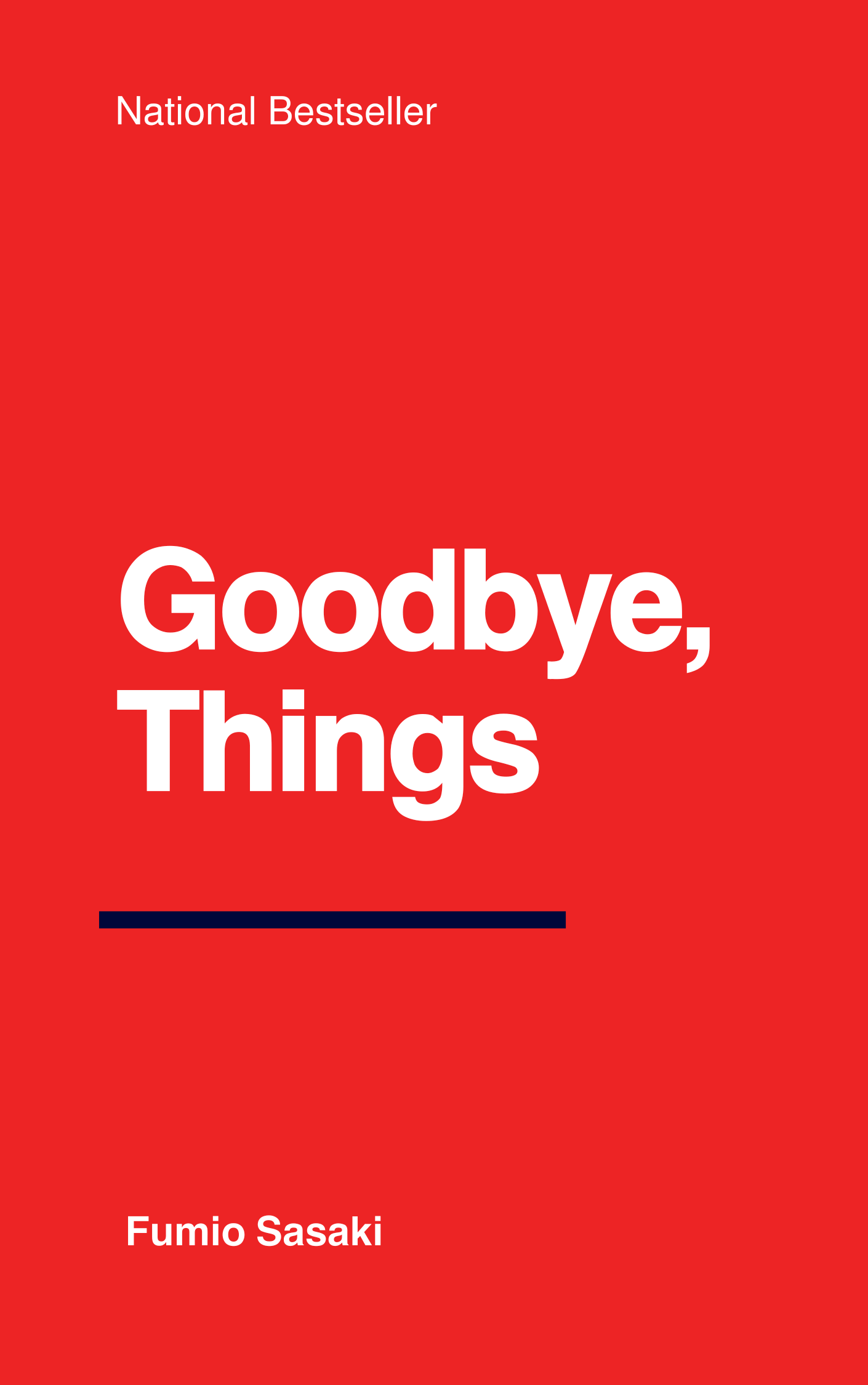
Goodbye, Things Book Summary
This Goodbye, Things Book Summary covers the key ideas, lessons, and takeaways in about 20 minutes.
Short Description:
Goodbye, Things shows minimalism brings freedom and joy.
Helps with these goals
Want the complete 20-minute summary?
- Full structured summary
- Video Summary
- Podcast Summary
- Audio summary
- Key takeaways
- Exercises
- Quiz
- Highlights and notes
- Ask the book with AI
Want a Free Weekly Read?
Get a free summary every week straight to your mailbox.
Preview the Goodbye, Things book summary
Below is a preview of Sumizeit’s comprehensive human-written summary of Goodbye, Things by Fumio Sasaki. The full summary is 15-20 minutes long and covers the book’s key ideas in text, audio, visual, and video formats. Unlock the full 20 Minute Summary
In Goodbye, Things, Japanese author Fumio Sasaki tells the story of how he transformed his life by letting go of nearly everything he owned. Once a typical Tokyo office worker with an apartment crammed full of books, CDs, clothes, and gadgets, Sasaki constantly compared himself to others who seemed more successful or stylish. He believed that buying more things—nicer furniture, trendier clothes, better tech—would make him happier. But the more he owned, the more anxious and dissatisfied he felt. His possessions, meant to symbolize success, only reminded him of what he lacked.
The turning point came when Sasaki encountered minimalism and realized how much his clutter was weighing him down—physically, mentally, and emotionally. He began giving away and selling his belongings, keeping only what he truly needed: a small desk, a futon, a laptop, and a few changes of clothes. This drastic downsizing brought him an unexpected sense of lightness and peace. He no longer woke up to piles of clothes or stacks of unread books whispering guilt. He felt freer, calmer, and more focused than ever before.
Sasaki’s journey is not about extreme deprivation—it’s about discovering joy and purpose through simplicity. Minimalism, he argues, is not an act of sacrifice but one of liberation. When you reduce your possessions to the essentials, you make room for clarity, gratitude, and growth.
The Emotional Traps of Possession
Sasaki begins by explaining that our attachment to material things comes from deeper emotional needs. We buy things to prove our worth, mask our insecurities, or preserve memories. For instance, a person might buy a designer watch to feel successful or collect art books to appear cultured. These items become extensions of our identity—a way to broadcast who we want others to think we are.
However, this pursuit quickly turns into a vicious cycle. The initial excitement of a new purchase fades, and soon we crave the next upgrade—a faster phone, a newer car, a bigger home. Sasaki connects this to what psychologists call the hedonic treadmill: no matter how much we acquire, our satisfaction eventually returns to the same baseline.
He also explores the emotional burden of “keeping things for later.” We tell ourselves that we’ll wear that outfit one day or restart that hobby someday, but these objects end up as symbols of procrastination and regret. For example, someone might keep a pile of unused gym gear as a reminder of a fitness goal they abandoned. Sasaki points out that these unfulfilled hopes clutter not just our homes but our minds, creating invisible pressure and guilt.
Then there are sentimental items—gifts from loved ones, souvenirs from trips, or family heirlooms. Sasaki admits these are the hardest to part with, but he insists that memories don’t live inside objects. Holding onto every keepsake only traps us in the past. He recalls throwing away a beloved childhood photo album and realizing that the memories were still vivid in his mind, untouched by the loss of the physical pictures.
He introduces the concept…
Want the complete 20-minute summary?
- Full structured summary
- Video Summary
- Podcast Summary
- Audio summary
- Key takeaways
- Exercises
- Quiz
- Highlights and notes
- Ask the book with AI
Who should read Goodbye, Things?
Goodbye, Things is for anyone feeling overwhelmed by clutter, trapped by consumer habits, or searching for deeper meaning beyond material accumulation. Whether you're drowning in possessions, struggling with decision fatigue, or simply curious about living more intentionally, this book offers both inspiration and practical guidance to reclaim your space and peace of mind.
Why does Goodbye, Things matter?
In an age of endless consumption, social media comparison, and the pressure to own more to be more, Fumio Sasaki's Goodbye, Things challenges the core assumptions of consumer culture and offers a countercultural path to genuine happiness. His real-life transformation demonstrates that true freedom, clarity, and joy come not from acquiring, but from letting go—making this book urgently relevant for anyone seeking authentic fulfillment beyond the hedonic treadmill.
What are the key themes in Goodbye, Things?
- The emotional roots of excessive consumption and comparison
- Minimalism as liberation rather than deprivation
- Breaking free from the hedonic treadmill and possessions-based identity
- Intentional living and the power of quality over quantity
- Mindfulness, gratitude, and presence in daily life
- Environmental and personal sustainability through simplicity
- Redefining success beyond material measures
Want the complete 20-minute summary?
- Full structured summary
- Video Summary
- Podcast Summary
- Audio summary
- Key takeaways
- Exercises
- Quiz
- Highlights and notes
- Ask the book with AI
How can you apply ideas from Goodbye, Things?
- Start decluttering with easy wins: broken items, expired goods, and duplicates to build momentum before tackling sentimental possessions
- Take photographs of sentimental items before letting them go to preserve memory while reclaiming physical and emotional space
- Apply the Replacement Test when deciding what to keep: if you wouldn't immediately rebuy it, it's nonessential clutter
- Implement the one in, one out rule to prevent re-cluttering and maintain intentional awareness around new acquisitions
- Redirect money saved from reduced spending toward meaningful experiences—travel, learning, quality time—rather than material upgrades
- Practice daily gratitude for your essential possessions and small life moments to rewire happiness away from acquisition toward appreciation
- Audit your digital life alongside physical space: review apps, subscriptions, and notifications that create the same mental clutter as physical objects
What common mistakes do readers make with Goodbye, Things?
- Assuming minimalism requires extreme deprivation or joyless living, when it actually means surrounding yourself with fewer but genuinely loved and useful things
- Keeping possessions out of guilt (sunk cost) rather than evaluating their current usefulness, creating a silent to-do list of items that drain mental energy
- Underestimating emotional attachments to objects and trying to purge everything at once, leading to decision fatigue and reverting to accumulation habits
- Treating minimalism as a one-time project rather than an ongoing practice and mindset shift, allowing gradual re-cluttering without maintaining awareness
- Focusing on the number of possessions rather than intentionality, leading to replacing clutter with fewer but equally unjustified items
Sumizeit Exercises Apply what you've learned
Turn ideas from Goodbye, Things into action with a short guided reflection: identify the biggest takeaway, connect it to your life, and commit to one step you can take in the next 24 hours.
What is the expert analysis of Goodbye, Things?
Overview
Goodbye, Things is a compelling exploration of minimalism authored by Fumio Sasaki, a Japanese writer whose personal transformation from a cluttered, anxious office worker to a minimalist advocate lends the book both authenticity and practical insight. Sasaki’s narrative is significant not only as a memoir but as a philosophical and psychological treatise on the modern human condition—our attachment to material possessions and the emotional burdens they impose. By weaving personal experience with cultural critique and ancient wisdom, Sasaki positions minimalism as a liberating lifestyle choice that challenges consumerist norms and offers a pathway to mental clarity and genuine happiness.
Core Thesis
The central argument of Goodbye, Things is that material possessions, far from being sources of happiness or identity, often become psychological shackles that fuel dissatisfaction, anxiety, and a relentless hedonic treadmill. Sasaki contends that by consciously reducing one’s belongings to the essentials—those items that truly spark joy or serve meaningful purposes—individuals can reclaim freedom in time, money, and space. This decluttering is not an exercise in deprivation but a deliberate act of liberation that fosters gratitude, mindfulness, and authentic living. Minimalism, therefore, is presented as a philosophy of detachment aligned with Stoic and Buddhist principles, enabling one to break free from societal pressures and rediscover contentment in simplicity.
Strengths
- Authentic Personal Narrative: Sasaki’s candid recounting of his own struggles and breakthroughs provides a relatable and inspiring foundation that grounds abstract ideas in lived experience.
- Integration of Philosophy and Psychology: The book skillfully connects minimalism to enduring philosophical traditions and psychological concepts like the hedonic treadmill, enriching its intellectual depth.
- Practical Guidance: The inclusion of concrete decluttering strategies and decision-making tools makes the book actionable, appealing to readers seeking tangible change.
- Holistic View of Freedom: By framing minimalism as freedom across multiple dimensions—time, money, and space—Sasaki expands the conversation beyond mere aesthetics or consumption habits.
- Attention to Emotional Complexity: The nuanced treatment of sentimental items and the “silent to-do list” reveals an empathetic understanding of the psychological challenges involved in letting go.
Critiques & Counterarguments
- Potential Oversimplification: While minimalism is presented as broadly beneficial, the book may understate the complexity of socio-economic factors that limit individuals’ ability to choose simplicity, such as housing insecurity or cultural expectations around consumption.
- Limited Engagement with Consumer Culture Nuances: Sasaki critiques consumerism but does not deeply address how systemic forces—advertising, capitalism, social stratification—perpetuate material attachment, possibly leaving the analysis somewhat individualistic.
- Romanticization of Minimalism: The portrayal of minimalism as a near-universal solution might overlook how some people find meaning and identity in collections or possessions, suggesting a less one-size-fits-all approach.
- Competing Research on Well-being and Possessions: Some psychological studies suggest that material possessions can contribute to well-being when they support personal identity or social connections, challenging the blanket assertion that fewer things always equal greater happiness.
- Cultural Specificity: Sasaki’s Japanese context informs his minimalist sensibility, which may not fully translate across cultures where social norms and living conditions differ significantly, potentially limiting the book’s universal applicability.
Who Should Read This
Goodbye, Things is ideally suited for readers interested in self-improvement, mindfulness, and intentional living who feel overwhelmed by consumer culture or personal clutter. It appeals to those seeking psychological insight into their relationship with possessions and practical methods to simplify their lives. Philosophically minded readers will appreciate the integration of Stoic and Buddhist ideas, while anyone curious about minimalism’s emotional and environmental dimensions will find Sasaki’s approach both accessible and thought-provoking. However, readers from diverse socio-economic backgrounds should approach the book with an awareness of its context and consider how minimalism might be adapted to their unique circumstances.
Frequently asked questions about the Goodbye, Things book summary
What is Goodbye, Things about?
Goodbye, Things is Fumio Sasaki's memoir about transforming his life by releasing nearly all his possessions and discovering joy, freedom, and clarity through minimalism. The book combines Sasaki's personal story—from a cluttered Tokyo office worker to a minimalist living with only essentials—with practical strategies and philosophical insights about why we accumulate, what happiness truly means, and how simplicity creates the freedom to live intentionally.
Who should read Goodbye, Things?
Goodbye, Things is for anyone feeling overwhelmed by clutter, trapped by consumer habits, or searching for authentic happiness beyond material possessions. It appeals to people struggling with decision fatigue, those curious about sustainable living, readers seeking deeper meaning in life, and anyone interested in practical strategies to reclaim their time, space, and peace of mind from the burden of excessive stuff.
What are the main takeaways from Goodbye, Things?
The core message of Goodbye, Things is that owning less creates more—more freedom, clarity, time, money, and joy. Sasaki's main takeaways include: possessions carry hidden emotional and psychological costs; minimalism is liberation rather than sacrifice; true happiness comes from gratitude and presence, not upgrades; and intentional living rooted in authenticity trumps the endless pursuit of status through consumption. Ultimately, when you own less, you gain the space to become who you truly are.
How does Fumio Sasaki define minimalism?
Sasaki defines minimalism not as extreme deprivation but as keeping only what truly serves you—what is useful, beautiful, or brings genuine joy. It's about intentional ownership rather than a specific number of possessions, and it's rooted in a mindset shift from acquisition-based identity to presence-based contentment. For Sasaki, minimalism is fundamentally an act of liberation that creates freedom of time, money, and space.
What practical methods does Goodbye, Things offer for decluttering?
Goodbye, Things provides several practical decision-making techniques: the Starting from Zero method (imagine your home empty, then choose what you'd actually repurchase), the Replacement Test (would you immediately rebuy it if it disappeared?), and the Passion Rule (keep only things that genuinely excite or inspire you). Sasaki also recommends starting with easy wins like broken items and duplicates, photographing sentimental items before releasing them, and implementing the one-in-one-out rule to prevent re-cluttering.
Does Goodbye, Things address sentimental attachment to objects?
Yes, Sasaki directly addresses the challenge of sentimental items and acknowledges they're the hardest to release. His key insight is that memories live in the mind, not in objects—releasing physical possessions doesn't erase cherished memories. He recommends photographing sentimental items before letting them go, preserving the memory digitally while freeing yourself from the guilt and emotional weight of keeping everything. This approach honors the past while clearing space for the present.
How does minimalism relate to happiness according to Goodbye, Things?
In Goodbye, Things, Sasaki argues that happiness comes not from possessions or upgrades but from gratitude, presence, and freedom from comparison. He explains the hedonic treadmill—the cycle where temporary satisfaction from purchases quickly returns to baseline—and shows how minimalism breaks this trap by shifting focus to appreciating what you already have. True happiness, Sasaki concludes, emerges from living intentionally, with fewer distractions, deeper relationships, and alignment between your values and your daily choices.
About Sumizeit
Sumizeit is a profitable Scomy LLC company based in Miami, Florida. Our founders, Clemens Raemy and Weina Scott, are successful entrepreneurs with several exits. Sumizeit is a popular book summary app / micro learning app used by busy professionals and entrepreneurs with over 2,500 non-fiction book summaries and 10,000 podcast summaries in text, audio, visual, podcast, and video format. We also have stellar retention tools to make ideas stick - such as flashcards with spaced repetition, quizzes, streaks, highlighting and notes, daily challenges, riddles, mini-courses, meditation, and more. You won't only learn the idea, but also remember it. Over 90% of our users change their habits with Sumizeit.
Upgrade Now
Want the complete 20-minute summary?
- Full structured summary
- Video Summary
- Podcast Summary
- Audio summary
- Key takeaways
- Exercises
- Quiz
- Highlights and notes
- Ask the book with AI
Here's why readers love Sumizeit
Join thousands of learners getting smarter every day
"Great experience. Detailed summaries. Loved the gamification feature. Makes learning fun. Good customer service. I recommend Sumizeit to anyone. You'll learn a lot."
"I always felt busy but still wanting to keep up with the book discussion in my friend group. This was a great supplement to help me keep reading the books I find fun while keeping up with important books."
"I love this website. Instead of scrolling social media, I find myself learning a lot. I use it everyday. I recommend this app for anyone who is too busy and wants to get up to speed with their favorite books."
Goodbye, Things Book Summary PDF
Looking for a Goodbye, Things Book Summary PDF you can save and revisit offline? Our Goodbye, Things Book Summary PDF captures the book’s core ideas in a clean, printable format — the key frameworks, takeaways, and structure without the fluff. Download the Goodbye, Things Book Summary PDF when you want a reference you can annotate, share with your team, or review on the go. Get your Goodbye, Things Book Summary PDF from the download page below.
Download Goodbye, Things Book Summary PDFPeople also liked these summaries
Readers who explored Goodbye, Things often enjoyed these titles next.

Want the complete 20-minute summary?
- Full structured summary
- Video Summary
- Podcast Summary
- Audio summary
- Key takeaways
- Exercises
- Quiz
- Highlights and notes
- Ask the book with AI
Featured Book Titles
Popular Book Summaries at sumizeit, leading book summary app