


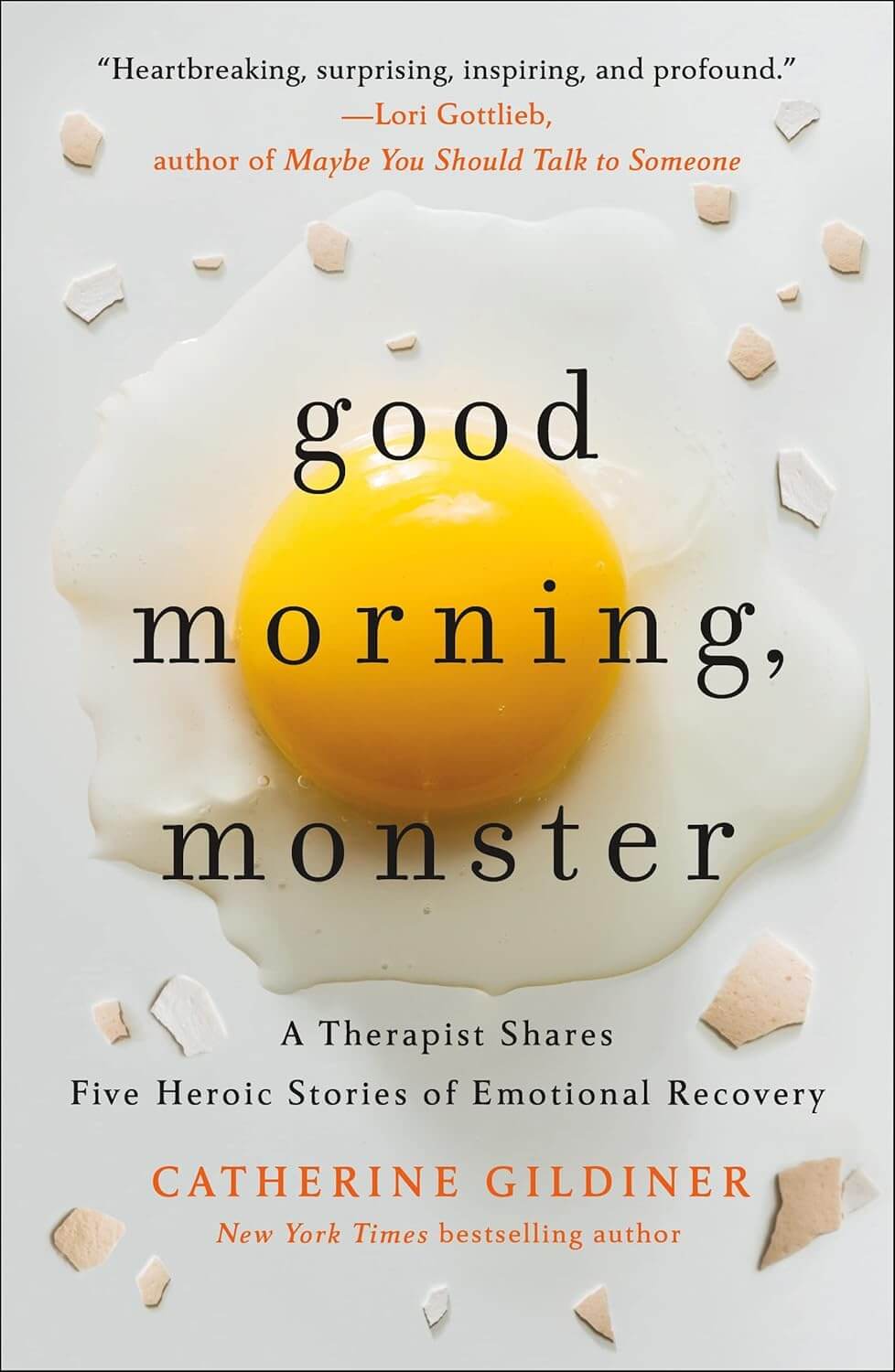
Prefer the print book? Buy on Amazon
As an Amazon Associate, Sumizeit earns from qualifying purchases.
Good Morning, Monster Book Summary
This Good Morning, Monster Book Summary covers the key ideas, lessons, and takeaways in about 20 minutes.
Short Description:
Good Morning, Monster shows healing trauma needs empathy and patience.
The book’s central lesson is that survival strategies, no matter how extreme, are intelligent responses to impossible circumstances. Healing begins when these strategies are honored for their role in keeping the person alive—and gently questioned when they begin to limit life.
Therapy, as portrayed here, is not about fixing broken people. It is about uncovering truths that were once too dangerous to face alone. Through empathy, trust, and careful pacing, individuals can reclaim agency, rewrite internal narratives, and build relationships that are no longer governed by fear.
Good Morning, Monster affirms that even the deepest wounds can be approached, understood, and integrated. Healing is not quick, clean, or complete—but it is possible.
Helps with these goals
Preview the Good Morning, Monster book summary
Below is a preview of Sumizeit’s comprehensive human-written summary of Good Morning, Monster by Catherine Gildiner. The full summary is 15-20 minutes long and covers the book’s key ideas in text, audio, visual, and video formats. Unlock the full 20 Minute Summary
Good Morning, Monster by Catherine Gildiner is a deeply human exploration of psychological survival and healing, told through the intimate lens of long-term therapy. Rather than presenting abstract theories or diagnostic manuals, Gildiner invites readers into the therapy room, where pain unfolds slowly, trust is fragile, and progress is nonlinear. The book chronicles the therapeutic journeys of five patients—Laura, Peter, Danny, Alana, and Madeline—each shaped by profound childhood trauma and each struggling with its aftershocks in adulthood.
What emerges is not simply a collection of case studies, but a meditation on what it means to endure the unbearable and still build a life. Gildiner writes as both clinician and witness, showing how early wounds distort identity, relationships, and self-worth, while also revealing the astonishing ingenuity people use to stay alive emotionally. The book’s power lies in its refusal to sensationalize trauma. Instead, it lingers on the slow, painstaking work of understanding, naming, and eventually loosening the grip of the past.
Childhood as the Blueprint for the Adult Mind
One of the book’s central assertions is that early experiences do not fade quietly into memory; they embed themselves into the nervous system and shape how adults interpret the world. For the patients in Good Morning, Monster, childhood was not a place of safety but of threat, confusion, and betrayal. Abuse, neglect, and emotional abandonment did not merely hurt them at the time—it rewired how they understood love, danger, and their own value.
Gildiner illustrates how children adapt to unbearable environments by developing strategies that ensure survival. These adaptations are often ingenious, even heroic. Yet what protects a child can later imprison an adult. Emotional numbing, dissociation, hyper-independence, people-pleasing, and self-erasure all appear in different forms across the stories. Therapy, in this sense, is not about fixing what is broken, but about understanding why these strategies once made sense—and why they no longer serve.
The book repeatedly underscores that trauma inflicted by caregivers is especially damaging. When the people meant to protect instead harm, the child’s internal compass is distorted. Trust becomes dangerous. Love feels conditional or predatory. As adults, these individuals often blame themselves for struggles that are, in reality, logical consequences of early environments that offered no safe alternatives.
Laura: Intelligence as Armor
Laura’s story opens the book with urgency and emotional force. She arrives in therapy consumed by shame after a herpes diagnosis, convinced that this single fact has rendered her unlovable and monstrous. Yet as sessions unfold, it becomes clear that the diagnosis is merely the trigger—not the root—of her distress.
Laura grew up in a household marked by cruelty, neglect, and instability. Her mother was emotionally absent and punitive, while her father failed to protect her from harm. From an early age, Laura learned that vulnerability invited attack. In response, she cultivated sharp intelligence, self-reliance, and fierce control over her environment. These qualities allowed her to survive and to excel, but they also isolated her.
Gildiner carefully traces how Laura’s internal narrative—“I am defective”—originated long before…
Want the complete 20-minute summary?
- Full structured summary
- Video Summary
- Podcast Summary
- Audio summary
- Key takeaways
- Exercises
- Quiz
- Highlights and notes
- Ask the book with AI
Who should read Good Morning, Monster?
Good Morning, Monster is essential for anyone seeking to understand how childhood trauma shapes adult life, including mental health professionals, trauma survivors, and readers interested in the psychology of healing. It speaks to those who struggle with shame, relationship difficulties, or emotional numbness and want to understand their roots. This book is also valuable for family members and caregivers trying to grasp why someone they love carries invisible wounds.
Why does Good Morning, Monster matter?
In a culture that often dismisses psychological struggle as weakness or pushes quick-fix solutions, Good Morning, Monster validates the slow, nonlinear nature of genuine healing. Catherine Gildiner's intimate portrayal of five therapy journeys counters shame and isolation by showing that survival strategies, no matter how extreme, are intelligent responses to impossible circumstances. The book matters today because it centers empathy and understanding over judgment, offering a roadmap for how we can support ourselves and others through the long work of becoming whole.
What are the key themes in Good Morning, Monster?
- Childhood experiences embed themselves in the nervous system and shape adult interpretation of reality
- Survival strategies developed in traumatic childhoods often become limiting in adulthood
- Trauma is not only about harm inflicted but also about critical needs that went unmet
- Trust and empathic witnessing are foundational to therapeutic change
- Progress in healing is incremental, nonlinear, and rarely dramatic
- Cultural and historical trauma requires culturally informed approaches to treatment
How can you apply ideas from Good Morning, Monster?
- Recognize when present struggles—anxiety, relationship patterns, self-sabotage—may be rooted in childhood adaptations rather than current reality, allowing for compassion instead of self-blame
- Practice noticing your own survival strategies (people-pleasing, emotional numbing, perfectionism, isolation) and questioning when they serve you versus when they limit connection
- Build awareness of your relational patterns by observing what dynamics you unconsciously recreate in intimate relationships and family interactions
- Develop a practice of empathic self-talk by extending to yourself the compassionate understanding you might offer a trauma survivor, especially during moments of shame or self-criticism
- When working with someone in pain, prioritize patient presence and listening over offering quick solutions or reassurance, allowing them to feel witnessed rather than fixed
- If seeking therapy, look for a therapist who emphasizes the therapeutic relationship and cultural context rather than purely diagnostic approaches or symptom reduction
- Create boundaries by naming and protecting your needs, even when doing so feels dangerous—a key practice for those trained by trauma to self-erase
What common mistakes do readers make with Good Morning, Monster?
- Believing that understanding your trauma intellectually is the same as healing from it—real change requires emotional processing and relational experience over time
- Expecting healing to be linear and dramatic rather than accepting that progress is incremental, often invisible, and may involve cycling back through old material
- Using self-awareness as a tool for self-judgment rather than self-compassion, turning insight into another form of internal criticism
- Attempting rapid change or 'getting over it' rather than respecting the nervous system's need for slow, safe pacing when processing deep wounds
Sumizeit Exercises Apply what you've learned
Turn ideas from Good Morning, Monster into action with a short guided reflection: identify the biggest takeaway, connect it to your life, and commit to one step you can take in the next 24 hours.
What is the expert analysis of Good Morning, Monster?
Overview
Good Morning, Monster is a profound contribution to contemporary psychological literature by Catherine Gildiner, a Canadian clinical psychologist and acclaimed memoirist. Departing from traditional academic texts, Gildiner offers an intimate, narrative-driven exploration of trauma and healing through the therapeutic journeys of five diverse patients. The book stands out for its nuanced portrayal of trauma’s enduring impact and the painstaking, nonlinear process of recovery. Gildiner’s dual role as clinician and storyteller enriches the work, making it both accessible and deeply insightful for readers interested in the human psyche, psychotherapy, and resilience.
Core Thesis
The central argument of Good Morning, Monster is that childhood trauma indelibly shapes adult identity, relationships, and emotional functioning by embedding itself within the nervous system and internal schemas. Survival strategies developed in response to early adversity—though adaptive at the time—can later become psychological prisons. Healing, therefore, is not about “fixing” broken individuals but about understanding and gently unraveling these ingrained patterns through empathy, trust, and therapeutic presence. The book emphasizes that trauma’s legacy is complex, often manifesting as absence or fragmentation rather than overt symptoms, and that recovery requires courageous truth-telling and incremental, compassionate work rather than quick solutions.
Strengths
- Humanizing Trauma: Gildiner’s refusal to sensationalize or reduce trauma to clinical labels allows for a deeply empathetic and respectful portrayal of suffering and survival.
- Rich Case Narratives: The detailed, varied patient stories provide textured insights into different manifestations of trauma, from neglect and abuse to cultural annihilation and dissociation.
- Therapeutic Nuance: The book’s focus on the therapist’s emotional presence, humility, and the dynamics of transference/countertransference adds a sophisticated layer often absent in popular psychology.
- Cultural Sensitivity: Incorporating Indigenous healing traditions for Danny’s story demonstrates an awareness of the limitations of Western psychotherapy and the importance of culturally informed care.
- Emphasis on Empathy: Highlighting empathy as a transformative force underscores the relational core of healing, moving beyond mechanistic or purely cognitive models.
Critiques & Counterarguments
- Limited Generalizability: While rich in qualitative detail, the book’s reliance on five case studies restricts its applicability across broader populations or diverse trauma types, potentially limiting its empirical weight.
- Potential Overemphasis on Childhood: The thesis foregrounds early trauma as the blueprint for adult dysfunction, which may underplay the role of later life experiences, neuroplasticity, and socio-environmental factors in shaping psychological outcomes.
- Therapeutic Idealization: Gildiner’s depiction of therapy as a primarily empathic, relational process might underrepresent the efficacy and necessity of evidence-based interventions such as trauma-focused cognitive-behavioral therapy or EMDR, which have robust empirical support.
- Competing Views on Narcissism and Anxiety: The portrayal of narcissistic parenting and its effects, while compelling, could be contrasted with research emphasizing genetic and temperamental contributions to anxiety disorders, suggesting a more multifactorial etiology.
- Challenges of Cultural Integration: Although the inclusion of Indigenous healing practices is commendable, the book does not deeply engage with the complexities and potential tensions between Western psychotherapy and Indigenous epistemologies, which some scholars argue require more than integration but fundamental paradigm shifts.
Who Should Read This
Good Morning, Monster is essential reading for mental health professionals, psychotherapists, and clinical trainees seeking a compassionate, narrative approach to understanding trauma’s long shadow. It also appeals to scholars and students of psychology and social work interested in the interplay between early adversity and adult mental health. Beyond professionals, the book offers valuable insights for survivors of trauma and their loved ones, providing hope through its honest depiction of healing as a courageous, gradual process. Readers drawn to memoir, narrative psychology, and the human stories behind clinical phenomena will find Gildiner’s work both enlightening and deeply moving.
Frequently asked questions about the Good Morning, Monster book summary
What is Good Morning, Monster about?
Good Morning, Monster by Catherine Gildiner is a narrative exploration of five therapy cases that illuminate how childhood trauma shapes adult life and how healing unfolds through patient, empathic therapy. The book moves beyond diagnostic categories to show the human reality of surviving abuse, neglect, and betrayal, revealing both the ingenuity of survival and the slow, nonlinear work of becoming whole.
Who should read Good Morning, Monster?
This book is valuable for mental health professionals seeking deeper understanding of trauma and therapy, trauma survivors and adult children of dysfunctional families seeking validation and perspective, and anyone interested in the psychology of resilience and healing. It also speaks to family members, caregivers, and people who struggle with shame, relationship difficulties, or emotional numbness.
What are the main takeaways from Good Morning, Monster?
The central takeaways include: survival strategies, no matter how extreme, are intelligent responses to impossible circumstances; healing requires honoring these adaptations while gently questioning their continued usefulness; empathic witnessing and therapeutic trust are transformative; and change is possible but incremental, nonlinear, and never complete. Gildiner demonstrates that understanding the origins of pain creates the foundation for lasting change.
How does Catherine Gildiner approach trauma therapy differently?
Gildiner emphasizes the therapeutic relationship over diagnostic labels, values patience and careful pacing over quick insights, and incorporates cultural context into treatment. She shows how honoring the intelligence behind survival strategies—while respecting resistance and silence—builds deeper trust and more meaningful healing than conventional prescriptive approaches.
Can trauma from childhood really shape adult relationships and behavior?
Yes, according to Good Morning, Monster, early experiences embed themselves in the nervous system and shape how adults interpret love, danger, and their own worth. Children develop adaptive strategies in traumatic environments that later become limiting. Through therapy, individuals can gain awareness of these patterns and make different choices.
What does Gildiner say about dissociation and fragmented identity?
Gildiner presents dissociation and alternate identities not as pathology but as extraordinary acts of survival. When reality is unbearable, the mind creates separate states or identities to distribute pain and preserve the core self. Healing honors these adaptations while helping the person regain agency over their inner world.
How long does healing from trauma actually take?
Good Morning, Monster emphasizes that healing is not quick or linear. Progress is measured in small moments of awareness, acts of self-protection, and gradual softening of internal cruelty rather than dramatic breakthroughs. Real change requires patient, consistent work over years and may never be 'complete,' but increasing capacity for connection and presence is achievable.
What role does the therapist play in Good Morning, Monster?
Gildiner shows the therapist as a consistent, emotionally present witness who builds trust through humility and respect for patient pacing. Rather than offering expert solutions, the therapist creates safety, listens to what is avoided, acknowledges their own emotional responses, and helps patients discover their own truths at a tolerable pace.
About Sumizeit
Sumizeit is a profitable Scomy LLC company based in Miami, Florida. Our founders, Clemens Raemy and Weina Scott, are successful entrepreneurs with several exits. Sumizeit is a popular book summary app / micro learning app used by busy professionals and entrepreneurs with over 2,500 non-fiction book summaries and 10,000 podcast summaries in text, audio, visual, podcast, and video format. We also have stellar retention tools to make ideas stick - such as flashcards with spaced repetition, quizzes, streaks, highlighting and notes, daily challenges, riddles, mini-courses, meditation, and more. You won't only learn the idea, but also remember it. Over 90% of our users change their habits with Sumizeit.
Upgrade Now
Here's why readers love Sumizeit
Join thousands of learners getting smarter every day
"Great experience. Detailed summaries. Loved the gamification feature. Makes learning fun. Good customer service. I recommend Sumizeit to anyone. You'll learn a lot."
"I always felt busy but still wanting to keep up with the book discussion in my friend group. This was a great supplement to help me keep reading the books I find fun while keeping up with important books."
"I love this website. Instead of scrolling social media, I find myself learning a lot. I use it everyday. I recommend this app for anyone who is too busy and wants to get up to speed with their favorite books."
Good Morning, Monster Book Summary PDF
Looking for a Good Morning, Monster Book Summary PDF you can save and revisit offline? Our Good Morning, Monster Book Summary PDF captures the book’s core ideas in a clean, printable format — the key frameworks, takeaways, and structure without the fluff. Download the Good Morning, Monster Book Summary PDF when you want a reference you can annotate, share with your team, or review on the go. Get your Good Morning, Monster Book Summary PDF from the download page below.
Download Good Morning, Monster Book Summary PDFPeople also liked these summaries
Readers who explored Good Morning, Monster often enjoyed these titles next.



Ready to read the whole thing?
- Full structured summary
- Video Summary
- Podcast Summary
- Audio summary
- Key takeaways
- Exercises
- Quiz
- Highlights and notes
- Ask the book with AI
Featured Book Titles
Popular Book Summaries at sumizeit, leading book summary app