


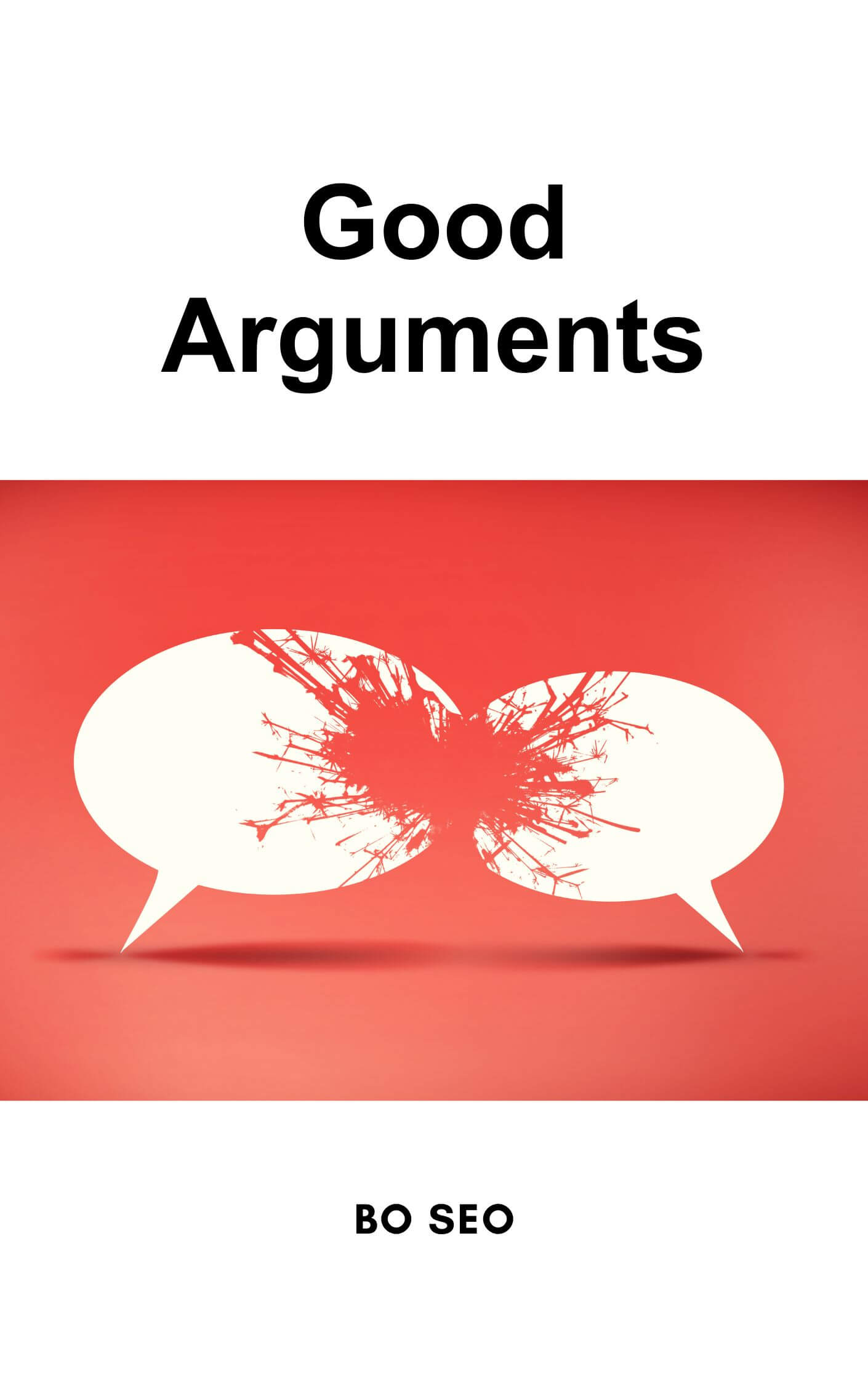
Prefer the print book? Buy on Amazon
As an Amazon Associate, Sumizeit earns from qualifying purchases.
Good Arguments Book Summary
This Good Arguments Book Summary covers the key ideas, lessons, and takeaways in about 20 minutes.
Short Description:
Good Arguments teaches rhetoric as ethical, persuasive communication.
In a world where disagreements are common, the book emphasizes the importance of learning how to disagree more constructively. By mastering the principles of rhetoric, such as clarity, conciseness, personal connection, and fluid speech, individuals can enhance their ability to communicate effectively. This skill is not only valuable for personal relationships but is also essential for fostering healthy democratic discourse and encouraging positive social change.
"Good Arguments" encourages readers to recognize that, despite its negative associations, rhetoric can be a force for good. When used ethically and skillfully, rhetoric can amplify the truth, spread ideas, and motivate people to take action. The book ultimately advocates for the pursuit of persuasive speaking as a means to bridge divides, inspire positive change, and revitalize our democratic societies.
Helps with these goals
Want a Free Weekly Read?
Get a free summary every week straight to your mailbox.
Preview the Good Arguments book summary
Below is a preview of Sumizeit’s comprehensive human-written summary of Good Arguments by Bo Seo. The full summary is 15-20 minutes long and covers the book’s key ideas in text, audio, visual, and video formats. Unlock the full 20 Minute Summary
Who Is This For
Key Insights
"Good Arguments" by Bo Seo, published in 2022, offers readers a unique blend of memoir and a practical guide to the art of effective communication. At its core, the book is about the world of competitive debate, revealing the subculture's intriguing intricacies. Through this exploration, Seo distills the hidden secrets of competitive debate into timeless principles that can enhance our ability to communicate effectively.
This book offers valuable insights into the art of persuasion, presenting readers with the tools to engage in meaningful discussions and debates. It equips us with practical techniques and strategies for presenting our ideas persuasively and countering opposing viewpoints.
In a world often marked by divisive rhetoric and polarizing arguments, "Good Arguments" serves as a timely and essential resource, urging us to embrace the art of effective communication as a means to foster healthier relationships and promote the revitalization of our democratic ideals.
Bo Seo's Debate Journey
Bo Seo's life is a remarkable journey from silence to becoming a champion in the world of competitive debate. Born in South Korea, Seo's life took a significant turn when his parents made the bold decision to move the family to Australia in search of better opportunities. At just eight years old, Seo found himself in a foreign land where he did not speak the language.
Initially, the language barrier was overwhelming, and Seo struggled to communicate with his peers or even understand his schoolwork. In response, he retreated into himself and chose silence as a way to cope with the challenges of his new life. He learned to navigate this unfamiliar world by keeping quiet and simply following instructions.
For several years, Seo remained a quiet and introverted child, never asserting himself or speaking up. He focused on studying and slowly began to grasp the nuances of the Australian English accent. However, it was a pivotal moment in fifth grade that altered the course of his life forever. His teacher invited him to participate in a debate competition.
Competitive debate, as Seo discovered, is a formal and structured activity where teams engage in verbal battles to persuade judges on various issues. It's a widely practiced sport in schools and universities worldwide, with many notable figures, including presidents, CEOs, and civil rights leaders, having participated.
In his first debate, Seo was tasked with defending the motion, "All zoos should be banned." On the stage, amid the initial fear of approaching the podium and the exhilaration of receiving applause at the end, Seo discovered his voice.
Over the next decade, Seo embraced debate wholeheartedly, participating in numerous competitions and steadily improving his skills. However, debate wasn't the only area where he excelled. The logical thinking, composition, and public speaking skills he honed in debate also greatly enhanced his social and academic life.
Seo's dedication to debate led him to remarkable achievements. He not only won the World High School Championship but also earned a place at Harvard University, where he led the debate team…
Want the complete 20-minute summary?
- Full structured summary
- Video Summary
- Podcast Summary
- Audio summary
- Key takeaways
- Exercises
- Quiz
- Highlights and notes
- Ask the book with AI
Who should read Good Arguments?
Good Arguments is essential for anyone who wants to communicate more effectively, whether in personal conversations, professional settings, or public debates. It's particularly valuable for students, educators, public speakers, and anyone frustrated with unproductive arguments in today's polarized world. If you care about improving how you disagree with others and want to understand the real mechanics of persuasion, this book offers practical wisdom drawn from competitive debate.
Why does Good Arguments matter?
In an era of divisive rhetoric and surface-level persuasion tactics, Good Arguments by Bo Seo reminds us that effective communication requires both substance and skill. The book shows how mastering argumentation can strengthen personal relationships, revitalize democratic discourse, and create meaningful dialogue across disagreements. Understanding rhetoric as a force for truth rather than manipulation has never been more relevant.
What are the key themes in Good Arguments?
- The structure of effective arguments
- Identifying the true root of disagreement
- Rhetoric as a tool for truth and positive change
- How delivery shapes persuasion as much as content
- Constructive disagreement in a polarized world
- The role of evidence and proof in debate
- Building empathy through perspective-taking
How can you apply ideas from Good Arguments?
- Before your next argument or debate, write down exactly what you disagree about—identify whether it's a disagreement about facts, judgments, or prescriptions
- Practice the Side Switch technique by arguing your opponent's position before responding to their actual argument, building empathy and anticipating rebuttals
- Structure your arguments using the formula: clear claim + supporting evidence + logical connection to your conclusion, rather than stating opinions without proof
- Record yourself speaking to identify filler words, stutters, or unclear phrasing, then practice delivering your points with greater fluency and confidence
- When persuading others, connect your logical arguments to their specific needs and experiences by sharing relevant examples or personal stories
- In meetings or discussions, pause to ensure you and others agree on the core disagreement before diving into debate, saving time and increasing productivity
- Apply debate principles to difficult conversations: identify the real point of contention, gather evidence, explain the logical connection between your claims and conclusion
What common mistakes do readers make with Good Arguments?
- Jumping into arguments without identifying what you actually disagree about, leading to circular, unproductive conversations
- Confusing facts with arguments—listing information without explaining how it supports your main conclusion
- Ignoring the rhetorical dimension of persuasion and assuming logical arguments alone will convince others
- Failing to prepare rebuttals or consider opposing viewpoints, missing opportunities to strengthen your position
- Presenting ideas unclearly or with nervous delivery, undermining credibility even when the argument is sound
Sumizeit Exercises Apply what you've learned
Turn ideas from Good Arguments into action with a short guided reflection: identify the biggest takeaway, connect it to your life, and commit to one step you can take in the next 24 hours.
What is the expert analysis of Good Arguments?
Overview
Good Arguments is a compelling work by Bo Seo, a two-time world debating champion and respected journalist. Published in 2022, the book synthesizes Seo’s personal journey from a silent immigrant child to a master of competitive debate with practical lessons on rhetoric and argumentation. Seo’s unique vantage point as an elite debater and communicator lends the book both authenticity and authority. The text is significant for its timely exploration of how effective argumentation and rhetoric can revitalize public discourse, foster healthier interpersonal communication, and strengthen democratic engagement in an era marked by polarization and superficial dialogue.
Core Thesis
The central insight of Good Arguments is that the art of argumentation transcends mere content; it is equally about how ideas are communicated. Seo argues that effective rhetoric—clarity, structure, emotional engagement, and fluency—is indispensable for persuasion and constructive disagreement. The book posits that disagreements often fail because participants do not identify the precise point of contention, and that mastering the skills of pinpointing the root of disagreement, constructing logically sound arguments, and employing ethical rhetoric can transform conflict into productive dialogue. Ultimately, Seo champions rhetoric not as manipulation but as a vehicle for truth, understanding, and positive social change.
Strengths
- Integration of Memoir and Practical Guide: Seo’s personal narrative enriches the instructional content, making abstract principles tangible and relatable.
- Clear Framework for Disagreement: The categorization of disagreements into facts, judgments, and prescriptions provides a useful heuristic for dissecting arguments and avoiding common pitfalls.
- Emphasis on Ethical Rhetoric: Seo rehabilitates rhetoric’s reputation by highlighting its potential as a force for good, encouraging readers to wield it responsibly.
- Practical Techniques: Tools like the “Side Switch” method offer actionable strategies that foster empathy and deepen understanding of opposing views.
- Relevance to Contemporary Issues: The book’s focus on improving democratic discourse and bridging political divides addresses urgent societal challenges.
Critiques & Counterarguments
- Potential Oversimplification of Complex Disagreements: While categorizing disagreements into facts, judgments, and prescriptions is helpful, real-world disputes often involve overlapping and nuanced issues that resist neat classification.
- Limited Engagement with Power Dynamics: The book emphasizes rhetoric’s ethical use but does not deeply interrogate how power imbalances affect who gets to speak and be heard in public discourse, a critical factor in debates about persuasion and influence.
- Reliance on Competitive Debate Paradigm: Seo’s framework is heavily informed by competitive debate culture, which prioritizes winning arguments. This may not always translate seamlessly into everyday conversations or political dialogues where relational dynamics and emotional intelligence play larger roles.
- Competing Research on Rhetoric and Truth: Some scholars argue that rhetoric inherently involves elements of persuasion that can distort truth, suggesting a more skeptical stance on rhetoric’s capacity to serve truth without manipulation.
- Real-World Evidence of Polarization: Despite advances in communication skills, empirical studies indicate that increased exposure to opposing views can sometimes reinforce entrenched beliefs rather than foster understanding, challenging the optimistic view that better argumentation alone can bridge divides.
Who Should Read This
- Debaters and Public Speakers: Those engaged in competitive debate or public speaking will find Seo’s insights and techniques directly applicable to honing their craft.
- Educators and Students: The book serves as an excellent resource for teaching argumentation, critical thinking, and effective communication.
- Professionals in Communication-Heavy Fields: Leaders, negotiators, and anyone reliant on persuasion will benefit from the practical guidance on rhetoric and constructing sound arguments.
- Civic-Minded Individuals: Readers concerned with the quality of public discourse, political polarization, and democratic engagement will appreciate the book’s call to elevate dialogue through ethical persuasion.
- General Readers Interested in Self-Improvement: Anyone seeking to improve interpersonal communication and resolve conflicts constructively will find valuable lessons in Seo’s approach.
Frequently asked questions about the Good Arguments book summary
What is Good Arguments about?
Good Arguments by Bo Seo is a blend of memoir and practical guide that explores the art of effective communication through the lens of competitive debate. The book teaches readers how to construct sound arguments, identify the root of disagreements, and use rhetoric ethically to persuade and communicate more effectively in all areas of life.
Who should read Good Arguments?
Good Arguments is ideal for anyone who wants to improve their communication skills, including students, educators, public speakers, and professionals. It's especially valuable for those frustrated with unproductive arguments, concerned about polarized public discourse, or interested in mastering the principles of persuasion and debate.
What are the main takeaways from Good Arguments?
The main takeaways are that effective communication requires identifying the true disagreement, constructing arguments with evidence and logical support, and recognizing that how you say something matters as much as what you say. Good Arguments emphasizes that rhetoric, when used ethically, is a powerful tool for spreading truth and fostering healthier dialogue.
How does Bo Seo's personal story connect to the book's message?
Bo Seo's journey from a silent immigrant child to a two-time world debate champion demonstrates how mastering argumentation and communication can transform lives. His path illustrates that effective speaking and persuasion are learnable skills, regardless of where you start, making the book's lessons deeply personal and universally applicable.
What are the three types of disagreements according to Good Arguments?
Good Arguments identifies disagreements as facts (claims about how things are, like 'water boils at 100°C'), judgments (subjective evaluations, like 'lying is wrong'), and prescriptions (how things should be, like 'you should go to the gym'). Recognizing which type of disagreement you're having helps you address it more effectively.
What is the Side Switch technique mentioned in Good Arguments?
The Side Switch technique involves temporarily adopting your opponent's viewpoint and brainstorming their best arguments. This practice helps you anticipate rebuttals, understand opposing perspectives more deeply, and engage in more respectful, thoughtful debate while strengthening your own position.
How does Good Arguments address the role of rhetoric in communication?
Good Arguments reframes rhetoric from its negative association with manipulation to recognize it as a legitimate tool for conveying truth effectively. The book emphasizes that clarity, emotional connection, fluent delivery, and proper structure—all rhetorical elements—are essential to persuasive communication when used ethically.
Can the lessons in Good Arguments apply outside of formal debate?
Yes, absolutely. While rooted in competitive debate, Good Arguments teaches universally applicable communication skills valuable in personal relationships, professional settings, and public discourse. The principles of identifying disagreements, constructing sound arguments, and using rhetoric effectively enhance communication in virtually any context.
About Sumizeit
Sumizeit is a profitable Scomy LLC company based in Miami, Florida. Our founders, Clemens Raemy and Weina Scott, are successful entrepreneurs with several exits. Sumizeit is a popular book summary app / micro learning app used by busy professionals and entrepreneurs with over 2,500 non-fiction book summaries and 10,000 podcast summaries in text, audio, visual, podcast, and video format. We also have stellar retention tools to make ideas stick - such as flashcards with spaced repetition, quizzes, streaks, highlighting and notes, daily challenges, riddles, mini-courses, meditation, and more. You won't only learn the idea, but also remember it. Over 90% of our users change their habits with Sumizeit.
Upgrade Now
Here's why readers love Sumizeit
Join thousands of learners getting smarter every day
"Great experience. Detailed summaries. Loved the gamification feature. Makes learning fun. Good customer service. I recommend Sumizeit to anyone. You'll learn a lot."
"I always felt busy but still wanting to keep up with the book discussion in my friend group. This was a great supplement to help me keep reading the books I find fun while keeping up with important books."
"I love this website. Instead of scrolling social media, I find myself learning a lot. I use it everyday. I recommend this app for anyone who is too busy and wants to get up to speed with their favorite books."
Good Arguments Book Summary PDF
Looking for a Good Arguments Book Summary PDF you can save and revisit offline? Our Good Arguments Book Summary PDF captures the book’s core ideas in a clean, printable format — the key frameworks, takeaways, and structure without the fluff. Download the Good Arguments Book Summary PDF when you want a reference you can annotate, share with your team, or review on the go. Get your Good Arguments Book Summary PDF from the download page below.
Download Good Arguments Book Summary PDFPeople also liked these summaries
Readers who explored Good Arguments often enjoyed these titles next.


Ready to read the whole thing?
- Full structured summary
- Video Summary
- Podcast Summary
- Audio summary
- Key takeaways
- Exercises
- Quiz
- Highlights and notes
- Ask the book with AI
Featured Book Titles
Popular Book Summaries at sumizeit, leading book summary app