


Prefer the print book? Buy on Amazon
As an Amazon Associate, Sumizeit earns from qualifying purchases.
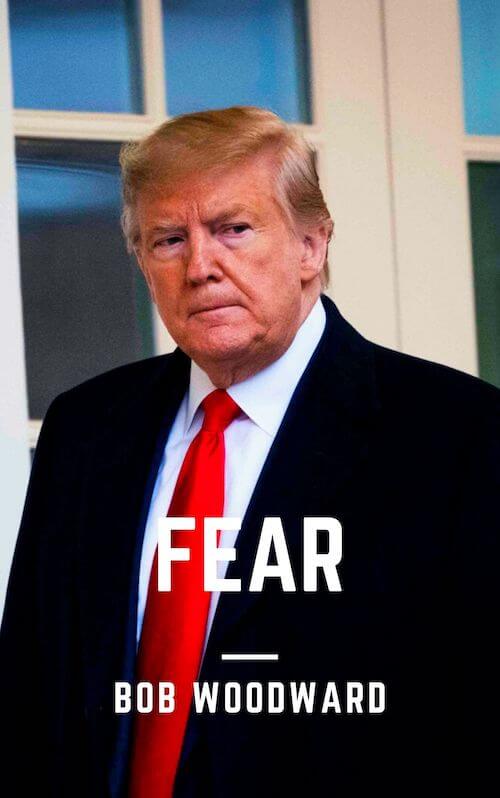
Fear Book Summary
This Fear Book Summary covers the key ideas, lessons, and takeaways in about 20 minutes.
Short Description:
Trump’s chaotic leadership appeals through bullying and def
Helps with these goals
Preview the Fear book summary
Below is a preview of Sumizeit’s comprehensive human-written summary of Fear by Bob Woodward. The full summary is 15-20 minutes long and covers the book’s key ideas in text, audio, visual, and video formats. Unlock the full 20 Minute Summary
In this book, journalist Bob Woodward, famed for his coverage of the Watergate scandal in the 70s, turns his investigations towards the Trump administration. Drawing on hours of witness interviews with insiders, he gives an even-handed account of the dynamics inside the White House, particularly how Trump’s infamous temperament has played out in practice, creating a chaotic and ill-prepared White House. Ultimately, he paints a frightening picture of Trump’s volatility and ignorance and the mounting anxieties of his advisors and staff.
Trump was a political novice and Steve Bannon stepped in to organize the dysfunctional campaign.
In 2010, Donald Trump was considering a potential candidacy in the 2012 elections. Steve Bannon, then the leader of far-right political outlet Breitbart, visited Trump to speak about it. Bannon liked Trump and felt his populist attitude and disdain of political correctness meant that he could stand up for “the little man”. But quickly, Bannon started to realize the extent of Trump’s political inexperience and naivety.
As they spoke, Trump insisted that he had voted in every election (not realizing that public voting records indicated that he had only voted in a single primary in his lifetime). Donation records also indicated that most of his political donations had gone to Democrats. Bannon tried to explain how this could affect his chances as a candidate, but Trump couldn’t understand how this was relevant. Bannon struggled to take him very seriously.
When Trump won the 2016 Republican nomination, Bannon was surprised but intrigued. He noticed that the Trump campaign was getting far less positive coverage than Clinton, and there were stories everywhere about the messiness and disorganization of the campaign. With 85 days left before the election, Bannon went to work on the Trump campaign, re-organizing the agenda. Going forward, he said, they would focus on three issues: immigration, jobs, and foreign wars.
Bannon considered these things to be what set him most apart from his competitor, Democrat Hillary Clinton. He knew that Clinton would have trouble defending herself on these issues— she was a globalist who wanted to soften immigration rules, which Trump argued would lead to a loss of American jobs to foreign competitors— and a part of the political establishment that had brought about too many foreign military conflicts. As long as Trump emphasized these weaknesses, he had a chance at becoming President.
When the votes came in and Trump won the election, even Trump was caught off-guard. He hadn’t spent much time considering who he would employ in his transition to the White House. While Hillary Clinton had spent her entire life preparing to be president, says Woodward, Trump didn’t spend a minute.
As Trump staffed his office, he ran into issues with the director of the FBI, James Comey.
Trump picked an eclectic mix of people to fill his cabinet. His chief of staff was Reince Priebus, who was the liaison between the Republican Party and Trump’s campaign.
Want the complete 20-minute summary?
- Full structured summary
- Video Summary
- Podcast Summary
- Audio summary
- Key takeaways
- Exercises
- Quiz
- Highlights and notes
- Ask the book with AI
Who should read Fear?
Fear is essential reading for anyone seeking an insider's perspective on the Trump White House. This book appeals to political junkies, history buffs, and citizens interested in understanding how presidential decision-making actually unfolds behind closed doors. It's particularly valuable for those wanting to grasp the dynamics between Trump and his cabinet members, and how personality clashes shape major policy decisions.
Why does Fear matter?
Bob Woodward's Fear offers crucial insight into a pivotal period of American political history through on-the-record interviews with White House insiders. The book reveals how inexperience, impulsiveness, and dismissal of expert advice can create dysfunction at the highest levels of government. Understanding these dynamics helps readers appreciate the importance of institutional knowledge, expert consultation, and stable leadership in crisis management—lessons relevant to any organization or nation.
What are the key themes in Fear?
- Political inexperience and its consequences
- The clash between ideology and expertise
- Presidential temperament and its impact on governance
- The role of media and public perception in politics
- Institutional dysfunction and cabinet conflict
- Power dynamics between leadership and advisors
How can you apply ideas from Fear?
- Hiring decisions should prioritize relevant experience and expertise over appearance or charisma alone
- Organizations benefit from implementing approval processes that slow impulsive decisions until emotions cool
- Leaders should actively solicit and genuinely consider expert advice before making major decisions
- Maintaining integrity through honesty and consistency builds long-term trust better than short-term tactical gains
- Creating a culture where advisors feel safe raising concerns prevents groupthink and improves decision quality
- Understanding the data relevant to your domain is non-negotiable for effective leadership
- Establishing clear procedures and protocols for major decisions prevents emotional decisions from becoming policy
What common mistakes do readers make with Fear?
- Assuming personal success in one field (business) automatically translates to competence in an entirely different domain (government)
- Treating disagreement as personal disloyalty rather than professional duty, leading leaders to fire those who most need to be heard
- Believing that confidence and determination alone can substitute for actual knowledge and preparation
- Underestimating how social media and informal communication channels can escalate into genuine national or international crises
Sumizeit Exercises Apply what you've learned
Turn ideas from Fear into action with a short guided reflection: identify the biggest takeaway, connect it to your life, and commit to one step you can take in the next 24 hours.
What is the expert analysis of Fear?
Overview
Fear by Bob Woodward stands as a significant contribution to contemporary political literature, offering an incisive, behind-the-scenes examination of the Trump administration. Woodward, a veteran investigative journalist renowned for his pivotal role in uncovering the Watergate scandal, leverages his unparalleled access and rigorous interview methodology to illuminate the chaotic inner workings of the White House under Donald Trump. His reputation for meticulous reporting lends the book a level of credibility and gravitas that distinguishes it from partisan polemics or superficial political commentary.
Core Thesis
Woodward’s central argument is that Donald Trump’s tenure as President was marked by profound political inexperience, impulsiveness, and a volatile temperament that undermined effective governance. The book contends that this instability fostered a fractious and dysfunctional administration, characterized by internal conflicts, frequent resignations, and a disregard for expert counsel. At the same time, Woodward suggests that Trump’s appeal to his base derived largely from his unfiltered communication style and willingness to challenge established political norms, even if that meant embracing falsehoods and controversy.
Strengths
- Firsthand Access and Detailed Reporting: Woodward’s extensive interviews with key insiders provide a granular, nuanced portrait of the administration’s internal dynamics.
- Balanced Narrative: Despite the critical tone, the book refrains from overt partisanship, presenting a sober account that acknowledges both Trump’s political appeal and his administrative shortcomings.
- Contextualizing Political Novice Status: The exploration of Trump’s lack of preparation and understanding of governance offers valuable insights into the challenges faced by non-traditional candidates ascending to high office.
- Illumination of Key Policy Conflicts: The detailed accounts of disputes over trade, foreign policy, and national security reveal the complexity and stakes of decision-making within the administration.
- Insight into Leadership Psychology: Woodward’s portrayal of Trump’s communication style and decision-making processes contributes to broader discussions on leadership, power, and political behavior.
Critiques & Counterarguments
- Potential Overemphasis on Chaos: While the book highlights dysfunction, some critics argue it may overstate disarray, neglecting instances where the administration achieved policy goals or maintained operational continuity.
- Reliance on Anonymous Sources: The heavy use of unnamed insiders, while common in investigative journalism, raises questions about verifiability and potential bias in the narratives presented.
- Oversimplification of Complex Issues: The framing of Trump’s economic views as purely nostalgic or uninformed may overlook legitimate critiques of globalization and trade deficits held by diverse political constituencies.
- Competing Interpretations of Leadership Style: Some leadership scholars might argue that Trump’s confrontational and populist approach reflects a deliberate strategy that resonates with disenfranchised voters, challenging traditional notions of effective governance.
- Contradictory Evidence on Policy Impact: Real-world outcomes, such as economic indicators or foreign policy shifts, may not fully align with the portrayal of incompetence, suggesting a more complex legacy than the book implies.
Who Should Read This
Fear is essential reading for political scientists, historians, and informed citizens seeking an in-depth, journalistic account of one of the most unconventional presidencies in American history. It appeals to those interested in the interplay between personality and power, the mechanics of executive governance, and the challenges posed by populist leadership in contemporary democracies. Additionally, students of leadership psychology and organizational behavior will find Woodward’s insights into decision-making under pressure particularly instructive.
Frequently asked questions about the Fear book summary
What is Fear about?
Fear by Bob Woodward is an insider's account of Donald Trump's first years as president, based on extensive interviews with White House staff and advisors. The book documents the dysfunction, conflicts, and decision-making processes within the Trump administration, focusing on the tension between Trump's inexperience and the expertise of his cabinet members. Woodward portrays a chaotic White House where the president's temperament, impulsiveness, and resistance to expert advice created ongoing crises and policy failures.
Who should read Fear?
Fear is essential for political junkies, history enthusiasts, and anyone wanting to understand how the Trump presidency actually functioned behind closed doors. It appeals to readers interested in organizational dysfunction, leadership failures, and the personalities that shape major political decisions. The book is also valuable for those seeking to understand the period of recent American political history and how personality clashes at the highest levels of government affect policy outcomes.
What are the main takeaways from Fear?
The key takeaway is that inexperienced leadership combined with dismissal of expert advice creates institutional chaos, even as personality and messaging appeal can maintain political support. Woodward shows that Trump's cabinet members repeatedly tried to protect the country from impulsive decisions, that ignoring economic data still produces economic consequences, and that personal charisma can outweigh policy competence in political appeal. The book ultimately illustrates how institutional dysfunction develops when leaders refuse to listen to the experts they hire.
What is Bob Woodward's background and credibility?
Bob Woodward is an acclaimed investigative journalist who began at the Washington Post in 1971 and is currently Associate Editor. He is best known for his groundbreaking reporting on the Watergate scandal in 1972, which contributed to President Richard Nixon's resignation. Since then, he has written 19 books on American presidents and politics, establishing himself as one of the most respected chroniclers of recent presidential history.
How did Trump's cabinet members respond to his decision-making style?
Trump's cabinet members grew increasingly frustrated as he rejected their expertise and dismissed data they presented. Several key advisors, including Gary Cohn, Reince Priebus, and Steve Bannon, eventually resigned, citing Trump's refusal to listen to counsel and his erratic behavior. Some, like Cohn, took matters into their own hands by removing unsigned orders from Trump's desk to prevent impulsive decisions they believed would harm national security.
What does Fear reveal about Trump's approach to economic policy?
Fear documents Trump's ideological commitment to protectionist trade policies despite his advisors providing extensive economic data showing free trade benefited the U.S. economy. Trump believed American manufacturing decline was caused by unfair trade deals and refused to engage with evidence that the economy had successfully transitioned to service-based sectors. His insistence on trade wars and tariffs ultimately produced mixed results, with benefits primarily flowing to wealthy individuals and corporations rather than manufacturing workers.
How did Trump's social media use impact national security?
Fear highlights several instances where Trump's inflammatory tweets created genuine national security risks, most notably his 2018 nuclear threat exchange with North Korea's Kim Jong-Un. Military leaders and advisors were alarmed by his willingness to use childish provocations on Twitter to engage with a dictator possessing nuclear weapons, and his tweet suggesting nuclear buttons demonstrated how personal communication channels could escalate into actual diplomatic crises without traditional filtering or strategic planning.
About Sumizeit
Sumizeit is a profitable Scomy LLC company based in Miami, Florida. Our founders, Clemens Raemy and Weina Scott, are successful entrepreneurs with several exits. Sumizeit is a popular book summary app / micro learning app used by busy professionals and entrepreneurs with over 2,500 non-fiction book summaries and 10,000 podcast summaries in text, audio, visual, podcast, and video format. We also have stellar retention tools to make ideas stick - such as flashcards with spaced repetition, quizzes, streaks, highlighting and notes, daily challenges, riddles, mini-courses, meditation, and more. You won't only learn the idea, but also remember it. Over 90% of our users change their habits with Sumizeit.
Upgrade Now
Here's why readers love Sumizeit
Join thousands of learners getting smarter every day
"Great experience. Detailed summaries. Loved the gamification feature. Makes learning fun. Good customer service. I recommend Sumizeit to anyone. You'll learn a lot."
"I always felt busy but still wanting to keep up with the book discussion in my friend group. This was a great supplement to help me keep reading the books I find fun while keeping up with important books."
"I love this website. Instead of scrolling social media, I find myself learning a lot. I use it everyday. I recommend this app for anyone who is too busy and wants to get up to speed with their favorite books."
Fear Book Summary PDF
Looking for a Fear Book Summary PDF you can save and revisit offline? Our Fear Book Summary PDF captures the book’s core ideas in a clean, printable format — the key frameworks, takeaways, and structure without the fluff. Download the Fear Book Summary PDF when you want a reference you can annotate, share with your team, or review on the go. Get your Fear Book Summary PDF from the download page below.
Download Fear Book Summary PDFPeople also liked these summaries
Readers who explored Fear often enjoyed these titles next.




Ready to read the whole thing?
- Full structured summary
- Video Summary
- Podcast Summary
- Audio summary
- Key takeaways
- Exercises
- Quiz
- Highlights and notes
- Ask the book with AI
Featured Book Titles
Popular Book Summaries at sumizeit, leading book summary app