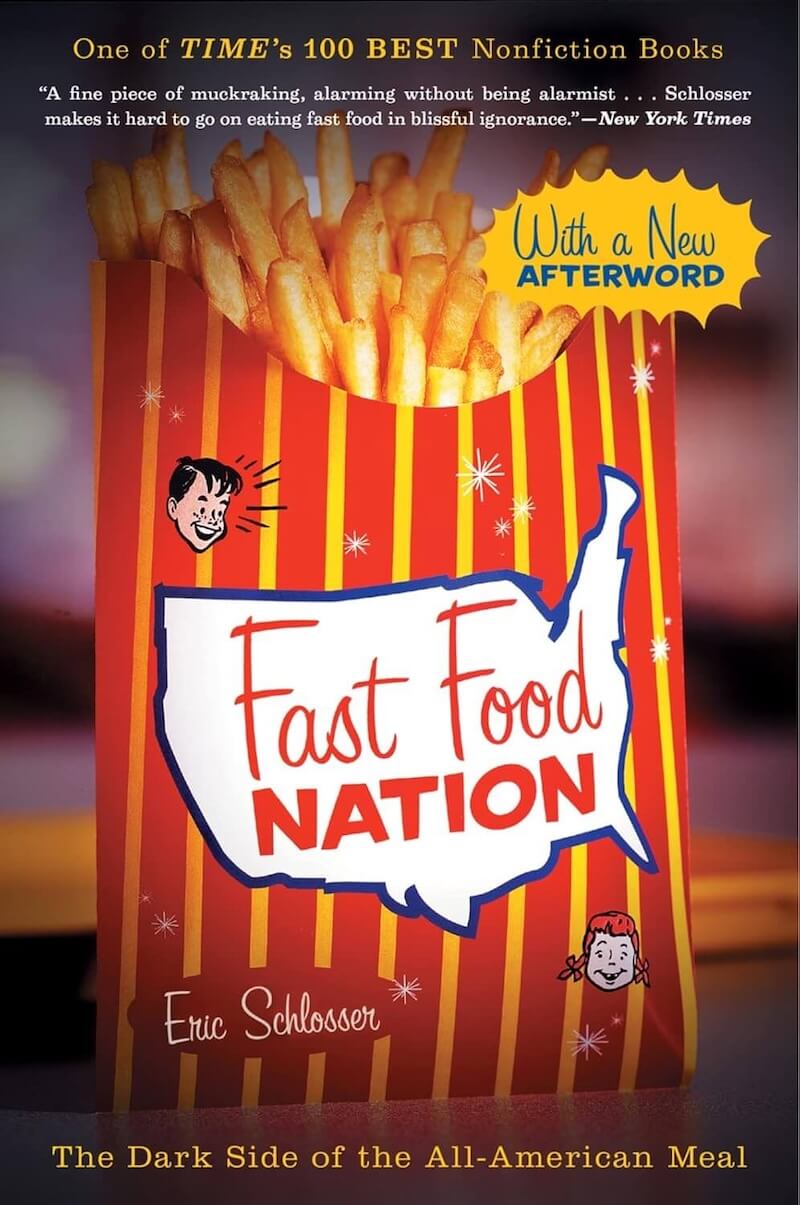
Fast Food Nation begins by describing the dramatic transformation of American society in the mid-20th century. After World War II, millions of Americans moved to newly built suburbs, creating communities centered around automobiles rather than walkable city centers. Federal policies encouraged this lifestyle shift: the government invested billions in interstate highways and suburban housing developments, while car manufacturers aggressively promoted automobile ownership. As more families became dependent on cars, roadside businesses became essential to daily life—gas stations, drive-through banks, motels, and ultimately fast food.
Southern California was the epicenter of this revolution. Cities like Los Angeles and Anaheim grew rapidly, powered by aerospace industry jobs and subsidized infrastructure. Teenagers became a powerful consumer force, as they now had cars, spending money, and freedom, fueling youth-centric businesses. Drive-in restaurants like Bob’s Big Boy and local hamburger stands became popular hangouts, but the system was slow and labor-intensive. The McDonald brothers saw an opportunity: eliminate carhops and full-service dining, simplify the menu, standardize production, and push efficiency above all else.
Their “Speedee Service System” was a radical innovation: burgers cost only 15 cents (half of typical restaurant prices), food was served in paper packaging instead of dishes, and employees executed repetitive, timed motions like factory workers. This was the first time industrial manufacturing principles entered kitchens. The results were unprecedented: extremely low costs, enormous volume capacity, and complete uniformity of product. Within months, lines stretched around the building and competitors sought to copy the model.
When Ray Kroc partnered with the McDonalds, he realized the concept could become a national empire—not just a local success. He built a franchise model, standardized operational training, and enforced absolute consistency. The first Ronald McDonald appeared in 1963; by 1973, McDonald’s dominated the American fast-food landscape. By 2000, McDonald’s served roughly 46 million customers per day—more people than the population of Spain.
The Psychology of Marketing and the Engineering of Childhood Loyalty
Schlosser argues that fast food chains created a market where brand loyalty begins in childhood and extends throughout life. When research revealed that children influence billions of dollars of adult spending, companies began crafting marketing strategies aimed explicitly at manipulating desire before children develop critical thinking skills.
Corporations hired child psychologists, animation studios, and behavioral consultants to design mascots and environments that build emotional connection. Ronald McDonald became a character children trusted—hospitals even featured “McDonald’s playrooms” and Ronald visits to reinforce positivity. By the late 1990s, Ronald McDonald was the second most recognizable fictional character among children worldwide, more familiar than Mickey Mouse.
The Happy Meal solidified this strategy. Toys from blockbuster movies, video games, and TV shows turned meals into collectible experiences. When McDonald’s released Teenie Beanie Babies, customers waited in hours-long lines, stores imposed per-customer limits, adults bought dozens of meals just for toys, and violent fights broke out in parking lots. Similar obsession followed Pokémon cards, Tamagotchis, and Disney character releases.
Fast food marketing also penetrated schools. By the early 2000s:
30% of U.S. public high schools sold branded fast food…